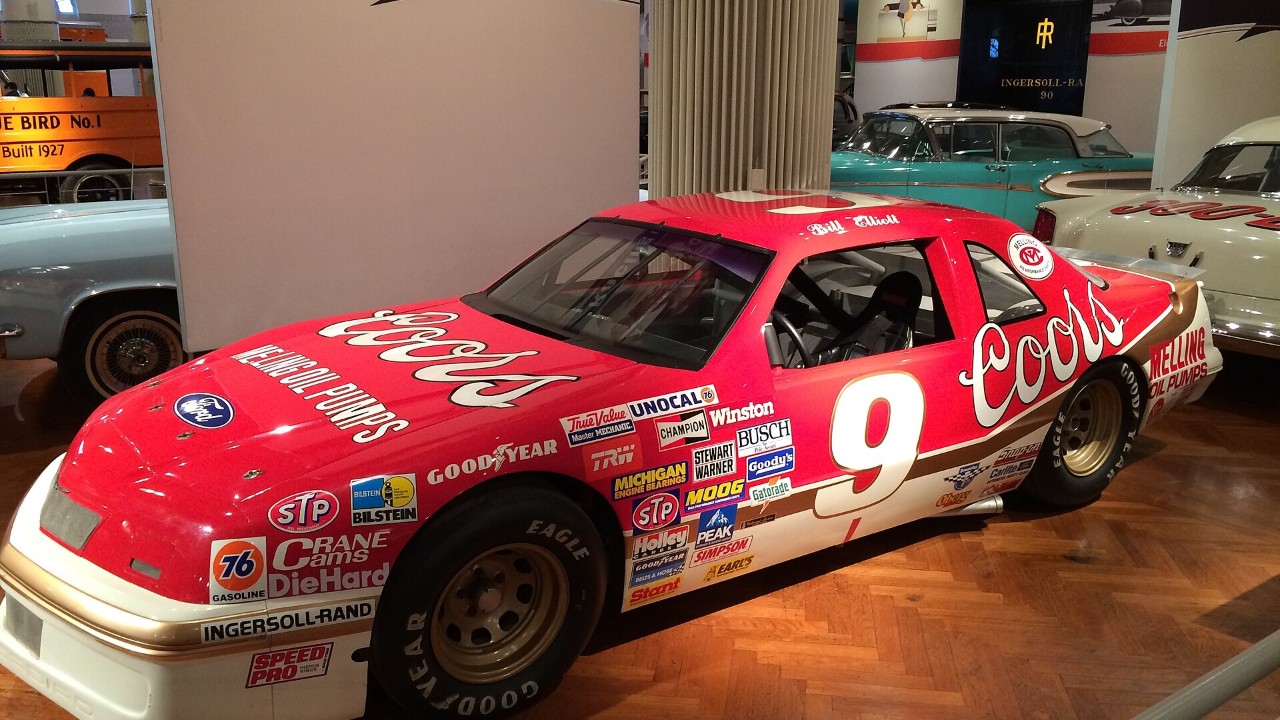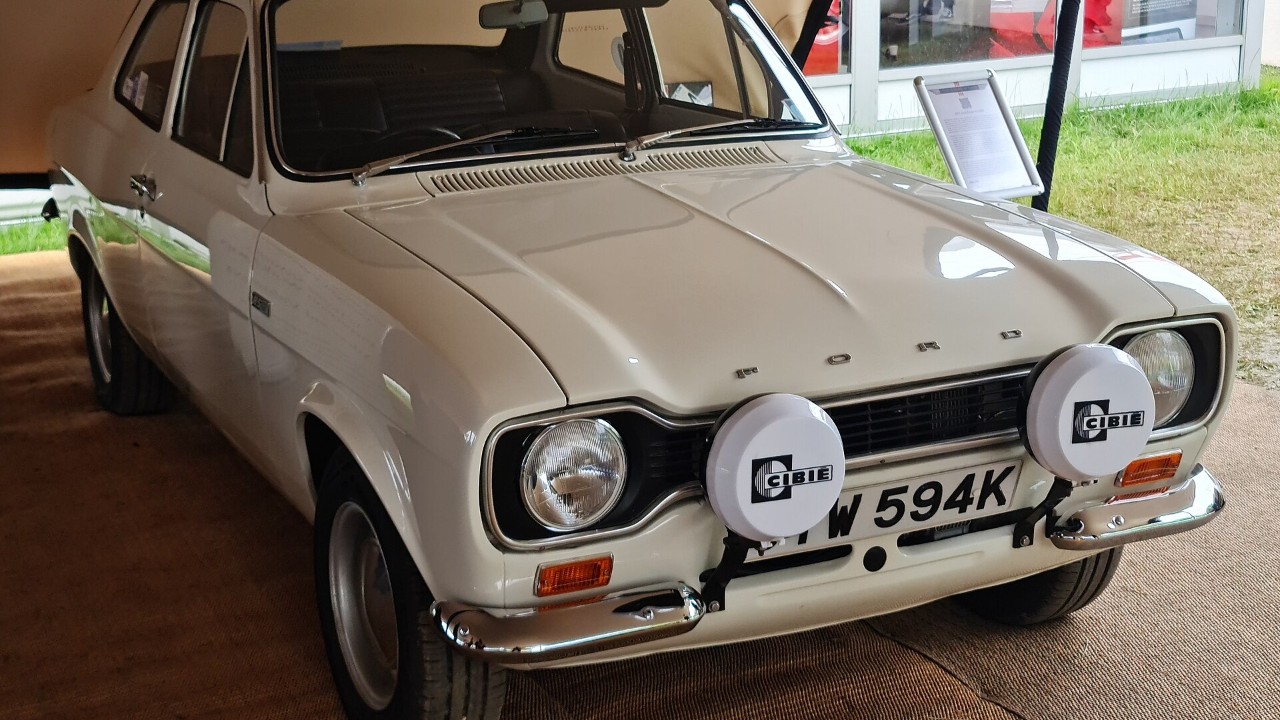
Rally rules once forced carmakers to sell road versions of the cars they raced. As a result, a showroom could hold a Toyota Celica GT-Four or a Ford Escort RS1600 next to the family sedans. To race, a maker first had to build a set number of road cars, and those cars became the stuff of bedroom-wall posters.
The numbers changed with each era. Some rules asked for a few hundred cars, while later ones asked for thousands. Either way, the road cars carried the same basic engines, drivetrains and attitude as the machines on the stages.
These 12 are our picks for the homologation cars that shaped a generation of drivers, from 1960s Lancias to the last of the turbo Mitsubishis. The verdict is our opinion. However, the facts behind each pick come from heritage archives, auction catalogs, rally histories and road tests.
1. 1969–1970 Lancia Fulvia Rallye 1.6 HF “Fanalone”
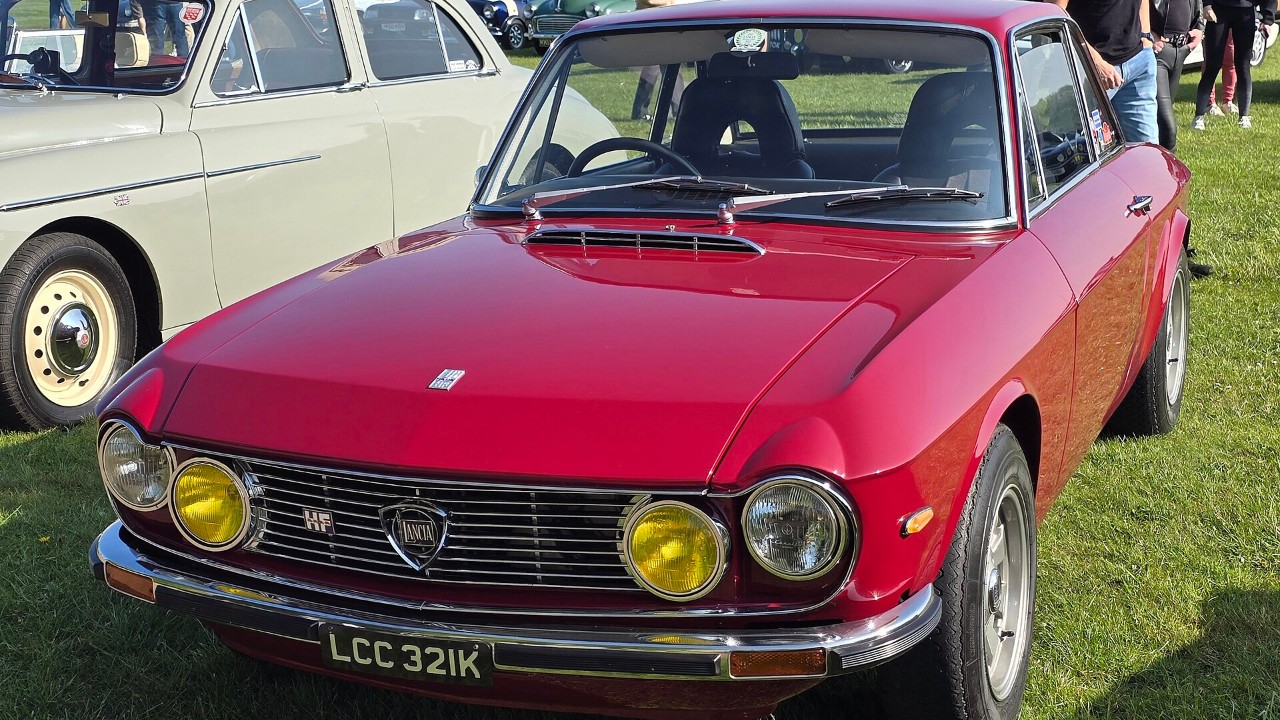
The Fulvia coupe looked polite, but the HF versions were all business. Lancia built the Rallye 1.6 HF for 1969 and 1970, and fans know it as “Fanalone,” or “big lamps.” The name came from its upsized inner pair of headlights. It grew out of the 1966–1967 Fulvia Coupé HF, which used a 1,216 cc version of the V4 rated at 88 CV.
Under the hood sat a compact V4 of 1,584 cc, rated at 115 CV in road form. That is a small engine by modern standards, yet the light coupe used it well. In fact, Fulvias won the Italian Rally Championship every year from 1965 to 1973, with the single exception of 1970. Then, in 1972, Lancia won the International Championship for Manufacturers with two rounds to spare. Sandro Munari also won the 1973 European Rally Championship in a Fulvia.
In our view, the Fanalone set the template for the Lancia rally dynasty that followed. It also proved that a small, front-drive car with a clever engine could beat bigger rivals on twisty roads. If you shop for one, check that the HF badges match a real HF chassis, because a lot of plain Fulvias now wear the look.
2. 1970 Ford Escort RS1600

Ford’s RS1600 put a race-bred cylinder head on a humble small sedan. According to the Revs Institute, Cosworth developed the BDA engine specifically for this car. It used the Ford “Kent” block with an aluminum head, twin overhead camshafts and four valves per cylinder. For the record, BDA stood for Belt Drive, Type A.
The car showed its pace early, too, because Roger Clark won with it in March 1970, while Ford still treated it as a prototype. Even so, the paperwork mattered as much as the engine. Revs says the RS1600 earned homologation on October 1, 1970, after the Royal Automobile Club confirmed that Ford had built 1,000 road cars by September 1. The road engine displaced 1,599 cc, but Ford homologated it at 1,601 cc so it could run in the over-1,600 class. Two years later, Hannu Mikkola and Gunnar Palm won the 1972 East African Safari Rally, and RS1600s took three of the top four places.
Overall, we think the RS1600 defined the British club rally scene for years. Its basic recipe of a light body, rear drive and a revvy four was easy to copy and easy to love.
3. 1971 Alpine A110 1600S

The little Alpine was French, light and low. The A110 used a steel backbone chassis under a fiberglass body. Meanwhile, the 1600S version carried a tuned Renault four of 1,565 cc, rated at 125 PS DIN. The 1600S made its debut in October 1969, and a high-compression version breathed through twin Weber 45 carburetors.
That combination worked brilliantly on mountain roads. For example, Swedish driver Ove Andersson won the 1971 Monte Carlo Rally in an A110. Two years later, Alpine won the very first manufacturers’ title of the new World Rally Championship in 1973. That is a remarkable record for a small company building cars in fiberglass.
Our take is simple. The A110 1600S showed a whole generation that a rally winner did not need a big engine or a big budget, only low weight and a smart layout. It is also, to our eyes, one of the prettiest cars on this list. If you want one, look for documented history, because the 1600S name is the one that matters to collectors.
4. 1979 Vauxhall Chevette HS
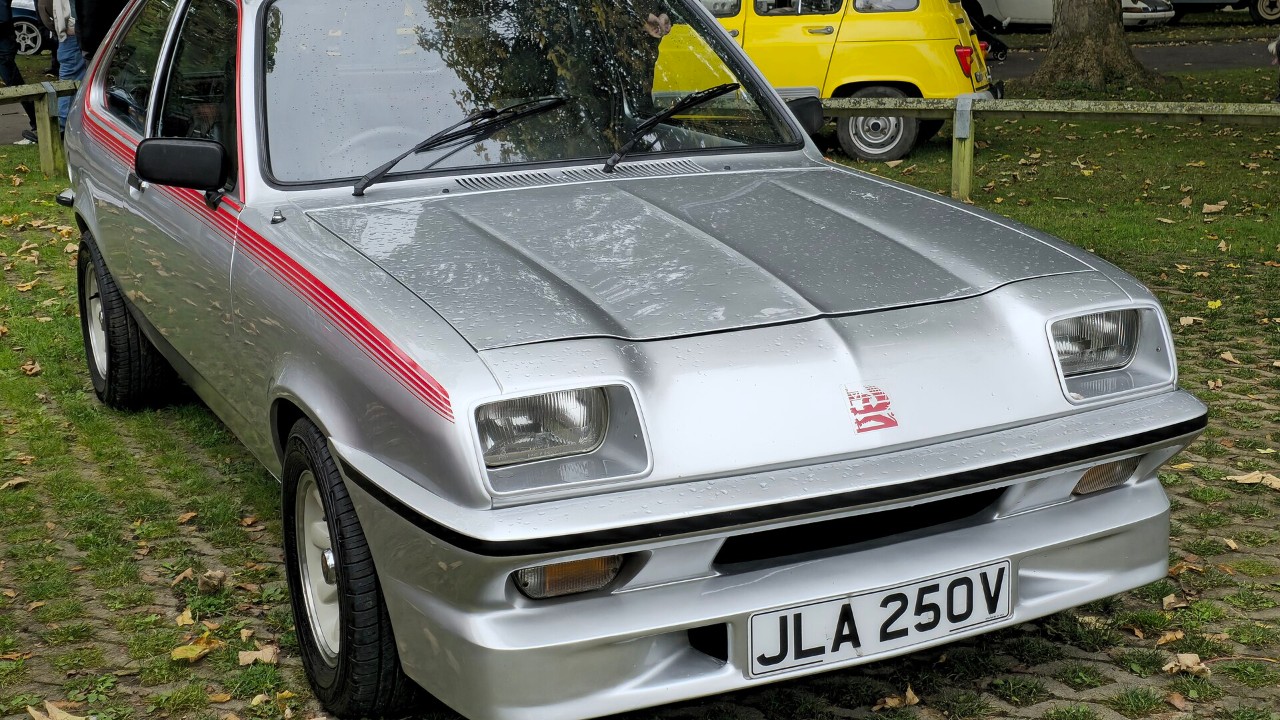
Vauxhall’s Chevette was a plain small hatchback, so the HS came as a surprise. The three-door HS arrived in January 1978 with a 16-valve, 2,279 cc slant-four and a close-ratio five-speed gearbox. In rally trim with two Stromberg carburetors, however, the engine made 135 bhp.
Group 4 rules of the time called for 400 production cars for public sale. Once Vauxhall cleared that bar, drivers such as Pentti Airikkala, Jimmy McRae and Tony Pond won with it. As a result, the Chevette won the British Open Rally Championship for drivers in 1979. Later, in April 1980, Vauxhall added the HSR, an evolution with plastic body panels that earned it the nickname “Plastic Fantastic.” Group 4 evolution rules called for 50 such cars, so Vauxhall rebuilt unsold HSs and modified customer cars to reach the count.
In our opinion, the Chevette HS is the most overlooked car here. It gave British fans a home-grown hero to cheer against the Escorts. The Opel side of the company later cut the HSR program in favor of the Manta 400, which makes the Chevette’s short run feel even more special.
5. 1984 Peugeot 205 Turbo 16

The 205 Turbo 16 looked like a shopping hatchback that had been to the gym. Underneath, though, it was a different animal. Peugeot moved the engine behind the seats and drove all four wheels, which made the road car a mid-engine, four-wheel-drive machine.
Group B rules asked for only 200 road cars, and Peugeot numbered them carefully. The street versions wore chassis numbers P1 to P200, and the first one, painted white, served as a demonstrator. In addition, each road car used the same 1,775 cc engine as the rally car, tuned to about 200 PS. Meanwhile, the factory competition cars won both the drivers’ and constructors’ titles in 1985 and 1986, with Timo Salonen and then Juha Kankkunen taking the crowns. For 1986, Peugeot also added an Evolution 2 version.
We’d argue the 205 T16 marks the peak of the Group B era more than any other car. It was compact, approachable on the road and nearly unbeatable on the stages. If you ever see one, check the chassis plate, because that P-number tells you exactly where it sits in the run of 200.
6. 1985 Ford Escort RS Turbo

After Group B, Ford needed a car for the new Group A class, where the minimum ran into the thousands. The Escort RS Turbo debuted in October 1984 and went on sale early in 1985. It made 132 PS and used a viscous-coupling limited-slip differential to put that power down.
Ford first planned 5,000 cars, the Group A minimum. Demand ran well past that, so Ford built 8,604 in total, almost all in Diamond White. Only three left the line in black. That white paint soon became part of the car’s identity in Britain. Later, a Series 2 RS Turbo carried the idea into the facelifted 1986 Escort.
Our view is that the RS Turbo brought the hot-hatch-with-a-turbo idea to ordinary buyers, and it set the tone for a decade of Ford performance cars. It is not the fastest car on this list, and it never needed to be. However, it may be the one that most people actually drove, borrowed or wanted at 17. If you buy one, check its paperwork and how original it is before you pay a premium.
7. 1988 Toyota Celica GT-Four ST165
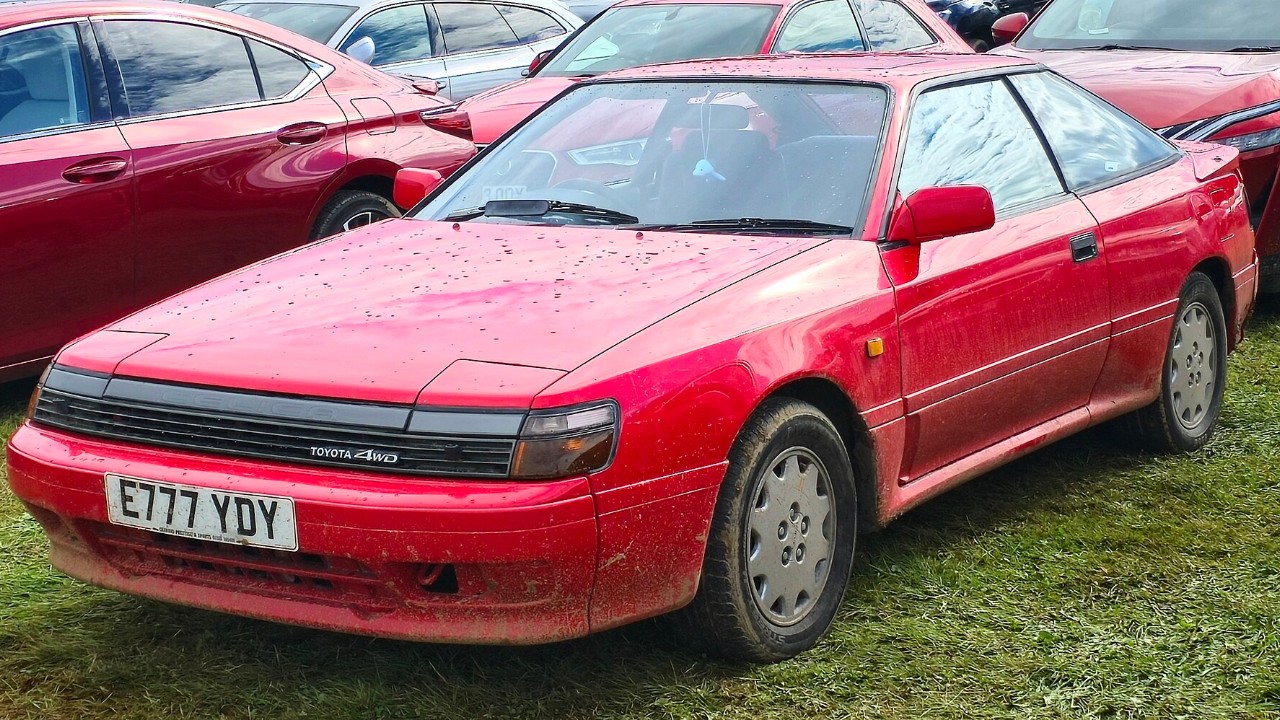
Toyota’s first all-wheel-drive Celica rally car started life as a sleek coupe. The ST165 GT-Four ran from October 1986 to August 1989. It was the only car sold with the first version of the turbocharged 3S-GTE engine, rated at 182 to 190 hp depending on market and year.
The car first appeared in the World Rally Championship on the 1988 Tour de Corse. Its first win came at the 1989 Rally Australia with Juha Kankkunen. Then, in 1990, Carlos Sainz drove an ST165 to the drivers’ title. That made him Toyota’s first world rally champion, and it gave the company the foundation for the title run that followed with the next Celica.
In our view, the ST165 is the car that turned Toyota from a rally outsider into a title contender. It also proved that a Japanese coupe could win at the top level. As a buyer, budget for turbo and four-wheel-drive maintenance, because these were complex cars for their time. Also check which market a car came from, since output varied by market and model year.
8. 1988 Mitsubishi Galant VR-4

The Galant VR-4 had a surprising origin for a family sedan. According to RM Sotheby’s, Mitsubishi’s Ralliart division homologated it for Group A in 1988, using the Group B Starion Turbo prototype as its mechanical starting point. Because the FIA required 5,000 road cars, Mitsubishi sold the VR-4 in North America, Australia, New Zealand and Japan.
The road car paired a turbocharged two-liter 4G63 with four-wheel drive and four-wheel steering. Ralliart Europe raced it in the WRC from 1988 to 1992. Over that span, it won three rounds, in Finland and Great Britain in 1989 and in Sweden in 1991. Along the way, it earned 14 podium finishes with drivers including Ari Vatanen, Jimmy McRae and Kenneth Eriksson. It also won the Rallye Côte d’Ivoire three years running. RM Sotheby’s adds an odd postscript: Mitsubishi left its rally cars in Côte d’Ivoire after 1992 instead of shipping them home.
We think the VR-4 matters most for what it passed on. After all, its engine and drivetrain formula lived on in the Lancer Evolution. A clean, unmodified road car is the one to find.
9. 1990 Subaru Legacy RS

Before the Impreza made Subaru famous, the Legacy did the hard work. According to Autosport, the Legacy RS arrived in 1990, developed by David Richards’ Prodrive operation. At first, its World Rally Championship results were slow, and Markku Alen’s best result in the first season was fourth in Finland.
The car found its stride with a young Scot. Colin McRae won back-to-back British Rally Championship titles in 1991 and 1992 in a Rothmans-backed Legacy. Then he took second in Sweden in 1992 and won Rally New Zealand the following season in the 555-liveried car. Richard Burns also won three British titles in a row for the Legacy, the last in 1993. Autosport describes the rally car as a 400-horsepower machine, and Burns later won the 2001 world title with Subaru.
Our take is that this is the car that built Subaru’s rally identity before the Impreza arrived. If that history interests you, our look at the Subaru rally wins that boosted its image picks up the story. If you shop for a road car, we’d look for one that has stayed close to factory spec.
10. 1991 Nissan Pulsar GTI-R

The Pulsar GTI-R packed a lot into a small hatchback. According to JDM Buy Sell’s guide, Nissan built it from August 1990 to November 1994. Power came from the 1,998 cc SR20DET turbo four, rated at 230 PS in the Japanese car, and the ATTESA system drove all four wheels.
Nissan homologated the car for Group A on FIA form 5427 and ran a works WRC program in 1991 and 1992. The same guide lists two road grades. The RA came with air conditioning and ABS, while the stripped RB skipped them to save weight. By comparison, the guide counts only 701 RB cars, including 21 NISMO complete cars. Europe got its own version, the Sunny GTI-R, rated at 217 bhp, and the guide says Nissan built 771 of them.
In our view, the GTI-R’s bigger legacy came off the stages, because it packed turbo all-wheel drive into a compact hatchback that tuners loved. When you shop, follow the guide’s advice and confirm the RNN14 chassis code and the grade before you buy. For more cars like it, see our list of rally-bred imports that changed enthusiast culture.
11. 1992 Toyota Celica GT-Four RC

The second-generation ST185 Celica GT-Four built on the first car’s success, and the RC was its homologation version. Toyota’s UK media site says the company built 5,000 GT-Four RC cars for Group A. Toyota named the finished car the Carlos Sainz Edition, in honor of its first world champion. Australian buyers knew the same car as the Group A Rallye. Instead of the standard air-to-air intercooler, the RC used a water-to-air unit.
The rally version used the same 1,998 cc 3S-GTE engine, rated by Toyota at 295 bhp in competition form. On the stages, Sainz won four rallies and his second drivers’ title in 1992. In 1993, Juha Kankkunen took the drivers’ title, and Toyota won its first manufacturers’ crown. Didier Auriol then became the first Frenchman to win the drivers’ title in 1994, and Toyota won the manufacturers’ title again.
We’d call the RC the high point of Toyota’s Group A years. Three straight seasons of titles say plenty. When you find one, the special intercooler setup is the detail that separates a real RC from a standard GT-Four.
12. 2000 Mitsubishi Lancer Evolution VI Tommi Mäkinen Edition

By 2000, Tommi Mäkinen had won four straight world titles for Mitsubishi. So the company celebrated with a special Evolution VI, launched in March 2000. According to evo magazine, Mitsubishi built 2,500 Tommi Mäkinen Editions to meet homologation requirements.
The changes went beyond stickers. Evo lists revised aerodynamics, a titanium turbocharger for quicker response, suspension changes and 17-inch wheels that copied the rally car’s. The engine made 276 bhp, while Passion red paint was available only on this edition. An optional decal set copied the WRC car’s livery, too. Buyers could order it in RS, RS2 and GSR trims.
In our opinion, the Mäkinen Edition is the last true rally homologation hero of its generation. In other words, it closes the era that the Fulvia opened. Prices show it, as evo puts them at £20,000 to £90,000, with the best collector cars nudging £100,000. Buy the most original one you can afford, and ask for proof of the trim and color, since Passion red is part of the car’s story. Our earlier list of homologation cars built only to satisfy racing rules covers more of these rule-driven specials.
More from Fast Lane Only