
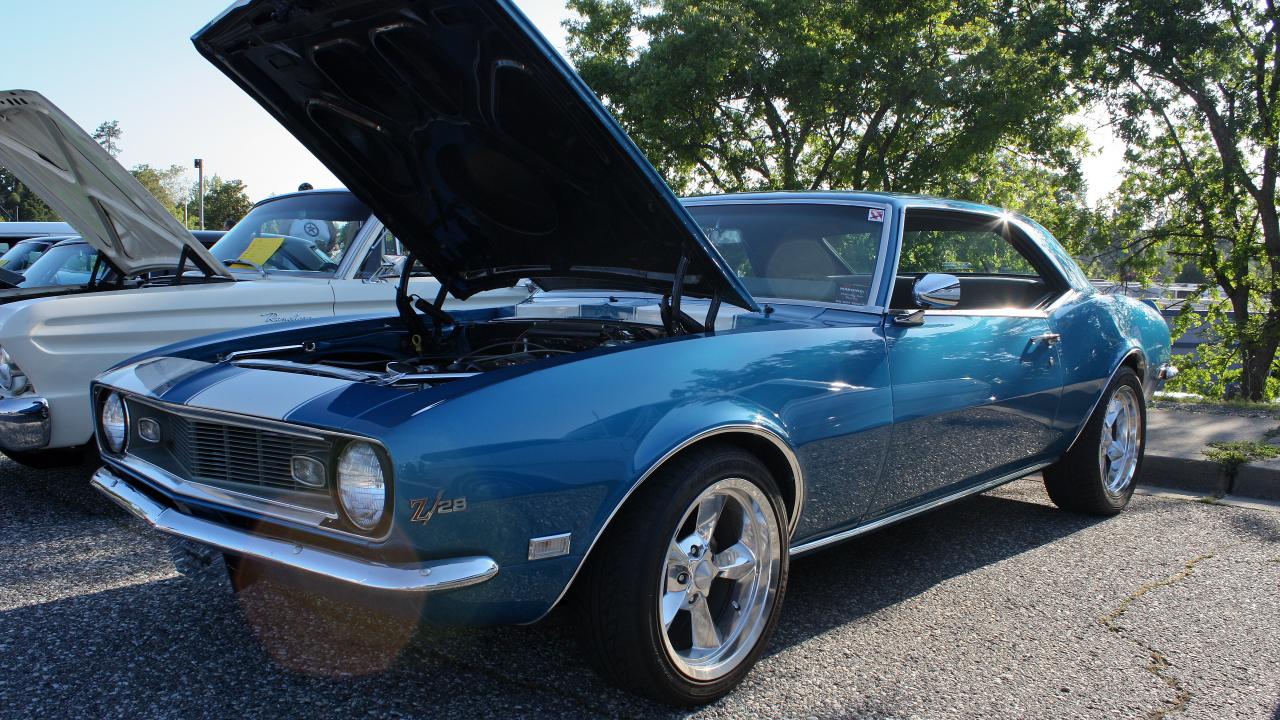
The 1968 Camaro Z/28 did more than chase trophies in Trans‑Am. It forced Chevrolet to think like a race team in the showroom, tightening every part of the package from aerodynamics to gearing so the car could leave the factory already tuned for road courses. That shift in mindset, from option code to integrated competition tool, is what sharpened Chevy’s race development for years to come.
By the late 1960s, the battle with Ford’s SCCA‑homologated Mustang had turned into an engineering arms race, and the Z/28 became Chevrolet’s answer. The 1968 model year in particular shows how quickly the company evolved from simply offering a powerful engine to delivering a cohesive, track‑biased system that privateers could exploit with minimal changes.
From Mustang provocation to Camaro purpose
Chevrolet did not invent the idea of a factory road‑race special, it reacted to it. Ford and Shelby had already turned the Mustang into an SCCA weapon, and that program, as documented in period coverage of the GT350 Mustang and its road‑racing role, set the competitive bar that General Motors could not ignore. The Camaro’s launch for 1967 put a body in the fight, but it was the Z/28 package that translated corporate pride into a focused response to the Shelby‑tuned Mustang challenge, a point underscored in retrospective analysis of the early Camaro seasons in SCCA competition.
By the time the 1968 Z/28 arrived, Chevrolet had clearly absorbed the lesson that racing success required more than raw displacement. Reporting on the original Z/28 notes that motorsport enthusiasts gravitated to this variant precisely because it was “purpose‑built to do battle on the track,” not just a dress‑up or drag‑strip option. That focus on circuit performance, rather than straight‑line theatrics, is what pushed Chevy engineers to refine suspension geometry, gearing, and braking in ways that would influence later performance models far beyond the Camaro line.
Wind‑tunnel body, race‑ready stance
The Camaro’s basic shape gave the Z/28 a head start. As the first new GM design born out of wind tunnel testing, the car carried a sleeker, more aerodynamic profile than many of its contemporaries, a fact highlighted in enthusiast discussions of the 1968 Camaro’s muscle car features and design. That work in the tunnel did not turn the car into a low‑drag prototype, but it did give Chevrolet a more stable, predictable platform at speed, something that mattered on long straights and in high‑speed sweepers where lift and crosswinds could unsettle a less developed body.
Chevrolet then layered a more aggressive stance and hardware on top of that aero‑informed shell. Contemporary promotional material for the 1968 Chevrolet Camaro Z28 emphasized the car’s “tough and purposeful” appearance and detailed touches like chrome‑plated components that signaled performance intent. Later video walk‑throughs of surviving cars, including a Feb 10, 2024 feature with Jo Newberg and a 1968 Z28, show how the combination of low ride height, wide tires, and functional detailing created a car that looked ready for a grid, not just a boulevard. That visual language reflected real tuning decisions, from wheel and tire sizing to suspension rates, that were chosen with cornering loads in mind.
The 302 that taught Chevy to think in lap times
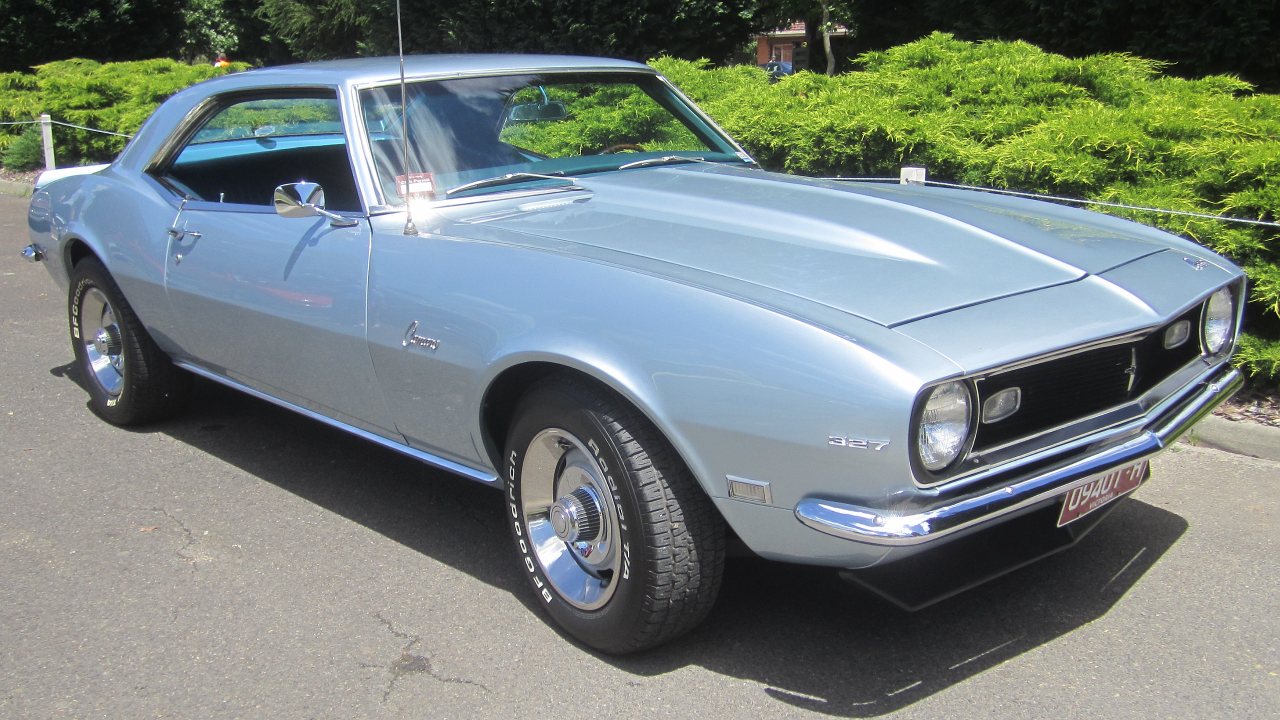
Under the hood, the Z/28’s small‑block was the clearest sign that Chevrolet had started to think like a sanctioning body as much as a marketing department. To hit the SCCA’s 5.0‑liter class limit, Chevrolet created a 302 cubic inch V8 by combining a small‑journal 327 block with a forged, Tufftrided 283 crankshaft, a configuration detailed in technical histories of the car’s origins. That hybrid bottom end was not a parts‑bin accident, it was a deliberate way to build a high‑revving engine that could survive the sustained abuse of road racing while fitting neatly inside the rulebook.
Period test reports on the 1968 Chevrolet Camaro Z28 described this 302 as the “most responsive American V8 we’ve ever tested,” a line that captures how different the engine felt from the big‑cube torque monsters of the era. Later retrospectives on the original Chevy Camaro Z/28 note that motorsport buyers specifically sought out this variant because it was engineered for the track, with a solid‑lifter cam, high‑flow intake, and underrated horsepower figures that were widely believed to be closer to serious race output than the brochure admitted. That combination of rev‑happy character and durability forced Chevrolet to refine its understanding of valve‑train stability, lubrication, and cooling in a way that would inform future small‑block development well beyond the Z/28 badge.
Chassis, gearing, and the “everywhere you look” performance mindset
The 1968 Z/28’s chassis and driveline show how deeply Chevrolet internalized the idea that every component had to serve lap times. Enthusiast breakdowns of the car’s specification point to details like the mandatory heavy‑duty suspension, quick steering, and disc brakes that were not mere options but integral parts of the Z/28 identity. A Dec 31, 2015 video analysis of a late‑sixties Z/28 summed it up as “Performance everywhere you look: From the chrome air cleaner and aluminum intake manifold to the solid camshaft and deep‑geared rear axle,” underlining how the package was engineered as a system rather than a single headline feature.
Rear‑end ratios and axle hardware were particularly telling. Reporting on a 1968 RS Z/28 Camaro Rescued From a Barn After 45 Years notes that production 1968 Camaros used a 12‑bolt rear axle with aggressive gear sets such as 4.10, a choice that made little sense for highway fuel economy but perfect sense for keeping the 302 in its power band through a road course. That same barn‑find story, published Apr 20, 2023, shows how even a long‑dormant, numbers‑matching car still carries the DNA of those decisions, from the stout differential to the close‑ratio transmission that made the most of the engine’s narrow but potent rev window.
How a homologation special reshaped Chevy’s performance playbook
What ultimately sharpened Chevrolet’s race tuning was not a single breakthrough but the way the 1968 Z/28 tied all of these elements together under the pressure of real competition. Coverage of the Camaro’s early racing years, including a Jan 16, 2020 deep dive into the 1967–1969 Z/28s, makes clear that the car existed because Ford and Shelby had already proven the value of a homologated Mustang in SCCA road racing. Chevrolet’s answer, refined in the 1968 model, was to treat the showroom car as a near‑turnkey race chassis, with the 302, close‑ratio gearbox, heavy‑duty suspension, and aero‑aware body all aligned around the same mission.
That integrated approach has echoed through Chevrolet’s performance catalog ever since. Later analyses of the original Z/28, including a Dec 26, 2024 retrospective aimed at Motorsport enthusiasts, argue that the car’s appeal lay in how little needed to be changed once it left the factory. Owners could strip weight, add safety gear, and tweak carburetion, but the core tuning philosophy was already baked in. Even decades later, when a long‑hidden 1968 RS Z/28 emerges from storage after 45 years, or when a dedicated owner like Jo Newberg walks viewers around a cherished 1968 Z28 on Feb 10, 2024, what stands out is how modern that philosophy feels: a cohesive, track‑first package that taught Chevrolet to see every future performance model as a system, not just an engine with a badge.
More from Fast Lane Only

Leave a Reply