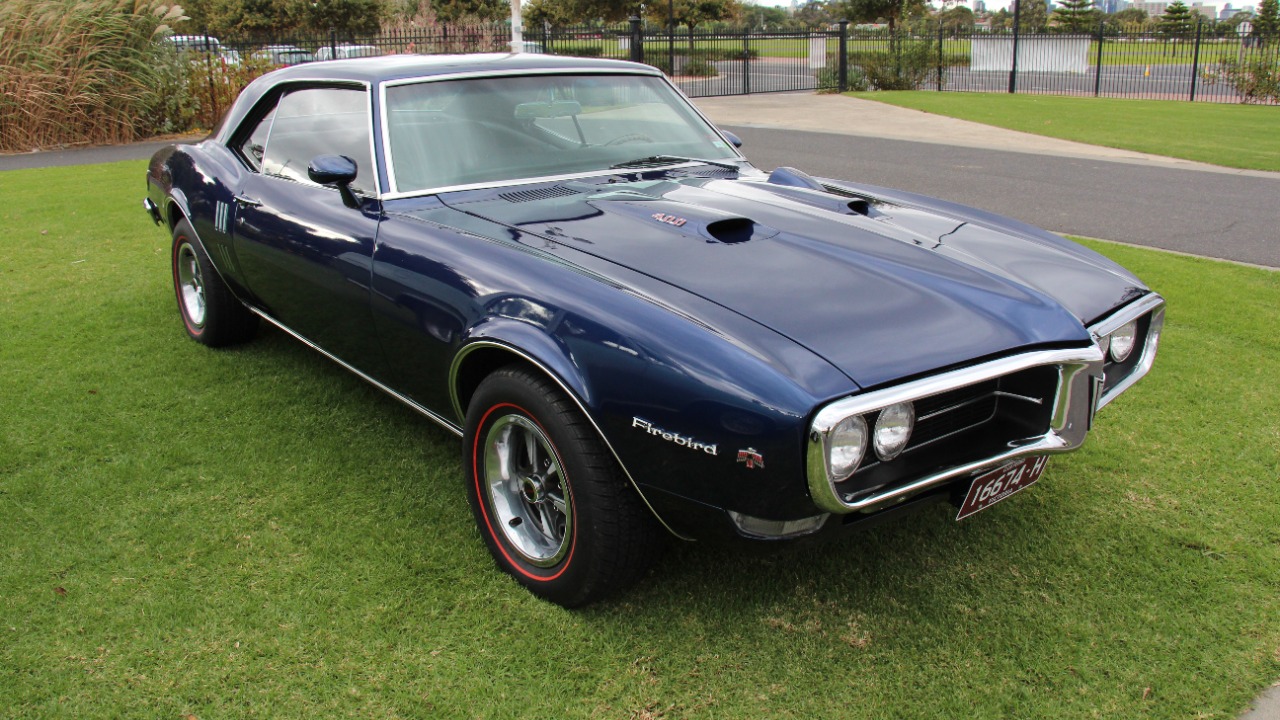
The 1968 Firebird Ram Air I and Ram Air II share a nameplate and basic 400 cubic inch formula, but they are very different cars once I get past the fender callouts. One is a relatively low-production performance package, the other a short‑run, midyear escalation that pushed Pontiac’s pony car deep into factory drag racing territory. Understanding how they diverge in hardware, performance and rarity is essential if you are trying to decode a car, shop intelligently or simply rank these two in the Firebird performance hierarchy.
How Ram Air I set the stage for Pontiac’s 1968 Firebird performance
Ram Air I arrived as the logical top step above the regular 400, giving buyers a hotter cam, functional cold‑air induction and a more aggressive tune without turning the Firebird into an unruly race car. The broader lineup still revolved around smaller engines, since the car was also offered with 250-cu.in. OHC-6s and 350-cu.in. V‑8s, but the 400 sat at the top of the order sheet and could only be specified with the W66 Firebird 400 package. That structure meant Ram Air I was not a standalone model so much as a specialized engine option layered onto an already well‑equipped performance trim.
From a hardware standpoint, Ram Air I relied on what enthusiasts now call D‑port cylinder heads, a conventional exhaust layout and a relatively street‑friendly camshaft. Period coverage of the 1967–1968 Firebird 400 notes that the two‑letter engine code on the block is the key to sorting out whether a car left the factory with a manual or automatic transmission, a detail that still matters when I am verifying a Ram Air I car against the 1967–68 Firebird 400 production patterns. In practice, Ram Air I delivered strong performance while remaining compatible with the broader Firebird mission as a stylish, reasonably comfortable pony car that could be ordered with everything from a Turbo Hydra‑Matic to a four‑speed.
Ram Air II’s midyear arrival and fundamental engine differences
The real split between the two packages came when Pontiac introduced Ram Air II as a midyear upgrade. In May of 1968, the powerful Ram Air II 400 superseded the earlier Ram Air engine, effectively replacing Ram Air I at the top of the Firebird performance ladder. That timing matters, because it means any genuine Ram Air II Firebird is a late‑production 1968 car, often referred to as a 1968 1/2, and it also explains why the option is so scarce compared with the D‑port package that preceded it.
Under the hood, Ram Air II was far more than a simple recalibration. The new engine introduced the famed round‑port cylinder heads to the Firebird, a major departure from the D‑port layout used on Ram Air I and other Pontiac V‑8s. Reporting on the engine’s specifications notes that the 2.11-inch intake and 1.77-inch exhaust valves were retained, but the port configuration and valvetrain were reworked to support higher rpm and better breathing. That change, combined with a more aggressive cam and revised induction, made Ram Air II a fundamentally different animal from the earlier Ram Air I even though both carried the same basic displacement.
Horsepower, drivability and real‑world performance

On paper, the gap between the two engines might look modest, but the way they deliver power separates them sharply. Horsepower rating for the Ram Air II engine in the Firebird was listed as 340 HP at 5300 RPM, a figure that contemporary observers have long suspected was conservative. The identical engine in other Pontiac applications carried a higher advertised rating, which suggests Pontiac was intentionally underrating the Firebird version to keep insurance companies and internal brand politics in check.
Ram Air I, by contrast, relied on its D‑port heads and milder cam timing to deliver a broader torque curve and more forgiving street manners, even if its official horsepower rating sat below that 340 HP at 5300 RPM benchmark. Period testing of the 1968 Firebird lineup shows how the chassis and body were already evolving to handle more power, with Pontiac Firebirds and other General Motors products adopting Astro Ventilation and other refinements that made the cars more livable day to day. In practice, that meant a Ram Air I Firebird could serve as a fast, comfortable street car, while a Ram Air II example leaned harder toward weekend strip duty and demanded more commitment from its driver.
Production numbers and rarity: D‑port volume vs round‑port scarcity
If the mechanical differences explain why enthusiasts argue about which engine is “better,” the production numbers explain why Ram Air II cars command such a premium. Coverage of the 1968 Firebird Ram Air system notes that there were just 413 total D‑port Ram Air Firebirds built, broken down into 321 4‑speeds and 92 automatics. Those figures cover the Ram Air Firebirds that used the earlier D‑port configuration, which aligns with what collectors typically describe as Ram Air I production.
Ram Air II sits on an entirely different level of scarcity. A detailed breakdown of late‑run cars notes that in total there were 110 Ram Air II Firebirds built, a fraction of the already limited D‑port total. That tiny run, combined with the midyear timing and the engine’s round‑port hardware, is why Ram Air II Firebirds are routinely described as some of the rarest Pontiac muscle cars and why even project‑grade examples can trigger bidding wars among serious collectors.
Visual cues, documentation and the Weidner Pontiac Drag connection
Sorting a genuine Ram Air I from a Ram Air II is not just a matter of reading the fender script, especially given how often these cars have been cloned or modified over the decades. Engine codes, casting numbers and build dates are critical, but so is understanding how Pontiac rolled out the late‑run package. A detailed look at the midyear option notes that In May of 1968 the Ram Air II engine superseded the earlier Ram Air, which means any authentic Ram Air II Firebird must carry a build date that lines up with that introduction. That timing, combined with the specific round‑port head castings and associated hardware, gives me a checklist that goes far beyond decals and hood scoops.
The culture around these cars also reflects their different missions. A 1:18 scale model of the Weidner Pontiac Drag 1968 Pontiac Firebird First Ram Air II by ACME highlights how closely the late‑run engine option was tied to organized drag racing. The same coverage describes the 1968 1/2 Ram Air II as a late production package and calls these cars some of the rarest Pontiac muscle cars, a reputation that has only grown as more documentation has surfaced and as collectors have become more sophisticated about verifying round‑port hardware and build data.
Where Ram Air I and Ram Air II sit in the broader Firebird story
Context inside the broader Firebird lineup helps explain why Pontiac bothered to create two distinct Ram Air levels in a single model year. The base and mid‑range cars, including the OHC sixes and 350 V‑8s, gave the brand volume and everyday usability, while the W66 Firebird 400 and its Ram Air options served as halo models that could compete directly with the hottest offerings from rival pony cars. Contemporary overviews of the 1968 Firebird 350 point out that General Motors was already investing in comfort and refinement features like Astro Ventilation, which meant the platform could support both boulevard cruisers and serious performance variants without feeling compromised.
By the time Ram Air II arrived, Pontiac had effectively split its performance audience. Ram Air I appealed to buyers who wanted a strong, street‑oriented Firebird 400 with extra punch, while Ram Air II targeted the small group of customers and racers who were willing to trade some civility for a harder‑edged, round‑port engine that was engineered with the drag strip in mind. The existence of detailed midyear coverage, from the initial explanation of how the Ram Air engine was superseded to later deep dives that focus on Retaining the key valve sizes while changing the port design, underscores how significant that shift was inside Pontiac’s own engineering ranks. For anyone weighing Ram Air I against Ram Air II today, the choice comes down to that same tradeoff: a rare but somewhat more approachable D‑port package, or an even rarer, round‑port Firebird that represents Pontiac’s most focused 1968 performance effort.