
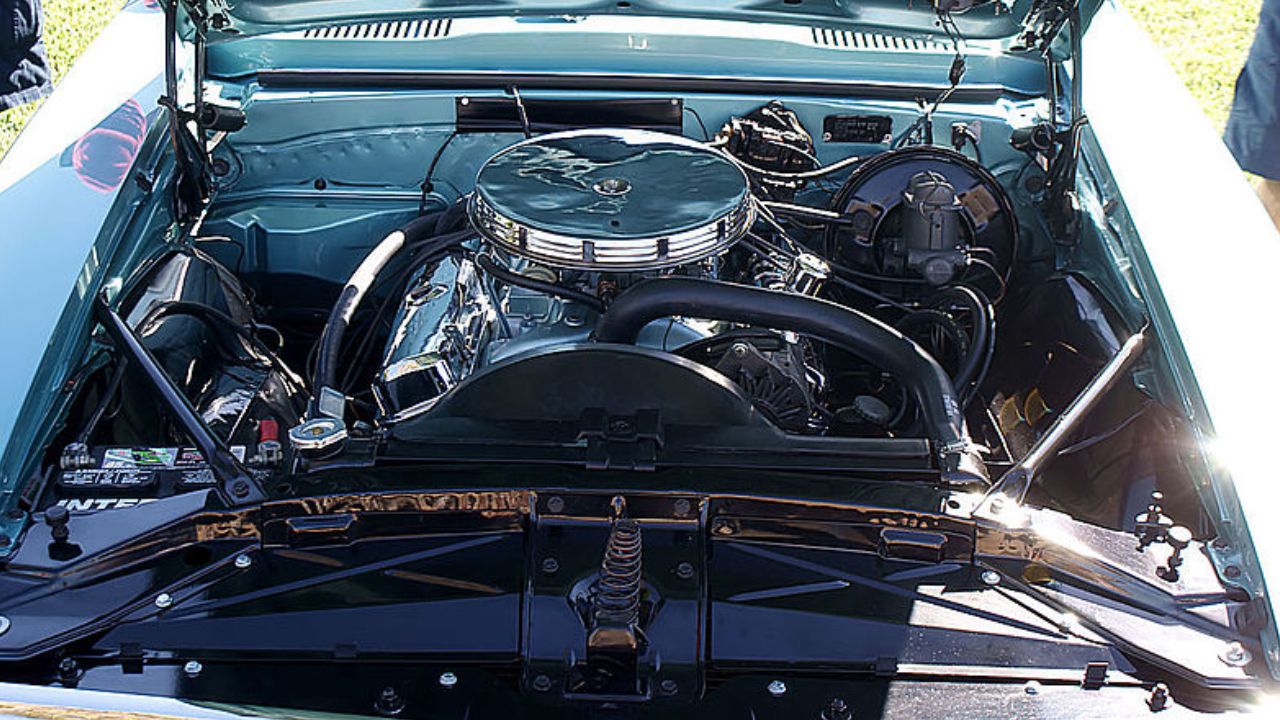
In collector circles, a single engine variant can turn an ordinary production car into a blue-chip asset. From early V8s that democratized speed to Japanese inline-sixes that inspired a tuning arms race, these powerplants reshaped values far beyond their spec sheets. Here are eight engines whose specific configurations decisively changed a car’s fate in the collector market.
The 1932 Ford Flathead V8 in the Model 18
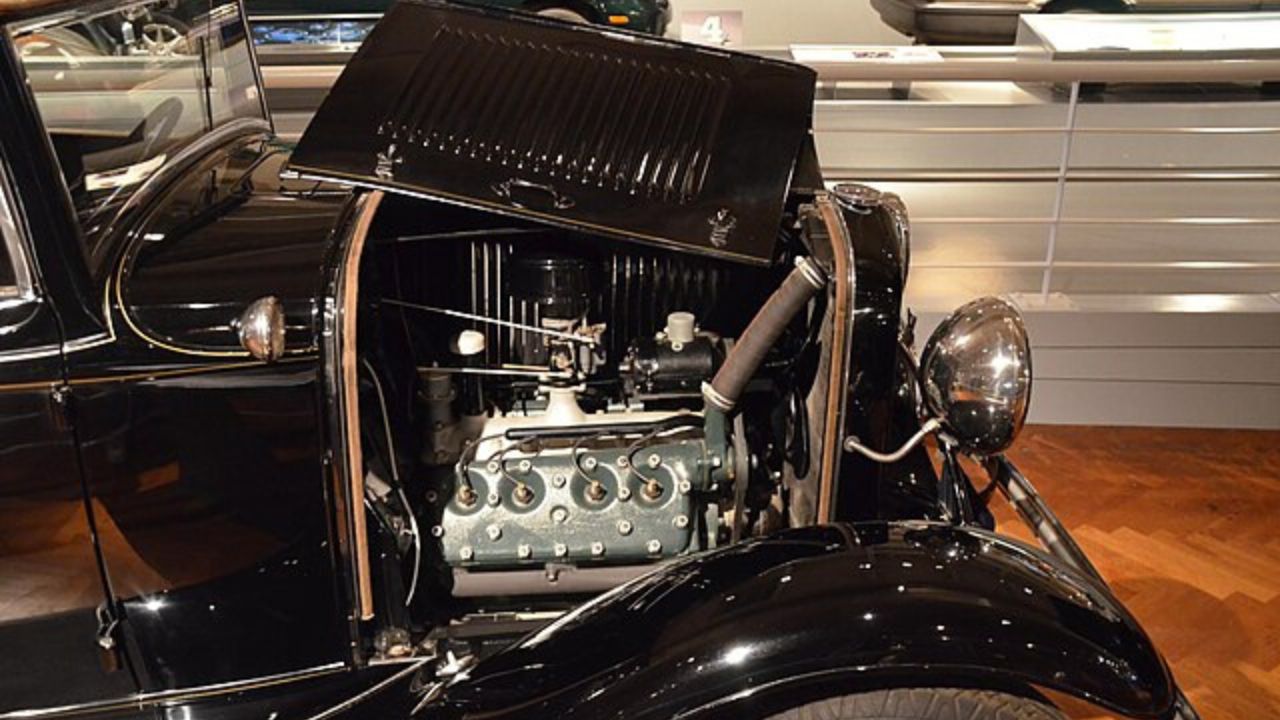
The 1932 Ford Model 18, often nicknamed the Deuce, arrived with the Ford Flathead V8 and put eight-cylinder power within reach of mainstream buyers. According to V8 history, this affordable V8 turned the Model 18 into the template for postwar hot rodding, with early restorations trading around $500 in the 1950s. As returning veterans modified these cars, the Flathead became synonymous with accessible performance and period-correct authenticity.
That cultural weight translated directly into collector premiums. The same reporting notes that by 2020, original Model 18s still equipped with their Flathead V8 were commanding more than $50,000, a hundredfold jump over early restoration prices. Enthusiasts in groups dedicated to the 1932 Ford still treat the Deuce as the quintessential hot rod, and buyers pay accordingly for cars that retain the correct engine casting and factory-style induction.
Chevrolet’s 1955 Small Block 265 V8 in the Bel Air
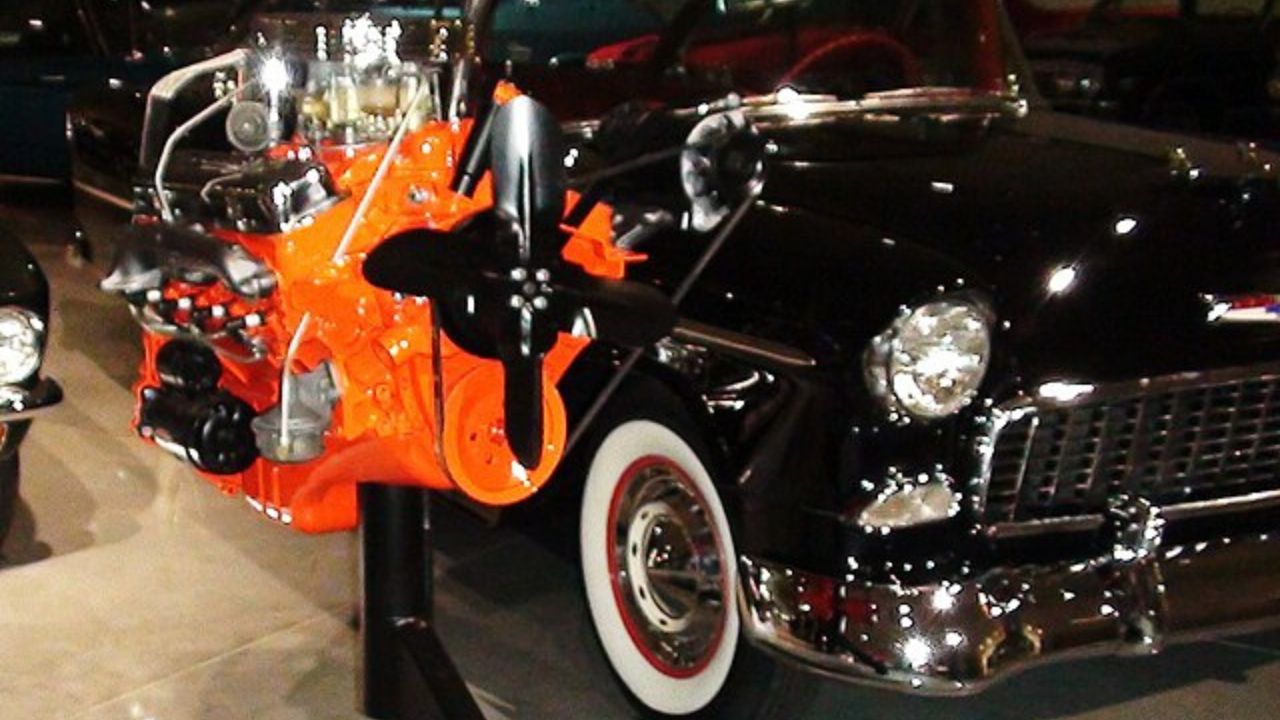
Chevrolet’s 1955 Small Block 265 V8, debuting in the ’55 Bel Air, set a durable template for American performance. A technical retrospective credits its 162 hp output and robust cast-iron construction with making it the go-to swap for racers and street builders. The compact dimensions and interchangeability across model years meant that one family of engines could power everything from mild customs to serious drag cars.
That ubiquity did not dilute collector appeal, it concentrated it around early small-block–equipped Chevrolets. The same analysis ties a roughly 300 percent rise in premiums for Corvettes and muscle cars since 1980 to the presence of correct 265-based small blocks. For collectors, a matching-numbers 265 in a Bel Air or early Corvette signals both historical significance and mechanical toughness, which is why restamped blocks or incorrect heads can sharply undercut auction results.
The 1964 Chrysler 426 Hemi V8 in the Plymouth Belvedere
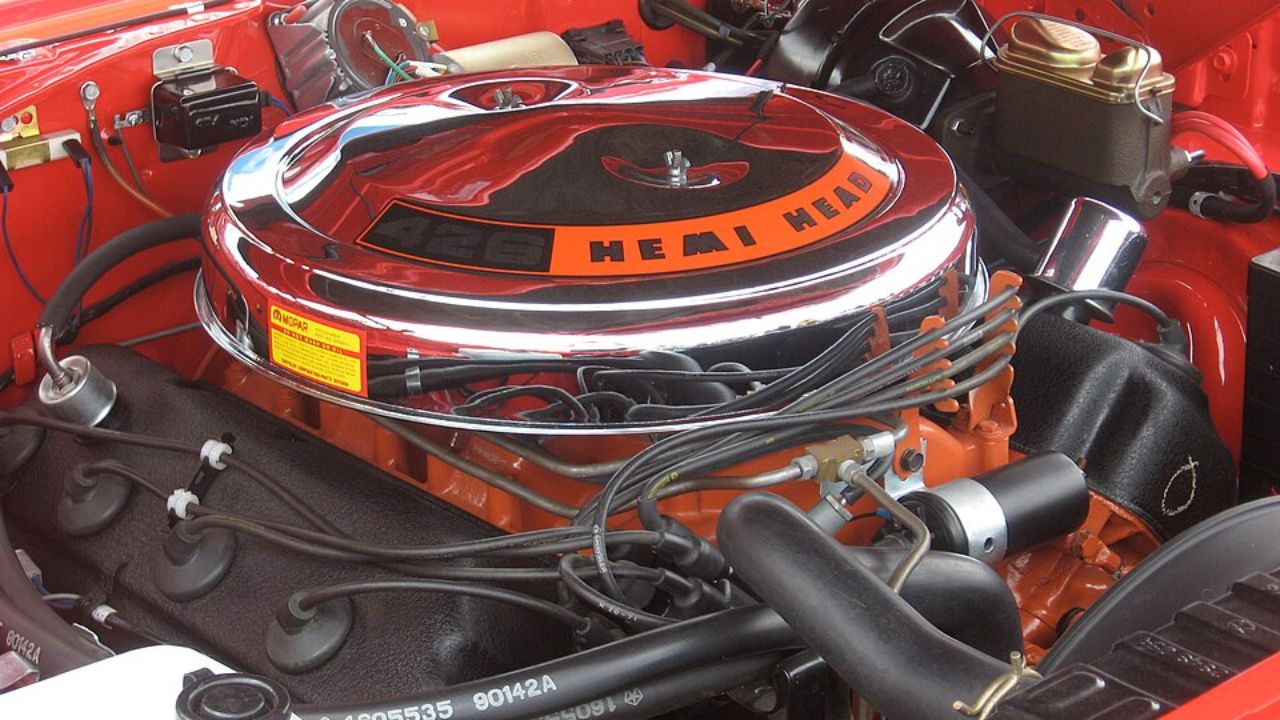
The 1964 Chrysler 426 Hemi V8, first seen in NASCAR-influenced Plymouth Belvedere models, turned otherwise modest Mopar sedans into blue-chip collectibles. A market report shows how the race-bred Hemi, developed to dominate stock-car ovals, overshadowed Chrysler’s earlier wedge engines. Its hemispherical combustion chambers and massive breathing capacity created a performance mystique that standard big-blocks could not match.
That engineering edge shows up starkly in auction lanes. The same reporting notes that Hemi Belvederes now bring $200,000 or more, while visually similar non-Hemi counterparts often struggle to clear $20,000. For owners and restorers, the presence of an authentic 426 Hemi, with correct stampings and ancillaries, is the single biggest determinant of value, turning a once-utilitarian Plymouth into a museum-grade artifact of American racing history.
Porsche’s 1963 Type 547 Air-Cooled Flat-Four in the 356 Carrera
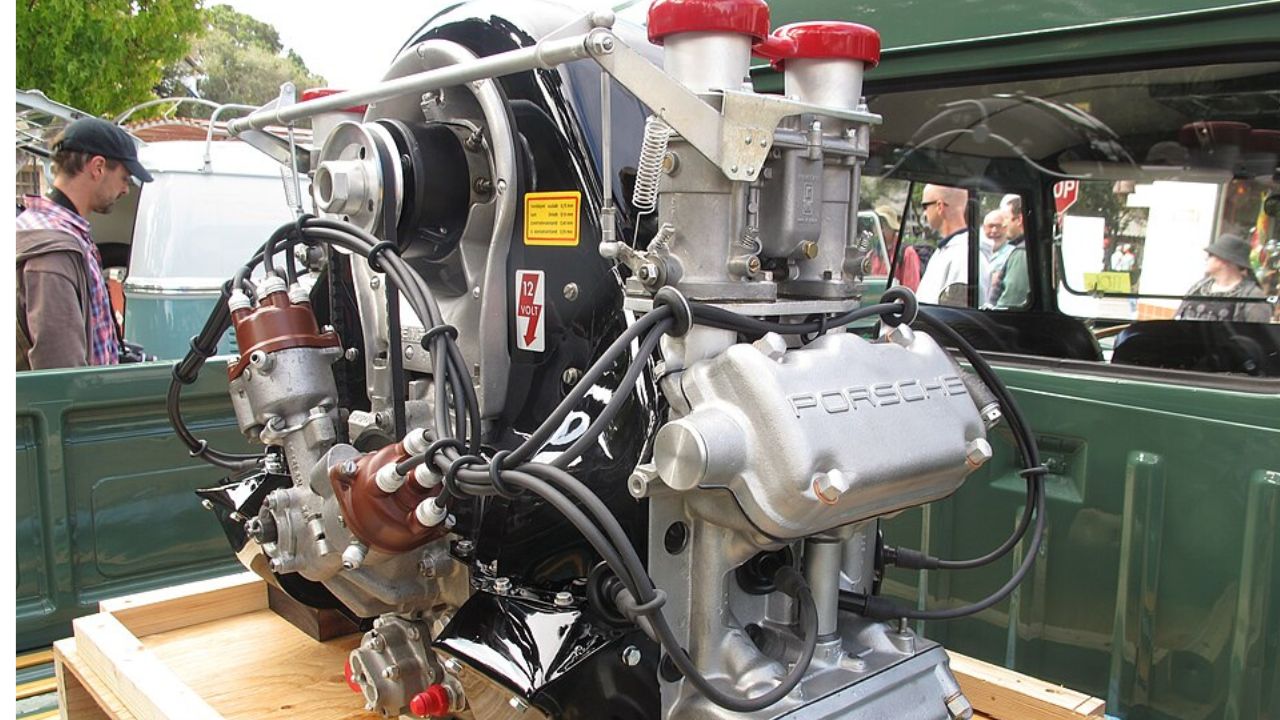
Porsche’s 1963 Type 547 air-cooled flat-four, fitted to the 356 Carrera, delivered 130 hp and a level of sophistication rare in small-displacement engines of its era. A club feature explains how this complex four-cam unit elevated the 356 from nimble sports car to serious competition tool, with a reputation for high-revving power and meticulous engineering. That blend of performance and rarity made the Carrera badge a shorthand for investment-grade Porsches.
The same reporting notes that the Type 547’s legacy carried into the 911 lineage, where period-correct engine swaps can add around $100,000 to a car’s value. Early 911s, including the first 2.0-liter versions with 130 hp and the Porsche 901/911 power unit that also produced 130 horsepower and sprinted to 60 miles per hour, inherited the Carrera’s aura. Collectors now scrutinize engine codes and build sheets, knowing that a genuine four-cam or historically significant swap can transform a car’s financial trajectory.
Ferrari’s 1957 Colombo V12 Tipo 128 in the 250 Testa Rossa
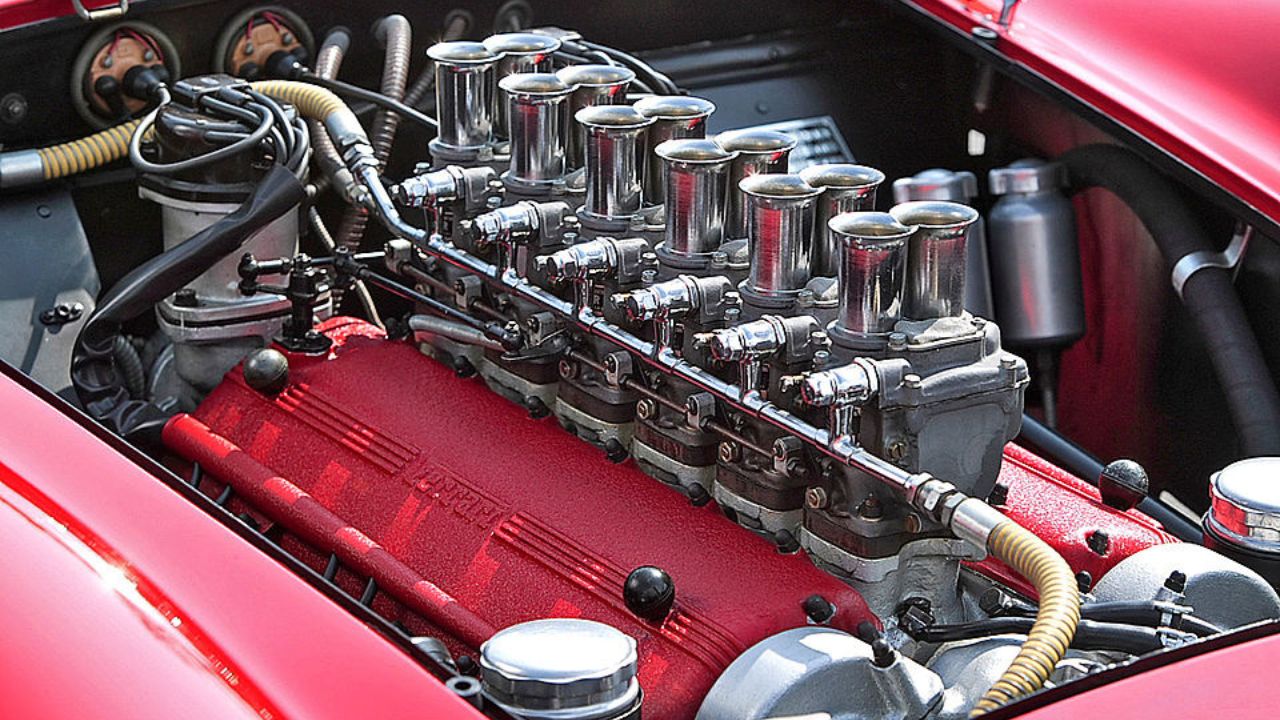
Image Credit: Tennen-Gas – CC-BY-SA-3.0,2.5,2.0,1.0/ Wiki Commons
Ferrari’s Colombo V12 Tipo 128, introduced in the 1957 250 Testa Rossa, is a textbook example of an engine defining a car’s ultimate value. The 3.0-liter unit produced 280 hp, and an auction catalog ties that output directly to the model’s endurance-racing success. Lightweight construction, high-rev capability, and relentless development made the Tipo 128 the heart of Ferrari’s late-1950s sports-prototype dominance.
That competition pedigree culminated in a 250 Testa Rossa selling for $38.4 million at a headline RM Sotheby’s sale, making it one of the most valuable internal-combustion cars ever sold publicly. Collectors prize not only the V12’s power but also its continuity with Ferrari’s broader Colombo lineage, which links road-going 250 GTs to Le Mans winners. As a result, originality of the Tipo 128 block and heads is scrutinized to a degree few other engines face, with any replacement parts carefully documented.
Jaguar’s 1948 XK Inline-Six (3.4L) in the XK120
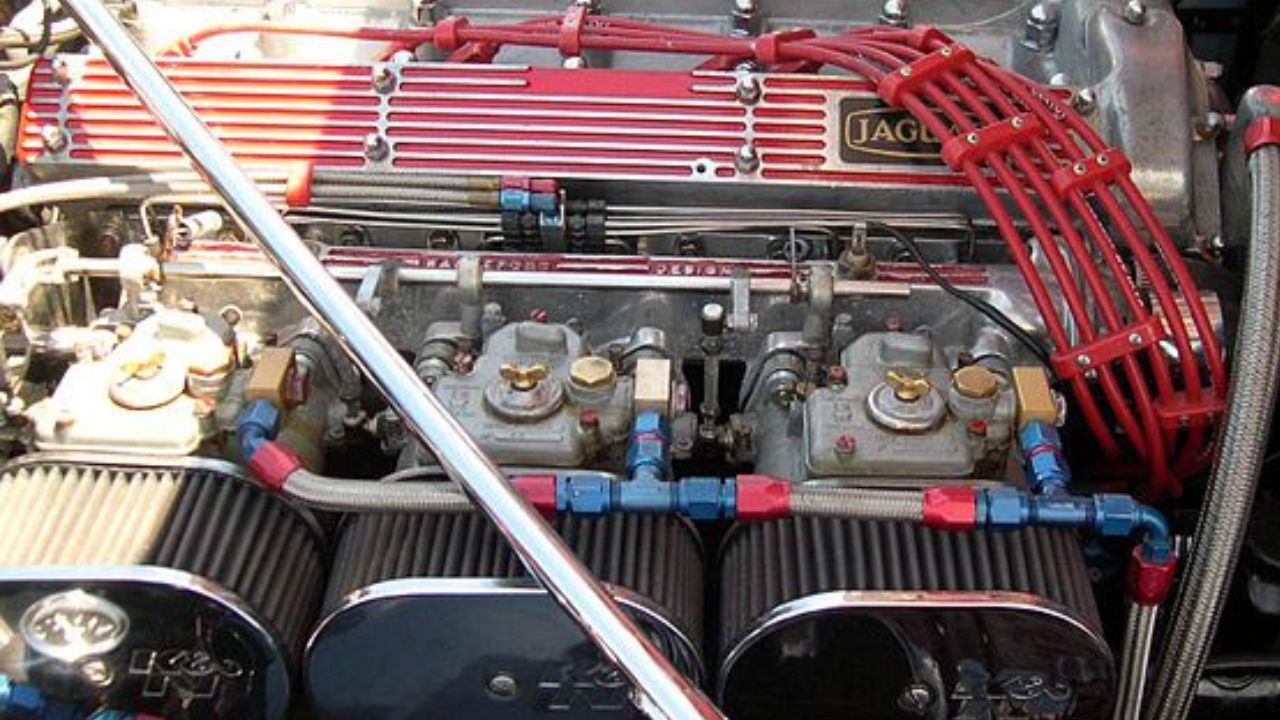
Jaguar’s 1948 XK inline-six, displacing 3.4 liters and rated at 160 hp, debuted in the XK120 and redefined expectations for postwar grand touring. The factory archive credits this twin-cam straight-six with combining high specific output and smoothness in a package suitable for both racing and refined road use. Its success on rallies and circuits burnished Jaguar’s image as a maker of high-performance luxury cars.
That dual character paid dividends once the 1970s restoration boom drew attention to early XKs. The same historical review notes that XK120s retaining their original XK engines can command premiums of $150,000 or more over cars with incorrect or replacement powerplants. For restorers, sourcing a period-correct 3.4L block and head set has become a major cost driver, while buyers increasingly view the XK engine as the non-negotiable core of Jaguar’s mid-century identity.
The 1993 Toyota 2JZ-GTE Inline-Six Twin-Turbo in the Supra MkIV
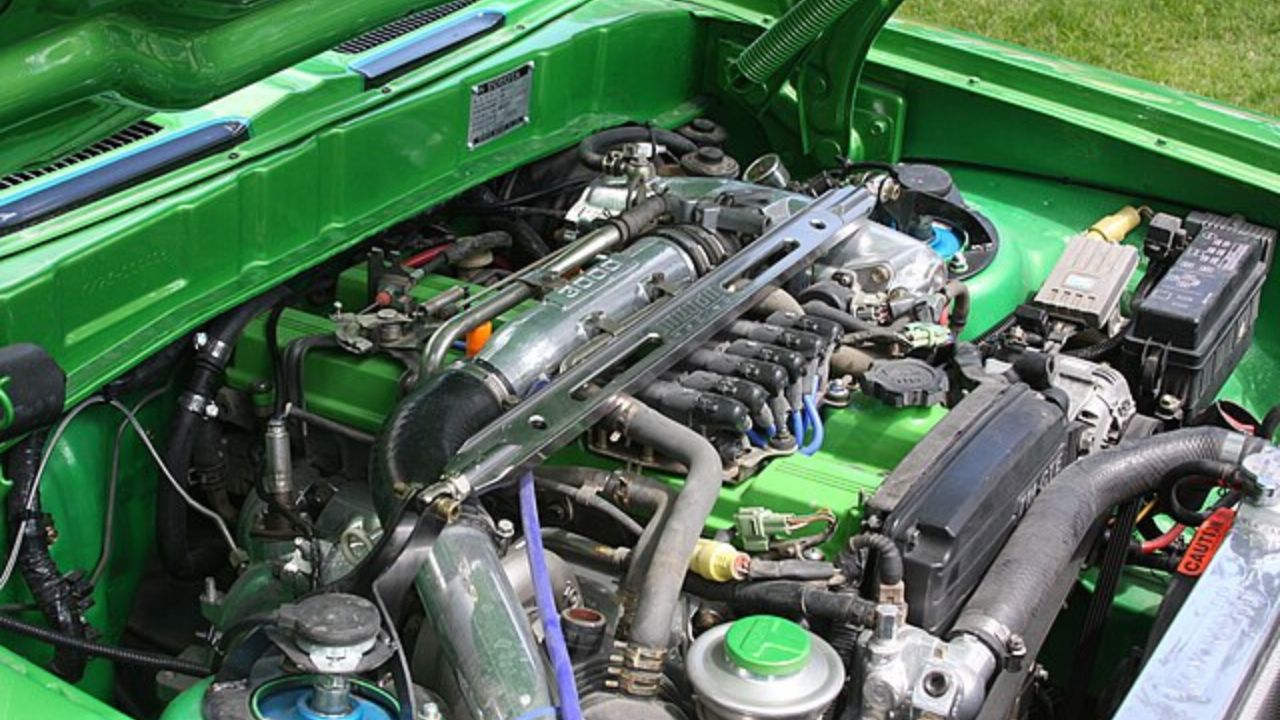
The 1993 Toyota 2JZ-GTE inline-six twin-turbo in the Supra MkIV turned a solid grand tourer into a modern collectible phenomenon. A JDM retrospective notes that the 2JZ-GTE delivered 320 hp in some markets and could be tuned reliably to 1,000 hp and beyond, a claim echoed by enthusiasts who highlight how the Engine’s iron block shrugs off extreme boost. In Japan, the same basic GTE unit was officially rated at 276 hp under the “gentleman’s agreement.”
Social media coverage of the Stock Mk4 Supra underscores the technical details behind that legend. One breakdown lists a 3.0L 2JZ-GTE Inline-6 Twin-Turbo with 276 hp at 5,600 rpm and 318 lb-ft at 4,000 rpm, figures shared in a Supra overview. Another profile of the 1993 Toyota Supra from Japan calls the GTE a 3.0L inline-six with twin turbochargers delivering 276 horsepower, as noted in a model history. Backed by Fast & Furious exposure, values climbed from roughly $10,000 around 2000 to more than $200,000 by 2023 for low-mile, unmodified cars.
BMW’s 1978 M88 3.5L Inline-Six in the M1 Supercar
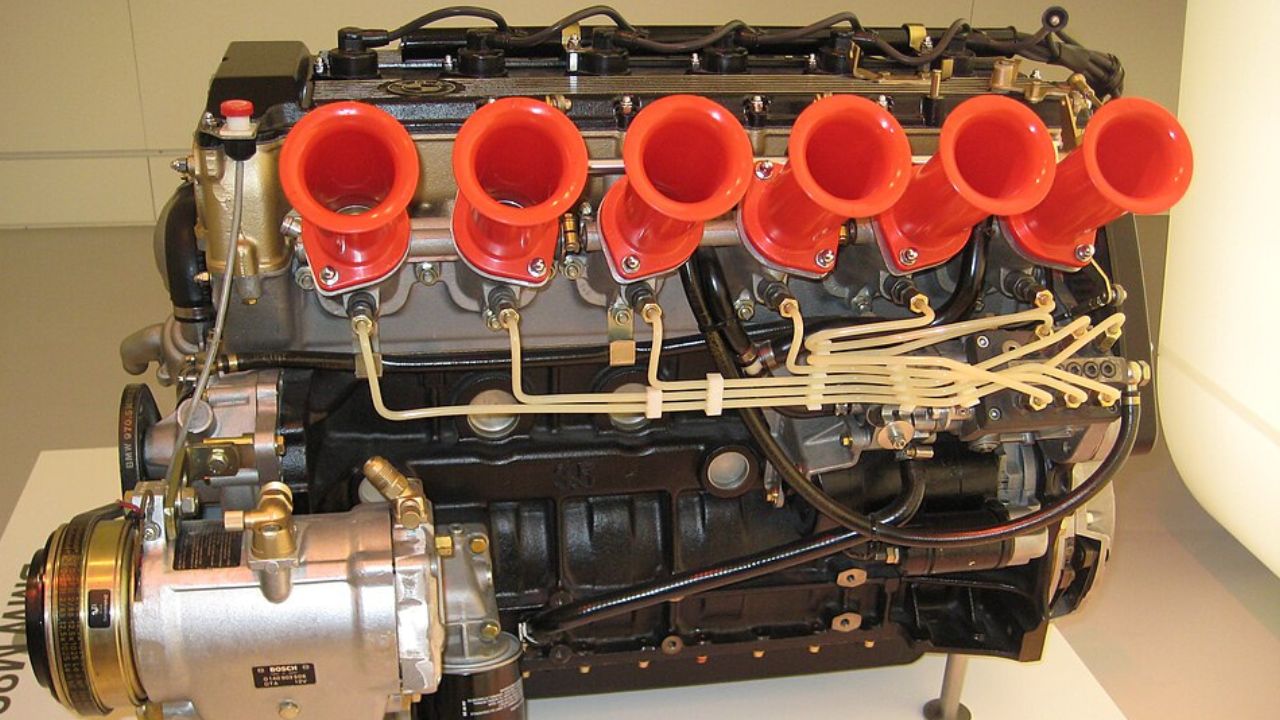
Image Credit: Buschtrommler – CC-BY-SA-3.0,2.5,2.0,1.0/ Wiki Commons
BMW’s 1978 M88 3.5L inline-six, installed in the M1 supercar, gave the brand a motorsport-derived halo engine that still shapes collector sentiment. The naturally aspirated six produced 277 hp, and auction data links that output to the M1’s Group 4 and Group 5 ambitions. With individual throttle bodies and a racing pedigree that later informed the E28 M5 and E24 M635CSi, the M88 turned the M1 into a bridge between road and track.
That mechanical lineage has made engine originality the key value driver for M1s. The same auction records show M1s with their correct M88 engines selling for about €1.2 million, while cars lacking that specification or carrying non-M88 replacements can fall toward €500,000. For collectors, the M88 is not just a powerplant but the defining feature that separates a historically significant homologation special from a merely rare BMW coupe.
More from Fast Lane Only:

Leave a Reply