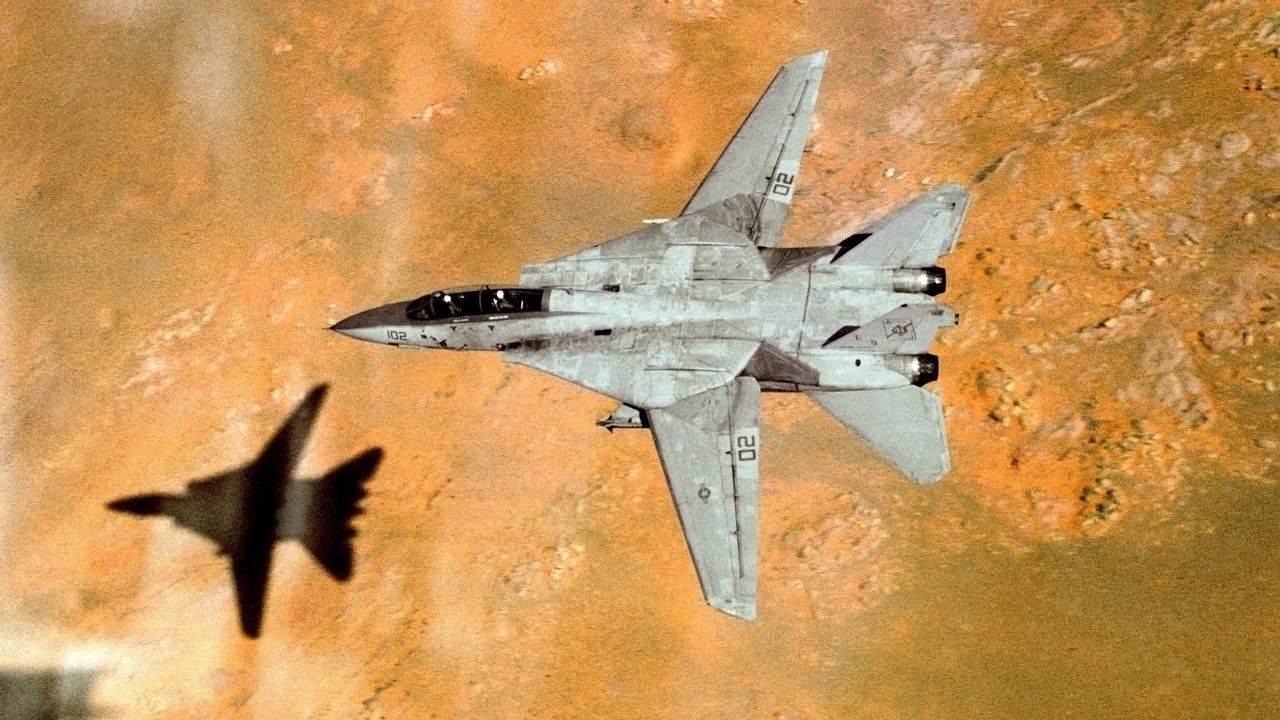
The U.S. Navy has a storied history of utilizing some of the most advanced and iconic aircraft in the world. From the early days of naval aviation to the modern era of stealth and precision, these aircraft have played pivotal roles in both peacetime and conflict. Here are nine of the coolest aircraft that have ever taken to the skies under the banner of the United States Navy.
F4U Corsair
The F4U Corsair is a legendary fighter aircraft that gained fame during World War II and the Korean War. Known for its distinctive inverted gull wing design, the Corsair was a formidable aircraft in dogfights and ground attacks. It was powered by a powerful Pratt & Whitney R-2800 Double Wasp engine, allowing it to reach speeds of over 400 mph. Its robust build and versatility made it a favorite among pilots, earning it the nickname “Whistling Death” from its adversaries.
The Corsair’s operational history is rich with success stories. It served with distinction in the Pacific Theater, providing critical air support for ground troops and engaging enemy fighters. Its reputation was further cemented by the exploits of pilots like Gregory “Pappy” Boyington, who became one of the top flying aces of World War II while piloting the Corsair.
F-14 Tomcat
The F-14 Tomcat is perhaps one of the most recognizable fighter jets ever produced, thanks in part to its starring role in the film “Top Gun.” This twin-engine, two-seat fighter was the U.S. Navy’s primary air superiority fighter from the 1970s until the mid-2000s. Equipped with variable-sweep wings, the Tomcat could adapt its wing position to optimize performance for both high-speed engagements and slower, more stable flight.
Famous for its long-range AIM-54 Phoenix missiles, the F-14 was designed to intercept enemy aircraft before they could pose a threat to naval forces. Its advanced radar and avionics systems allowed it to track multiple targets simultaneously, making it a formidable opponent in aerial combat. The Tomcat’s retirement in 2006 marked the end of an era, but its legacy continues to influence modern naval aviation designs.
F/A-18 Hornet
The F/A-18 Hornet is a versatile multirole fighter that has served the U.S. Navy since the 1980s. As both a fighter and attack aircraft, the Hornet can perform a wide range of missions, from air superiority to ground strike. Its ability to switch roles seamlessly made it an invaluable asset during the Gulf War and subsequent conflicts.
The Hornet’s twin engines and advanced avionics provide it with excellent agility and combat capability. It has been a staple of naval aviation for decades, and its design influenced the development of the F/A-18E/F Super Hornet, which continues to serve as a critical component of the Navy’s air power.
P-8 Poseidon
The P-8 Poseidon is a state-of-the-art maritime patrol aircraft that plays a key role in anti-submarine warfare, intelligence, and reconnaissance. Based on the Boeing 737 airframe, the P-8 is equipped with advanced sensors and communication systems that enable it to perform long-duration missions over vast ocean areas.
With its ability to deploy sonobuoys and torpedoes, the Poseidon is a crucial asset in detecting and neutralizing submarine threats. Its advanced radar and surveillance capabilities also make it an effective tool for monitoring sea lanes and gathering intelligence, ensuring that naval forces maintain situational awareness in critical regions.
F-35C Lightning II
The F-35C Lightning II represents the cutting edge of naval aviation technology. As the carrier-capable variant of the Joint Strike Fighter, the F-35C combines stealth, supersonic speed, and advanced sensor fusion to provide unparalleled situational awareness and combat effectiveness.
Designed to operate from aircraft carriers, the F-35C features larger wings and more robust landing gear to handle the rigors of carrier operations. Its ability to conduct a wide range of missions, from air-to-air combat to ground attack and electronic warfare, makes it a cornerstone of the Navy’s future air strategy.
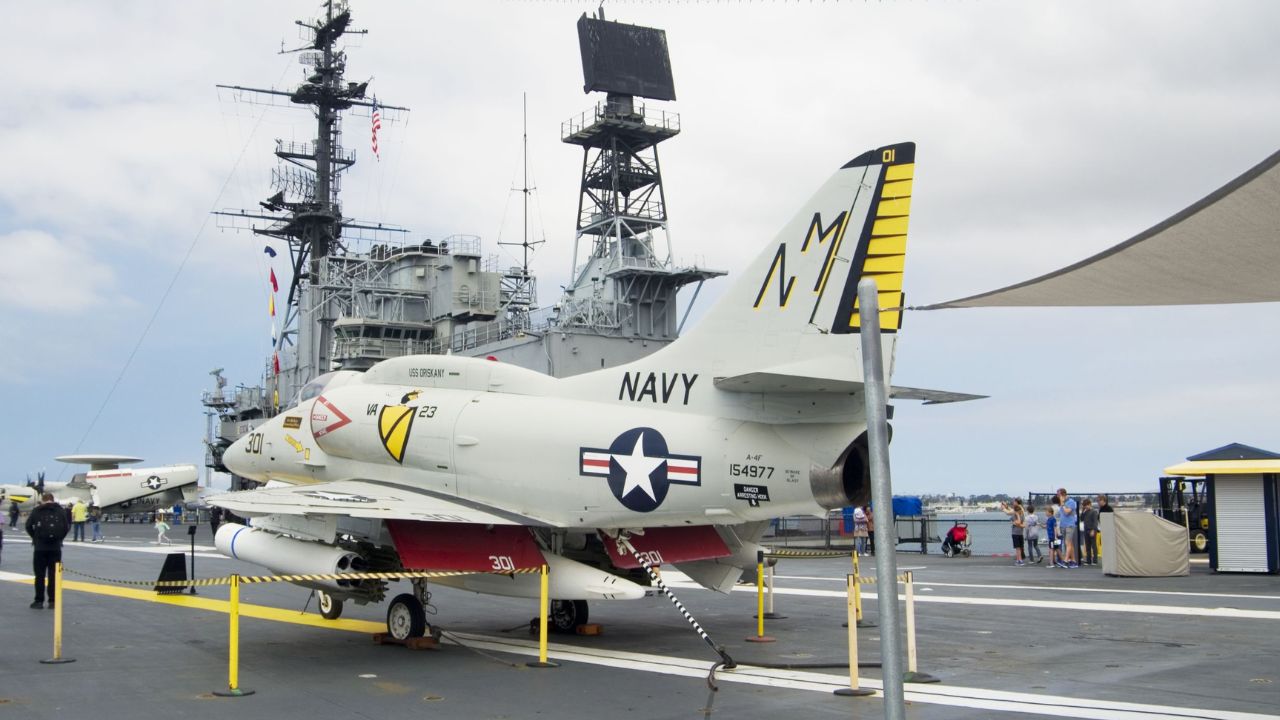
A-4 Skyhawk
The A-4 Skyhawk is a lightweight attack aircraft that served prominently during the Vietnam War. Known for its agility and simplicity, the Skyhawk was used extensively for ground attack missions, providing close air support for troops on the ground.
Despite its small size, the A-4 proved to be a highly effective platform, capable of delivering a wide variety of ordnance. Its affordability and ease of maintenance made it a popular choice not only for the U.S. Navy but also for allied nations. The Skyhawk’s legacy is marked by its long service life and adaptability to different combat scenarios.
S-3 Viking
The S-3 Viking was a versatile anti-submarine warfare aircraft that served the U.S. Navy from the 1970s until its retirement in the mid-2000s. Designed to operate from aircraft carriers, the Viking was equipped with advanced sonar and radar systems to detect and track submarines.
Beyond its anti-submarine role, the S-3 was also capable of conducting aerial refueling, electronic surveillance, and anti-surface warfare operations. Its versatility and range made it a valuable asset for naval operations, providing critical support for carrier strike groups around the world.
E-2 Hawkeye
The E-2 Hawkeye is an airborne early warning aircraft that plays a crucial role in the Navy’s command and control structure. Recognizable by its distinctive rotating radar dome, the Hawkeye provides all-weather airborne surveillance and battle management capabilities.
Since its introduction in the 1960s, the E-2 has been a key component of the Navy’s air defense systems, coordinating the actions of fighter jets and other assets. The latest variant, the E-2D Advanced Hawkeye, boasts upgraded radar and communication systems, ensuring that it remains at the forefront of naval aviation operations.
A-7 Corsair II
The A-7 Corsair II was an attack aircraft introduced during the Vietnam War era, known for its precision strike capabilities. Unlike its predecessors, the A-7 featured a modern avionics suite and the ability to carry a wide array of weapons, from bombs to missiles.
Its efficient design allowed for extended range and loiter time, making it an effective platform for sustained operations over hostile territory. The A-7 served with distinction through the 1970s and 1980s, participating in numerous conflicts and earning a reputation for reliability and effectiveness in combat.