
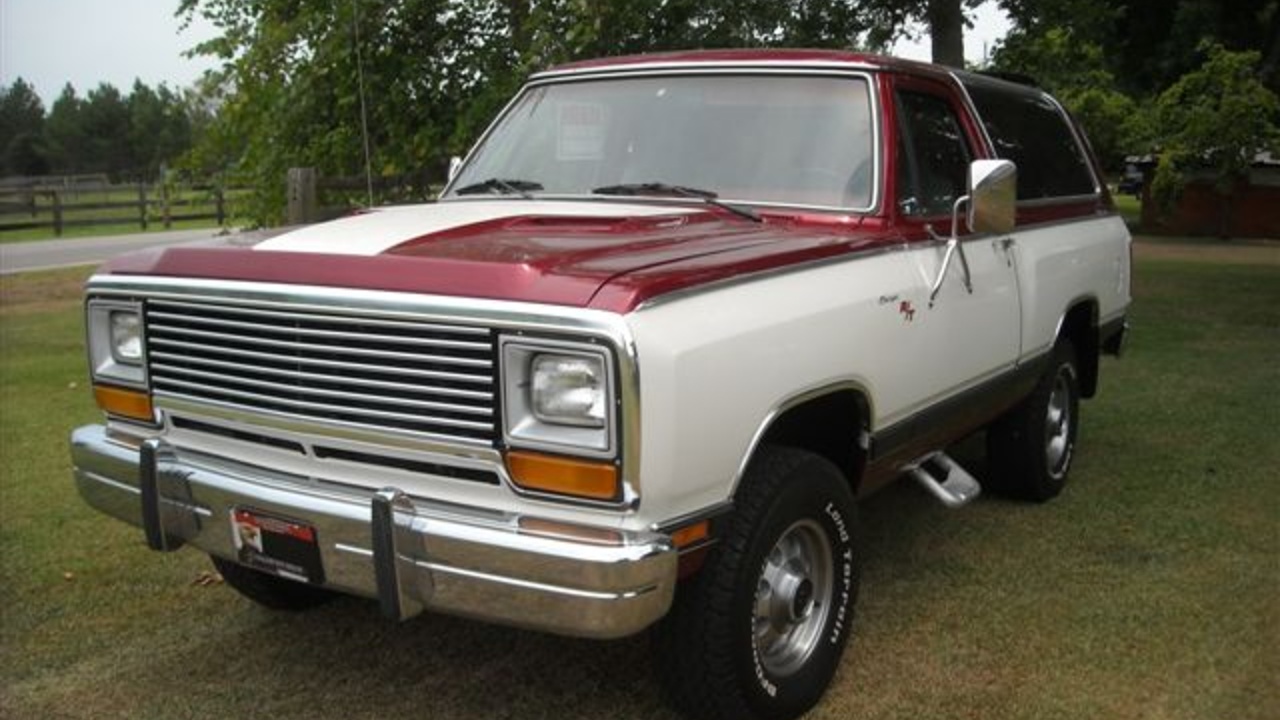
The Dodge Ramcharger SE 360 sits at the intersection of muscle-era bravado and early SUV practicality, pairing a big-block attitude with family-hauler utility. For collectors, understanding exactly when this V8 package was offered and what it is worth today is the key to separating a solid buy from an overhyped listing.
By tracing the Ramcharger’s production run, drilling into the years when the SE trim and 360 cubic inch V8 overlapped, and then comparing current asking prices and valuation guides, I can map out how this once-utilitarian truck has become a rising two-door SUV collectible.
How the Dodge Ramcharger evolved into a V8 SUV icon
The Dodge Ramcharger arrived as Chrysler Corporation’s answer to the full-size two-door SUV trend, built to compete directly with the Ford Bronco and Chevrolet Blazer. According to model histories, the Dodge Ramcharger was a product of Chrysler Corporation and slotted into the same family as the similar Plymouth Trailduster, with the basic formula of a short-wheelbase truck chassis, removable-style bodywork in early years, and serious off-road hardware. That combination made it a natural platform for larger-displacement engines, including the 360 cubic inch V8 that would later define many SE-badged trucks.
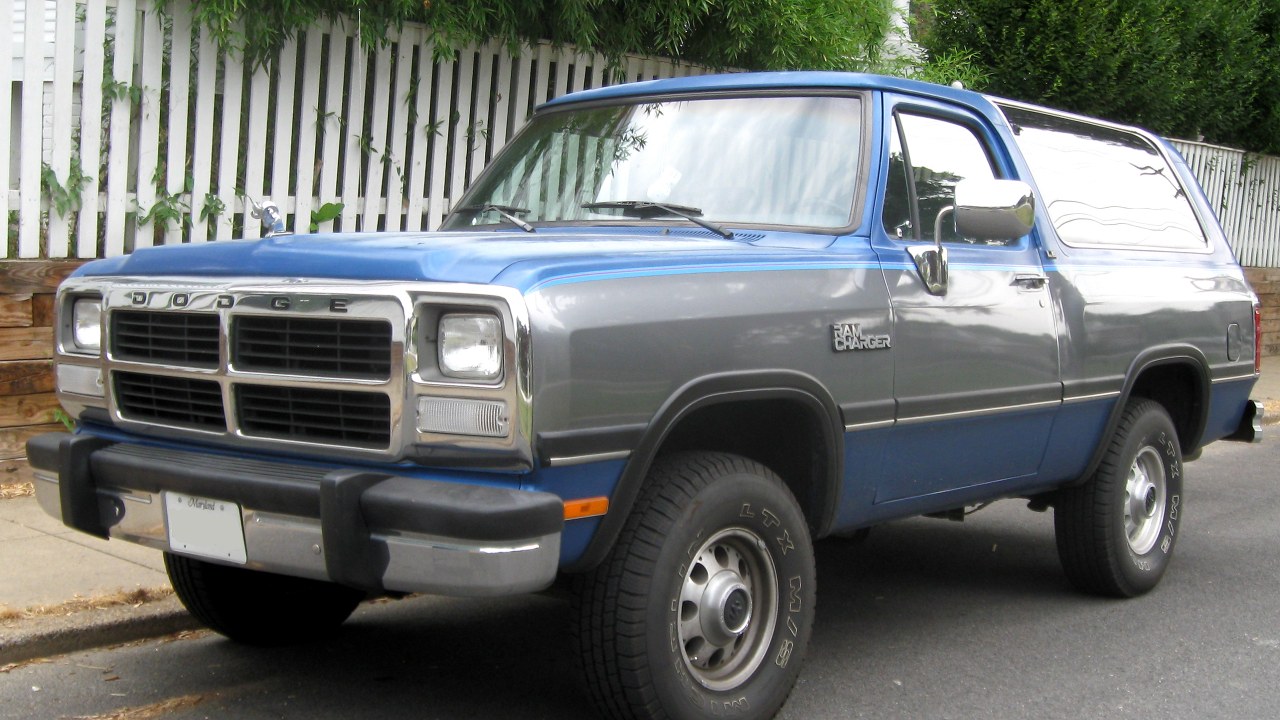
Production of the Ramcharger spanned multiple generations, with the first generation introduced for the 1974 model year and running through 1980, followed by a second generation that carried the nameplate into the early 1990s. Market data on early trucks notes that the first generation of Dodge Ramcharger covered model years 1974 to 1980, after which the second generation took over. Across these phases, the Ramcharger evolved from a somewhat spartan off-road rig into a more refined SUV, but the availability of a 360 V8, especially in SE trim, kept it anchored to its performance roots.
Pinpointing the SE 360 within the Ramcharger production years
To understand when the Ramcharger SE 360 was actually built, it helps to separate the broader Ramcharger timeline from the specific engine and trim combination. The overall production run for the Dodge Ramcharger stretches from the mid-1970s through the early 1990s, but the 360 cubic inch V8 and SE package did not appear uniformly across every year. Engine charts for related Dodge trucks show that from 1981 through 1987, all engines were updated to the “LA” series, and later the 360 replaced the earlier LA engine in the lineup, which frames the period when a 360-equipped Ramcharger SE would have been most common in the second generation. That detail is reflected in technical notes on the Dodge Ramcharger, which track the shift in engine families and confirm the 360’s role as a key V8 option.
On the first-generation side, contemporary coverage of collectible trucks confirms that the Ramcharger was already available with V8 power during its initial 1974 to 1980 run, and that higher-spec trims were part of the appeal. A detailed retrospective published on Sep 25, 2012 lists “The Info” for these early trucks, noting “Years produced1974-1980” and “Number produced109,073 (nearly 90 percent of which were 4x4s; about one-third that …),” which underscores how many early Ramchargers were built and how heavily they skewed toward four-wheel drive. That same piece on Years produced1974-1980 also highlights that many trucks have been modified over time, which complicates efforts to verify exactly how many of those first-generation examples left the factory as SE 360 models. What is clear from the combined engine and production data is that the SE 360 configuration is most strongly associated with late first-generation and especially second-generation Ramchargers, roughly from the late 1970s through the late 1980s.
How the Ramcharger SE 360 fit into Dodge’s broader truck lineup
The Ramcharger did not exist in a vacuum, and the SE 360 package made the most sense when viewed alongside Dodge’s full-size pickups. The SUV shared much of its hardware with the Ram pickup line, including engines and chassis components, which allowed Dodge to spread development costs and offer familiar powertrains across multiple body styles. Engine tables for the pickup range show how the company structured its offerings, listing “Engines” with columns for “Model years,” “Engine,” “Power,” and “Torque,” and including entries such as “Model years: 1981–1987” with an “Engine: 225” cubic inch six-cylinder. That same chart for the Engines family makes clear that the 360 V8 sat near the top of the hierarchy, giving Ramcharger buyers a performance-oriented alternative to the workhorse sixes and smaller V8s.
Within that context, the SE 360 Ramcharger effectively became the SUV counterpart to a well-optioned Ram pickup, aimed at buyers who wanted truck capability with enclosed cargo space and a more family-friendly cabin. The SE trim typically bundled cosmetic and comfort upgrades, while the 360 cubic inch V8 delivered the torque needed for towing and off-road use. Because the Ramcharger shared so much with the pickup line, including the 225 engine and other components documented in the Model and “Engine” listings, parts interchangeability remains a selling point for collectors today. That overlap also helps explain why SE 360 trucks can command a premium: they combine the most desirable SUV body with one of the most capable engines Dodge offered in its light-duty range.
Production numbers, rarity and what they mean for SE 360 values
Rarity is a major driver of collector interest, and the available production figures help frame how scarce SE 360 Ramchargers are likely to be. The first-generation Ramcharger alone accounted for “Number produced109,073 (nearly 90 percent of which were 4x4s; about one-third that …),” according to the Sep 25, 2012 breakdown of “The Info” and “Years” for these trucks. That same analysis of number produced 109,073 (nearly 90 percent also notes that many trucks have been modified, which means surviving examples that still carry their original SE trim and 360 engines are a subset of an already finite pool. With nearly 90 percent built as 4x4s, the odds are good that a genuine SE 360 will also be four-wheel drive, further aligning it with today’s appetite for capable vintage SUVs.
Second-generation production added more volume, but the SE 360 combination remained a relatively specialized configuration rather than a base model. Because precise factory counts for SE 360 trucks are not broken out in the available sources, I have to infer rarity from the intersection of overall Ramcharger production, the share of high-spec trims, and the survival rate of unmodified vehicles. Market watchers who track the first generation of Ramcharger as a distinct market segment treat well-preserved, V8-powered trucks as the top of the heap, which suggests that SE 360 examples, while not vanishingly rare, are scarce enough to justify a meaningful premium over lower-spec or heavily altered trucks.
Price trends: how Ramcharger values are moving in the collector market
Values for Ramchargers have been climbing as collectors rediscover two-door SUVs, and the SE 360 sits squarely in that upswing. A detailed market analysis from Jan 25, 2019 notes that “Interestingly, it’s the two bookends of the second-generation Ramcharger production that have the highest values,” pointing to early and late second-generation trucks as the most desirable. That same piece on Interestingly highlights that Ramcharger values were rising in step with other classic SUVs, and that the final year of production had become particularly sought after. For SE 360 buyers, that pattern suggests that trucks from the earliest and latest years when the 360 V8 was offered in SE trim may see the strongest appreciation, especially if they retain original equipment and present in high condition.
Valuation tools focused on specific model years reinforce the idea that well-kept SE trucks are now firmly collectible. A dedicated guide for the 1977 Dodge Ramcharger SE asks “How much is a 1977 Dodge Ramcharger SE worth?” and frames the discussion around condition-based pricing, while also encouraging owners to “Protect your 1977 Dodge Ramcharger from the unexpected.” That resource on and “Common Questions” about “How” to value a Dodge Ramcharger SE underscores that the market now treats these vehicles as worthy of formal appraisal rather than just used trucks. As more buyers chase a limited supply of original SE 360 examples, especially from key years, the upward pressure on prices is likely to continue, even if the pace of gains varies by condition and specification.
Real-world asking prices for Ramcharger SE 360s and comparable trucks
Current listings give a ground-level view of what sellers believe Ramchargers are worth, and they show a clear spread based on year, condition, and specification. On one major marketplace, a 1976 Dodge Ramcharger with “1,309 m” on the odometer and a 5.9L Cummings Diesel Engine is listed “For Auction,” with the truck located at “Carlisle Events” and the listing inviting shoppers to “Confirm Availability.” That snapshot of a 1976 Dodge Ramcharger with only “2,398 miles” away from a given ZIP code illustrates how low-mileage or heavily modified examples can command attention even when they are not SE 360s, setting a context for what a well-presented SE might bring.
Other platforms show more directly comparable SE and non-SE trucks with clear price tags. One listing hub highlights a “$19,500 Featured. 1983 Dodge Ramcharger SE Pros… La Vergne, TN,” alongside a “$25,000 Featured. 1988 Dodge Ramcharger. Lake Mary, FL,” and another “$13,995” example, all of which demonstrate the range of asking prices for driver-quality and lightly restored trucks. Those figures, presented in a grid of $19,500, “$25,000,” and “$13,995,” show that even non-show-condition Ramchargers can sit in the mid-five-figure bracket, particularly when they carry desirable trims like the Dodge Ramcharger SE Pros or come from attractive markets such as La Vergne or Lake Mary. For a genuine SE 360 in strong cosmetic and mechanical shape, it is reasonable to expect pricing at or above the top of that band, especially if documentation confirms original equipment.
Where collectors are finding Ramcharger SE 360s today
For buyers hunting a Ramcharger SE 360, the search typically starts online, where national marketplaces aggregate listings from dealers and private sellers. One of the broadest inventories of Ramchargers appears on a site that groups “Dodge Ramcharger Classic Cars for Sale,” showing multiple years with available inventory and filtering tools for distance, price, and condition. Browsing that catalog of Dodge Ramcharger offerings reveals everything from project-grade trucks to restored examples, and while not every listing is an SE 360, the volume of Ramchargers on the market helps buyers benchmark pricing and spot outliers.
Specialist and enthusiast-focused platforms add another layer, often surfacing rarer trims and better-documented trucks. Dedicated classic-car marketplaces that highlight “Dodge Ramcharger Classic Cars For Sale” and label certain listings as “Featured” tend to attract sellers who understand the value of options like the SE package and the 360 V8, which is why trucks such as the Dodge Ramcharger SE Pros in La Vergne and the Dodge Ramcharger in Lake Mary appear with detailed descriptions and firm pricing. At the same time, fan-driven resources that catalog the image and specifications of the Dodge Ramcharger, including its relationship to the Plymouth Trailduster, help buyers verify that a given truck’s badging and equipment match what the factory offered. In a market where many vehicles have been modified, that kind of cross-checking is essential for anyone paying a premium for an SE 360 badge.


Leave a Reply