
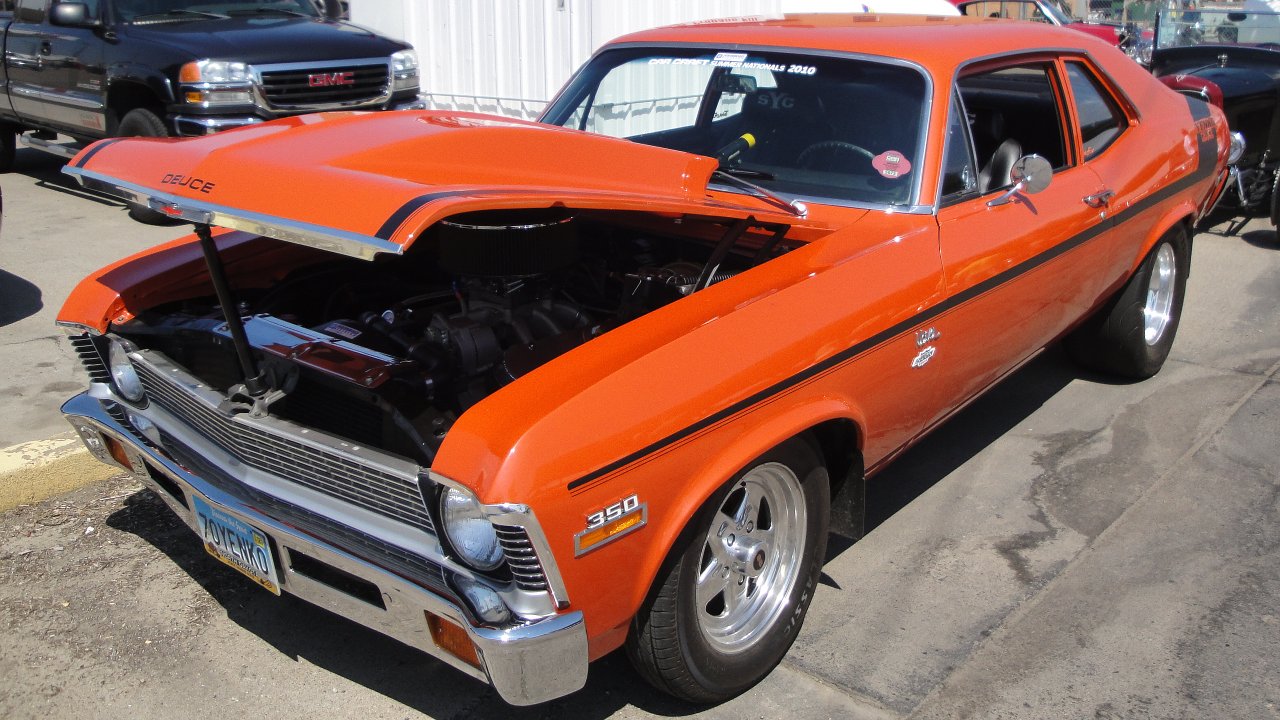
The Yenko-badged Nova 427 sits at the sharp edge of Chevrolet muscle history, a compact coupe that quietly carried one of the wildest big blocks of its era. Built in tiny numbers and traded today at eye-watering prices, it has shifted from underground legend to blue-chip collectible without losing its outlaw aura.
To understand when Chevrolet and Don Yenko turned the humble Nova into a 427-powered missile, and why surviving cars now command serious money, I need to trace how the program came together, how many were actually built, and what recent sales and valuation data say about the market today.
How the Yenko Nova 427 program came together
The Yenko Nova story starts with Chevrolet’s willingness in the late 1960s to let savvy dealers exploit the Central Office Production Order system, better known as COPO, to sneak race-ready hardware into street cars. Performance-focused dealers had already used COPO to put big blocks into the Camaro and Chevelle, and by the time Yenko Jr turned his attention to the compact Nova, the template was in place. The 396 COPO package was especially important because it brought stronger frames, upgraded brakes, and heavy-duty driveline parts that could handle serious power, a foundation later highlighted in coverage of the 396 COPO cars.
Into that chassis, Don Yenko’s operation installed the 427 cubic inch big block that had already made his Camaros famous, creating what enthusiasts now recognize as the Chevy Nova Yenko SC 427. A later discussion of a scale model described the full-size car as a 1969 Chevrolet Yenko Nova built by Don Yenko Ch, underscoring how the dealer’s name became inseparable from the car’s identity. The combination of a relatively light compact body, COPO-strengthened underpinnings, and a 427 that had already proven itself in other Chevrolet muscle platforms pushed the Nova far beyond what the factory officially advertised, which is why later analysis framed this configuration as a compact that “pushed the limits of legality, sanity, and street” performance in the late 1960s.
1969: the original Yenko Nova 427 run
By the time the program reached production, the 1969 model year had become the focal point for the most extreme version of the car. Reporting on the rarest Nova variants singles out the 1969 Chevy Nova Yenko SC 427 as one of the hardest to find, and notes that the 427 and 396 figures define how these cars are remembered. A later enthusiast post dated Jun 21, 2017, referring to a “’69 Chevy Yenko 427 Nova,” claimed that “ONLY 38 Yenko Nova’s were built in ’69” and that “69, 427, 38 Yen, 175 Yen, 70 m” are the key production metrics enthusiasts still repeat, even if those shorthand numbers compress a more complicated reality.
More formal documentation from a detailed listing of a 1969 Chevrolet Nova Yenko adds another layer, stating that “While Yenko Chevrolet converted at total of 37 427/SC Novas according to the Yenko Sportscar Club, just seven are known to exist” today. That same listing, which describes the car as a 1969 Chevrolet Nova Yenko with a manual transmission and coupe body style, underscores how tiny the original run really was. When I weigh the enthusiast claim of 38 cars against the Yenko Sportscar Club figure of 37, I see a narrow band of uncertainty, but either way the production volume sits in the high 30s, which is vanishingly small for a Chevrolet product of that era.
How 1970 and other Yenko-sourced Novas fit into the picture
Although the 1969 SC 427 cars are the headline, they did not exist in a vacuum. Enthusiast accounts that mention “175 Yenko Nova’s were built for the ’70 model y” and include the shorthand “175 Yen, 70 m” suggest that a much larger batch of Yenko-badged Novas followed for 1970, even if those later cars did not all share the same 427 specification. A feature on rare Nova variants reinforces that the Chevy Nova Yenko SC 427 sat at the top of a broader hierarchy of special Novas, many of which relied on the COPO structure to bring heavy-duty hardware into what started as a modest compact.
Separate reporting on a potential barn-find big-block Yenko-sourced Nova, framed under the title “Was A Potential Barn-Find Big-Block Yenko-Sourced Nova Found,” shows how the Yenko connection extended beyond the exact SC 427 formula. That story notes that in 1967, to the relief of Ralph Nader, Don Yenko was already experimenting with big-block swaps, and it suggests that depending on the engines used there may be “maybe 10 survivors” of certain big-block Nova configurations. When I put that in context with the 37 or 38 SC 427 cars and the claimed 175 Yenko Nova units for 1970, it becomes clear that the Yenko Nova universe includes several overlapping but distinct small production runs, all of which feed the car’s modern mystique.
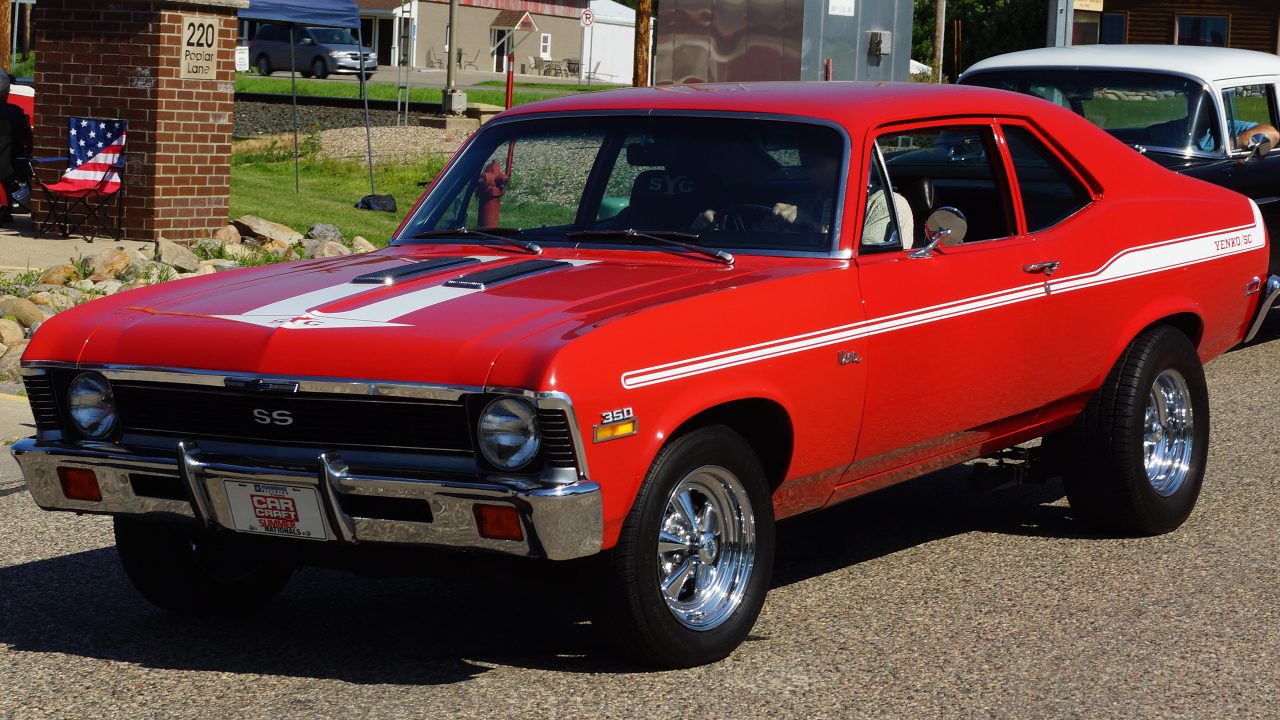
Why the Yenko Nova 427 is considered one of Chevrolet’s rarest muscle cars
Scarcity alone does not guarantee legend status, but in the case of the Yenko Nova 427, the numbers and the specification work together. A feature on rare Chevrolet muscle cars from the 1960s describes how, in the late 1960s, Chevrolet signed off on a compact that was “too extreme for roads,” and it singles out the 1969 Yenko Nova as a car that was both too wild and too coveted to fade away. That assessment lines up with the way modern hobbyists talk about the 1969 Chevrolet Yenko Nova in model-car circles, where a discussion dated Mar 19, 2025, calls it a performance legend despite its modest appearance and credits Don Yenko Ch with turning an ordinary Nova into something far more serious.
Within the Nova family itself, the Chevy Nova Yenko SC 427 is routinely grouped among the rarest variants, with the 427 and 396 figures serving as shorthand for the big-block hierarchy. The same analysis that highlights the 396 COPO package as the preferred starting point for serious builds also notes that the SC 427 cars came with the kind of heavy-duty frames and brakes that set them apart from regular production Novas. When I combine that mechanical distinction with the production figures from the Yenko Sportscar Club, which put total 427/SC Novas at 37 with only seven known survivors, it becomes easier to see why later commentators describe the 1969 Yenko Nova as the rarest Chevrolet muscle car of the 1960s and why collectors treat it as a once-in-a-generation opportunity when one surfaces.
What a Yenko Nova 427 sells for today
Rarity and reputation eventually show up in the market, and the Yenko Nova 427 is no exception. A detailed valuation snapshot for the 1969 Chevrolet Nova Yenko indicates that price guides now treat the car as a top-tier collectible, with condition-based values that reflect both its COPO underpinnings and its tiny production run. One recent analysis of 1960s muscle cars that “nearly broke the rules” notes that Hagerty sets the Concours condition value for this car at $470,000, with the important caveat that finding a seller is often harder than finding a buyer. That figure aligns with the way high-end insurers and valuation tools treat the Yenko Nova, placing it in the same financial conversation as the most desirable Camaros and Chevelles of the era.
Real-world transactions back up those guidebook numbers. The same 1969 Chevrolet Nova Yenko listing that cites the Yenko Sportscar Club’s total of 37 427/SC Novas and seven known survivors also notes that a comparable example recently came up for sale and brought $400K. That car was described as a Used 1969 Chevrolet Nova Yenko, with the entry clearly labeling its Price as Sold and its Type as Used, and specifying the Year as 1969. When I compare that $400K sale to the $470,000 Concours benchmark, the pattern is consistent: top examples trade in the high six figures, and even driver-quality cars, when they appear, sit far above the values of ordinary Novas from the same period.
How collectors and enthusiasts treat the Yenko Nova today
The combination of limited production, big-block performance, and six-figure valuations has reshaped how enthusiasts interact with the Yenko Nova. In online communities, posts that reference the “’69 Chevy Yenko 427 Nova” and repeat the “ONLY 38 Yenko Nova’s were built in ’69” line show how production myths and shorthand like “69, 427, 38 Yen, 175 Yen, 70 m” have become part of the car’s folklore. Model builders discussing a 1969 Chevrolet Yenko Nova kit treat it as a chance to recreate a piece of history that most will never see in person, echoing the Mar 19, 2025, description of the car as a modest-looking coupe that hides serious performance credentials.
On the collector side, the fact that a single 1969 Chevrolet Nova Yenko sale reached $400K, and that valuation tools peg Concours examples at $470,000, has effectively moved the car into investment territory. A feature that calls the 1969 Yenko Nova S one of the rarest Chevrolet muscle cars of the 1960s underscores that these cars are now too coveted to forget, and the same sentiment appears in coverage of potential barn-find big-block Yenko-sourced Novas, where the possibility of “maybe 10 survivors” for certain configurations fuels intense speculation. When I put all of this together, I see a car that started as a dealer-built experiment within Chevrolet’s COPO framework and has ended up as one of the most closely watched, tightly held muscle machines in the market, with prices and enthusiasm that show no sign of fading.

Leave a Reply