
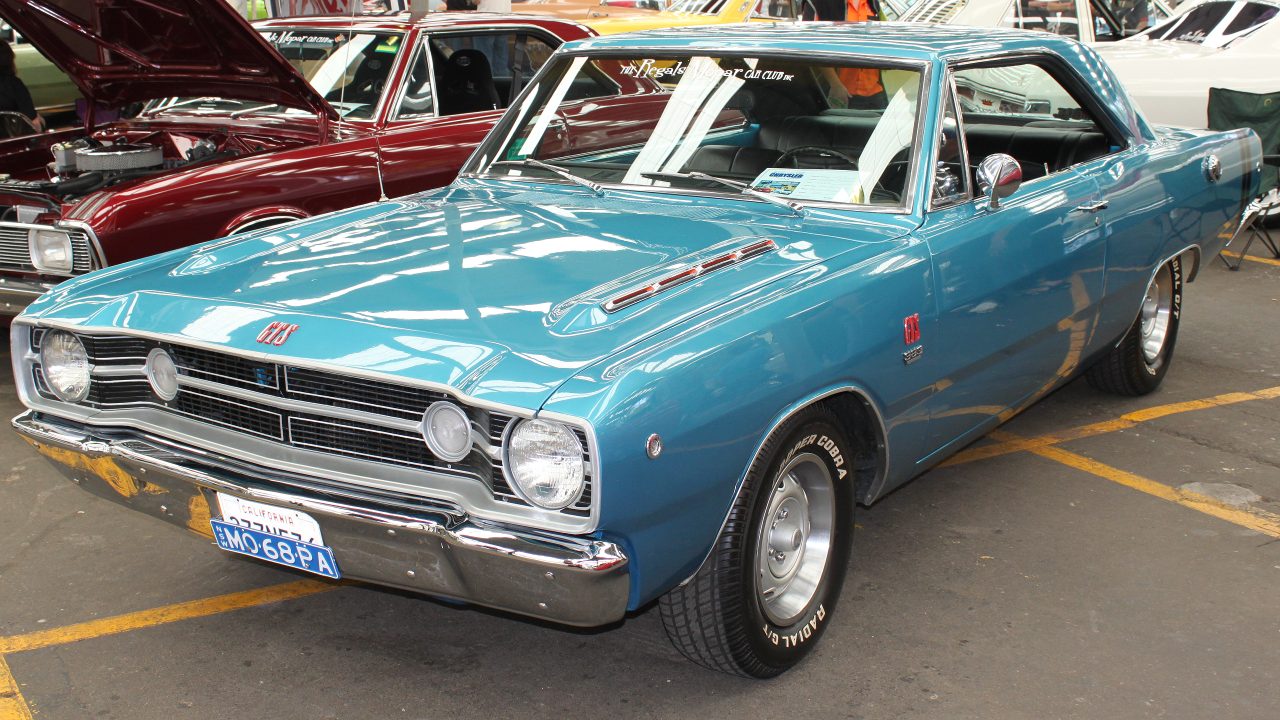
The 1968 Dart GTS is one of those rare cases where two engines with the same badge and body tell very different stories once you look under the hood. The 340 and 383 versions shared showroom space and styling cues, yet Chrysler tuned them for distinct missions that still shape how enthusiasts build and drive these cars today. By unpacking the factory specifications, internal hardware, and real-world behavior, I can trace how Mopar engineers tailored each package and why the smaller engine often punches above its weight.
Factory intent: why Chrysler built two very different GTS powerplants
On paper, the 1968 Dart GTS 340 and 383 look like simple choices between small-block and big-block power, but the factory tuning shows Chrysler was chasing two different buyers. The 340 package was engineered as a high-revving street and strip combination that could live with daily use, while the 383 GTS leaned toward big torque and image, even if that meant some compromises in the compact A-body chassis. Period documentation on the 1968 GTS options and engine codes confirms that both engines were marketed under the same performance umbrella, yet they carried distinct compression ratios, cam profiles, and exhaust layouts that reveal separate priorities for response versus brute force power.
When I compare the engineering choices, the 340 looks like a purpose-built performance small-block, while the 383 GTS appears more like a transplant of an existing big-block into a lighter shell. Factory literature lists the 340 with a high compression ratio and performance-oriented internals, while the 383 in the Dart used a milder tune than the same displacement in larger B-body cars, in part to manage heat and packaging in the smaller engine bay. That split in philosophy is the starting point for understanding why the 340 GTS often feels sharper and more balanced, even though the 383 carries the bigger displacement and headline horsepower.
Internal hardware: compression, camshaft, and breathing differences
The core of the 340’s character comes from its internal hardware, which Chrysler designed specifically as a performance small-block rather than a detuned passenger-car engine. Factory engine identification charts list the 1968 340 with a 10.5:1 compression ratio, forged pistons, and a relatively aggressive hydraulic camshaft, all feeding through high-flow cylinder heads and a four-barrel carburetor. That combination gave the 340 a strong midrange and a willingness to rev, traits that tuners still exploit with additional cam and carburetor upgrades that build on the solid factory foundation.
The 383 GTS, by contrast, shared its basic architecture with other B-series big-blocks but did not receive the same all-out performance tune as the 383 Magnum in larger cars. Documentation for the 1968 383 shows a lower compression ratio and a milder cam profile than the 340, along with more restrictive exhaust manifolds dictated by the tight A-body engine bay. The big-block still delivered strong torque, but its breathing limitations and conservative valve timing meant it did not scale linearly with displacement when compared to the smaller, sharper 340. For tuners, that means the 383 GTS often needs more extensive upgrades in headers, camshaft, and compression to unlock the same per-cubic-inch performance that the 340 approaches in near-stock form.
Induction, ignition, and exhaust: how factory tuning shaped drivability
Beyond the rotating assembly, the 340 and 383 GTS diverged in how they mixed air and fuel and how they lit the charge, which shows up in day-to-day drivability. The 340 left the factory with a performance four-barrel carburetor, matched intake manifold, and ignition curve that favored quick throttle response and higher rpm power, all calibrated around its 10.5:1 compression.In practice, that meant the small-block could tolerate more aggressive spark advance and tighter plug gaps, especially once owners stepped up to premium fuel and fine-tuned the distributor weights and vacuum canister.
The 383 GTS used a similar four-barrel layout but with a different intake and more conservative ignition timing to keep detonation in check in the smaller engine compartment. Factory charts show distinct distributor part numbers and advance curves for the 383 compared with the 340, reflecting the big-block’s lower rev ceiling and higher cylinder pressures at modest rpm. Exhaust routing also diverged: the 340 benefited from freer-flowing manifolds and less cramped routing, while the 383’s larger physical size forced tighter bends and more restrictive castings. For tuners, that means ignition and exhaust upgrades on the 383 GTS often deliver outsized gains, whereas the 340 responds more incrementally because it started from a more performance-focused baseline.
Chassis, gearing, and weight: how the engines feel in the Dart shell
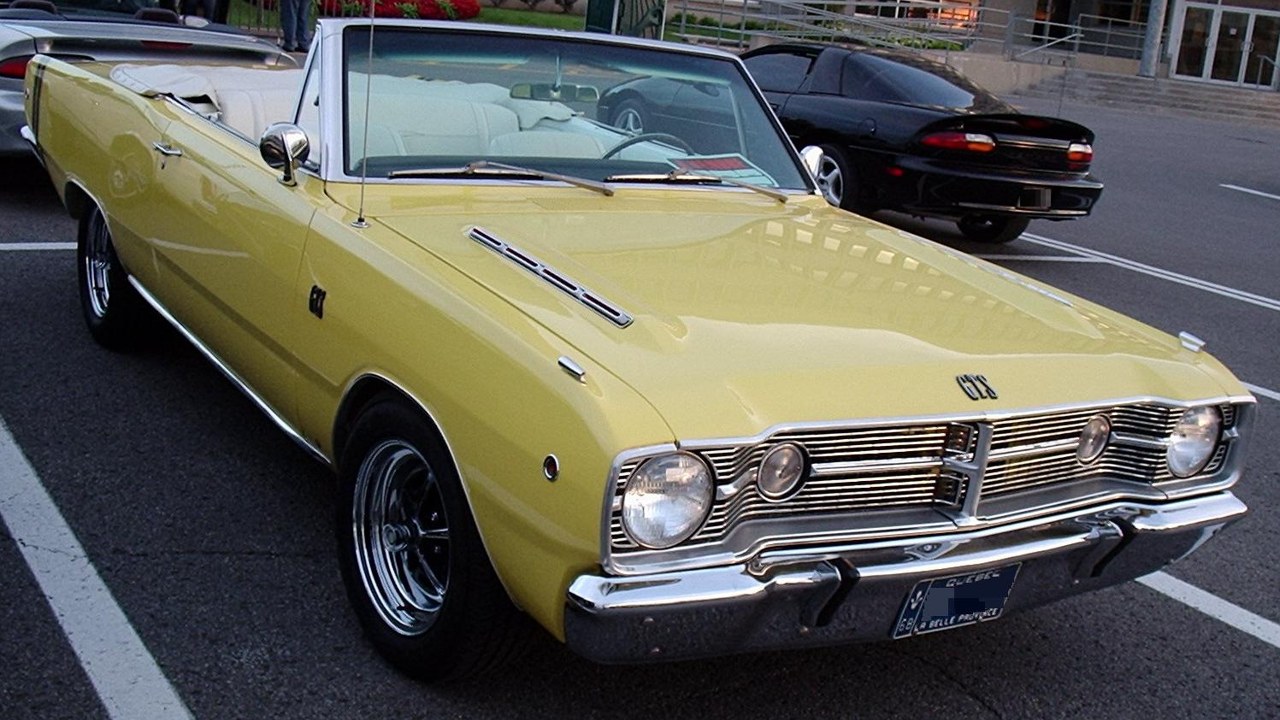
Engine tuning only tells part of the story, because the way the 340 and 383 interact with the Dart’s chassis and driveline is where the differences become obvious on the road. The 340 GTS carried less weight over the front axle, which helped the A-body suspension maintain better balance and steering feel, especially with the performance-oriented torsion bars and shocks listed in the 1968 option sheets. Factory axle ratio charts show that 340 cars were often paired with shorter rear gears, which amplified the small-block’s willingness to rev and made the car feel lively in street driving and at the drag strip.
The 383 GTS added significant mass to the nose, and that weight, combined with the big-block’s broader torque curve, changed how the car launched and turned. Documentation on 1968 Dart suspension and brake options indicates that Chrysler upgraded front components and offered heavier-duty pieces with the 383 package, but the basic A-body geometry still had to cope with a larger, hotter engine in a tight space. Rear axle ratios for 383 cars tended to be slightly taller, relying on torque rather than rpm to move the car, which made them strong in straight-line acceleration but less eager to spin to the same engine speeds as the 340. From a tuning perspective, I see the 340 GTS as the more agile and forgiving platform, while the 383 GTS rewards careful suspension and cooling upgrades to fully exploit its power.
Real-world tuning paths: how builders exploit each engine’s strengths
When I look at how modern builders approach these cars, the factory tuning differences still dictate the most effective modification paths. The 340’s high compression, strong rods, and good-flowing heads make it an ideal candidate for incremental upgrades like a hotter hydraulic cam, improved intake, and headers, all while retaining street manners. Period-correct performance manuals and later tuning guides consistently highlight the 340’s ability to handle increased rpm and cylinder pressure without major bottom-end changes, which aligns with the robust specifications recorded in the original engine charts.
The 383 GTS, by contrast, tends to benefit most from addressing the constraints Chrysler accepted to fit it into the A-body. Builders often start with better flowing exhaust manifolds or full headers, a more aggressive camshaft closer to the 383 Magnum profile used in larger cars, and attention to cooling system capacity to manage the extra heat in the compact bay. Factory documentation on radiator sizes, fan options, and shrouds for 383-equipped Darts underscores how close to the margin the original package could be in heavy use, which is why upgraded cores and improved airflow are common first steps. In the end, the 340 GTS rewards fine-tuning of an already sharp combination, while the 383 GTS responds best when I treat it as a strong but somewhat constrained big-block that needs breathing room and chassis support to show its full potential.





Leave a Reply