
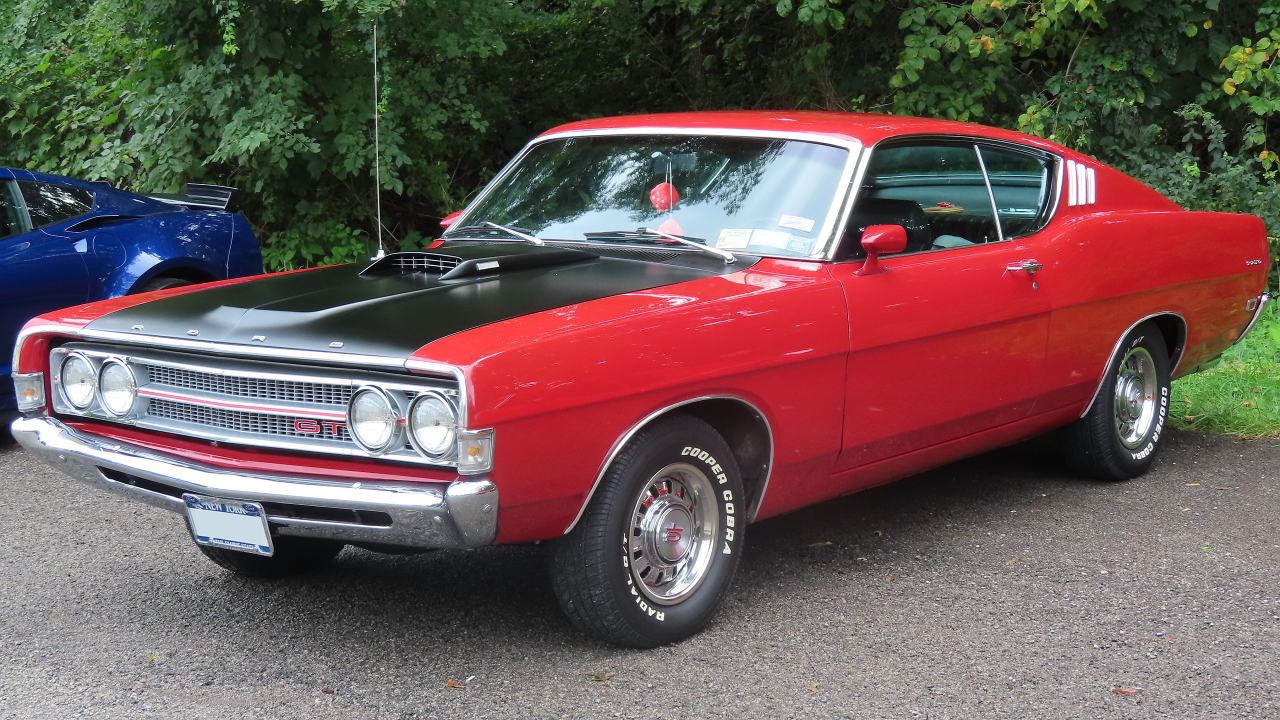
The 1968 Torino GT arrived at a turning point for Detroit, when muscle cars were expected to do more than run hard in a straight line. Ford’s mid‑size fastback had to carry big‑block power, meet tightening safety rules, and still feel composed on the kind of rough, real‑world roads buyers actually drove. To understand why this Torino still resonates with enthusiasts, I look past the paint and stripes to the chassis work that quietly pushed Ford’s intermediate platform forward.
Under its long hood and sweeping roofline, the Torino GT hid a mix of traditional body‑on‑frame thinking and incremental engineering upgrades that anticipated the handling demands of the 1970s. The frame, suspension geometry, and brake options show how Ford tried to balance cost, comfort, and control, using race‑inspired ideas in a package that still had to serve as a family car during the week.
Framing the Torino GT: body‑on‑frame fundamentals
The 1968 Torino GT sat on Ford’s intermediate body‑on‑frame architecture, a layout that separated the steel body from a full‑length ladder frame. I see that choice as central to the car’s character, because it gave the Torino the durability and isolation buyers expected from a mid‑size American car while still allowing engineers to tune the chassis for higher‑speed stability. The frame rails, crossmembers, and bolt‑on front substructure were designed to carry the weight of big‑block V8s without excessive flex, which helped the car track straight at highway speeds and under hard acceleration.
That traditional frame also shaped how the Torino responded to bumps and cornering loads. With the body mounted on rubber bushings, much of the road harshness was filtered before it reached the cabin, which made the GT feel more refined than some unibody rivals even when it shared similar suspension hardware. The trade‑off was weight and a slightly slower steering feel, but for a late‑1960s buyer who wanted a comfortable cruiser that could still handle a back‑road sprint, the compromise worked in the Torino’s favor.
Front suspension: control arms, geometry, and steering feel
Up front, the Torino GT relied on unequal‑length control arms with coil springs, a layout that was already familiar across Ford’s lineup but tuned here for a blend of ride and handling. I view this double‑wishbone style arrangement as the key to the car’s relatively confident turn‑in, because it allowed engineers to manage camber gain as the suspension compressed, keeping more of the tire’s contact patch on the pavement through a corner. Combined with a front anti‑roll bar, the setup limited body lean enough that the car felt composed without punishing occupants over broken pavement.
Steering hardware completed that picture. The Torino GT used a recirculating‑ball steering box rather than a rack‑and‑pinion unit, which meant a slower ratio and more turns lock‑to‑lock, but the system was robust and well suited to the car’s weight and intended use. With power assist, the wheel could be twirled easily in parking lots, yet on the highway the gearing and caster settings helped the car self‑center and track steadily. That combination of geometry and steering hardware gave the Torino a relaxed, confident feel that matched its long‑legged V8 performance.
Rear suspension and axle: leaf springs, traction, and ride
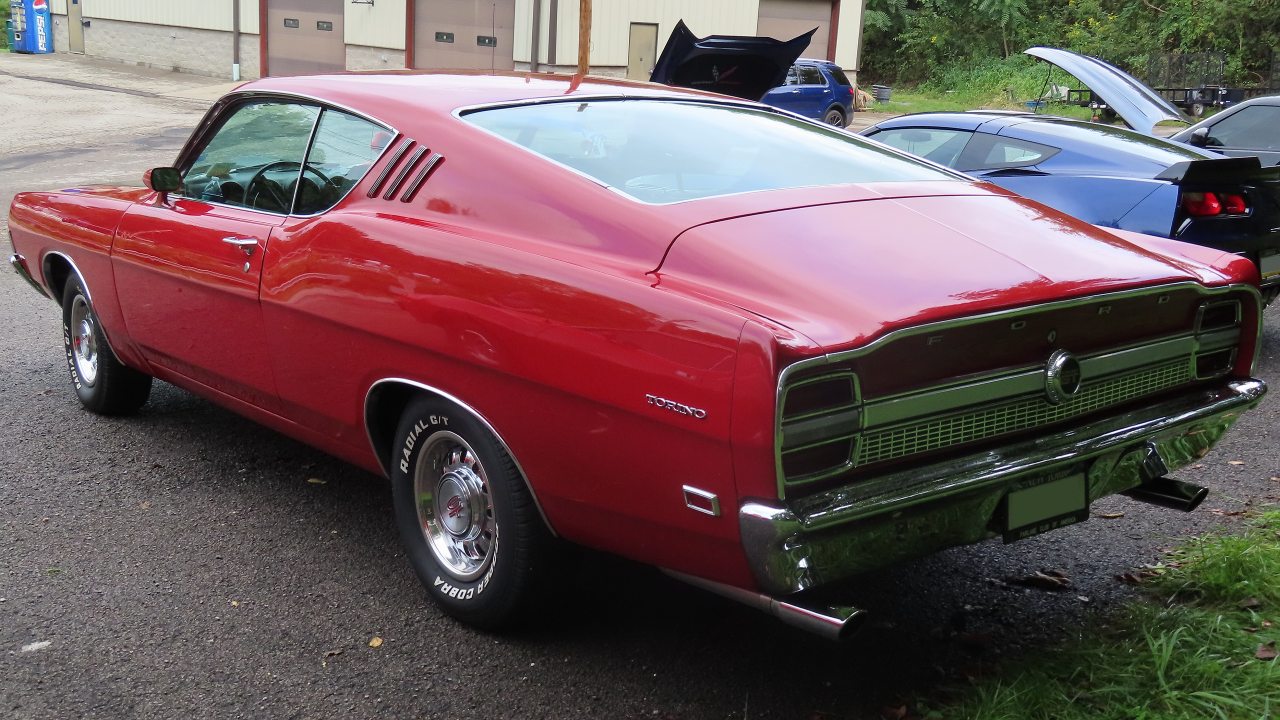
At the rear, the Torino GT used a solid axle located by leaf springs, a straightforward solution that prioritized strength and packaging. I see this as a classic muscle‑era compromise: the live axle could handle the torque of high‑output engines and wide tires, and it was relatively inexpensive to build and service, but it also meant that both rear wheels reacted together to bumps and cornering forces. On smooth pavement, the setup delivered predictable traction, especially in a straight line, which suited the car’s quarter‑mile ambitions.
Leaf‑spring tuning helped soften the rough edges of that design. By choosing specific spring rates and shock valving, Ford’s engineers gave the Torino GT a compliant ride that absorbed expansion joints and patched asphalt better than some stiffer, more overtly performance‑oriented rivals. The rear suspension’s behavior under load, particularly during acceleration, also contributed to the car’s stability, keeping the back of the car planted instead of hopping or stepping out abruptly when the driver leaned on the throttle.
Brakes, wheels, and the move toward real-world performance
Chassis progress on the 1968 Torino GT was not limited to springs and steering; it also showed up in the braking hardware and wheel choices that supported the car’s performance envelope. As power levels climbed, Ford increasingly paired its mid‑size GT with front disc brakes, which resisted fade better than drums during repeated stops and gave drivers more consistent pedal feel. I see that shift as a quiet but important acknowledgment that buyers were using these cars at higher speeds and expected them to slow with the same confidence they accelerated.
Wheel and tire packages reinforced that direction. Wider rims and performance‑oriented tires improved grip and shortened stopping distances, while also working with the suspension geometry to sharpen turn‑in and reduce understeer. Even within the constraints of period tire technology, those choices helped the Torino GT feel more secure in emergency maneuvers and more engaging on a winding road, signaling a gradual move away from purely straight‑line thinking toward a more rounded definition of performance.
Safety, stiffness, and the path to more advanced chassis design
The late 1960s brought new safety expectations, and the Torino GT’s chassis reflected that shift in subtle but meaningful ways. Frame design and body mounting were influenced by emerging crash‑protection thinking, with attention paid to how impact forces traveled through the structure and how much intrusion reached the passenger compartment. I read those choices as early steps toward the more sophisticated crumple‑zone and energy‑management strategies that would define the next decade, even if the Torino still relied on a fundamentally traditional ladder frame.
Structural stiffness also played a role in how the car felt from behind the wheel. A more rigid frame and carefully braced body helped the suspension do its job consistently, because geometry stayed closer to its intended alignment under load. That translated into fewer squeaks and rattles over time and a more precise sense of how the car would react when pushed, qualities that enthusiasts still notice when they compare a well‑kept Torino GT with some of its more loosely assembled contemporaries.
How the 1968 Torino GT set the stage for later Ford handling gains
Looking back, I see the 1968 Torino GT as a bridge between the soft, boulevard‑focused intermediates of the early 1960s and the more handling‑aware performance cars that followed. Its chassis did not rewrite the rulebook, but it integrated stronger frames, better suspension tuning, and improved braking into a cohesive package that could credibly serve as both family transport and weekend toy. That dual mission forced Ford to think harder about how weight distribution, geometry, and structural integrity worked together, lessons that would inform later platforms.
Those incremental advances matter because they shaped how drivers experienced power. A big‑block V8 is only as enjoyable as the chassis that supports it, and in the Torino GT, the underlying structure, suspension, and brakes worked together well enough that the car felt composed rather than overwhelmed. In that sense, the 1968 model’s advancing chassis work did more than keep up with its engine options; it quietly pointed Ford’s mid‑size performance cars toward a future where handling and control were as central to the story as raw horsepower.

Leave a Reply