
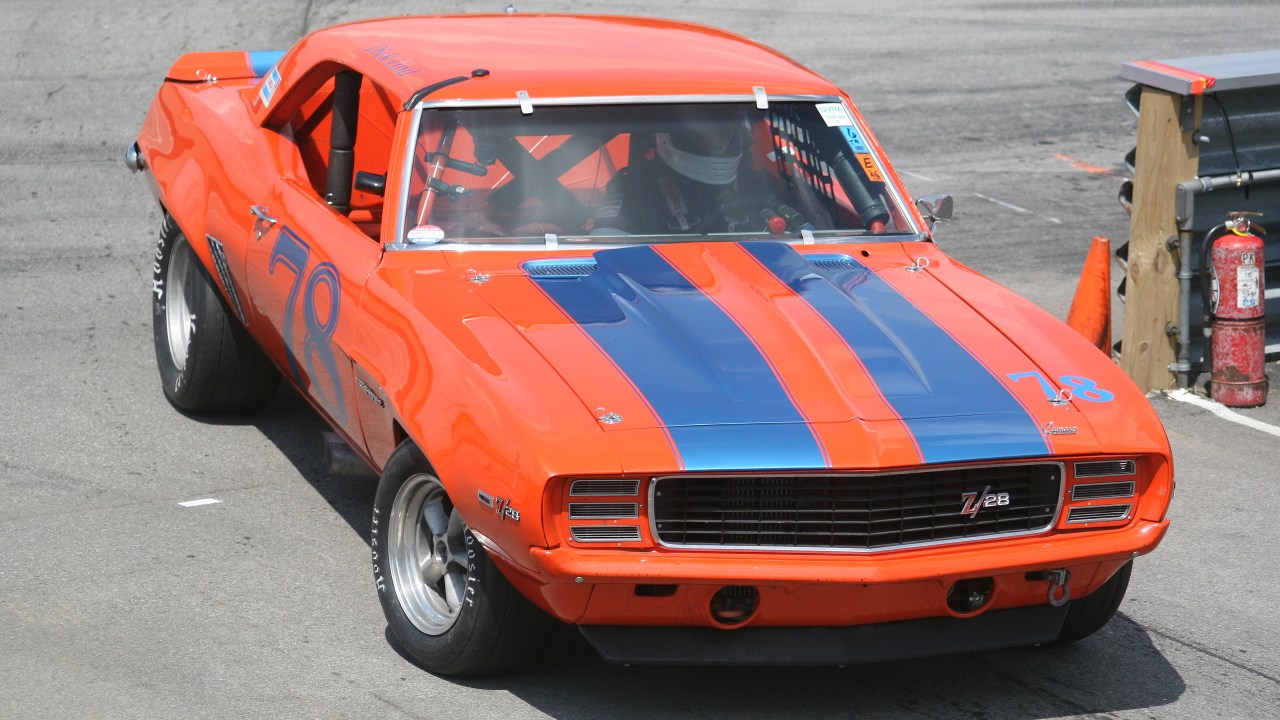
The 1969 Camaro Z/28 arrived at a moment when Chevrolet was no longer content to treat racing as a sideline, but as a proving ground that could shape every part of its performance image. I see that car not just as a desirable option package, but as the clearest point where Chevrolet’s Trans‑Am ambitions, small‑block engineering, and showroom strategy finally snapped into alignment. By tracing how the Z/28 evolved, it becomes clear how deeply racing began to inform the way Chevy built, marketed, and refined its muscle cars for the street.
What set the 1969 Z/28 apart was not a single headline feature, but the way its engine, chassis, and options were tuned to satisfy both sanctioning‑body rulebooks and demanding drivers. The car distilled lessons from the track into a production package that could be ordered from a dealer, driven to work, and still feel ready for a grid slot on the weekend. That dual identity is what marked a turning point in Chevrolet’s performance philosophy.
Homologation roots and the Trans‑Am rulebook
Chevrolet did not create the Z/28 in a vacuum. I see it as a direct response to the Sports Car Club of America’s Trans‑Am series, which required manufacturers to sell road‑going versions of their race cars in order to compete. The 302 cubic inch small‑block that defined the Z/28 was sized to slip under the series’ 5.0‑liter displacement cap, a clear sign that the engine’s dimensions were dictated by the rulebook rather than by marketing whim. That decision tied the Camaro’s identity to a specific racing class, turning the showroom model into a homologation tool for Chevrolet’s factory‑backed teams.
By 1969, this approach had matured into a cohesive package that went far beyond simply dropping a race‑inspired engine into a street shell. The Z/28 combined its high‑revving 302 with close‑ratio gearing, heavy‑duty suspension pieces, and power‑assisted front disc brakes that mirrored the priorities of Trans‑Am competition. I read that combination as Chevrolet’s acknowledgment that race credibility depended on more than straight‑line speed, and that the company was willing to engineer a street car around the demands of road‑course racing rather than dragstrip bragging rights.
The 302 small‑block as a racing laboratory
The 302 itself became a rolling laboratory for Chevrolet’s small‑block development. Instead of chasing displacement, engineers focused on airflow, valvetrain stability, and durability at sustained high rpm, all traits that mattered in a 200‑mile Trans‑Am event. The solid‑lifter camshaft, high compression ratio, and free‑breathing cylinder heads gave the engine a personality that felt more like a race motor detuned for the street than a typical production V8 warmed over with bolt‑ons. I see that as a deliberate choice to prioritize track‑style performance characteristics, even if it meant a peaky powerband that casual drivers might find demanding.
Those engineering priorities paid off in the way the Z/28 delivered its performance. The 302 rewarded drivers who were willing to keep the tachometer needle high, where the engine’s breathing and valvetrain design could shine. That behavior mirrored what Chevrolet’s race teams needed from their engines, and it created a feedback loop where track experience informed production tuning, and customer use in turn validated the hardware under real‑world abuse. In my view, the 1969 Z/28 stands as one of the clearest examples of Chevrolet using a showroom engine program to refine its broader small‑block architecture for sustained competition.
Chassis tuning that favored corners over quarter‑miles
Where many muscle cars of the era were optimized for straight‑line acceleration, the 1969 Z/28’s chassis tuning signaled a different set of priorities. I see the firm spring rates, quick steering, and standard front disc brakes as evidence that Chevrolet was thinking in terms of lap times and cornering stability rather than just elapsed times at the drag strip. The suspension calibration, especially when combined with performance‑oriented tires, gave the car a level of agility that aligned more closely with Trans‑Am road courses than with boulevard cruising.
That focus on handling also reshaped how the Camaro fit into Chevrolet’s broader performance lineup. By positioning the Z/28 as the road‑race specialist, Chevrolet could let big‑block SS models carry the torch for raw torque and straight‑line punch. I read that division of roles as a strategic evolution, one that allowed the brand to cover multiple performance niches without diluting the identity of each variant. The Z/28’s chassis setup, with its emphasis on balance and braking, effectively made it the factory‑endorsed choice for drivers who valued apex speed over tire smoke.
Styling, options, and the showroom‑to‑track pipeline
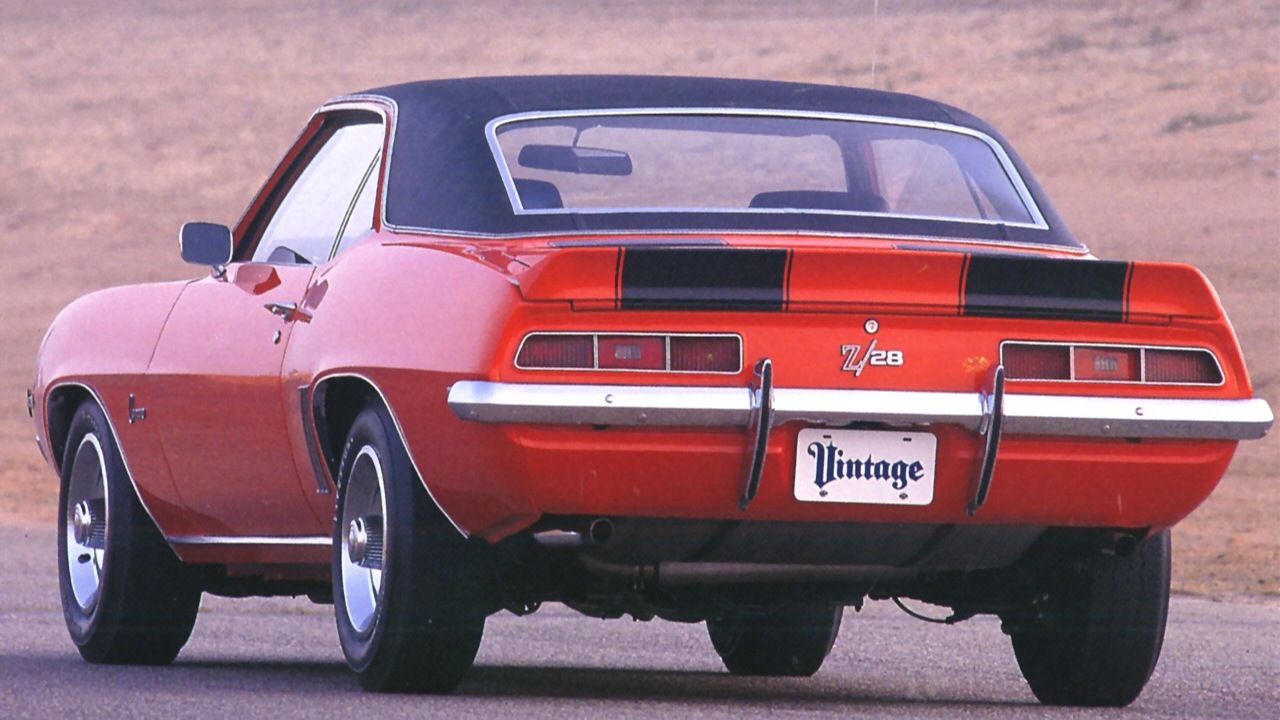
The 1969 model year also sharpened the Z/28’s visual and functional identity. The revised bodywork, with its more aggressive front fascia and available cowl‑induction hood, gave the car a look that matched its competition intent. I see the bold stripes and subtle badging as part of a calculated effort to signal performance without resorting to the overt cues associated with drag‑focused packages. Those styling choices helped the Z/28 stand out in dealer showrooms as the Camaro that was built with road racing in mind.
Options played a crucial role in bridging the gap between street and track. Buyers could equip their Z/28s with features that mirrored race‑car hardware, from heavy‑duty cooling components to specific axle ratios that favored acceleration out of corners. That menu of choices effectively turned the order form into a tuning sheet, allowing customers to tailor their cars toward weekend competition or spirited daily driving. In my view, this flexibility was a key part of Chevrolet’s evolving racing strategy, because it encouraged privateer participation while still keeping the core package accessible to a broader audience.
Legacy and how the 1969 Z/28 reshaped Chevy performance
Looking back, I see the 1969 Camaro Z/28 as the moment when Chevrolet fully embraced the idea that racing could define a model’s character rather than simply decorate its marketing. The car’s homologation roots, its high‑strung 302, and its corner‑focused chassis all pointed toward a future where track development and showroom offerings were tightly linked. That philosophy would echo through later performance programs, from subsequent Camaro generations to other small‑block‑powered Chevrolets that borrowed lessons first proven in Trans‑Am competition.
The Z/28’s influence also extended to how enthusiasts and the company itself thought about performance hierarchies. Instead of treating the biggest engine as the automatic top dog, Chevrolet used the 1969 Z/28 to argue that sophistication, balance, and race‑bred engineering could be just as compelling as raw displacement. I view that shift as a defining step in the brand’s racing evolution, one that helped cement the Camaro’s reputation as more than a straight‑line muscle car and set the template for how Chevrolet would integrate motorsport into its identity for decades to come.

Leave a Reply