
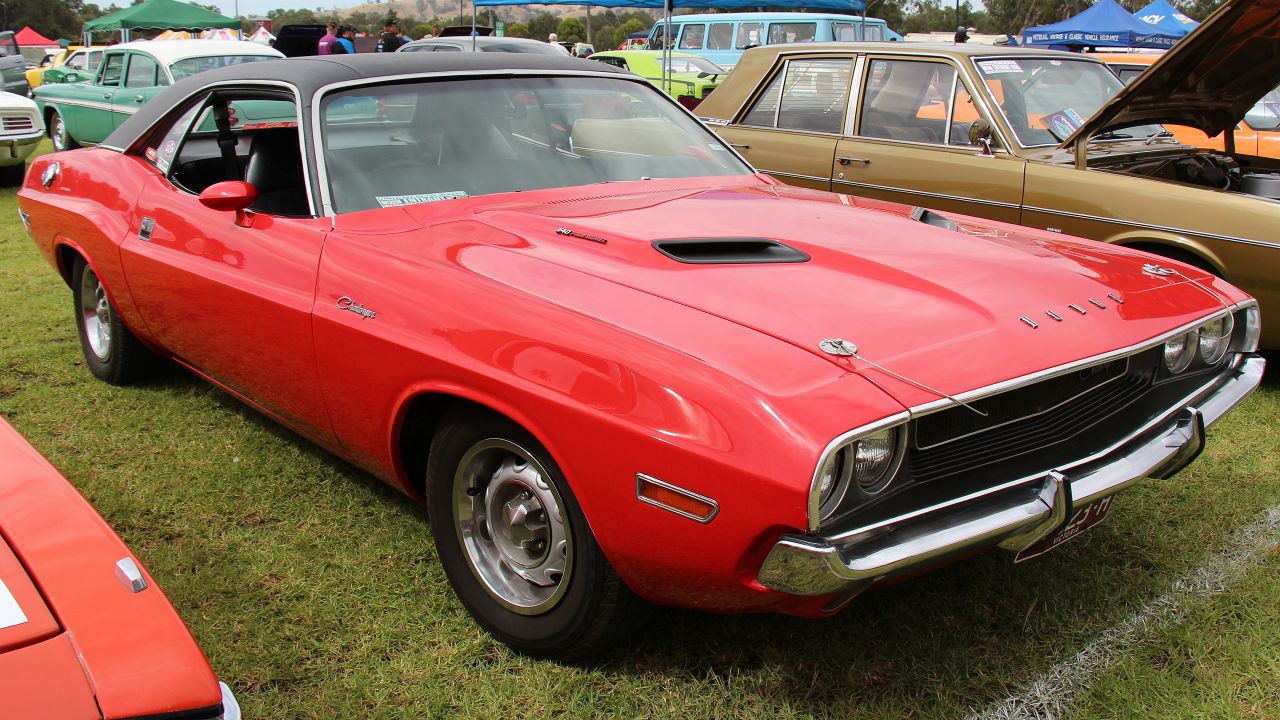
The Dodge Challenger T/A occupies a rare space in muscle car history, born from factory racing ambitions and revived decades later as a modern homage. To understand when Dodge released the Challenger T/A Special Edition, and what collectors are paying today, I need to trace its roots from the original 1970 homologation car to the twenty‑first century revivals and the current market.
That story starts with the first‑generation Challenger, built in limited numbers for Trans‑Am competition, then jumps forward to carefully branded modern T/A packages that trade on that heritage. Along the way, auction data and recent sales show how values for both classic and late‑model T/As are behaving in a market that is rethinking V8 performance cars.
The 1970 Challenger T/A, born from Trans‑Am racing
The Challenger T/A Special Edition began life as a purpose‑built answer to road‑race rivals in the Trans‑American Sedan Championship, and Dodge needed a street car to homologate the package. The first‑generation Challengers arrived for the 1970 model year, and within that lineup Dodge created a special model that was only available that year, built around a small‑block performance engine and track‑inspired hardware. That one‑year run is the core of what collectors now mean when they talk about the original Challenger T/A Special Edition.
Under the hood, the street‑legal T/A used a 340 cubic inch V8 with a triple‑carburetor setup often described as a “Six Pack,” a configuration that period coverage notes as central to the car’s identity and that later reporting still highlights with the figure 340. Contemporary sources on the 1970 Challenger platform emphasize that this T/A was part of a broader first‑generation run of 165,437 cars, but the T/A itself represented only a small fraction of that total, which helps explain its scarcity today.
How the original T/A Special Edition was positioned
From the start, Dodge treated the T/A as a halo variant rather than just another trim line, and that positioning is crucial to understanding its later collectability. Period pricing referenced in modern retrospectives puts the 1970 T/A at a starting figure of about four thousand dollars, a premium over more basic Challengers that bought buyers the race‑bred engine, side‑exit exhaust and aggressive graphics that set it apart on the street. A detailed “Then and Now” comparison of the Dodge Challenger T/A, published on Mar 29, 2017, underscores how that original car was marketed as a direct link to the Trans‑Am program rather than a mere appearance package.
That same comparison notes that the 1970 T/A’s limited production and single‑year availability quickly turned it into a sought‑after classic once the muscle car era faded. Within the broader first‑generation lineup, which included variants like the 1970 Dodge Challenger Convertible, the T/A stood out as the Special model that most directly translated racing tech to the street. That combination of scarcity, motorsport pedigree and distinctive specification is exactly what modern collectors still look for when they chase surviving T/As.
Modern revivals: from nostalgia play to full T/A lineup
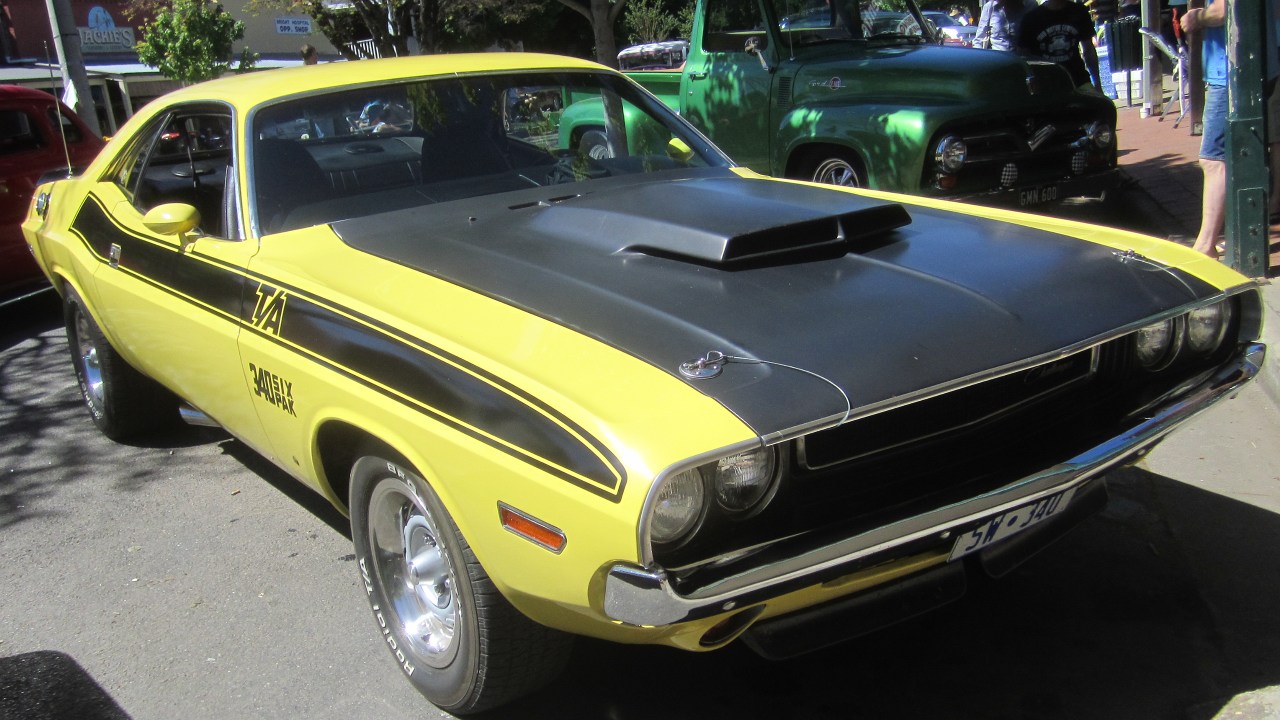
Decades after the original run ended, Dodge revived the Challenger nameplate and eventually the T/A branding, turning nostalgia into a full product strategy. A detailed look at the “Then and Now” story of the Dodge Challenger T/A, dated Mar 29, 2017, notes that the brand brought back the T/A designation for modern Challengers as a way to connect contemporary buyers with that 1970 heritage. These modern T/As use current Hemi V8s and updated chassis technology, but they lean heavily on retro striping, hood treatments and badging that echo the original Special Edition.
Dealers quickly embraced the revival, with outlets such as University Dodge highlighting the 2017 Dodge Challenger T/A as a fierce and fun model that channels a “very desirable classic muscle car.” That same dealer material reminds buyers that the special model was originally created for Trans‑Am racing, explicitly tying the modern car’s appeal to the 1970 homologation story. In practice, the twenty‑first century T/A lineup has included both standard V8 cars and higher‑output versions, giving Dodge a way to sell heritage at multiple price points.
Key modern T/A milestones: 2017, 2019, 2020 and 2021
Within the modern era, several specific T/A releases stand out as milestones that shaped how the badge is perceived today. The 2017 relaunch framed the T/A as a heritage‑rich option on the contemporary Challenger, and by Oct 28, 2019, Dodge was explicitly positioning the 2019 Challenger T/A as an homage to the iconic 1970s Trans‑American muscle car. That factory description emphasizes exclusive design and performance cues, along with modern driver‑assistance and performance‑monitoring systems, which shows how Dodge blended retro branding with current technology.
Video walk‑throughs of later models reinforce that evolution. A detailed look at the 2020 Dodge Challenger T/A, posted on Aug 31, 2019, explains how the T/A Package adds more heritage flavor to R/T and R/T Scat Pack models with both visual and performance enhancements. A later review of a 2021 T/A in the Gold Rush color, uploaded on Mar 22, 2021, highlights the “beautiful rumble” of a 6.4 liter Hemi V8 and notes options like a power sunroof, underscoring how the T/A badge has become shorthand for a well‑equipped, high‑output Challenger rather than a bare‑bones homologation special. Together, these releases show Dodge steadily expanding the T/A concept from a single Special Edition into a recurring, multi‑year package.
Collector values for the 1970 Challenger T/A today
On the collector side, the original 1970 Challenger T/A has matured into a serious asset, with pricing that reflects its one‑year status and racing roots. Market trackers that focus on the first‑generation Dodge Challenger T/A, covering the 1970 to 1970 production window, compile auction and private‑sale data to answer questions such as “What was the most expensive Dodge Challenger T/A – 1st Gen ever sold?” and how many 1st Gen T/As were produced. While the exact peak sale figure and production count are not detailed in the summaries available here, the very existence of a dedicated 1st Gen T/A market page signals that this is a tracked and actively traded segment rather than a niche curiosity.
Insurance and valuation tools add more texture. A valuation entry for the 1970 Dodge Challenger T/A lists Past sales that include a Sold price of $82,480 for a 1970 Dodge Challenger R/T SE with 13000 M, described as Standard and located in North America, recorded on Nov 9, 2025 on Bring a Trailer. Another entry on the same page notes a transaction at $28,620, illustrating how condition, specification and provenance can swing values widely. Even though the R/T SE is not the T/A itself, its pricing helps frame the broader first‑generation Challenger market in which genuine T/As typically sit at or above the upper end of comparable cars, especially when they feature rare color combinations like the Sep 27, 2025 auction preview of a 1970 car in a super rare scheme.
How modern T/As and late V8 Challengers are performing
Modern Challenger T/As do not yet command the same premiums as the 1970 originals, but recent sales and broader V8 Challenger data suggest they are already behaving like future collectibles. A detailed report on whether 2020s V8 Chargers and Challengers will become collectible, dated Feb 17, 2025, cites market analyst Hewitt and notes that, According to that analysis, the average change in value of a V8 Challenger between Jan 2022 and Jan 2023 was 8 percent. The same piece points out that some Hellcat models effectively appreciated the moment they were parked when new, which hints at how limited‑run or heritage‑branded trims like the T/A could follow a similar path as production of V8 muscle cars winds down.
A more granular example comes from a story dated Aug 28, 2025, in which a buyer picked up a 2023 Dodge Challenger T/A 392 for $69,530, drove it 2,500 Miles, then Sells for $51,500. The story frames the owner as reasonably happy with the deal, but the roughly eighteen‑thousand‑dollar drop in a short period shows that late‑model T/As are still depreciating like normal new cars, even when they carry the 392 badge and limited‑run branding. For collectors, that gap between current used prices and the long‑term trajectory of the 1970 Special Edition suggests an opportunity: the heritage is real, the badge is established, and the market has not yet fully priced in the end of the V8 Challenger era.



Leave a Reply