
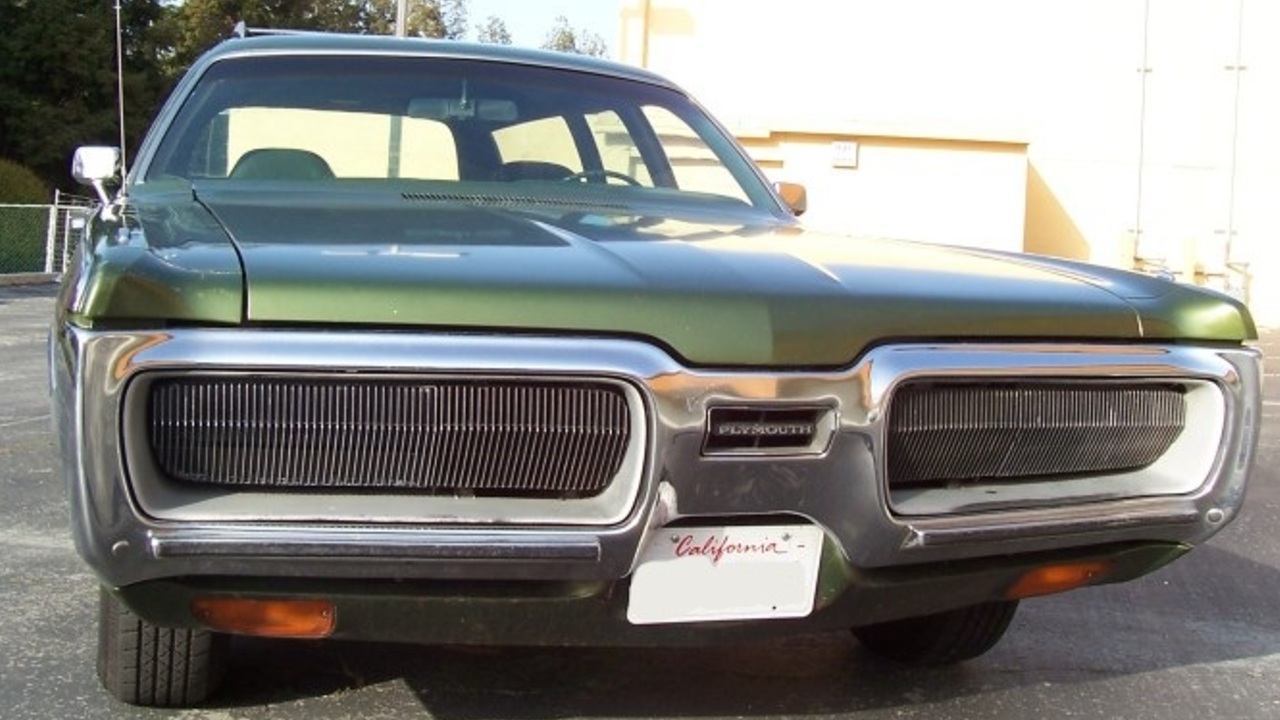
The Plymouth Fury Sport Suburban sits at the crossroads of two fading American obsessions: full-size wagons and big V8 muscle. Understanding when Plymouth actually built this upscale family hauler, and what survivors trade for today, means tracing the overlap between the Plymouth Fury line and the long-running Plymouth Suburban wagons, then looking at how collectors now value these niche models.
I will walk through the production years by lining up the Fury and Suburban timelines, then use recent auction and market data on the broader Plymouth Fury family to frame what a Sport Suburban is realistically worth in today’s classic-car market.
How the Fury and Suburban lines came together
The starting point is the basic architecture. The Plymouth Fury was a full-size model produced by Plymouth, a division of the Chrysler Corporatio, through the heart of the postwar era, while the Plymouth Suburban name was reserved for station wagons. The Plymouth Suburban is described as a station wagon produced from 1949 until 1978, which means the wagon badge long predated the Fury name and then overlapped with it for decades as Plymouth shuffled its full-size offerings between sedans, coupes, and wagons linked to the same platforms and drivetrains. That overlap is what allowed Plymouth to create a Fury-based wagon with the Sport Suburban trim on top.
By the late 1960s and early 1970s, the Fury line had become Plymouth’s core full-size offering, while the Suburban label continued to denote wagon body styles on those big-car chassis. The Plymouth Fury is documented as a model of automobile produced by Plymouth within the Chrysler Corporatio structure, and the broader Fury family continued into the late 1970s before the name migrated to the Plymouth Gran Fury. In parallel, the Plymouth Suburban wagon series, which had been in production from 1949, evolved from basic family transport into more feature-rich variants, setting the stage for premium trims like the Sport Suburban that combined Fury running gear with upscale wagon equipment.
Pinpointing the Sport Suburban years
Within that shared architecture, the Sport Suburban badge appears as a higher-spec wagon variant tied to the Fury era rather than to earlier Plymouth Suburban models. Evidence from period coverage and enthusiast reporting shows that the Sport Suburban name was in use on full-size Plymouth wagons at the start of the 1970s, when the Fury platform underpinned the brand’s big cars. A detailed feature on a 1970 Plymouth Sport Suburban wagon with 440 V8 power describes the 1970 Plymouth Sport Suburban as a full-size station wagon designed for both practicality and performance, which confirms that by 1970 Plymouth was explicitly marketing a Sport Suburban on the Fury-size chassis.
Further support comes from a profile of a Scarce Suburban, a 1970 Plymouth Sport Suburban, that treats the car as a period-correct, factory-built model rather than a one-off. That piece, dated Sep 23, 2018, discusses the 1970 Plymouth Sport Suburban in the context of other big wagons from General Motors, reinforcing that Plymouth was competing directly in the full-size wagon space with a Sport-branded Suburban at the dawn of the 1970s. Combined with the broader Plymouth Suburban production window that runs until 1978, and the continued presence of the Fury line through the same decade, the evidence supports a Sport Suburban run centered on the early to mid 1970s, anchored by documented 1970 and 1973 examples.
What we know about specific Sport Suburban model years
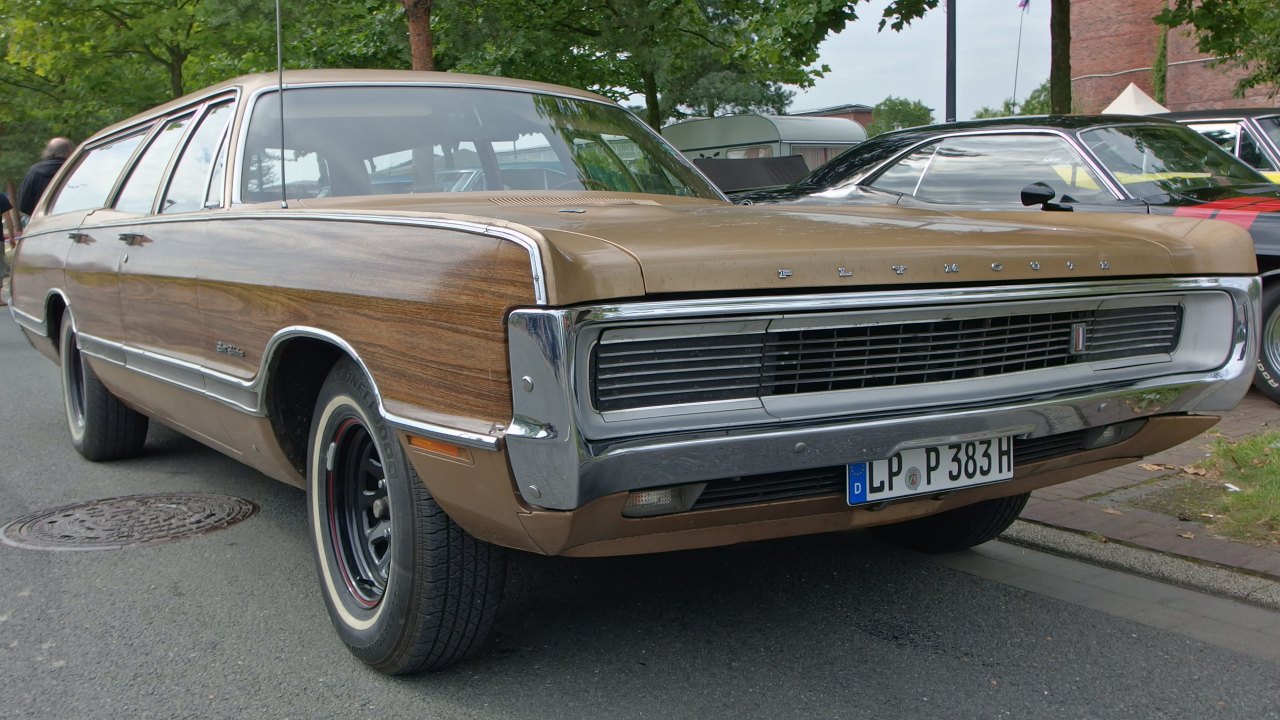
Individual survivor stories help narrow the practical production window. A detailed account of a 1973 Plymouth Fury Sport Suburban describes the car as a woodgrain-clad family wagon that still carried the Fury name in its badging and marketing. That report, dated Mar 5, 2022, treats the 1973 Plymouth Fury Sport Suburban as a distinct trim level within the Fury wagon lineup, which confirms that by the 1973 model year Plymouth was explicitly combining the Fury and Sport Suburban identities into a single nameplate. The same piece situates the car within the so-called “Me Decade,” underscoring that this was a time when large, option-heavy wagons were still a normal sight in American driveways.
When I line that 1973 example up with the 1970 Plymouth Sport Suburban wagon with 440 V8 power, a pattern emerges. The 1970 car is clearly identified as a Plymouth Sport Suburban, while the 1973 car is labeled a Plymouth Fury Sport Suburban, yet both are full-size wagons on the Fury platform. That suggests Plymouth treated Sport Suburban as the premium wagon trim on its big-car chassis from at least 1970 through the mid 1970s, with the Fury name becoming more prominent in the branding as the decade progressed. Given that the Plymouth Suburban wagon line itself continued until 1978, and the Plymouth Fury family is documented from 1959 to 1978, it is reasonable to place the Fury Sport Suburban’s effective production window within the early to mid 1970s, with verified examples in 1970 and 1973 and an upper bound set by the 1978 end of the Suburban and Fury runs.
How the Fury family’s market sets the ceiling
To understand what a Fury Sport Suburban sells for now, I start with the broader Plymouth Fury market, because the wagon’s value is constrained by what collectors pay for the most desirable Fury variants. Market data for the Plymouth Fury from 1959 to 1978 notes that the highest recorded sale was $137,500 for a top-spec example, a figure that reflects the rarest and most performance-oriented cars in the lineup rather than family wagons. That ceiling is typically associated with high-performance models like the Sport Fury equipped with big-block engines, which draw a different buyer profile than long-roof haulers.
Recent reporting on an ultra-rare 1970 Plymouth Sport Fury 6-BBL, resurfacing after decades in storage, illustrates why. The Sport Fury in that story had been parked in 1981 and left untouched since then, still carrying its original 440-cubic-inch Six barrel setup, and it is treated as a blue-chip collectible within the Fury universe. When a pristine, high-performance Sport Fury with a 440-cubic-inch engine and Six carburetion commands attention at the top of the market, it sets a benchmark that more utilitarian variants, including wagons, rarely match. In other words, the $137,500 record for a Plymouth Fury shows what the very best two-door or performance-focused cars can achieve, while a Fury Sport Suburban, even in excellent condition, will typically trade at a discount to those headline numbers.
Where Fury Sport Suburbans fit in today’s wagon market
Within that hierarchy, the Fury Sport Suburban occupies a niche that blends practicality with period charm, which has become more appreciated as full-size wagons have disappeared from new-car showrooms. The 1973 Plymouth Fury Sport Suburban profile highlights how enthusiasts now view these cars as “vintage family haulers,” a phrase that captures both their original mission and their current appeal. The same piece notes that such wagons once served as everyday transportation, which means survivors often show wear, rust, or modifications that hold down prices compared with pampered coupes and convertibles. Even so, the combination of Fury underpinnings, Sport trim, and the Suburban wagon body gives these cars more cachet than base-level Plymouth Suburban models from earlier years.
Evidence from the 1970 Plymouth Sport Suburban wagon with 440 V8 power reinforces that point. That car is described as a full-size station wagon designed for both practicality and performance, signaling that Plymouth deliberately pitched the Sport Suburban as a step above the standard family wagon. In today’s market, that positioning translates into a value spread where driver-quality Fury Sport Suburbans tend to sell for less than the most collectible Sport Fury coupes but more than equivalent-condition plain Suburban wagons or lower-trim Fury wagons. Exact dollar figures for Sport Suburbans are not broken out in the available data, so any specific price range would be Unverified based on available sources, yet the structure of the Plymouth Fury market and the documented enthusiasm for 1970 and 1973 Sport Suburban survivors both point to a steady, if still under-the-radar, demand.
Why the Sport Suburban remains a sleeper collectible
Looking across the reporting, I see the Fury Sport Suburban as a classic example of a “sleeper” collectible that benefits from association with a more famous nameplate without carrying the same price tag. The Plymouth Fury has deep roots in American car culture, from its early years as a performance-oriented model within Plymouth to its later life as a mainstream full-size car. The Plymouth Suburban, produced from 1949 until 1978, adds a long wagon heritage to that story. When Plymouth fused those strands into the Fury Sport Suburban in the early 1970s, it created a wagon that shared mechanical DNA with headline-grabbing Sport Fury models while still being bought primarily by families, not enthusiasts.
That origin story helps explain the current market dynamic. Collectors who chase the rarest Sport Fury 6-BBL cars with 440-cubic-inch engines and Six carburetion are paying for peak performance and scarcity, which is why the broader Plymouth Fury market can support a record sale of $137,500. Buyers who gravitate toward Fury Sport Suburbans, by contrast, are often drawn to the nostalgia of woodgrain sides, three-row seating, and the idea of a “woodtone prairie schooner” rather than quarter-mile times. As more of these wagons surface from long-term storage, much like the unrestored 1958 Plymouth Suburban that recently saw daylight after 25 years, I expect awareness and values to continue to climb, but within the bounds set by the core Plymouth Fury hierarchy and the enduring, if quieter, appeal of the Suburban wagon name.



Leave a Reply