
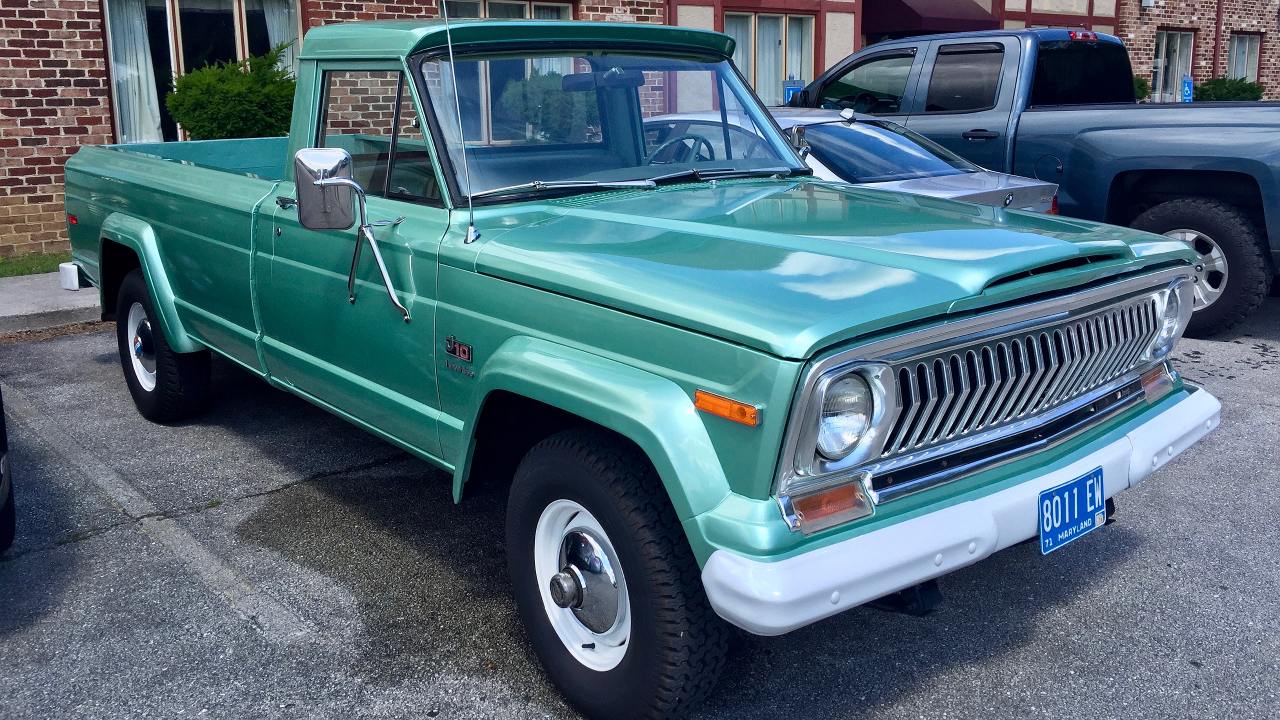
The Jeep J10 Honcho package sits in a small but loud corner of pickup history, a short‑bed bruiser that blended factory graphics with real off‑road hardware. Collectors now treat these trucks as precursors to modern lifestyle pickups, and values have climbed enough that even casual fans are asking which years matter and what a clean example should cost.
To answer that, I need to pin down the Honcho’s production window, separate the J10 versions from other trims, and then look at real‑world pricing data from valuation guides and high‑end builds. Only then does the market picture for the Jeep J10 Honcho, from driver‑grade rigs to six‑figure restorations, start to come into focus.
When Jeep built the J10 Honcho package
The Honcho name was not a standalone model, it was a trim package layered onto the existing Jeep J‑Series pickup, and the J10 Honcho was the short‑wheelbase star of that lineup. According to a detailed production overview for the Jeep Honcho, the Manufacturer is listed as Jeep with Production running from 1976 to 1983, which sets a clear seven‑year window for the factory package. That same range is echoed in enthusiast material that describes the Honcho as a trim on the Jeep Series pickups, again tying the name to the late‑1970s and early‑1980s J‑trucks rather than to earlier Gladiator‑era rigs.
Jeep’s own historical timeline for its 1970s trucks reinforces that framing by treating Honcho as a special version of the J‑10, not a separate platform. In the official history of the 1974‑1987 JEEP J‑10 PICKUP, the brand notes that in 1976 the popular HONCHO MEANS BOSS package arrived on the short‑bed pickup and that Later offerings were called J‑10 (119-inch) or J‑20 (131-inch), with the Honcho package eventually replaced in 1983. That corporate summary lines up with the 1976–1983 Production dates from the Jeep Honcho table and confirms that when people talk about a “real” J10 Honcho, they are talking about trucks built within that specific span.
How the Honcho fit into the J‑Series family
Within the broader J‑Series, the Honcho package was aimed squarely at buyers who wanted a factory‑tough look and off‑road capability without building a custom truck from scratch. Jeep’s own history notes that the J‑10 rode on a 119-inch wheelbase while the heavier duty J‑20 stretched to 131-inch, and the Honcho package was tied to that shorter J‑10 configuration, which gave it more agile proportions on trails. Period advertising and later write‑ups describe the Honcho as a trim that layered bold striping, flares and off‑road‑oriented equipment onto the existing J‑10 PICKUP, which is why the official timeline spells out that HONCHO MEANS BOSS as part of the 1970s marketing push for the J‑10.
Modern coverage of surviving trucks underscores how that positioning still shapes the way collectors see these rigs. A feature on a surviving J10 Honcho, published on Mar 5, 2024, frames the truck as a Rare, rugged Jeep that served as a precursor to the modern Gladiator, highlighting how few factory pickups Jeep built and how the Honcho package appealed to both work‑truck owners and off‑road aficionados. That same piece points out that Jeep does not make a lot of pickup trucks, which helps explain why a relatively low‑volume trim like the Honcho has taken on outsized importance in the brand’s back catalog and why the J10 Honcho is often treated as a spiritual ancestor to today’s lifestyle‑oriented midsize pickups.
Key J10 Honcho years and configurations
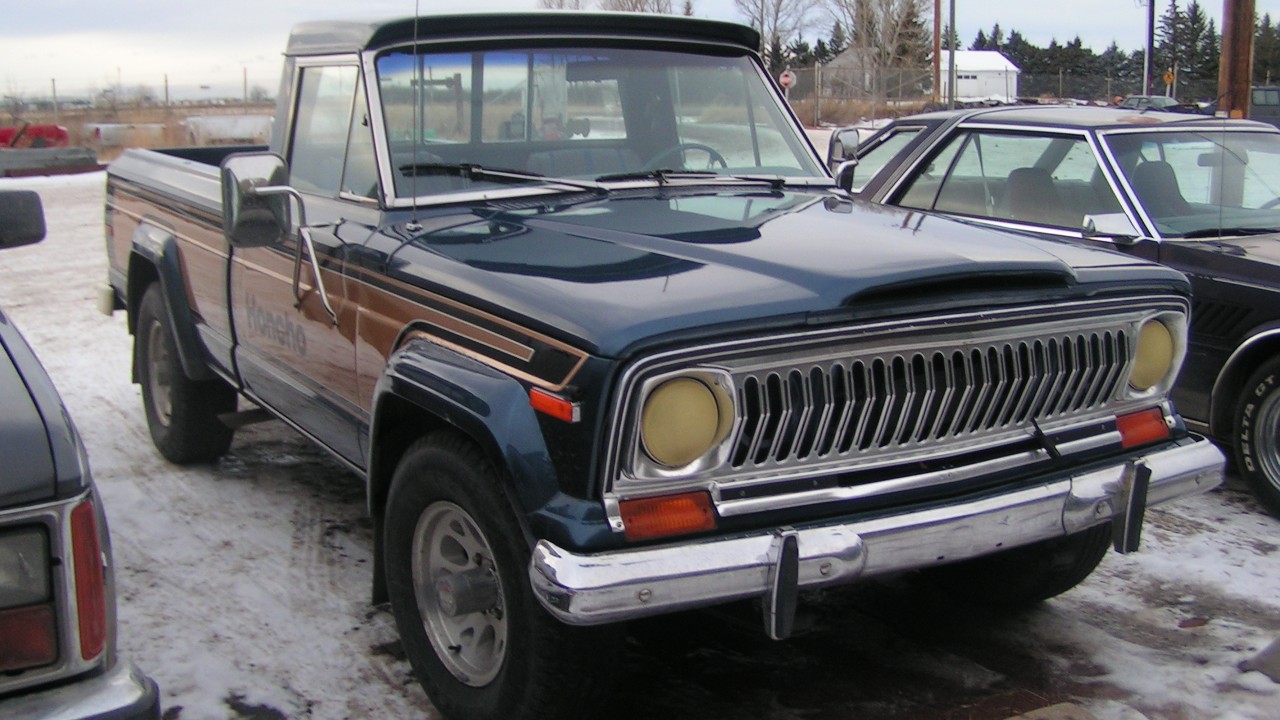
Although the Honcho package ran from 1976 through 1983, not every year carries the same weight in the market, and the body style matters. Valuation data for a 1978 Jeep J‑10 Honcho shows that configuration listed as a 2dr Townside Short Bed Pickup 4×4, which confirms that by the late 1970s the package was firmly associated with short‑bed four‑wheel‑drive trucks. That same entry pegs the representative value at $20,000 with a forecast adjustment of 6.5%, giving a snapshot of how a late‑1970s Townside Short Bed Pickup Honcho is treated by the collector market today.
By the early 1980s, Jeep was also selling the Honcho as a Sportside Pickup, a step‑side style that now commands a premium. A valuation listing for a 1981 Jeep J‑10 Honcho describes it as a 2dr Sportside Pickup 4×4 with a 6‑cyl. 258cid/115hp 2bbl engine and assigns it a representative value of $20,200 with a 6.5% forecast adjustment, essentially in line with the 1978 Townside truck despite the different bed style. That parity in guide values suggests that, on paper, the market does not dramatically favor one bed over the other, even though individual buyers may chase Sportside examples more aggressively because of their rarity and visual punch.
What J10 Honchos are worth today
Guidebooks and auction data now put a solid J10 Honcho squarely in the mid‑five‑figure conversation, with condition and originality doing most of the work. The 1978 Jeep J‑10 Honcho Townside Short Bed Pickup valuation at $20,000 with a 6.5% forecast and the 1981 Sportside Pickup figure of $20,200 with the same 6.5% forecast show that mainstream collector pricing for these trucks clusters around the low‑$20,000 mark for representative examples. Those numbers reflect typical trucks rather than outliers, and they give buyers a baseline for what a presentable, driver‑grade Honcho should cost before any rare options or concours‑level restorations enter the picture.
At the very top of the market, however, bespoke builds and fully restored examples have pushed values into a different stratosphere. A high‑end restomod listing for a Jeep J‑10 Honcho 1981 Sportside cites an Asking price $145,000 for a truck that has been Sold multiple times, describing it as a rare Honcho Sportside and noting that it is number three in a five‑series production of J‑10 Honch builds. That $145,000 figure is not representative of the average Honcho, but it does show what happens when a low‑production package, a desirable Sportside bed and a modernized restoration converge in a single truck. For buyers, the gap between roughly $20,000 in guide value and a six‑figure Asking price illustrates how sharply the market splits between honest survivors and custom or concours‑level builds.
How rarity and nostalgia shape demand
Part of the Honcho’s appeal today comes from the fact that it was never a mass‑market work truck, even when new. The Jeep Honcho production summary notes a total production run of 1,264 trucks, a tiny figure by pickup standards and one that helps explain why surviving examples draw attention at shows and online. A social media post from Jan 9, 2023, highlighting a 1982 Jeep J10 Honcho as a special edition of the Jeep Series pickup, leans into that scarcity by presenting the truck as a standout within the broader J‑Series family, and the enthusiastic response from fans shows how much nostalgia has built up around these short‑bed rigs.
That nostalgia is amplified by the way modern enthusiasts connect the Honcho to current Jeep products. The Mar 5, 2024 feature that calls a surviving J10 Honcho a Rare, rugged Jeep and a precursor to the Gladiator effectively positions the package as an early template for today’s lifestyle pickups, which blend daily usability with trail‑ready hardware. When I look at current valuations, from the roughly $20,000 guide figures for 1978 and 1981 trucks to the $145,000 Asking price on a high‑end Honcho Sportside, it is clear that buyers are not just paying for sheet metal. They are paying for a short, finite Production run, the cachet of a factory package that HONCHO MEANS BOSS, and a direct line from the J‑10 PICKUP era to the modern Jeep pickup sitting in showrooms now.


Leave a Reply