
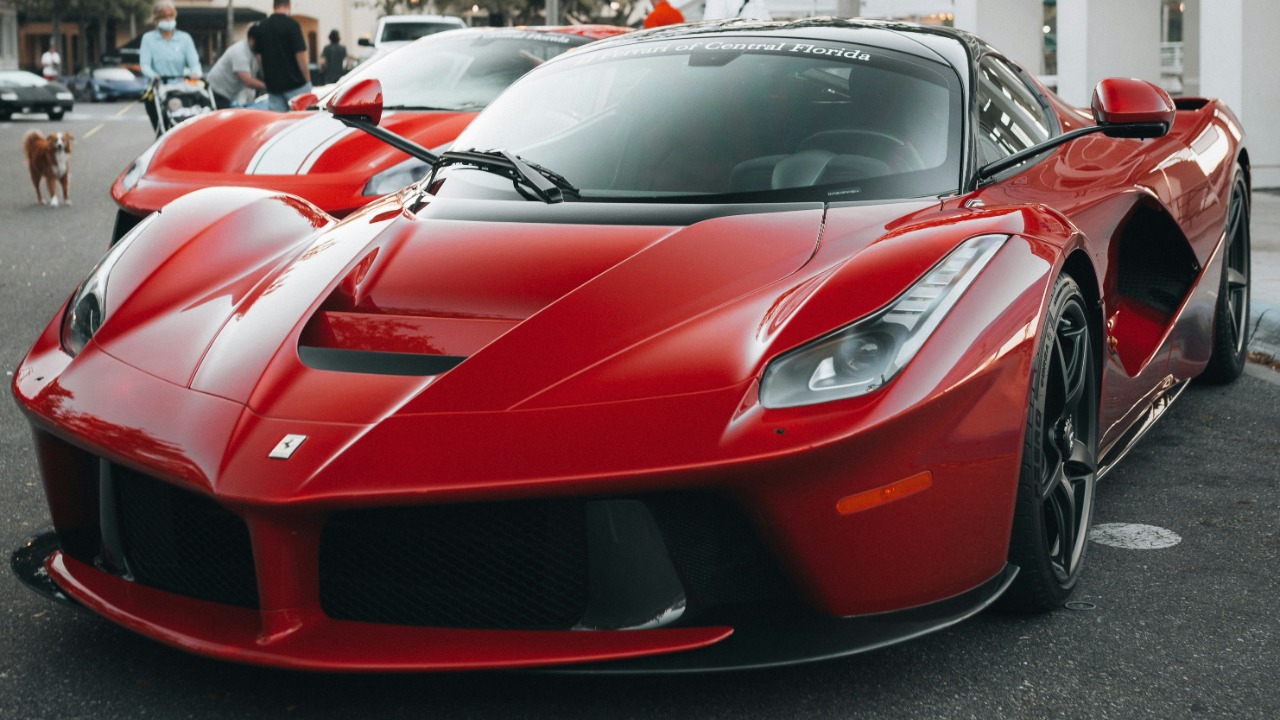
The Ferrari 458 arrived at a turning point for supercars, just as electronics, aerodynamics and emissions rules were reshaping what a mid‑engined V8 could be. More than a decade later, it still feels like the moment when all those forces clicked into a single, coherent idea. I see it less as a nostalgic favorite and more as a benchmark, a car that dialed every variable in so precisely that newer machines still struggle to feel as complete.
That sense of completeness is not about raw numbers, it is about how the 458 stitches together engine, steering, gearbox and chassis into one seamless experience. From the standard Italia to the hardcore Speciale, the car balances old‑school drama with modern control in a way that still defines what a road‑going Ferrari should feel like.
The last naturally aspirated statement
At the heart of the 458’s enduring appeal is its engine, a naturally aspirated V8 that revs with a clarity and urgency turbocharged successors cannot quite replicate. I find that matters more with each passing generation, because the soundtrack and throttle response shape every interaction you have with the car. When a source describes “The Ferrari 458 Speciale Was The Last Naturally” aspirated V8 of its kind, it underlines why this powertrain has become a line in the sand for enthusiasts who value response over sheer torque.
That same perspective frames the 458 as a kind of farewell tour for a certain type of Ferrari road car, one where the engine’s character dominates the experience rather than the software that manages it. The way the 458 builds power, the way it encourages you to chase the redline, and the way its exhaust note hardens into the song of a ferocious animal are all part of what makes Speciale Was The Last Naturally aspirated evolution of this formula feel so significant. In that context, the 458 is not just another fast Ferrari, it is a mechanical manifesto.
Aerodynamics and design that still look current
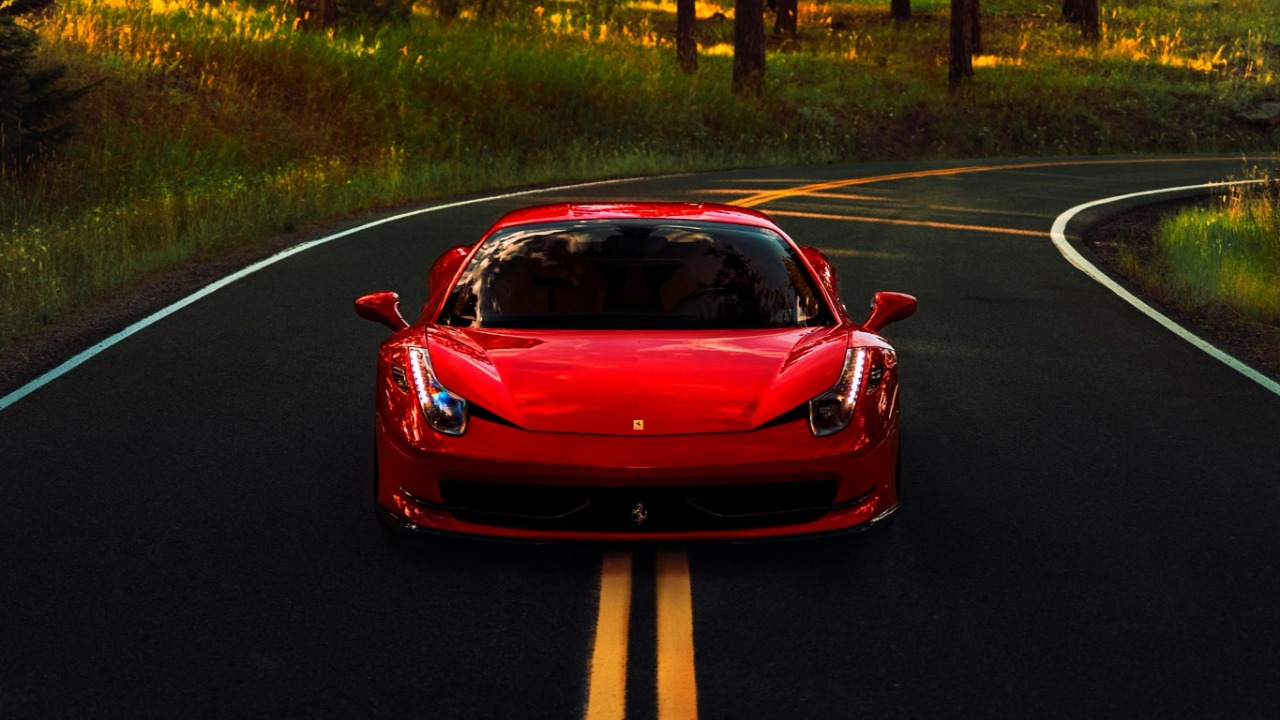
Visually, the 458 has aged with unusual grace, and that is not an accident. Its shape was driven by functional aero rather than styling gimmicks, which is why it still looks contemporary parked next to far newer supercars. The body integrates details like deformable winglets in the front bumper that adjust at speed, a solution that let the car generate meaningful downforce without resorting to towering fixed wings or cluttered add‑ons.
Those active elements were part of a broader push to make the 458 stable and predictable at the limit, not just fast in a straight line. The way the car’s design incorporated advanced aerodynamics, including those winglets that change their angle as air pressure builds, shows how deeply Ferrari baked performance into the bodywork itself. That approach is why the 458 still feels modern in a world of ever more aggressive aero packages, and it is captured clearly in technical breakdowns of the car’s design incorporated advanced aerodynamic solutions that remain relevant a decade after its release.
Steering, chassis and the “illogical excellence” factor
From behind the wheel, the 458’s steering and chassis tuning are what make it feel like perfection carefully dialed in rather than just a fast machine. The rack is extremely quick, yet it avoids nervousness, which gives you the confidence to place the car precisely on a narrow road. That precision is not accidental, it is the product of a long development arc, with one detailed drive noting that “Such” fine tuning makes the 458 feel like a culmination of earlier Ferraris rather than a clean‑sheet experiment.
The result is a car that seems to anticipate your inputs, turning in with immediacy but also settling into a corner with a natural, progressive balance. That blend of agility and stability is why some reviewers talk about the 458 in terms of “illogical excellence,” a phrase that captures how it can be both razor sharp and forgiving at the same time. The way the gearbox’s auto mode, the damping and the steering all work together to flatter the driver supports that sense that Illogical excellence is not hyperbole but a fair description of how thoroughly the car’s dynamics were resolved.
The Speciale and the art of sharpening without spoiling
If the standard 458 Italia is the sweet spot, the 458 Speciale is the proof that Ferrari could sharpen the recipe without losing its essential flavor. I see the Speciale as a study in restraint: more focused, more intense, yet still usable on real roads. Engineers combined high‑end aerodynamics, adapted dampers and bespoke tyres to create a car that feels more alert and more communicative, but they stopped short of turning it into a track toy that punishes you for every mistake.
That balance is why the Speciale is often singled out as one of the finest driver’s cars of its era, and why demand for it has remained so strong. The way “With the Ferrari” team blended aero tweaks, chassis changes and tyre development shows how carefully they approached the task of improving an already exceptional base. It is no surprise that waiting lists built up quickly once word spread about how cohesive the package felt, and that reputation is reflected in coverage of how With the Ferrari boffins combining those elements, the Speciale became one of the most coveted modern Ferraris.
Analog feel, digital assistance and future‑classic status
What sets the 458 family apart from newer models is how it blends an analog driving feel with just enough electronic assistance to keep the car approachable. I find that mix especially clear in the Speciale, which has been described as having “The Ferrari 458 Speciale Has The Perfect Blend Of Analog Feel And Technological Assistance.” That line captures why the car still resonates: the electronics are there to expand your abilities, not to mask the car’s behavior or filter out its feedback.
That philosophy extends across the range, from the Italia to the Speciale, and it is a big part of why the 458 is already treated as a future classic. When a detailed buying guide notes that the ultra‑focused Speciale is the ultimate expression of the line and remains one of the finest driver’s cars of all time, it reinforces the idea that the standard car is hardly a compromise. Instead, the Italia is framed as Ferrari’s final naturally aspirated mid‑engined V8 berlinetta, a car that is “undoubtedly a future classic” because it combines usability, engagement and desirability in a way few supercars have matched. That assessment is woven through analysis that points out how Speciale and standard 458 models alike have aged so well, remaining deeply desirable today.
Why the 458 still feels perfectly judged
Looking across the 458’s engineering, design and driving experience, what stands out to me is how little of it feels accidental. The car sits at a crossroads where naturally aspirated engines, compact dimensions and relatively light curb weights intersect with serious aero, fast dual‑clutch gearboxes and sophisticated stability systems. That intersection is where the 458 finds its magic, delivering a level of connection that newer, more powerful Ferraris sometimes struggle to match because they lean more heavily on electronics and turbocharged torque.
Even detailed road tests that focus on specifics like steering weight, brake feel and engine tone tend to circle back to the same conclusion: the 458 feels like a development of everything Ferr learned from earlier mid‑engined cars, refined until the rough edges were gone but the character remained. When one such drive notes that “Aug” testing highlighted how “Such” precision in tuning made the 458 feel like a distilled version of the brand’s past efforts, it underlines why the car still commands so much respect. That sense of a carefully honed endpoint, rather than a tentative first step, is why I see the 458 as perfection dialed in, a standard that continues to shape how we judge modern Ferraris even as the market moves on to hybrids and ever more complex performance cars. The way such precision is described in those tests only reinforces how thoroughly the 458 earned its reputation.
The 458 as a living benchmark
In the broader context of modern performance cars, the 458 now serves as a living benchmark rather than a relic. When newer Ferraris and rivals are evaluated, reviewers still reach back to the 458 as a reference point for steering feel, engine character and the balance between grip and playfulness. That is a rare status for any car, let alone one that has been on the road for well over a decade, and it speaks to how completely the 458 nailed its brief.
Even as the market shifts toward electrification and downsized turbo engines, the 458’s combination of naturally aspirated response, advanced aero and finely tuned electronics continues to feel like a high‑water mark. Enthusiasts and collectors recognize that, which is why values have remained strong and why discussions of the best modern Ferrari so often circle back to the 458 and its Speciale derivatives. When Dec analyses of “Here” and “The Ferrari” 458 “Speciale Has The Perfect Blend Of Analog Feel And Technological Assistance” keep resurfacing in debates about the greatest driver’s cars, it is a reminder that some formulas are hard to improve upon. The 458 may not be the newest or the fastest, but in the way it integrates every element of the driving experience, it still feels like the moment Ferrari got almost everything exactly right, and that is why it continues to define perfection for so many of us.

Leave a Reply