
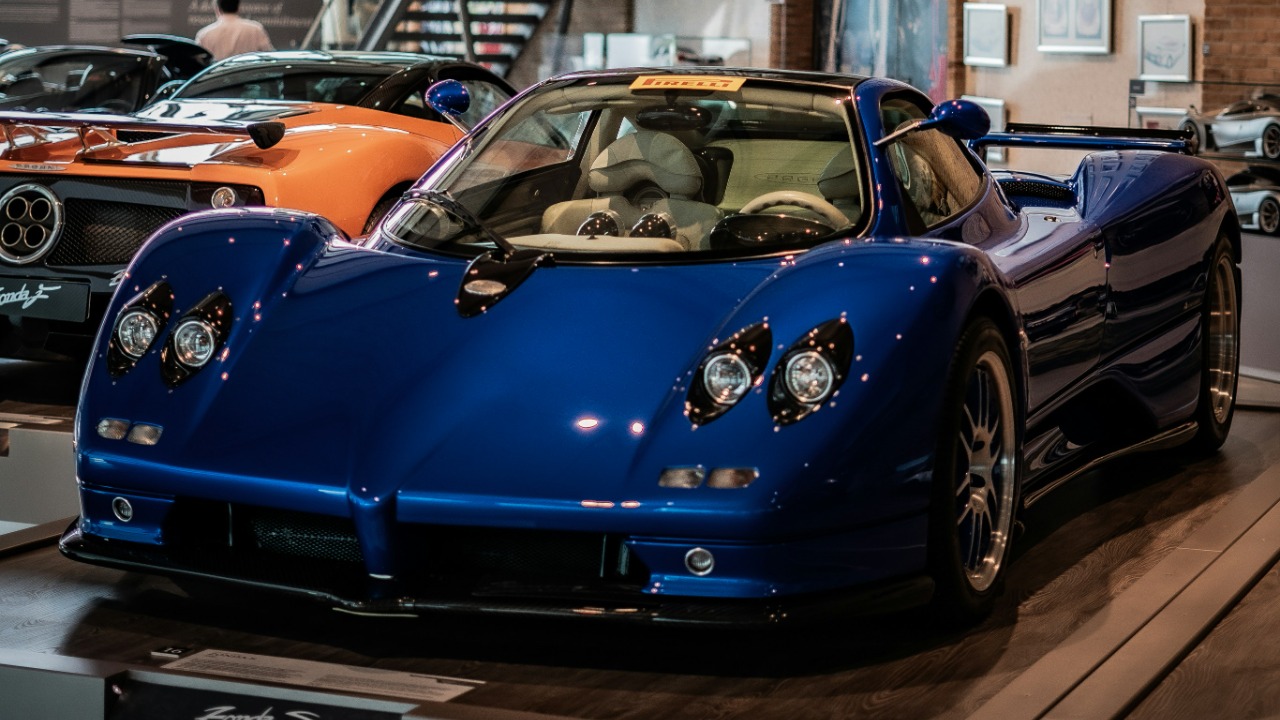
Carbon fiber is usually described in the language of laboratories and wind tunnels, a material of stiffness, strength and weight savings. In the hands of Pagani, and especially in the Zonda, it became something more intimate, a surface that could carry light, memory and emotion. I want to look at how one car family, and one pivotal version in particular, turned exposed weave into something that felt almost romantic.
The Zonda C12 and the idea of emotion in engineering
Before carbon fiber could feel poetic, Pagani had to prove that it could be precise. The Zonda C12 was conceived, designed and developed at the Pagani atelier with a deliberate mix of passion and objectiveness, and that duality still defines how I think about the car. It was not a sketchy supercar built around a single party trick, but a machine engineered with a focus on weight distribution, an extremely low barycentre and obsessive attention to every negligible and technical detail, all wrapped in a compact footprint that made the Zonda C12 small from the outside yet surprisingly generous inside.
That balance between rational engineering and emotional intent is spelled out in Pagani’s own description of the Zonda C12, which frames the car as a product of utmost passion and objectiveness rather than a mere performance figure chase. The Zonda, in this first iteration, was already designed to deliver driving emotions at any speed, not only at the limit, and that philosophy laid the groundwork for treating every visible surface as part of the experience. When a company talks about emotions in the same breath as barycentre height, it is easier to understand how a structural material like carbon fiber could later be invited to play a starring, almost lyrical role.
From structure to surface: how the Zonda F exposed carbon fiber
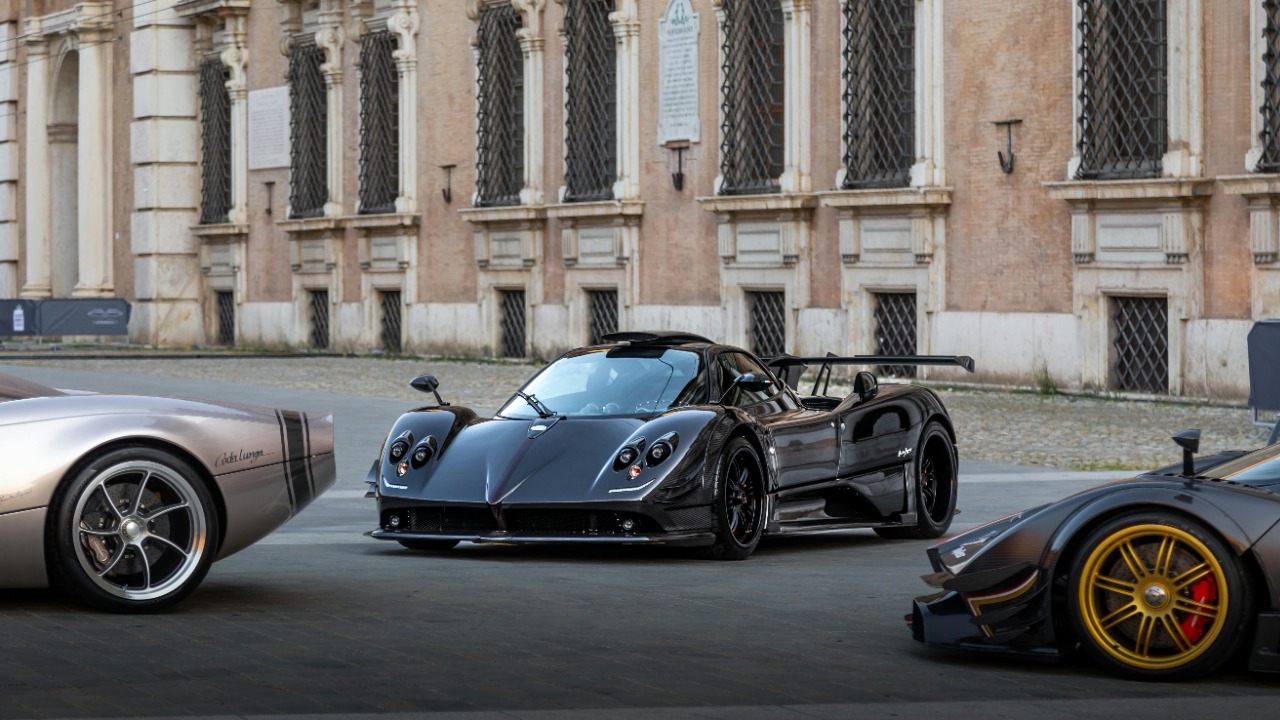
The turning point came when Pagani stopped hiding the material that had been doing the quiet work underneath. With the Zonda F, the brand created what it describes as the first car ever to display, on a client’s request, an exclusive bodywork in natural surface carbon fibre. That decision shifted carbon from a hidden skeleton to a visible skin, and in my view it changed how enthusiasts looked at the weave itself, no longer as a technical texture to be painted over but as a finish worthy of the spotlight.
Pagani’s own account of the Zonda F emphasizes that this exposed carbon bodywork was not a gimmick but an extension of the atelier’s craftsmanship, likening the work to the craft of antique master clockmakers. That comparison matters, because it frames each carbon panel as something hand-finished and almost artisanal, rather than a mass-produced composite shell. When the weave is aligned with that level of care, the reflections across the body start to feel less like a technical diagram and more like the grain of a musical instrument, a surface that invites touch as much as it promises speed.
Why enthusiasts call the Zonda F “romantic”
Romance is not a word usually attached to torque curves, yet it has followed the Zonda F for years. Pagani itself has leaned into that language, describing how many consider the Zonda F the most romantic Pagani of all time, a kind of poem in motion. I see that reputation as the product of several converging choices: the flowing lines that soften the aggression of a mid-engined supercar, the way the carbon fiber is allowed to breathe visually, and the sense that every intake and curve has been sculpted with a human hand rather than a purely computational brief.
In a recent reflection on the car, Pagani highlighted how the Zonda F, with its exposed carbon and sculpted body, is seen by enthusiasts as a Pagani of rare emotional clarity, with flowing lines that evoke a dancer’s grace and details that feel almost like verses in a longer composition. That sentiment is captured in a post that calls out how many consider the Zonda F the most romantic Pagani of all time, and it is telling that the language used is closer to dance and poetry than to aerodynamics. When a manufacturer and its audience both reach for those metaphors, it suggests that the car’s carbon fiber surfaces are being read less as bare engineering and more as a kind of visual love letter to the material.
The Zonda F Roadster and the romance of open air
If the Zonda F coupe made carbon fiber feel intimate, the Zonda F Roadster made it feel exposed to the elements in the best possible way. Removing the roof did more than add drama; it invited the wind, sound and light to interact directly with the carbon weave that now formed so much of the visible structure. I find that the Roadster format amplifies the emotional register of the material, because the driver is no longer separated from the textures and reflections by a solid canopy.
Pagani has described the Zonda F Roadster as a car created for those who love to feel the world around them, inviting the wind to join the journey and turning every drive into a more sensory experience. In a recent post, the company framed the first Pagani not as something made to be more in a conventional sense, but as a car that lets the environment become part of the narrative, a sentiment echoed in a description of how the Zonda F Roadster was created for those who want that connection. When the sun hits the natural surface carbon fibre and the driver feels the air swirl through the cabin, the material stops being a static design choice and becomes part of a shared moment between car, driver and landscape.
How Pagani’s philosophy turned carbon fiber into feeling
Underpinning all of this is a consistent philosophy that treats performance and emotion as inseparable. From the beginning, Pagani described the Zonda C12 as a car developed with utmost passion and objectiveness, with the aim of offering the highest levels of comfort and safety while still delivering driving emotions whatever the speed. That last phrase is crucial to me, because it suggests that the car should feel special even when it is not being driven flat out, which is exactly when details like exposed carbon fiber, cabin craftsmanship and the play of light across the body have the most time to register.
In its own materials, Pagani notes that the Zonda C12 was engineered so that every component, from the chassis to the interior, contributed to those emotions at any pace. That mindset carried through to the Zonda F, where the decision to reveal the carbon fiber was not just about saving paint weight but about letting the material’s pattern and depth become part of the emotional vocabulary of the car. When a manufacturer is willing to align its structural choices with its aesthetic and experiential goals, the result is a machine where even the weave of the carbon can feel like a deliberate, almost romantic gesture rather than a cold technical solution.




Leave a Reply