

The first-generation Lexus IS-F arrived as a shock to the German-dominated supersedan order, a compact four-door that hid a snarling V8 behind a badge better known for quiet hybrids and soft leather. It did something more interesting than simply chase lap times, though, by pairing that “thumping heart” with the brand’s obsession with refinement so the car could rage on demand yet settle down when the road and the driver needed calm. In an era now dominated by turbocharged complexity, the IS-F’s naturally aspirated character and road manners look increasingly like the sweet spot enthusiasts did not fully appreciate at the time.
Looking back, I see the IS-F as the car that taught Lexus how to be genuinely fast without abandoning its core values of reliability, craftsmanship and everyday usability. It previewed a new performance identity for the Company, one that treated V8 power not as a blunt instrument but as a tool to be honed, measured and civilised. That balance of fury and restraint is what still makes the IS-F compelling today.
The moment Lexus decided to get serious about speed
Before the IS-F, the Marque was respected for comfort and quality, not for lighting up track days. The creation of the dedicated performance sub-brand, often referred to simply as Lexus F, marked a turning point, with the IS-F as its first road-going statement. According to the programme’s own history, the performance arm of Lexus was Founded in the mid-2000s, and the IS-F debuted soon after as the compact sedan that would carry this new identity into showrooms and onto circuits.
That decision was not about building a one-off halo car, it was about proving the Company could engineer a high-revving V8 sedan that still felt like a Lexus in daily use. The IS-F arrived with a clear mission to challenge the established German benchmarks while preserving the brand’s reputation for durability and understated design. In that sense, it was less a rebellion against Lexus tradition and more an evolution of it, taking the quiet confidence the marque already owned and adding a layer of unapologetic aggression.
Design that signalled intent without shouting
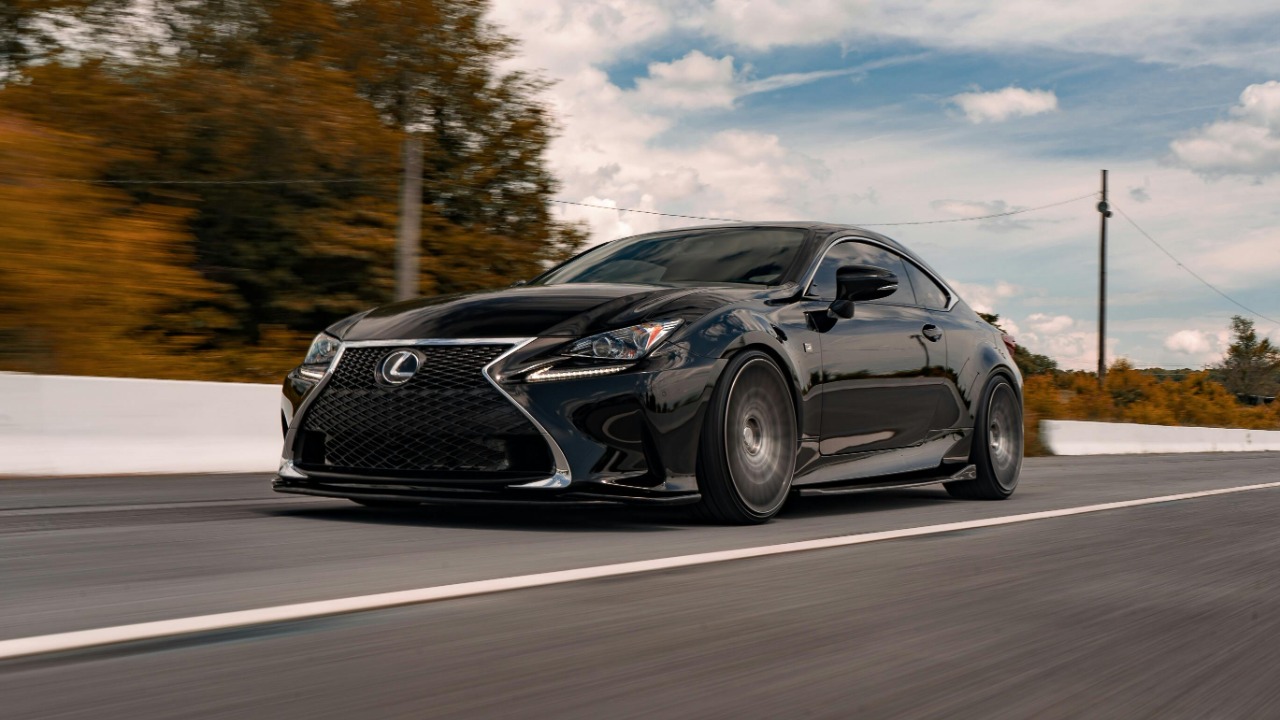
Visually, the IS-F had to walk a fine line: aggressive enough to justify its performance, restrained enough to avoid cartoonish excess. Engineers and designers widened the front fenders, opened up a larger grille and reshaped the rear to improve cooling and stability, then finished the job with a dual-exhaust system that split into quad tailpipes. The result was a compact sedan that looked purposeful from every angle, and period descriptions of the 2008 model underline how carefully Lexus balanced those visual cues so the IS-F would stand apart from the standard IS without abandoning its clean lines.
That exterior work was not just for show. The wider stance and aero tweaks helped the chassis stay composed at the speeds its V8 could generate, while the quad pipes became a visual shorthand for the car’s character. In an age when some rivals leaned on flared arches and oversized spoilers, the IS-F’s design language felt more disciplined, a reflection of the same engineering mindset that would later define the broader F portfolio.
The V8 that changed how Lexus sounded
At the core of the IS-F’s appeal is its naturally aspirated 5.0 litre V8, an engine that transformed how the brand’s compact sedan felt and sounded. Official figures describe a specific output of 83 horsepower per litre, a number that placed the car firmly in serious performance territory and underscored how far the engineers were willing to push beyond the brand’s comfort zone. That high operating range meant the engine rewarded revs, yet it still delivered the smoothness and refinement buyers expected from a Lexus powertrain.
Digging into the hardware reveals why this V8 became so respected. Known internally as the 2UR-GSE, it was a naturally aspirated 5.0 litre unit that shared architecture with the V8 used in the fourth-generation LS 460 and LS 600h, but it was reworked extensively for sharper response and a more urgent character. Technical breakdowns describe how the Lexus IS F V8 was rotated around five main bearings and tuned as a “smooth operator,” with Its brief to deliver “limitless depth of power, response and sound” without sacrificing the durability that defined the brand’s larger sedans.
Engine, Transmission, Drivetrain, Performance: rage with discipline
Raw numbers only tell part of the story, but they matter here. Factory data lists the IS-F’s 5.0 litre V8 at 416 horsepower, a figure that put it squarely in the same conversation as contemporary German supersedans. The official breakdown of Engine, Transmission, Drivetrain, Performance emphasises how the Lexus IS F features a 5.0 litre V8 that delivers that output alongside substantial torque, all channelled through a quick-shifting automatic gearbox that could behave like a traditional luxury transmission in normal driving yet snap off rapid changes when the driver selected more aggressive modes.
Later materials described the car as a High Performance Sedan Delivers a Thrilling Driving Experience, highlighting a specially built 416-hp, 5 litre V8 that sat at the centre of the package. That language matters because it shows how the brand framed the IS-F: not as a tuner special, but as a carefully engineered flagship for its performance ambitions. The Transmission and Drivetrain were calibrated to let the car cruise quietly on the highway, then wake up instantly when the driver leaned on the throttle, a duality that defined its character.
Brakes, chassis and the feel of real-world speed
Power is meaningless without control, and the IS-F’s braking hardware was a clear signal that Lexus understood the stakes. Contemporary reviews point to 14.1 inch rotors with six piston calipers at the front and 13.6 inch rotors with two piston calipers at the rear, describing how those 14.1 and 13.6 inch discs worked with the suspension to keep the car composed under repeated hard use. Engaging the Sports mode sharpened the drivetrain’s responses to the point where drivers reported “immense, instantaneous speed,” yet the chassis never felt overwhelmed by the engine’s output.
That balance carried over to everyday driving. Owners and long-term testers noted that the IS-F could feel taut on rough surfaces but rarely harsh, a reflection of how carefully the dampers and bushings were tuned. The car’s compact footprint and rear-drive layout gave it an agile feel that made back roads engaging without turning every commute into a workout, a trait that would become a hallmark of later F models.
Highway manners that surprised the skeptics
One of the most telling measures of the IS-F’s success is how it behaves far from any racetrack. Retrospective comparisons with rivals like the BMW E90 M3 highlight that The IS has excellent highway manners, with reports noting that Out on the open road, the car settles into a relaxed lope that still leaves plenty of performance in reserve. Writers who revisited the car years later described it as a very good sports sedan, very good for a Lexus, praising the feel of plentiful torque and the way the drivetrain never felt strained at typical cruising speeds.
That dual personality is precisely what made the IS-F stand out. In an era when some performance sedans demanded constant attention, this car could devour long distances with the calm, low-noise composure buyers expected from the brand, then transform into something far more aggressive with a flick of the right pedal or a change of mode. It is here, on the highway and in daily use, that the car’s “manners” become most obvious, and where the engineering effort behind its refinement really pays off.
Reliability and the everyday case for a V8
Enthusiast forums and owner reviews often circle back to one theme: the IS-F’s ability to deliver serious performance without the headaches that can accompany complex turbocharged engines. One representative owner review describes the ISF as simply unrivaled, praising a naturally aspirated V8 that “just rips” and insisting you never, “I mean ever,” need to think about reliability. That same sentiment notes how the car offers this level of performance “without all the ridiculous issues,” a pointed contrast to some European rivals, and it is captured clearly in consumer feedback on ISF ownership.
That reputation is not accidental. The V8’s roots in the brand’s larger sedans, combined with conservative cooling and lubrication strategies, gave it a robustness that owners have come to trust. In a market where some high-performance engines are treated as fragile, the IS-F’s powertrain has earned a different kind of respect, one based on years of hard use with relatively few horror stories. For buyers who want a car that can handle track days and school runs with equal ease, that reliability is as important as any horsepower figure.
How the IS-F fits into the broader Lexus philosophy
To understand why the IS-F feels so cohesive, it helps to look at how Lexus approaches even its more modest models. Reviews of the IS 250, for example, describe how Overall, though, this sharply tuned Lexus is a breath of fresh air, praising its manners, well tuned chassis and agile feel. That assessment of the smaller-engined sedan, captured in coverage of the Lexus IS 250, shows that the brand’s engineers were already focused on steering precision and chassis balance before they ever dropped a V8 into the platform.
Broader corporate statements reinforce that mindset. Internal briefings emphasise that Lexus engineers have achieved higher levels of accuracy, precision, refinement and craftsmanship than ever before, advancing real-world luxury rather than chasing spec-sheet bragging rights. The IS-F can be read as an extension of that philosophy into the performance space: a car that uses meticulous engineering to make high speed feel effortless and controlled, rather than wild or intimidating.
The legacy of the IS-F’s “thumping heart”
Looking back from today’s turbocharged landscape, the IS-F’s naturally aspirated V8 feels almost like a manifesto. Technical deep dives describe how the Known internally as 2UR-GSE engine was derived from the LS units but tuned to deliver a far more emotional experience, with GSE-specific changes that sharpened response and soundtrack. That “thumping heart” gave the car a personality that still resonates with enthusiasts who value linear power delivery and mechanical honesty over forced-induction torque spikes.
In that sense, the IS-F did more than introduce V8 rage with manners. It set the template for how the brand would approach performance, from later F models to the way even mainstream sedans are tuned today. By proving that a Lexus could be both brutally quick and impeccably behaved, it expanded what buyers expect from the badge and left a legacy that continues to influence the Company’s most exciting cars.


Leave a Reply