

Traffic stops rarely happen for the reasons drivers expect. While most people watch their speedometer and glance at traffic lights, a long list of lesser known rules can trigger blue lights just as quickly as running a red. I want to walk through ten of those under the radar violations that can quietly get you pulled over, and in some cases, leave you with a hefty fine or even points on your licence.
These are not obscure technicalities buried in legal codes for lawyers to argue about. They are practical rules that affect how you use your phone, where your dog sits, how you coast down a hill, and even how you park on a quiet street. Understanding them is one of the simplest ways to avoid an unexpected stop and keep everyone in the car safer.
1. Using your phone in your hand, even at a red light
Most drivers now accept that scrolling through Instagram at 70 miles per hour is a bad idea, but many still assume a quick tap at a red light or in slow traffic is harmless. I see the opposite on the road: officers increasingly treat any hand held phone use as active driving, whether the car is moving or not. The logic is simple. If your eyes are on a screen instead of the road, you are not ready to react when the light changes, a pedestrian steps out, or the car in front of you suddenly moves.
That is why modern rules on mobile use are written broadly. Under the tightened “using a phone while driving” laws, drivers can face 6 penalty points and a £200 fine simply for holding a device that is not secured in a proper mount, even if they are convinced they are in control. Those penalties apply when the phone is in your hand, not just when you are obviously texting or making a call, which is why I treat any hand held use as a bright red line. The safest habit is to set navigation before you move, lock the phone in a holder, and rely on voice assistants like Siri or Google Assistant rather than your thumbs, because the moment an officer sees a device in your hand, the assumption will be that you are breaking the law, as reflected in the strict wording highlighted under the current rules.
2. Coasting in neutral down hills or toward lights
Slipping a car into neutral to “save fuel” on a downhill stretch is one of those habits that gets passed down from older drivers, even though modern engines and transmissions are designed to do the opposite. When you coast, you give up a crucial layer of control. The car is no longer properly connected to the engine, which means your ability to accelerate out of trouble, manage traction, or respond to a sudden hazard is compromised. In an emergency, that split second of delay can be the difference between a near miss and a crash.
Traffic codes reflect that risk by explicitly banning coasting in many jurisdictions. Under the kind of Miscellaneous rules that drivers rarely revisit after their test, “Coasting of” a vehicle is not allowed, and “You” are expected to keep the gears or transmission engaged even when rolling downhill. I treat that as a reminder that fuel saving tricks should never come at the expense of control. Modern cars already cut fuel on overrun when you lift off the accelerator in gear, so the old neutral trick is not just risky, it is largely pointless.
3. Driving too close, even if you are under the speed limit
Speed cameras and radar guns get most of the attention, but tailgating is often just as dangerous and far more common. I regularly see drivers who are technically under the posted limit but are sitting a single car length off the bumper in front at motorway speeds. If that lead car brakes hard, there is simply no room to react, and the following driver will almost always be blamed for the collision. Police do not need a speed reading to justify a stop in that situation. The unsafe following distance is enough.
Safety guidance is clear that drivers should leave at least a two second gap in good conditions, and many experts now recommend three seconds or more to account for distraction and heavier traffic. That rule of thumb is baked into the way “Driving laws require motorists” to behave, with the expectation that you can stop safely if the vehicle ahead slams on the brakes. The reminder that “3 seconds is better” is not a suggestion for nervous learners, it is a practical buffer that gives you time to see, think, and brake before metal meets metal, as laid out in the kind of everyday rules highlighted Here. When officers see a car glued to another’s rear bumper, they see a crash waiting to happen, and they have every reason to intervene.
4. Improper turns and failing to signal clearly
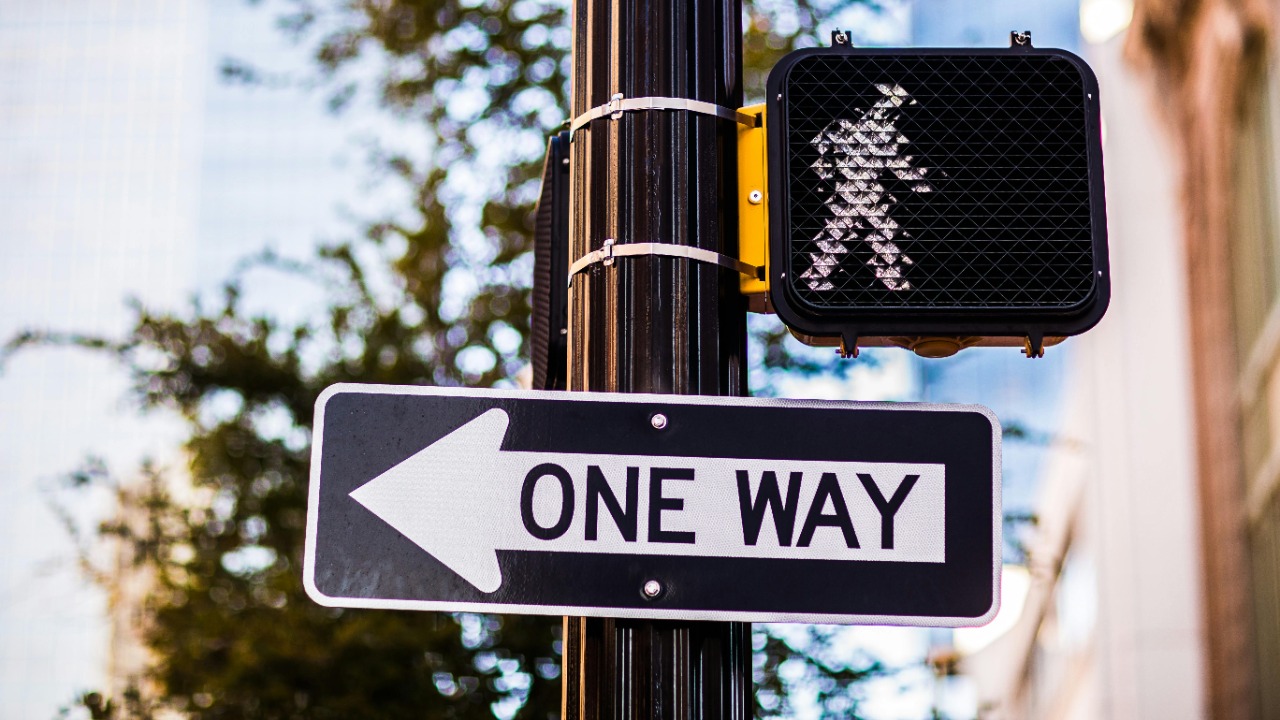
Turn signals are one of the simplest safety tools on a car, yet they are also one of the most neglected. I often watch drivers drift across lanes or swing into side streets with no indication at all, leaving everyone around them to guess their next move. That guesswork is exactly what traffic law is designed to eliminate. When you fail to signal, or you signal too late, you are not just being rude. You are creating a hazard that can justify a stop and a citation.
Legal analysis of crash patterns makes the point bluntly. “Unfortunately, people regularly ignore traffic signs and make improper turns,” and an improper turn includes failing to activate your blinker or turning from the wrong lane. Those seemingly minor lapses are a major source of collisions, and they are treated accordingly. When officers see a driver cutting across solid lines, turning from a through lane, or swinging into a junction without a clear signal, they are looking at a textbook example of the kind of behavior that leads to injuries “as a result of improper turns,” as detailed in the breakdown of how often these violations occur Unfortunately. I treat every turn as a small contract with the drivers around me: signal early, choose the correct lane, and complete the maneuver cleanly.
5. Misusing fog lights and other auxiliary lamps
Extra lighting on modern cars, from LED fog lamps to bright daytime running lights, can be helpful when used correctly. The problem is that many drivers treat those switches as cosmetic features rather than safety tools. I often see fog lights blazing on clear nights or in city traffic, where they do nothing to improve visibility and instead dazzle oncoming drivers. That kind of misuse is not just annoying. It can be illegal, and it is an easy reason for an officer to pull you over.
Guidance on lighting is explicit that “Here” are certain things that are illegal to do while driving, and “Using” your fog lights when visibility is not significantly reduced is one of them. The same goes for driving with full beam headlights in built up areas or failing to dim them for oncoming traffic. These rules are not about aesthetics, they are about glare, distraction, and the ability of other road users to see properly. When a patrol car spots a vehicle with inappropriate lighting, the stop is often framed as a safety conversation, but it can quickly turn into a ticket if the driver shrugs it off, as outlined in the list of behaviors that fall into the category of things you simply cannot do behind the wheel Here.
6. Letting your dog roam free in the car
Pets in cars are a familiar sight, but the way many people transport them would make a safety engineer wince. I regularly see dogs perched on drivers’ laps, heads out of the front window, or bouncing between the front and back seats. It might look cute on social media, yet from a traffic officer’s perspective, an unrestrained animal is a moving hazard that can distract the driver, interfere with steering, or become a projectile in a crash. That is why rules on animal restraint are increasingly being enforced.
Research into driver behavior backs up the concern. A survey by Gocompare found that 55% of drivers do not keep up to date with the highway code, which means a large share of pet owners may be naively breaking the law without realizing it. In many places, the requirement is straightforward: animals must be suitably restrained, whether that is with a harness attached to a seat belt, a secured crate, or a barrier that keeps them out of the front seats. If an officer sees a dog on a driver’s lap or hanging out of a moving window, they have clear grounds to stop the vehicle and, if necessary, issue a fine for driving without proper control.
7. Parking the wrong way on the street at night
Parking seems like the end of a journey, but in legal terms, your responsibilities do not stop when you switch off the engine. One of the most overlooked rules involves the direction your car faces when you park on a street at night. I often see vehicles lined up on both sides of a residential road, some facing with the flow of traffic, others pointed directly into oncoming lanes. It feels harmless, especially on a quiet street, yet it can be enough to attract a ticket or a knock on the door from an officer.
The reasoning is rooted in visibility. When you park facing against the flow, your rear reflectors, not your headlights, are what oncoming drivers see first, and those reflectors are not designed to make a stationary car obvious in the same way. In many jurisdictions, rules tucked into sections labeled “Miscellaneous” spell out that parked vehicles must be positioned with certain lights or reflectors facing traffic and that wheels should be turned away from the driver’s side when on a slope to prevent rollaways. Those details, including the expectation that the “triangle pointed up” on warning devices is correctly oriented and that wheels are “turned away from the driver,” are easy to forget once you have passed your test, but they are exactly the kind of technicalities that can justify enforcement when officers patrol residential areas after dark, as reflected in the practical reminders collected under that Miscellaneous heading.
8. Forgetting that “little known” local laws still count
National highway codes get most of the attention, but local and state level rules can be just as important, and they are often the ones drivers know least about. I have seen people pulled over for things they had no idea were regulated, from specific lane restrictions near schools to bans on certain types of aftermarket window tint. The common thread is that ignorance is not a defense. If the rule is on the books, officers can enforce it, even if it never came up in your driving lessons.
Legal guides to “Little” quirks in traffic law make this clear. Under sections labeled “Known Driving Laws You May Not Be Aware Of,” drivers are reminded that seemingly minor acts, like splashing pedestrians, leaving a car idling in certain zones, or failing to clear snow from the roof, can carry fines. In one example, a statute numbered 40-2-6.1 sets out that violating a specific traffic related requirement can lead to a fine of up to $1,000, a figure that tends to surprise people who assume only major offenses carry that kind of penalty. When “When” you first start driving, the list of rules you need to remember feels long enough, but as these local provisions show, the law keeps evolving, and staying current is part of being a responsible driver, as underscored in the overview of Little known requirements.
9. Treating “forgotten” basics like optional guidelines
Some of the most enforceable rules are also the ones drivers mentally downgrade to suggestions once they have a few years behind the wheel. I often see rolling stops at stop signs, half hearted yields at crosswalks, and casual lane changes without checking blind spots. None of these are exotic offenses. They are the bread and butter of traffic law, and they are exactly what patrol officers are trained to watch for when they look for signs of complacent or careless driving.
Lists of “10 traffic rules everyone forgets” highlight how often people slip on basics like full stops, proper yielding, and respecting right of way. The image of “Svitlana Pimenov” on “Shutterstock” attached to a reminder about “Speeding” is a visual shorthand for a broader point. Even when drivers know the posted limit, they often treat it as a suggestion, especially on familiar roads. That mindset bleeds into other areas, like assuming a quick roll through a stop sign is fine if the intersection looks empty. In reality, those are prime opportunities for enforcement, because they combine safety risk with clear, easy to prove violations, as illustrated in the practical breakdown of rules that many motorists quietly ignore Here. I treat those basics as non negotiable, not because I fear a ticket, but because they are the foundation of predictable, safe traffic flow.
10. Assuming “everyone does it” means it is allowed
Perhaps the most dangerous myth on the road is the idea that if a behavior is common, it must be acceptable. I hear it in conversations about speeding “a little,” driving with a cracked windscreen, or letting kids ride without proper restraints on short trips. The reality is that enforcement often focuses on exactly these everyday lapses, because they are widespread and directly linked to injuries when something goes wrong. When officers see a pattern of casual rule breaking, they see an opportunity to intervene before a crash, not a reason to look the other way.
Analyses of the “Top 5 Traffic Laws Broken in the United States” underline how routine these violations are. The word “Unfortunately” appears for a reason. People regularly ignore traffic signs, skip seat belts, and make improper turns, and those choices show up in crash statistics. Even where “rules may differ,” most jurisdictions agree on core expectations, like keeping children properly restrained and avoiding distractions. When I look at that pattern, I see a clear message. The fact that you can point to a dozen other drivers doing the same thing does not protect you when the blue lights appear in the mirror. It simply means you are part of a larger problem that traffic law is designed to address, as the summary of those broken rules makes painfully clear Unfortunately.



Leave a Reply