

The Lamborghini Countach did not simply join the supercar club, it redrew the boundaries of what an exotic car could look and feel like. From its radical wedge profile to its unforgiving driving manners, it set expectations that still shape how I, and many enthusiasts, define a “true” supercar today. Half a century on, its influence is visible in every low, wide, attention-seeking machine that dares to call itself iconic.
The radical shape that shocked the 1970s
When the Countach first appeared in the early 1970s, it looked less like an evolution of existing sports cars and more like a spacecraft that had accidentally been given license plates. Designer Marcello Gandini, already celebrated for the Lamborghini Miura, did not gently refine the supercar template, he detonated it with a razor-edged wedge, scissor doors and a cab-forward stance that made the car seem to pounce even while parked. The 1973 production version turned this concept into a road-going reality, and that shape, described as the form that “rewrote the rulebook,” became the visual shorthand for excess and speed that rivals would chase for decades, a legacy that still defines how I picture a supercar silhouette whenever I close my eyes and think of the word.
What made this design so disruptive was not just the drama, but the way it prioritized theater over practicality in a way that felt almost defiant. The low roofline, the sharply creased bodywork and details like the periscope-style rear-view solution were all in service of an image that put emotion ahead of ergonomics, a philosophy that continues to guide modern exotics. The Countach’s stance and proportions, credited directly to Marcello Gandini after his work on the Miura, are widely recognized as the moment the supercar stopped being a slightly hotter grand tourer and became a rolling poster, a transformation that contemporary analysis of The Shape That Rewrote the Rulebook traces back to that original 1973 Lamborghini Countach.
From Miura elegance to Countach aggression
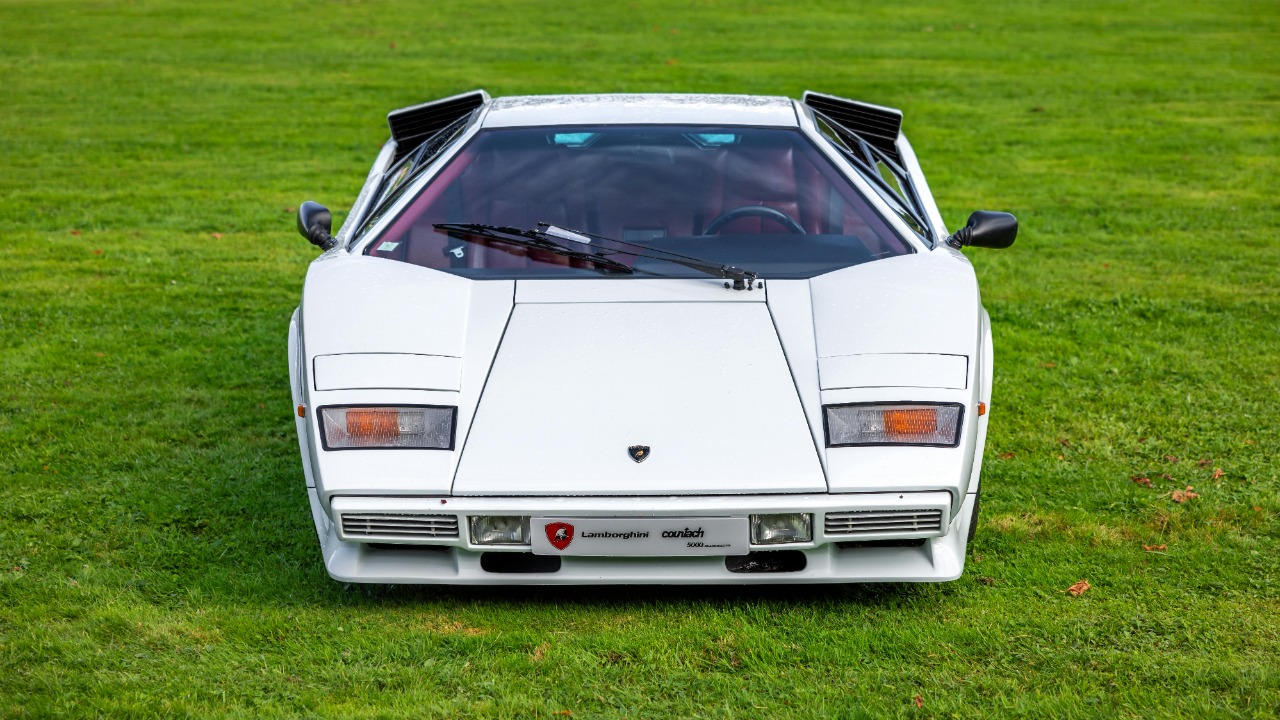
To understand how completely the Countach reset expectations, I have to look at what came just before it. The Lamborghini Miura was already a sensation, with its flowing curves and mid-engined layout that many credit as the first true supercar formula. Yet, despite the Miura being only four years old when the Countach project gathered pace, Lamborghini handed chief engineer Paolo Stanzani and Gandini a clean sheet, signaling that the company was willing to abandon even a recent icon in pursuit of something more extreme. That decision marked a pivot from the Miura’s sensual elegance to the Countach’s angular aggression, a shift that still defines the brand’s visual identity.
Accounts of the development process emphasize how radical this break really was, describing how, despite the Miura still being fresh, Lamborghini encouraged Paolo Stanzani and Gandini to chase a new direction that would make the Miura look almost conservative in comparison. The result was a car that not only overshadowed its predecessor in public imagination, but also set a new internal benchmark for what a Lamborghini should be: loud in shape, uncompromising in presence and unafraid to sacrifice comfort for spectacle. That lineage from Lamborghini Miura to Countach, and the decision to push past “good enough” design, is captured in detailed reflections on how, Despite the Miura, Lamborghini empowered Paolo Stanzani and Gand to create something even more audacious.
Driving experience: terrifying, thrilling, unforgettable
The Countach’s impact did not stop at the curb; it also redefined what it meant to drive a supercar, for better and for worse. Owners and testers describe a machine that is physically demanding, with heavy controls, limited visibility and a cabin that feels more like a cockpit than a comfortable interior. I find it telling that modern reviews still call the experience “terrifying and thrilling all at once,” a reminder that the Countach was never meant to be easy, it was meant to be intense. That intensity, from the way the V12 shouts behind the driver to the awkward contortions required just to reverse the car, became part of the legend.
Contemporary accounts of the driving experience underline how the bad bits often outweigh the good bits on paper, yet the emotional payoff keeps the Countach lodged in enthusiasts’ imaginations. One detailed review in a series titled Driving the Greats notes that You probably already know the basics of the car’s reputation, but it is the way the terrifying and thrilling elements intertwine that makes the experience unforgettable. Even short-form reflections on how the Countach changed cars forever highlight the bizarre ritual of driving it, including the need to open the scissor door and sit on the sill to see while reversing, a quirk that a clip from Aug uses to illustrate just how compromised yet charismatic the car really is.
The Countach as the archetypal supercar
Over time, the Countach’s outrageous design and uncompromising dynamics hardened into something more powerful: it became the mental template for what a supercar should be. Auction descriptions now routinely describe it as “quite possibly the most recognizable automotive design on the planet,” a phrase that captures how its silhouette has seeped into popular culture far beyond the car world. When I look at modern listings for a 1981 Lamborghini Countach LP400 S Series II by Bertone, the language used to sell the car emphasizes that it has stood the test of time as the quintessential supercar, a benchmark that newer models still chase rather than surpass.
That status as the archetype is not just about looks, it is about the way the Countach fused drama, rarity and performance into a single, instantly legible package. The car’s presence at high-profile auctions, and the reverent tone used to describe its wedge shape and scissor doors, reinforce the idea that this is not simply a classic Lamborghini, it is the car that defined the category. Descriptions of the LP400 S Series II highlight how the Quite possibly most recognizable Lamborghini Countach design has endured as the quintessential supercar, a phrase that neatly sums up how thoroughly it has colonized the public imagination.
Brand legacy and the culture of excess
The Countach did more than shape the supercar template, it also cemented Lamborghini’s identity as a brand that thrives on excess and longevity. Official brand commentary frames the car as a cornerstone of the company’s history, noting that Versions of the Countach The Countach ( Lamborghini Countach ) had several versions throughout its lifecycle, each one reinforcing the image of a wild, uncompromising flagship. That long production run, with multiple evolutions, helped the model become a touchstone for generations of enthusiasts, and I see that continuity as a key reason why the name still carries so much weight today.
Brand-focused retrospectives emphasize that the Lamborghini Countach is more than just a car; it is described as an icon that defined an era of automotive excellence and design innovation, a sentiment that aligns with how collectors and fans talk about it. One detailed profile notes that The Lamborghini Countach captured hearts and roads by embodying that era’s appetite for bold, futuristic shapes. Official brand analysis from a dealership perspective reinforces this, explaining why Versions of the Countach The Countach and the broader Lamborghini Countach lineage remain central to the company’s story and to how customers perceive the marque’s daring spirit.
From poster car to personal obsession
What fascinates me most is how the Countach moved from being a rare Italian exotic to a shared cultural obsession. For a generation that grew up with its image on bedroom walls and in video games, the car became a symbol of aspiration, even for those who would never see one in person. Commentators reflecting on its legacy argue that products with incredible longevity are doing something important in our life that adds value beyond their original function, and the Countach fits that description perfectly. It is not just transport, it is a piece of design that has shaped how people think about speed, luxury and rebellion.
Video retrospectives on the car’s legacy underline this emotional dimension, with one analysis from Sep arguing that lives or not, the Countach’s enduring presence in culture proves that some products transcend their mechanical purpose. That same idea appears in enthusiast writing that notes how Most supercars, and most expensive luxury items for that matter, are attention seeking, and that is precisely what buyers want. A reflective piece on modified exotics points out that Most supercars are designed to be seen as much as driven, and I think it is a really neat car that the Countach set that expectation so clearly that even heavily customized modern machines still chase its level of spectacle.
That culture of attention and longevity loops back to the Countach’s core achievement: it made the supercar something you experienced with your eyes and your imagination long before you ever turned a key. Whether through grainy VHS footage, glossy posters or short clips that show how awkward it is to reverse one into a parking space, the car continues to fascinate precisely because it refuses to be sensible. In that refusal, it rewrote the rules not only for how supercars are built, but for how they live in our collective memory, a legacy that still shapes every wild, wedge-shaped machine that follows in its tire tracks.



Leave a Reply