

The Lamborghini Aventador arrived as a shock to the supercar system, a wedge of carbon and noise that redefined what a 12‑cylinder flagship could be in the 2010s. In an era now pivoting toward batteries and silence, it has become the reference point people picture when they think of a modern V12, the car that turned old‑school fury into a contemporary spectacle. I see its legacy not just in auction prices and museum plinths, but in the way every new hybrid halo car is still measured against the raw drama it delivered.
The last pure V12 chapter
The Aventador’s status as the modern face of V12 power starts with timing. It arrived just as emissions rules and electrification began to close in on big displacement engines, yet it doubled down on a naturally aspirated 12‑cylinder layout and kept that formula alive for more than a decade. With its production now ended and no direct successor that upholds the tradition of a pure V12 without electrification, the Aventador stands as a significant closing chapter in Lamborghini’s history, the final word on an unassisted twelve‑cylinder flagship.
That sense of finality has only grown as the brand moves into its hybrid age. The new V12 hybrid platform, described by chief executive officer Matteo Ortenzi as pushing the boundaries of the architecture by increasing the horsepower of the thermal engine and pairing it with two motors in front, shows where the company is headed. That technology‑driven future makes the Aventador’s purely mechanical heart feel even more like a line in the sand, the last time a Lamborghini flagship relied on revs and displacement alone to make its point.
A design that turned shock into identity
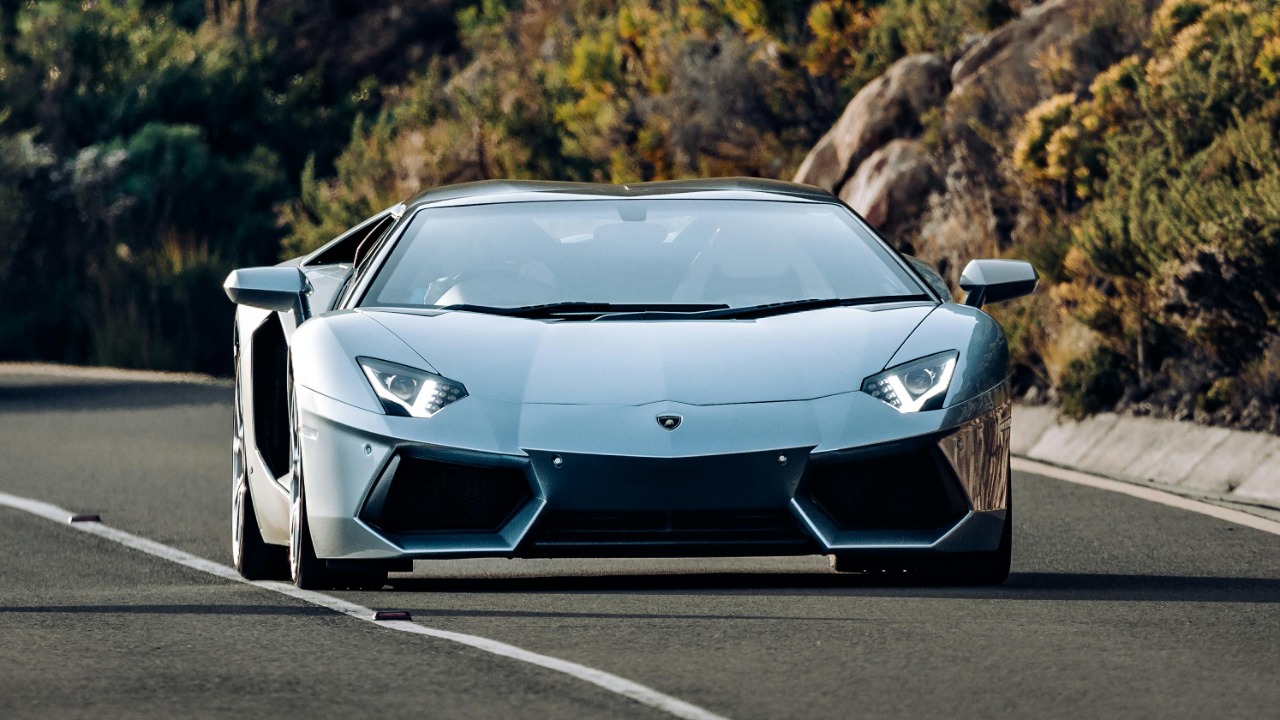
Visually, the Aventador did something few modern exotics manage: it made outrageous styling feel inevitable rather than forced. The car’s low, cab‑forward stance and razor‑edged surfacing distilled decades of Lamborghini wedge design into a single, unmistakable silhouette. Official history materials describe how the V12 engine, hand‑built in Sant’Agata Bolognese and mounted longitudinally, sits at the emotional center of the car, and the bodywork is essentially a dramatic exoskeleton wrapped around that mechanical jewel.
The Aventador S evolution sharpened that visual language further, proving the original design had the depth to be refined rather than replaced. In official notes on the Aventador S, Lamborghini explains that the design draws inspiration from earlier icons while using new surfaces to optimize aerodynamics, and that the “S” designation itself has existed for 50 years. That continuity matters: it positioned the Aventador not as a styling one‑off, but as the modern anchor of a visual lineage that stretches from the Countach to today’s hybrids.
Engineering fury with everyday reach
Underneath the drama, the Aventador was engineered to be more than a poster car. From its outset, the Lamborghini Aventador had much to prove, and it did so with a carbon fiber monocoque, advanced all‑wheel drive and a V12 that could launch the car to 60 miles per hour in under three seconds. Analysts of the model point out that this combination of cutting‑edge chassis technology and brutal acceleration allowed Lamborghini to push the limits of high‑performance cars while still delivering stability and control that older V12 flagships lacked.
Crucially, it was not a one‑dimensional track weapon. Owners and dealers alike have highlighted how Its Lamborghini Aventador comfort meant that you could make any grand tour with relative ease, and when the mood would change, the car was the first Lamborghini model to offer customizable drive modes that could transform its character. That duality, the ability to be both a long‑distance companion and a ferocious back‑road machine, helped the Aventador move from rarefied supercar into the broader cultural conversation as a usable symbol of excess.
Sales success and cultural saturation
For all its drama, the Aventador was not a niche experiment. It became the best‑selling V12 in Lamborghini’s history, a milestone that official communications describe simply as The Best‑selling V‑12 in Lamborghini’s History. Corporate retrospectives echo that point, noting that The Lamborghini Aventador beat all the sales records of its V12 predecessors and became the top selling V12 model of the brand’s history. That volume put more Aventadors on streets and social feeds than any previous twelve‑cylinder Lamborghini, cementing its shape and sound in the public imagination.
The car’s cultural reach was amplified by how long it stayed at the top. Over a decade spent as the flagship model, the Aventador spawned multiple variants and special editions, each reinforcing the core image of a naturally aspirated V12 screaming behind the driver. Commentators have noted that the original Aventador sent shockwaves through the supercar world and was designed not only to honor the Lamborghini legacy but grow it, and that long production run gave the car time to become a fixture in music videos, games and celebrity garages. By the time production ended, the Aventador was no longer just a model name, it was shorthand for the modern idea of a V12 supercar.
From museum piece to future classic
As the Aventador transitions from new car to collectible, the market is already treating it like a touchstone of the V12 era. Dealers who track values point out that some markets rise loud and some rise quietly, and that The Aventador SV is the quiet one right now, a car that delivers the full‑fat V12 and the wildness Lamborghini is famous for. That description, paired with hashtags like #FutureClassic and #V12Era, captures how enthusiasts already see the car: not as a used exotic, but as a benchmark collectible from the last age of unassisted twelve‑cylinders.
Institutions are treating it the same way. Automobili Lamborghini recently donated a 2011 Aventador, described as The First American Lamborghini Aventador, to a major museum collection, framing the car as a bridge between the company’s analog past and its technology‑driven future. Coverage of that move notes that the Aventador represents the end of a cherished era of performance in an automotive landscape increasingly defined by electrification, and that the donation allows enthusiasts to revel in that legacy long after production has stopped. When a car moves from showroom to museum floor this quickly, it is a sign that its image has already crossed into icon territory.
Technology that kept the V12 relevant
Part of why the Aventador became the definitive modern V12 is that it never felt like a relic. Engineers loaded it with contemporary hardware, from its carbon monocoque to its active aerodynamics and sophisticated all‑wheel drive. Technical overviews emphasize that Lamborghini equipped the Aventador with cutting‑edge technology to ensure it delivered not just unparalleled performance but also a driving experience that pushed the limits of high‑performance cars. That blend of old‑school engine and new‑school systems made the car feel current even as regulations tightened around it.
The Aventador S development cycle underlined that approach. Factory materials on the Aventador S, presented as Four Things You Should Know, highlight how engineers reworked the suspension, steering and aerodynamics to optimize the car’s function without abandoning its naturally aspirated core. In practice, that meant the Aventador could keep pace with newer turbocharged and hybrid rivals on road and track, proving that a big atmospheric V12 still had a place in a world obsessed with lap times and data.
Why this V12 became the face of an era
When I look across the Aventador’s story, what stands out is how completely it fused emotion, performance and timing. Official history materials even label the engine section EMOTION, describing the hand‑built V12 and the indescribable feeling of pushing accepted limits, and that is not marketing excess so much as an accurate summary of how the car is remembered. The original Aventador did not just replace a previous flagship, it reset expectations for what a twelve‑cylinder Lamborghini could look and feel like in the 21st century, and it did so while the rest of the industry was already pivoting away from such engines.
That is why, as the brand leans into hybrids and as collectors quietly accumulate low‑mileage examples, the Aventador has become the mental image people summon when they think of modern V12 fury. It was the top‑selling twelve‑cylinder in company history, the car that corporate retrospectives describe in News updates as a record‑breaker, and the model that enthusiasts now tag as a #V12Era future classic. In a landscape where no direct successor carries an unassisted V12, the Aventador’s combination of sales success, cultural saturation and unapologetic engineering excess has made it the defining twelve‑cylinder icon of its generation.


Leave a Reply