
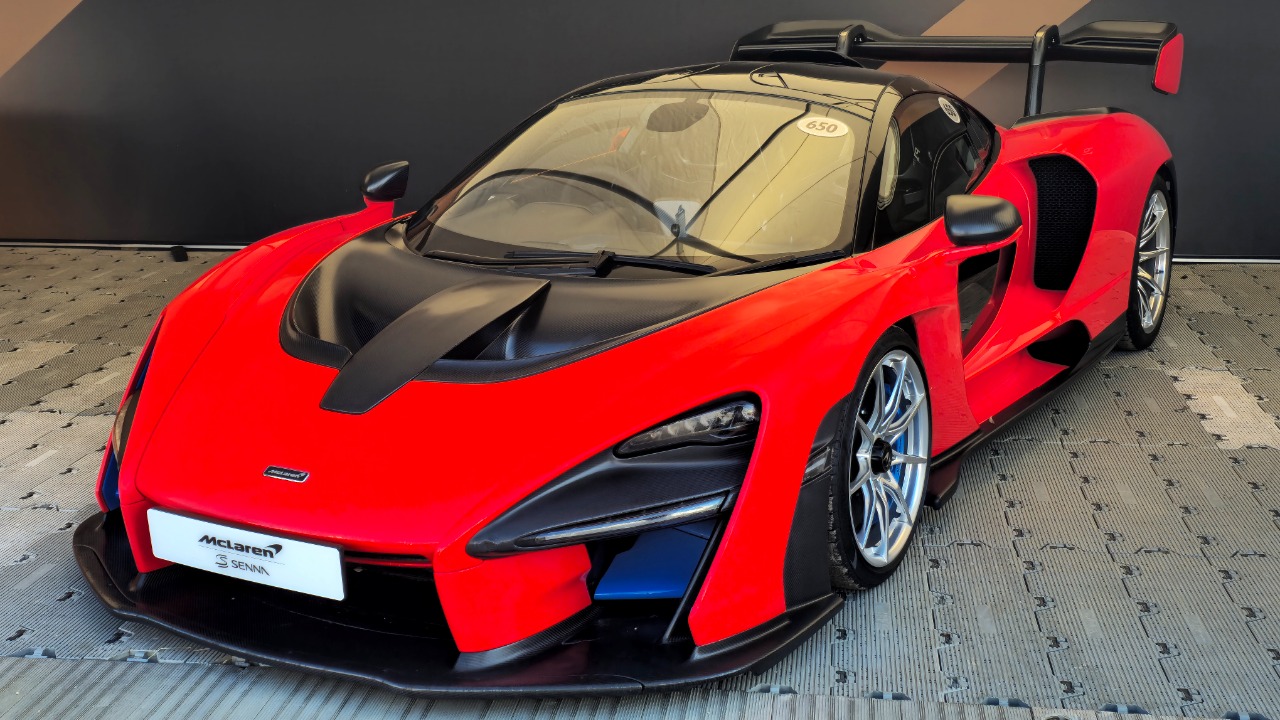
The McLaren Senna is the rare hypercar that still provokes arguments in pit lanes and comment sections alike. Its brutal focus on lap times, raw feedback and unapologetically aggressive design means it inspires awe and discomfort in equal measure. Years after launch, it remains a car that some owners call a “race car for the road” while others quietly admit it scares them.
That tension is exactly why the Senna endures. In an era of silent, clinically fast electric hypercars, this machine still overwhelms the senses, punishes mistakes and refuses to flatter its driver. It is not just fast, it is confrontational, and that is what keeps it at the center of the performance-car debate.
Old-school violence in a digital hypercar age
The Senna arrived as a paradox, a modern carbon-tub hypercar that behaves more like an old-school competition car than a polished grand tourer. Owners and testers repeatedly describe it as an assault on the senses, a machine that prioritizes feel and ferocity over comfort or refinement. One driver on a popular forum even called it “Legit one of the only cars that I can say is a ‘race car for the road’,” capturing how the car’s steering, noise and response feel closer to a GT racer than a typical road-legal flagship.
That same discussion framed the Senna as “old school sensory and speed overload,” with users noting that many modern exotics are either numb at sane speeds or softened into “really uncomfortable boulevard cruisers,” while this car stays alive and demanding at all times, a point that came through clearly in the Aug thread where the comment about Legit being a “race car for the road” appeared. That willingness to trade isolation for intensity is central to why the Senna still splits opinion: it is thrilling for drivers who want every vibration and every aero load transmitted through the seat, and exhausting for those who expect a seven-figure car to cosset as much as it corners.
Aero, brakes and the physics that frighten people
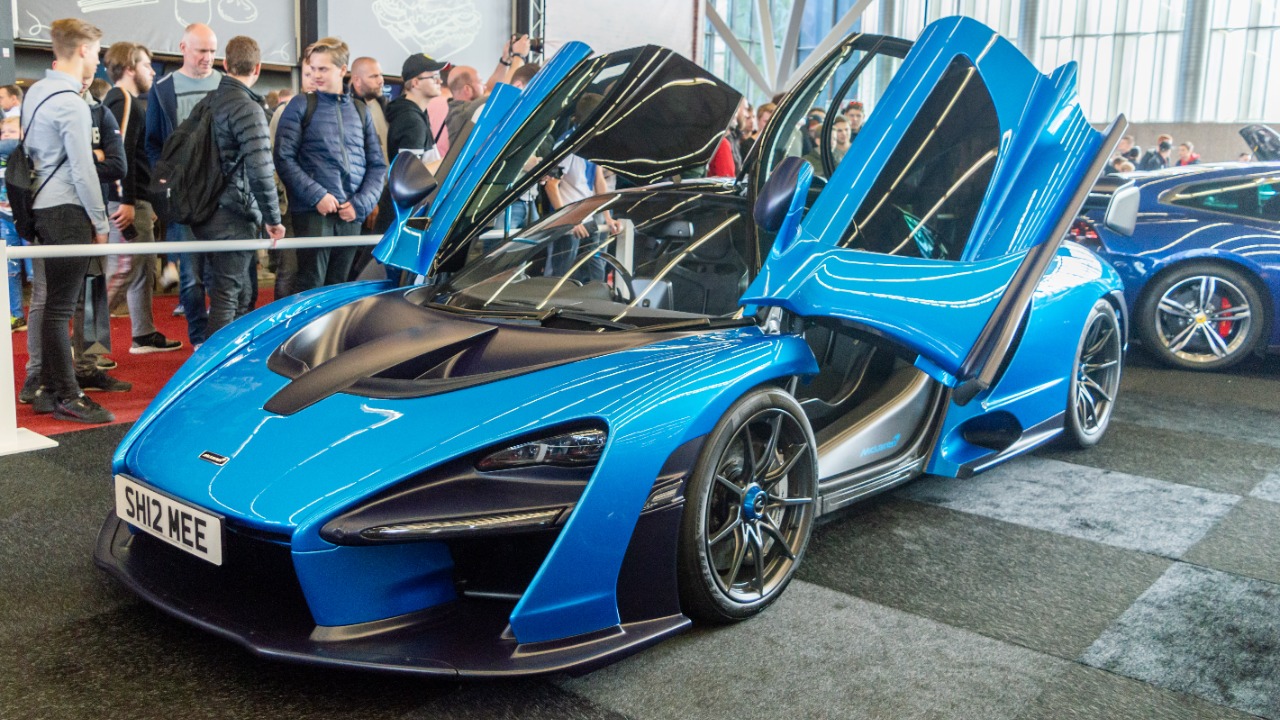
Underneath the drama, the Senna is defined by its aerodynamics and braking performance, and both are extreme enough to unsettle even experienced drivers. The towering rear wing, complex front ducts and sculpted bodywork generate huge downforce, which in turn allows astonishing corner speeds and late braking. Early road tests described how the car feels almost pinned to the tarmac, with one reviewer half-joking that “Bloody aero, it’s just not fair,” a reaction that underlines how the Senna’s grip can feel almost unnatural compared with more conventional supercars.
That same first-drive report highlighted how the car’s carbon-ceramic stoppers and active aero combine to deliver deceleration that borders on violent, with the writer noting that the Senna only really starts to make sense when driven hard enough for its systems to work in unison, a characteristic captured in detail in a Senna first drive. Another in-depth review of McLaren’s latest Ultimate Series Car stressed that “Then there are the brakes” as a separate topic, because the stopping power is so abrupt that it takes time for even seasoned testers like Jamie to recalibrate their expectations. That learning curve is part of the fear factor: the car can do more than most drivers are prepared to ask of it, and that mismatch can be intimidating.
Inside the cockpit: intensity, not indulgence
Climb into a Senna and the message is the same: this is a cockpit built for focus, not luxury. Thinly padded seats, a pared-back dashboard and a view dominated by the front fenders and giant mirrors all reinforce the sense that you are in a tool, not a toy. One long-term owner summed it up bluntly in a one-year report, listing “Pros” and starting with “Easily the most intense modern car I’ve ever driven,” before explaining that the acceleration is brutal and the aero “actually makes a difference,” while also accepting that the compromises that come with that intensity are simply “the territory” you sign up for.
That same Mar ownership post makes clear that the Senna is not a car you casually daily, even if some try. A separate video diary titled “10 Things I Hate About My McLaren Senna *Daily Driven POV*” runs through the predictable complaints: uncomfortable seats, stiff suspension, intrusive road noise, awkward Bluetooth issues, blind spots, small windows, no cup holder and a cramped interior. Those details matter because they show how the Senna’s design brief leaves little room for everyday niceties, which some fans admire as purity and others see as needless hardship in a road car.
When “Scary Fast” becomes literal
The Senna’s reputation for being intimidating is not just about feelings, it is also about what happens when things go wrong. Earlier this year, a story circulated widely after a car described as “Scary Fast” was involved in a crash while showboating in Los Angeles. The McLaren, only nine miles into its ownership, ended up colliding with a dealership building after the driver lost control, an incident that underlined how quickly the car’s power and grip can overwhelm someone who is not fully dialed in.
The report on that Senna Crashes Showboating Into Los Angeles Dealership incident, written by Raphael Orlove, described how the driver’s attempt to impress onlookers ended with the hypercar sliding straight into the front of the showroom. A separate account of a similar event noted that a YouTuber who makes car-related content also crashed his McLaren into the front of a Lexus dealership in Los Angeles, again while filming. In both cases, the combination of huge performance and public bravado created a perfect storm, reinforcing the idea that this is a car that punishes overconfidence faster than most.
Why some drivers still seek it out
For all the horror stories and complaints, the Senna continues to attract drivers who are bored by the clinical perfection of newer machinery. One detailed test of a 2019 example framed it as “The Ultimate Billionaires’ Play-Toy,” but the writer also described how, once strapped in, they had to “ignore what I can see” and focus on the road because the car’s speed and feedback were so consuming. The same piece talked about how the view of the front suspension working just in front of you, visible through the glass, adds to the sense that you are piloting a prototype rather than a finished road car.
That impression of the Senna as both indulgent and punishing is captured in the Aug review of the 2019 Senna, which leans into the phrase “The Ultimate Billionaires’ Play-Toy” while also stressing how demanding it is to drive quickly. Another revisit to the car in 2024 argued that, “With the arrival of electric super and hypercars in the interim making on-paper stats practically superfluous,” the Senna still stands out because few rivals can “match the thrills it provides,” a point made explicitly in a With the arrival feature that contrasted its visceral nature with the quiet speed of EVs. For drivers who value drama over ease, that trade-off is not a flaw but the whole point.
The legend, the name and the ongoing argument
Layered over all of this is the weight of the name itself. McLaren chose to call this car Senna, directly invoking Ayrton Senna’s legacy of precision, bravery and relentless pursuit of lap time. That decision raised expectations and scrutiny, and it still colors how people talk about the car: some see it as a fitting tribute to a driver who thrived in difficult machinery, others feel the association is too heavy for any road car to carry.
The debate is fueled by the way the car behaves in the real world. One video review titled “The McLaren Senna is Old School Sensory and Speed …” opens with the presenter noting that McLaren still has a 2019 Senna press car in its fleet, and then describing it as “one of the old school” experiences left in a market of increasingly digital supercars. Another Reddit discussion about the same model raves that “This thing is a rocket. The turn-in is unbelievable. I really think I underestimated this thing because it’s a lot more car than I thought,” before warning that cars like this are boring on the road for anyone but the most talented professional drivers, a sentiment captured in the Aug follow-up to that earlier thread. That mix of reverence and caution is why the Senna still divides fans and terrifies drivers: it is a car that demands respect, rewards commitment and refuses to be tamed into something everyone will like.


Leave a Reply