
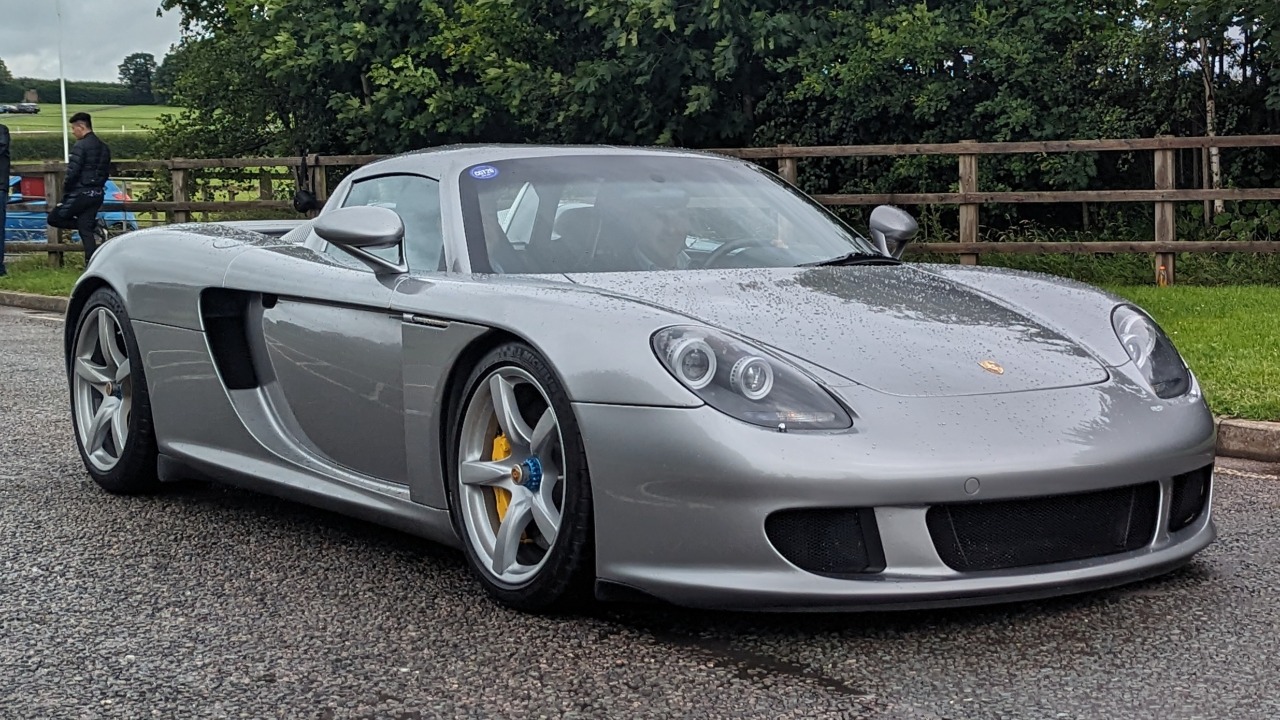
The Porsche Carrera GT’s V10 has a reputation that hangs over it like tire smoke after a missed apex, a mix of awe and unease that few modern supercars can match. Its engine is not just powerful, it is unforgiving, and that character has helped turn the car into a benchmark for how thrilling and how punishing a road‑legal machine can be when the safety net is stripped away.
When I look at why this particular V10 still defines danger in the supercar world, I keep coming back to how its raw race‑bred hardware, its chassis balance, and even a few humble components all conspire to punish overconfidence. The result is a car that rewards precision and punishes ego, a machine that still intimidates even in an era of traction‑managed hypercars.
The race-bred V10 that never learned to relax
The heart of the Carrera GT is a V10 that was never really designed to be polite. It traces its roots to a racing program, and you feel that in the way it delivers power with almost no filter, building to 612 horsepower at a screaming 8,40 rpm that demands commitment from the driver rather than casual throttle stabs. Unlike modern hypercars that lean on turbocharging or hybrid systems to broaden the powerband and smooth out the experience, the Carrera GT relies on revs and razor‑sharp response, which means the engine is always asking you to work for its best and punishing you if you are clumsy with your inputs, a character that is spelled out clearly in detailed Carrera GT technical breakdowns.
That same research makes it clear that the car’s personality is inseparable from its engine and chassis pairing, not just its headline figures. Is the Porsche Carrera GT hard to drive? The answer is a blunt Yes, and the reason is that, Unlike the latest performance cars that wrap their power in layers of stability control and adaptive everything, this V10 is bolted into a highly responsive carbon structure that reacts instantly to weight transfer and throttle changes. When I think about modern supercars that flatter the driver, the Carrera GT sits at the opposite end of the spectrum, a car that expects you to bring race‑driver discipline every time you turn the key, a reality that is spelled out in plain language in the question, Is the Porsche Carrera GT hard to drive.
A cockpit that feels like a prototype racer
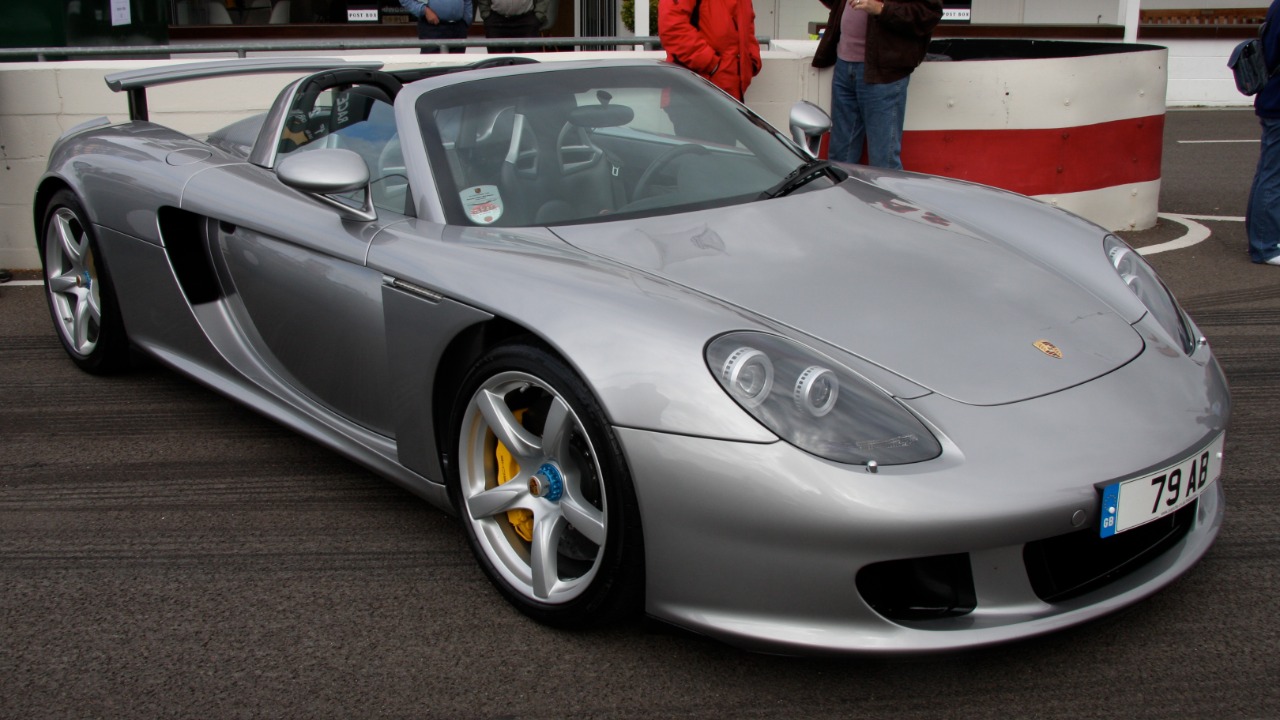
Step into a Carrera GT and the message from the cabin is just as uncompromising as the engine note. The seating position is low and locked‑in, the view forward framed by a long nose, and your right hand falls naturally to a high gear knob made of laminated beech wood that looks like it was lifted straight from a pit lane. That shifter is not a styling gimmick, it is a tactile reminder that the car’s layout and ergonomics were shaped by motorsport thinking, something that becomes obvious when you study how the Carrera GT interior was conceived around a race‑inspired driving position and a manual gearbox that puts the driver at the center of the action.
From behind that wheel, the V10’s danger is not just about outright speed, it is about how exposed you feel to every decision you make. There is no dual‑clutch to mask a bad downshift, no soft‑edged comfort mode to hide the car’s intent, only a direct mechanical link between your limbs and a chassis that reacts instantly. I find that this environment amplifies the engine’s personality, because every surge of torque and every rise in revs is transmitted straight through the seat and the shifter, turning the cabin into a kind of feedback chamber where the car constantly tells you how close you are to the edge.
Why drivers call it “scary” even at sane speeds
Ask owners and enthusiasts why the Carrera GT has such a fearsome reputation and the answers tend to converge on the same themes: suspension setup, chassis proportions, and engine placement. One thoughtful breakdown from a driver who has studied the car’s behavior points to the way the suspension tuning, the relationship between chassis width and wheelbase, and the mid‑mounted V10 combine to create a car that can feel like a very high powered MR2 when it is loaded up in a corner. I read that description, framed around the idea that “Something about the suspension setup and the chassis width to wheelbase and the engine placement also” makes the car tricky, and it perfectly captures why so many people on Feb threads still talk about the Carrera GT with a mix of admiration and caution.
What stands out to me is that this fear is not just about raw power, it is about how narrow the margin for error feels when the car is unsettled. With so much mass concentrated near the center and so little electronic intervention, a small lift of the throttle mid‑corner or a slightly late brake release can quickly turn into a big rotation. That is the kind of behavior that experienced drivers might relish on a track but that can catch out even talented owners on the road, and it is why the V10’s character is often described as “scary” even when the speedometer is showing numbers that would feel relaxed in a more forgiving modern supercar.
The cheap part and the high-profile crashes
The Carrera GT’s legend is not built only on engineering diagrams and spec sheets, it is also written in near misses and tragedies that have become part of car culture’s collective memory. Mar enthusiasts still talk about the way Jay Leno nearly lost control of a Carrera GT during a high‑speed run, a moment that underscored how quickly the car can bite even someone with his experience. That same conversation inevitably circles back to Paul Walker and the crash that claimed his life, a tragedy that cemented the car’s reputation in the public imagination as a machine that can go from intoxicating to lethal in the space of a single mistake, a narrative unpacked in detail in a video that traces how The Cheap Part That Made This Supercar Deadly! contributed to the danger.
What fascinates me is how a relatively humble component could play such an outsized role in a car that otherwise feels so meticulously engineered. When you look at the way that video frames the story, the phrase From Jay Leno to Paul Walker becomes shorthand for a pattern, a reminder that the Carrera GT’s unforgiving nature is not just theoretical. The analysis digs into how a specific part choice, described bluntly as cheap, may have exacerbated the car’s tendency to snap past the limit, and it is striking to see how a single decision in the supply chain can ripple outward into real‑world consequences, a point that is driven home when you follow the thread from From Jay Leno through to the broader discussion of responsibility.
Legal fallout has only sharpened that focus. In the wake of the Walker crash, a lawsuit argued that The Carrera GT was inherently dangerous and that the company should have done more to warn about the risks involved in using the vehicle. When I read the language that emerged from that case, especially the way it framed the car as a True Racing Derived Supercar that had been brought to the street with relatively few compromises, it reinforced the idea that this V10 and the chassis wrapped around it occupy a gray zone between road car and race car, a tension that is laid out starkly in the background section on Background and the legal arguments that followed.
Why danger and greatness are intertwined
For all the fear that surrounds it, the Carrera GT is still spoken of with reverence by people who know fast cars, and that tension is part of what keeps its V10 at the center of so many late‑night debates. Some seasoned voices have gone as far as to call it the greatest supercar of all time, precisely because it refuses to coddle the driver and instead demands skill, respect, and restraint. When I read a racer like Dario Franchitti describing how It Has a Bad Reputation yet still praising the way the car communicates and rewards proper technique, I see a case being made that the very traits that make the Carrera GT intimidating are also what make it special, a line of argument that runs through a passionate defense of the Bad Reputation it carries.
Two decades on from its debut, the car still feels like a time capsule from an era when manufacturers were willing to sell something that bordered on a race car for the road, with a V10 that never learned to be gentle and a chassis that expects you to rise to its level. I find that the danger it represents is not just about the possibility of a crash, it is about the psychological weight of knowing that the car will not save you if you get it wrong. In a world where most performance machines are faster on paper but calmer in practice, the Carrera GT’s V10 remains a standard for raw, unfiltered risk, a reminder that greatness and peril can be two sides of the same carbon‑fiber coin.


Leave a Reply