
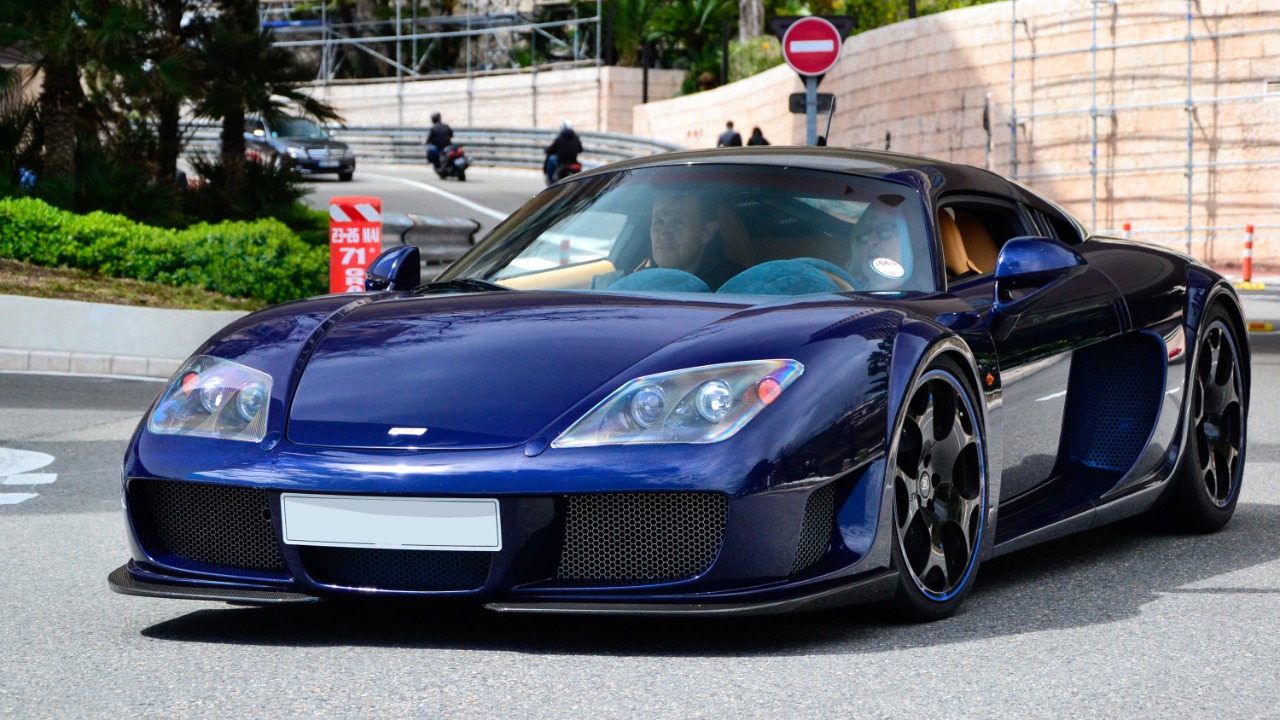
The Noble M600 has never chased comfort or convenience, it has chased fear. In an era when supercars are filtered through layers of electronics, this British brute still confronts drivers with unvarnished power and demands total concentration. Its reputation for being intimidating is not marketing hype but the logical result of how it is engineered, powered, and stripped of digital safety nets.
Lightweight body, heavyweight punch
The starting point for the M600’s menace is its power-to-weight balance, which reads more like a race car than a road car. Early reports on the prototype put its mass at 2,800 pounds with fluids, with production cars targeted closer to 2,700 pounds, figures that undercut many modern supercars laden with luxury hardware. That lean figure sits on a carbon body and tubular chassis, so when the driver asks for acceleration, there is very little inertia to soak up the response, which is why the car feels so immediate and, in the wrong hands, so unforgiving.
Into that light shell, The Noble M600 packs a 4.4-liter twin-turbocharged V8 that produces 650 horsepower and 618 lb-ft of torque, numbers that would be imposing even in a heavier grand tourer. The combination of a 4.4-liter displacement and twin turbos means the engine surges hard from low revs and then keeps pulling, so the driver is never far from the kind of thrust that can overwhelm tires and reflexes. With so little mass to move, every squeeze of the throttle translates into a lunge, which is exhilarating when judged perfectly and deeply unsettling when it is not.
A Volvo heart with a very different character
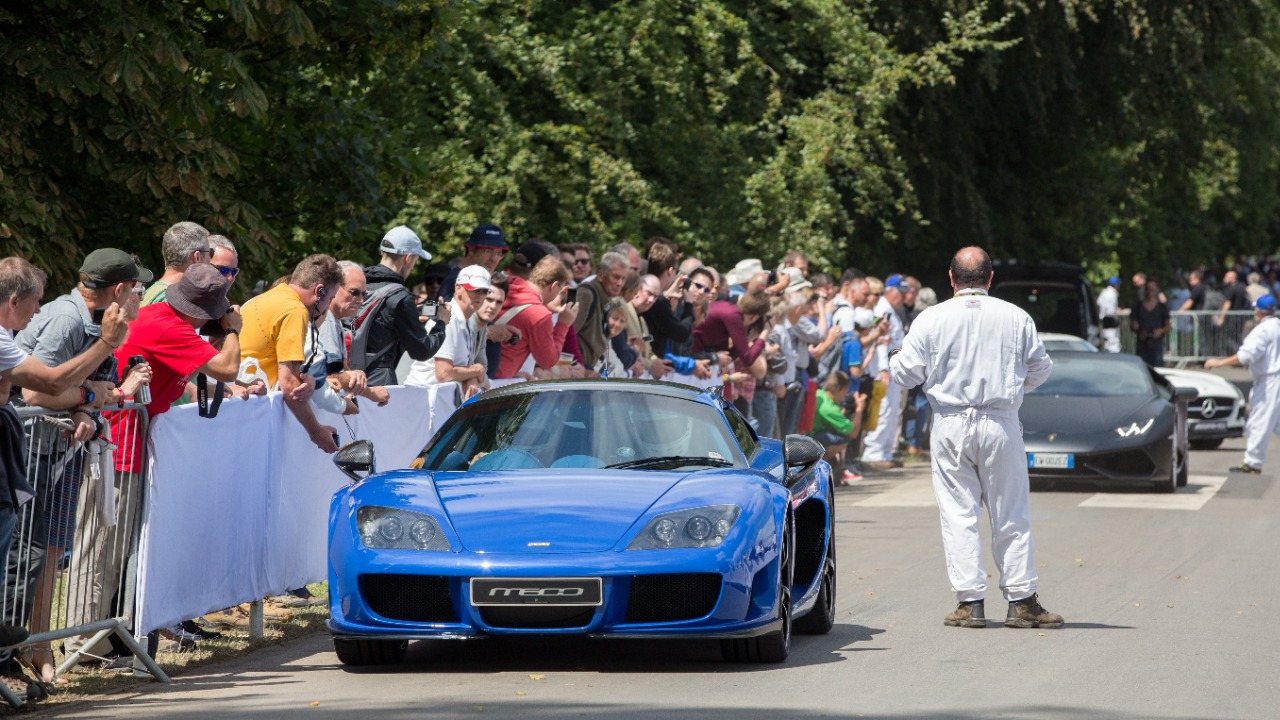
Part of what makes the M600 so disconcerting is that its engine’s origin story clashes with how violently it behaves on boost. One of the more surprising facts about the car is that its V8 traces back to a Volvo XC90 unit, a piece of hardware most people associate with family-hauling calm rather than track-day chaos. The Yamaha-designed 4.4-litre V8 is heavily reworked, with new turbocharging and mapping that turn a once-mild powerplant into something far more aggressive. That contrast, a sensible Scandinavian base turned into a snarling British weapon, reinforces the sense that the car is always a few bad decisions away from trouble.
On the road, that transformation is amplified by the way the power is delivered. Reports on what it is like to drive note that the car offers selectable modes, with a lower-output setting for wet conditions and a full-power option that unleashes the complete 650bhp. The moment a driver twists the control into its most aggressive position, the character of the Volvo-derived block changes from flexible to feral, and the rear tires are suddenly tasked with containing all of that torque without any electronic mediation. It is at that point that even experienced drivers tend to recalibrate their respect for the throttle pedal.
Back-to-basics philosophy that removes the safety net
The M600’s rawness is not an accident, it is the result of a deliberate philosophy that strips away the digital layers that define most modern performance cars. Company figures described it as a car that rewards the driver without the use of invasive systems, a point underlined when Boutwood explained that the focus was on mechanical grip and feedback rather than software. That approach means the chassis, steering, and suspension are tuned to communicate clearly, but it also means there is nothing in the background to catch a slide that goes too far or a braking maneuver that starts too late. The car trusts the human at the wheel more than the code in a control unit, which is flattering until the driver discovers the limits the hard way.
That Old School Approach is most obvious in the list of things the M600 does not have. Owners and testers point out that there is no traction control, no launch control, and no anti-lock braking system, a back to basics approach that would be unthinkable in a mainstream supercar. Rest assured, though, that this missing feature set does not detract from the experience one bit for drivers who crave purity, it heightens it, because every input has a direct and unfiltered consequence. For anyone accustomed to leaning on stability control or ABS as a last line of defense, the realization that none of those systems are present is often the moment when admiration for the car’s focus turns into a healthy dose of fear.
Brakes and chassis that demand commitment
To balance its ferocious acceleration, the M600 relies on serious hardware rather than software to slow down. Alcon developed the car’s massive brakes, with Alcon supplying 380mm front and 350mm rear vented discs mounted on lightweight bells. Without anti-lock assistance, those big rotors and calipers are only as effective as the driver’s ability to modulate pedal pressure, especially when braking hard over bumps or into a corner. The stopping power is immense, but so is the potential for lockup, which is why many first-time pilots find themselves braking earlier than they would in a more electronically cushioned rival.
The chassis follows the same philosophy, combining a carbon body with a steel structure to keep weight low and rigidity high. With a carbon body the car is incredibly lightweight, and with 650bhp the M600 represents staggering performance with little in the way of isolation, a point underlined by descriptions that call it a machine for those who love driving. The suspension is tuned to keep the car flat and responsive, which means bumps and cambers are transmitted clearly through the seat and steering wheel. That level of feedback is exactly what skilled drivers want on a circuit, but on a fast, imperfect road it can feel like the car is constantly asking whether the person in the driver’s seat is really up to the task.
A cult icon in the age of driver aids
What keeps the M600 relevant years after its debut is how starkly it contrasts with the rest of the performance market. Ever wondered which modern car deliberately skipped all driver aids while still delivering hypercar-level speed? Enthusiasts often point to the Noble M600, a British built supercar that leans into analog control instead of digital intervention. In an era when even track-focused specials arrive with multiple stability modes and configurable traction maps, the M600’s refusal to play that game has turned it into a cult object for drivers who see electronics as a barrier rather than a benefit.
That cult status is reinforced by the way owners and commentators talk about living with the car. Lists of things people tend to forget about the model often highlight its minimal cabin tech, its manual controls, and the fact that That Old School Approach extends to almost every aspect of the driving experience. The Noble M600 is not interested in daily usability or effortless speed, it is interested in making the driver earn every mile. For some, that is precisely why it terrifies: not because it is unpredictable, but because it is brutally honest about the consequences of every decision made behind the wheel.

Leave a Reply