
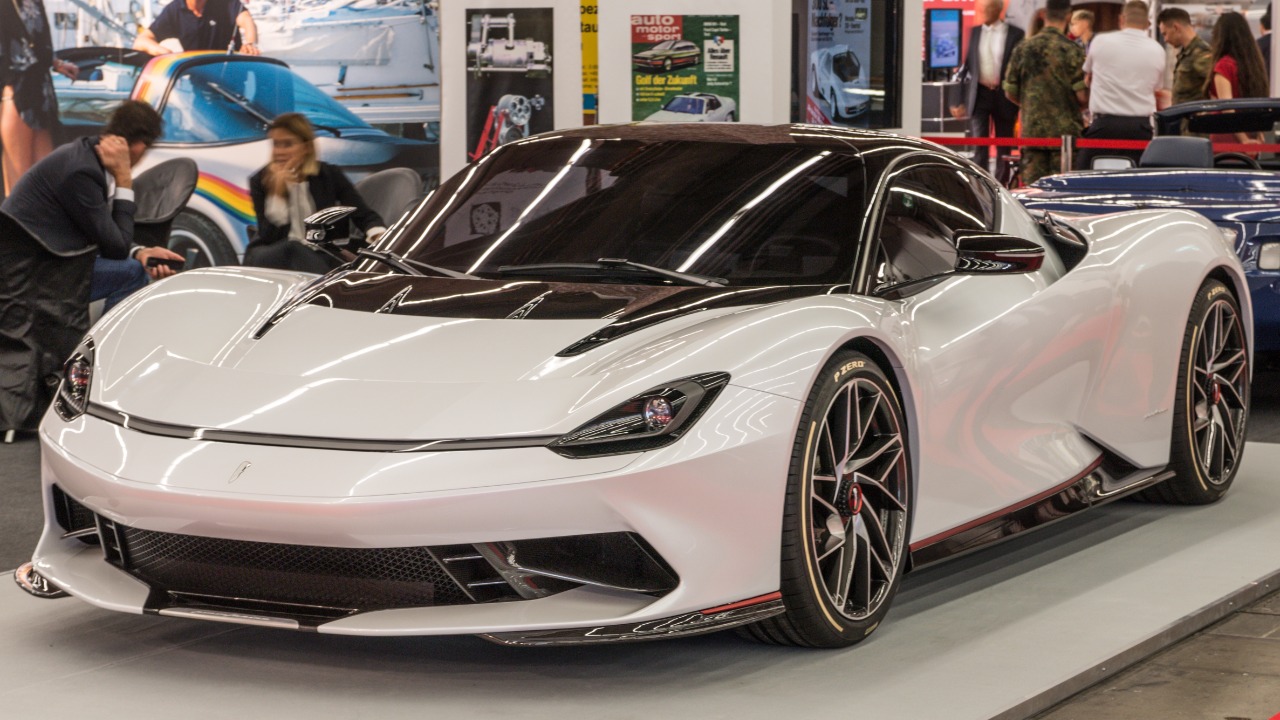
The Pininfarina Battista did not just join the electric supercar race, it reset the benchmark for what a road‑legal EV can do. By combining design heritage, bleeding‑edge battery tech and race‑honed engineering, it turned a storied Italian styling house into a builder of one of the quickest production cars on the planet. In the process, it showed that an electric hypercar could be both a design statement and a brutal performance machine without burning a drop of fuel.
To understand how the Battista became an electric speed monster, I need to trace how its creators fused outrageous power figures with meticulous chassis tuning and aerodynamics. The result is a car that does not just match traditional exotics on paper, it out‑accelerates many of them in the real world while carrying the name of Battista “Pinin” Farina into a new era.
From design house to hypercar maker
The Battista is the moment Pininfarina stopped being only the name on other people’s fenders and started building its own halo car. For decades the company was known for shaping Ferraris and other Italian exotics, but with this project it set out to create what early reports described as the most powerful Italian road car yet, a machine that could tell Maranello to move over by pairing 1,877 hp with a fully electric drivetrain. That ambition is baked into the car’s name, which honors company founder Battista “Pinin” Farina and signals that this is not a styling exercise but a statement of intent from a brand stepping into the arena of ultra‑low volume hypercars, as highlighted when the car was first framed as a rival that might make enthusiasts say “move over Ferrari” and recognize it as the most powerful Italian car yet.
That shift from design consultancy to manufacturer demanded more than a pretty body, it required a technical program that could stand alongside the world’s most advanced EVs. Rather than reinvent every component, Pininfarina tapped into existing high‑performance electric know‑how, then wrapped it in its own philosophy of proportion and surface. The result is a car that looks every bit like a classic Pininfarina sculpture, with a low nose, dramatic side intakes and a floating rear wing, yet underneath it is a clean‑sheet electric platform designed to deliver instant torque and repeatable performance on road and track.
Engineering an electric powertrain that outguns Formula 1
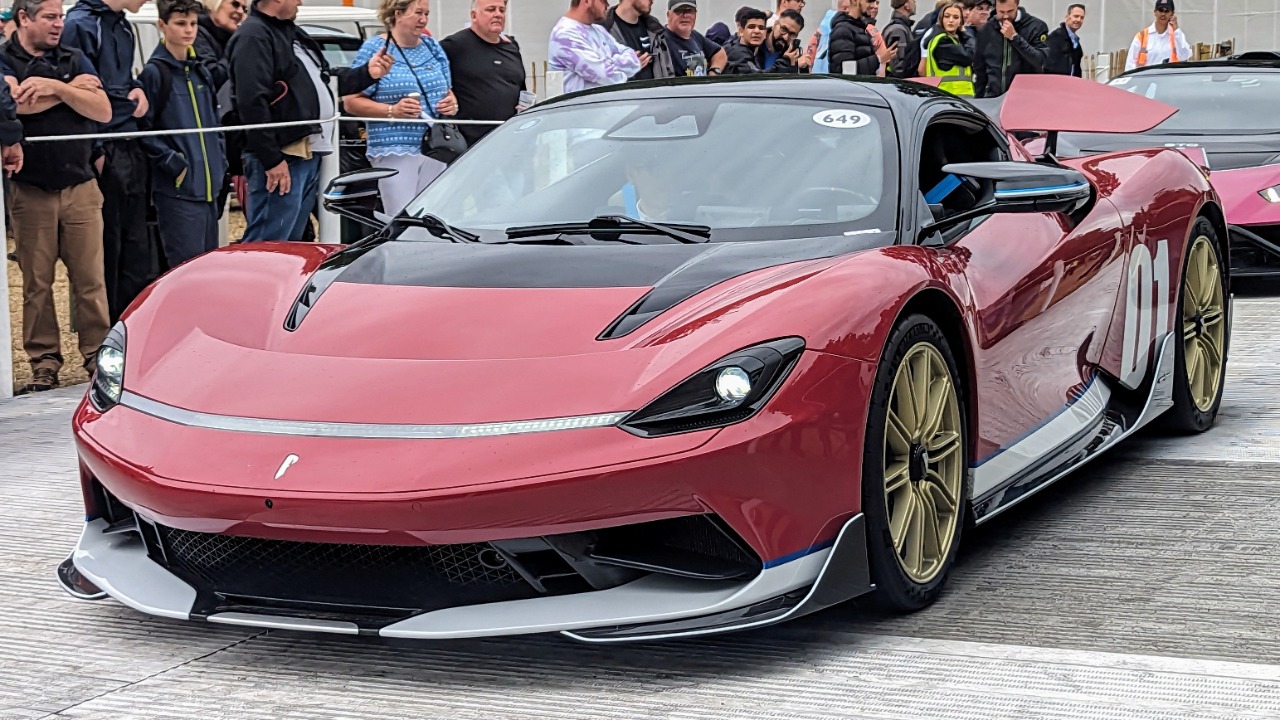
At the heart of the Battista’s transformation into a speed monster is an electric powertrain that reads like a spec sheet from science fiction. The car delivers a colossal 1,914 hp and 1,726 Lb‑Ft Of Torque, figures that put it beyond almost any internal‑combustion rival and firmly into hypercar territory. Those numbers are not marketing fluff, they are the foundation of how The Pininfarina Battista Has 1,914 hp and 1,726 Lb‑Ft Of Torque and why The Pininfarina Battista is described as a high‑powered and fast vehicle whose performance figures are nothing short of brilliant in detailed breakdowns of its capabilities, which underline that The Pininfarina Battista Has 1,914 hp and 1,726 Lb‑Ft Of Torque.
That output translates into acceleration that edges into single‑seater racing territory. The car is Boasting 1415kW, which is more output than a Formula 1 car, and its makers say the Battista will sprint to 100 km/h in under two seconds and hit 300 km/h in less than 12 seconds, performance that justifies calling it a beast quicker than an F1 car in the way it piles on speed. Those claims are not casual boasts but part of a carefully calibrated performance envelope that positions the Battista as a road‑legal EV with power and thrust that surpass many track‑only machines, a point underscored when reports described it as Boasting 1415kW, more than a modern Formula 1 car, and noted that the Battista is Boasting 1415kW, which is more output than a Formula 1 car.
Battery tech and the Rimac connection
Raw power is only half the story, because an electric hypercar lives or dies on the quality of its battery and control systems. The Battista’s 120 kWh battery pack is sourced from Rimac and gives the car a claimed 476 km of range on a single charge, a figure that matters because it shows this is not a one‑lap wonder but a machine that can cover serious distance between top‑ups. That pack is integrated into a carbon structure that helps keep weight low and stiffness high, and the company has been explicit that Its 120kWh battery comes sourced from Rimac and offers a charge of 476km on a single top‑up, with the same reporting noting that the company claims it takes only a handful of seconds for the car to reach triple‑digit speeds and that it is positioned as one of the quickest road‑legal cars in the world, details that are laid out in depth when describing how Its 120kWh battery comes sourced from Rimac and offers a charge of 476km on a single top‑up.
The Rimac and Pininfarina partnership is more than a supply deal, it is a shortcut to proven high‑performance EV architecture that lets Pininfarina focus on tuning, design and brand storytelling. By leaning on Rimac and its experience with extreme‑output electric drivetrains, the Battista gains access to sophisticated torque vectoring, thermal management and charging strategies that would have taken years to develop from scratch. That is how a company best known for penning Ferraris could suddenly field a hypercar whose battery and motor systems sit at the cutting edge of what is possible in a road‑legal EV.
Race‑bred development and chassis tuning
Turning staggering power into controllable speed required more than clever software, it demanded race‑bred development talent. Pininfarina brought in former Formula 1 driver Nick Heidfeld to help shape the car’s dynamics, and Working with Heidfeld is Peter Tutzer, who began his career at Porsche, where he was ultimately appointed chief engineer, bringing decades of experience in high‑performance chassis and powertrain integration. That pairing of a seasoned test driver and an engineer who cut his teeth at Porsche gave the Battista a development team that understood both the subjective feel of a hypercar and the hard engineering needed to deliver it, a collaboration that was highlighted when reports noted that Working with Heidfeld is Peter Tutzer, who began his career at Porsche and rose to chief engineer while helping to create cars that defined modern performance benchmarks, a background that is spelled out in coverage of how Working with Heidfeld is Peter Tutzer, who began his career at Porsche.
The result of that collaboration is a chassis that can exploit the Battista’s instant torque without turning every launch into a traction‑control light show. Multiple drive modes, active aerodynamics and finely tuned suspension settings allow the car to switch from grand‑touring calm to track‑ready aggression, while the brake system is engineered to cope with repeated high‑speed stops. That balance between comfort and control is crucial in a car that can out‑accelerate many race machines, and it is why the Battista feels like more than a straight‑line party trick when driven hard on a circuit or a fast, open road.
From “as fast as a bullet train” to quickest production car
Early on, the Battista was framed as a kind of electric fantasy, a road‑legal machine that could rival the speed of high‑speed rail. The Battista The BBC calls it “the fastest road car in the world,” and Italian automaker Pininfarina revealed it as a monster EV that would be launched in 2020, with a Formula 1‑inspired hypercar layout and a claimed range of up to 280 miles (450 km), a combination that led some observers to describe this road‑legal electric hypercar as being as fast as a bullet train and to emphasize that The Battista The BBC calls it “the fastest road car in the world” while noting that the Italian company Pininfarina was stepping into a new role as a maker of ultra‑fast EVs, a framing captured in early coverage that said The Battista The BBC calls it “the fastest road car in the world.” Italian automaker Pininfarina.
As development progressed and independent testing began, those lofty claims hardened into measurable records. The Battista has been timed from 0 to 60 mph in less than two seconds and has set benchmarks for quarter‑mile and half‑mile acceleration that put it ahead of many internal‑combustion legends. Its braking performance is equally striking, with stopping distances that sit in the same territory as the best ICE performance cars, including a new Corvette Z06 that stops from comparable speeds in 95 feet while being drastically lighter, a comparison that underscores how far electric hypercars have come and how the Battista now sits alongside the Rimac Nevera in discussions of the quickest production cars in the world, a status that was cemented when detailed testing confirmed that the Corvette Z06 stops from that distance in 95 feet and that the Battista has become officially the quickest production car in the world in several acceleration metrics.
Why the Battista matters for the future of speed
The Battista’s significance goes beyond its own numbers, because it shows how electric technology can redefine what a hypercar is supposed to be. By delivering power and acceleration that eclipse many combustion rivals while still offering usable range and a refined driving experience, it challenges the idea that ultimate speed must be accompanied by noise and fuel consumption. It also proves that a company rooted in traditional Italian design can adapt to a future where electrons, not octane, are the currency of performance, and that a car named after Battista “Pinin” Farina can carry that legacy into an era dominated by kilowatts and software.
For enthusiasts and engineers alike, the Battista is a rolling case study in how to blend heritage with cutting‑edge tech. Its combination of Rimac‑sourced battery hardware, race‑bred development from figures like Heidfeld and Peter Tutzer, and a design language honed over decades at Porsche and other marques shows that the path to the next generation of speed will be collaborative and global rather than confined to a single factory or engine layout. In that sense, the Battista is not just an electric speed monster, it is a blueprint for how the fastest cars of the coming decade will be conceived, engineered and brought to life.


Leave a Reply