
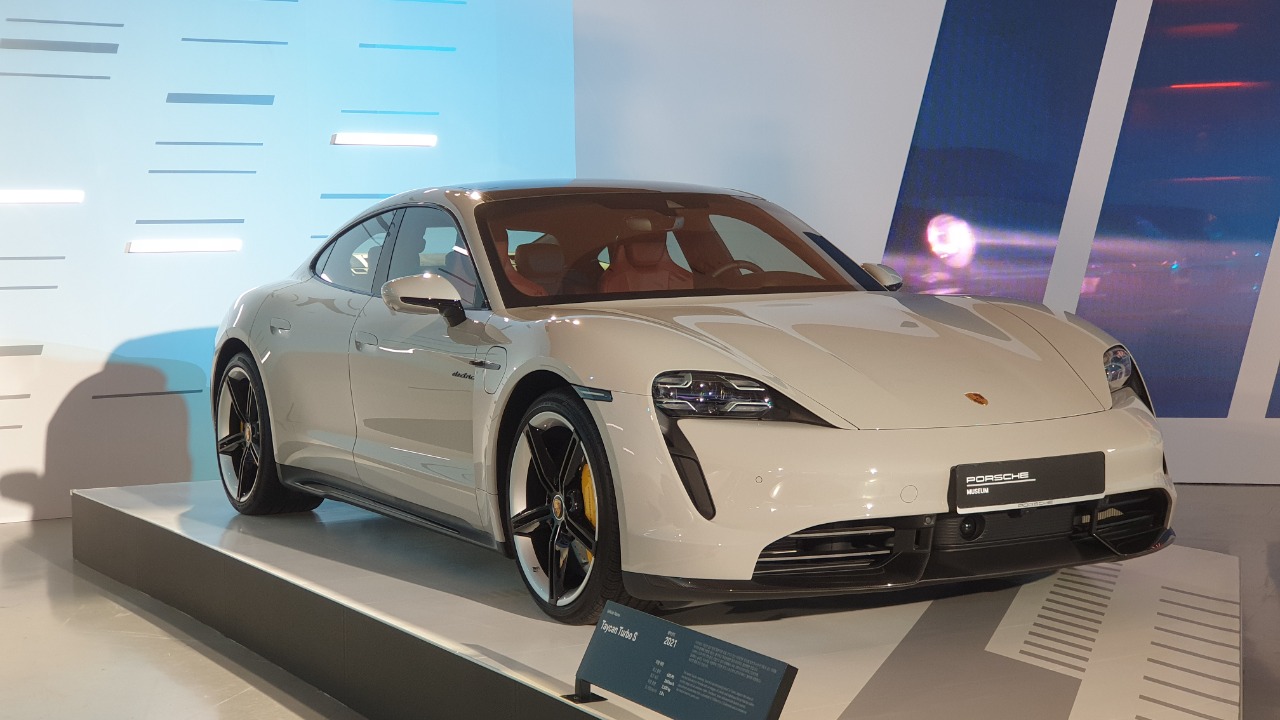
The first time I launched a Porsche Taycan Turbo S, my brain briefly lost the plot. Numbers could not fully explain what my body was feeling, yet the stopwatch insisted everything was perfectly rational. The car’s brutal, almost silent shove compresses time in a way that makes this electric sedan feel quicker than logic, even when the data says it is simply doing what it was engineered to do.
That disconnect between expectation and reality is exactly what makes the Taycan Turbo S so fascinating. On paper it is a high powered EV with serious performance credentials, but from behind the wheel it feels like the rules of acceleration have been rewritten, and your senses are scrambling to catch up.
Instant torque and the shock to your senses
What unsettles me most in the Taycan Turbo S is not the speed itself, but how instantly it arrives. In a combustion car, my body is used to a sequence: engine revs rise, a gear drops, then the surge builds. In the Taycan, there is no such prelude. The moment I press the pedal, the motors deliver their hit of torque with almost no delay, so my inner ear is already registering a hard shove before my conscious brain has finished deciding to go. That is the core of why this car feels so outrageously quick, even to drivers who are used to fast machinery.
Electric powertrains make this possible because they skip the entire combustion process that traditional engines rely on. Instead of waiting for fuel to ignite and for a transmission to shuffle ratios, the Taycan’s motors convert electrical energy into motion in a single, direct step, an approach that mirrors what specialists describe as The Advantage of Direct Power Conversion in Electric Cars. That is why the torque arrives in a clean, uninterrupted wave, and why the car’s response feels more like flicking a light switch than winding up an engine. When you combine that immediacy with the Taycan’s sheer output, the result is a launch that feels less like acceleration and more like a teleport.
The Taycan Turbo S powertrain: numbers that bend reality
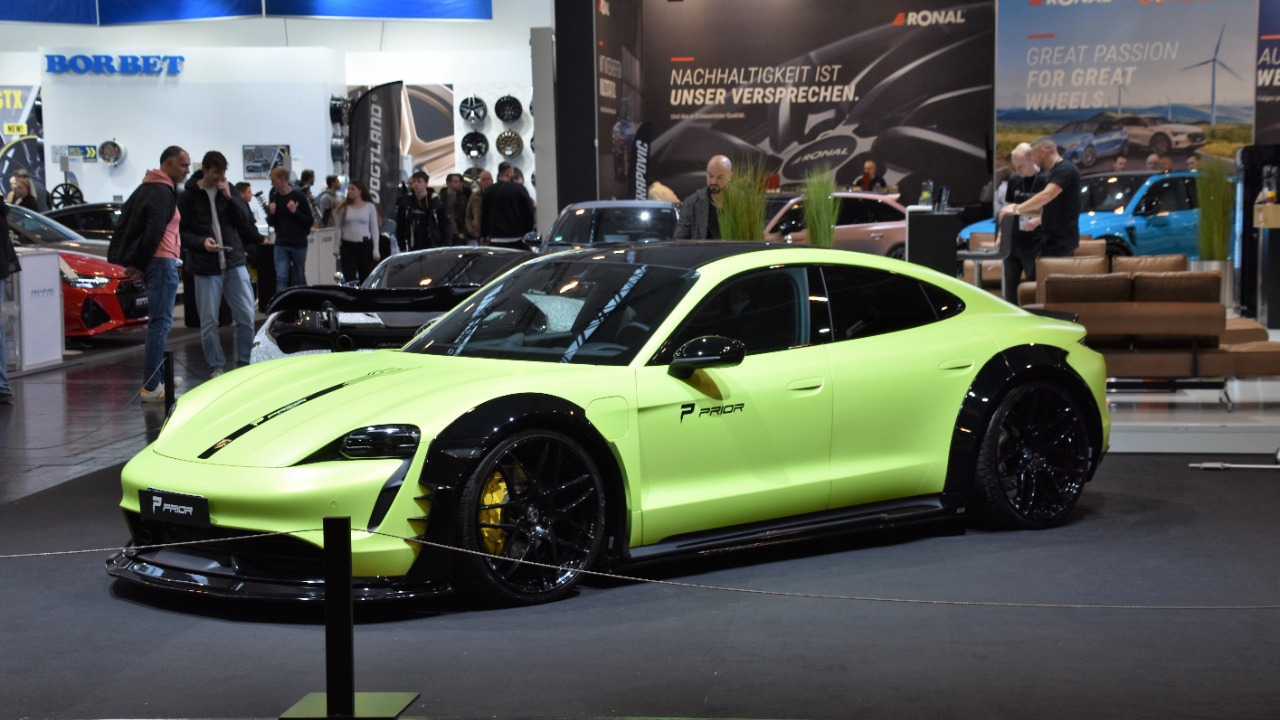
Underneath the drama, the Taycan Turbo S is still a machine, and its numbers are as serious as its sensations. In its most aggressive setting, the flagship version can briefly summon up to 560 k of overboost power, equivalent to 761 PS, which is supercar territory by any standard. When I roll into the throttle, I am not just feeling a quick sedan, I am feeling a car that has been engineered to sit at the sharp end of the performance spectrum, with the kind of output that used to be reserved for low slung exotics.
The way that power is deployed is just as important as the headline figures. The Taycan Turbo S uses a dual motor layout with one unit on each axle, a configuration that enthusiasts have rightly described as making The Taycan Turbo S Is Basically a Supercar in terms of traction and thrust. In Sport Plus mode, that system can deliver a reported 774 lb ft of torque, and the way it sends that force to all four wheels gives the car a kind of unflappable composure even as the scenery blurs. When I feel the Turbo S hook up and go, it is the combination of massive power and all wheel drive grip that makes the experience feel almost unreal.
Why electric acceleration feels different from any gas car
Even if you have driven fast combustion cars, the Taycan Turbo S plays by a different set of rules. Electric motors can deliver their maximum torque from essentially zero rpm, which means the full shove is available the instant you ask for it. That trait sits at the heart of what engineers describe when they say Electric Motors Deliver Instant Torque, and it is why the Taycan’s acceleration feels so linear and relentless. There is no waiting for a turbo to spool or a gearbox to kick down, just a smooth, continuous surge that makes traditional performance cars feel almost theatrical by comparison.
That smoothness is amplified by the Taycan’s unique transmission layout. Instead of a multi speed automatic, the car uses Two motors and a two speed gearbox, with a compact one speed unit at the front and a two speed transmission at the rear. From my seat, that translates into a launch that feels brutally short geared off the line, then eerily unbroken as the car shifts into its taller ratio without the lurch or pause I associate with conventional gear changes. The result is a sense of continuous, almost elastic acceleration that keeps building long after my instincts expect it to taper off.
G forces, human limits, and the “trust the thrust” moment
There is a point in every full bore Taycan Turbo S launch where physics stops being abstract and becomes deeply personal. Porsche itself notes that the most powerful Taycan, referred to as the Tayc, can subject occupants to a starting performance of around 1.2 g, which is the kind of load you feel in your chest and neck as much as in your stomach. When I pin the accelerator, my head presses into the headrest, my vision narrows slightly, and there is a brief moment where my body is convinced something unusual is happening, even though the cabin remains calm and composed.
That is where the phrase How to drive fast in a Taycan becomes more than a driving tip and turns into a psychological adjustment. I have to learn to trust that the car’s electronics, brakes, and chassis are fully in control even as my inner ear is screaming that this level of acceleration should come with more drama. The lack of engine noise and vibration strips away the usual cues my brain uses to gauge speed, so the g forces feel even more intense, as if the car is accelerating harder than it really is simply because it is doing so in near silence.
Chassis, traction, and the calm inside the storm
Part of what makes the Taycan Turbo S feel so uncanny is how relaxed it remains while delivering those numbers. The powertrain has been tuned for what Porsche itself calls Pure performance, with Breathtaking acceleration figures and sports car traction that stays consistent even as the car rockets out of bends onto a long straight. From behind the wheel, that translates into a strange duality: my body is being pushed hard into the seat, yet the steering remains light, the chassis feels settled, and the car tracks arrow straight as if this level of speed is no big deal.
That composure is what lets the Taycan Turbo S behave like a genuine long distance machine rather than a one trick drag racer. The same engineering that delivers Breathtaking acceleration also gives the car the ability to repeat those launches and high speed bursts without feeling ragged. When I drive it hard on a twisting road, the all wheel drive system and sophisticated suspension make the car feel planted and predictable, which only encourages me to lean more heavily on the instant torque. The calmer the chassis feels, the more surreal the acceleration seems, because my senses are used to associating this level of speed with noise, vibration, and a bit of chaos.
Sound, emotion, and why quiet can feel quicker
For drivers raised on big displacement engines, silence can feel like sacrilege. Traditionalists often argue that no engine noise means no soul, yet the Taycan Turbo S shows how the absence of mechanical drama can actually heighten the emotional hit of acceleration. When I launch the car, there is no rising wail to warn me what is coming, only a faint whir and a rising wind rush. That lack of auditory build up makes the shove feel more sudden, which is exactly what critics of modern cars are getting at when they say But instant torque delivery changes everything about how performance is perceived.
In the Taycan, there is also no waiting for the power band, no hunting for the right gear, and no sense that the car is working its way up to its best. The acceleration is simply there, fully formed, every time I ask for it. That immediacy, combined with the quiet cabin, tricks my brain into feeling that the car is bending the rules of physics, even though the stopwatch would show that its performance is right in line with its peers. The emotional gap between what I hear and what I feel is what makes the Turbo S seem quicker than logic, because my senses are calibrated to a world where speed always comes with a soundtrack.
Supercar pace, sedan practicality, and the new performance benchmark
What really scrambles expectations is that the Taycan Turbo S delivers this level of performance in a four door package that can handle school runs and grocery trips. On paper, the broader Taycan family already looks formidable, with Electrifying Performance figures like the 630 horsepower quoted for The Taycan Turbo, and acceleration that rivals traditional supercars. When I drive the Turbo S, I am effectively experiencing the top of that pyramid, a car that takes those already serious numbers and pushes them into territory that used to be the preserve of mid engined two seaters.
That is why some observers are comfortable saying Supercar when they talk about the Taycan Turbo S, even though it has four doors and a usable trunk. The car’s ability to deliver repeated, brutal launches, combined with its high speed stability and everyday usability, resets what I expect from a performance sedan. It is not just that the Taycan is fast for an EV, it is that it has become a reference point for what modern performance can look like when you are no longer constrained by the packaging and power delivery of a combustion engine.
From Turbo S to Turbo GT: the Taycan’s expanding performance envelope
The Taycan Turbo S does not exist in isolation, it sits within a broader lineup that keeps stretching what an electric Porsche can do. Higher up the ladder, the Porsche Taycan Turbo GT The Porsche Taycan Turbo GT has been highlighted as proof that EVs can deliver sustained, track level performance rather than just party trick launches. When I look at that car alongside the Turbo S, I see a brand that is using electric power not only to chase acceleration figures, but to build a family of cars that can handle repeated hard laps and long stints without fading.
That context matters when I think about why the Turbo S feels so extraordinary. It is not a one off experiment, it is part of a deliberate move to make electric performance feel as natural and repeatable as anything in the combustion era. Knowing that there is room above it in the range only reinforces how far the Taycan platform can be pushed, and why the Turbo S already feels like a glimpse of where everyday performance is heading.
Throttle response, human perception, and why it feels “too fast”
In the end, the Taycan Turbo S feels quicker than logic because its responses are operating on a different timescale from my reflexes. The car’s throttle response has been measured as several times faster than what drivers are used to from traditional powertrains, with one review noting that the Taycan Turbo S reacts around five times quicker than a comparable combustion engine setup. When I press the accelerator, the car has already delivered a meaningful chunk of its potential before my foot has finished its travel, which makes my inputs feel almost telepathic.
That mismatch between human reaction time and machine response is the final piece of the puzzle. My brain is wired to expect a small delay between action and consequence, especially in something as complex as a high performance car. The Taycan Turbo S removes that delay, layers it on top of huge power and traction, and wraps it all in a quiet, composed package. The result is a car that does exactly what the numbers say it should, yet still feels like it is getting away with something every time I floor it.

Leave a Reply