
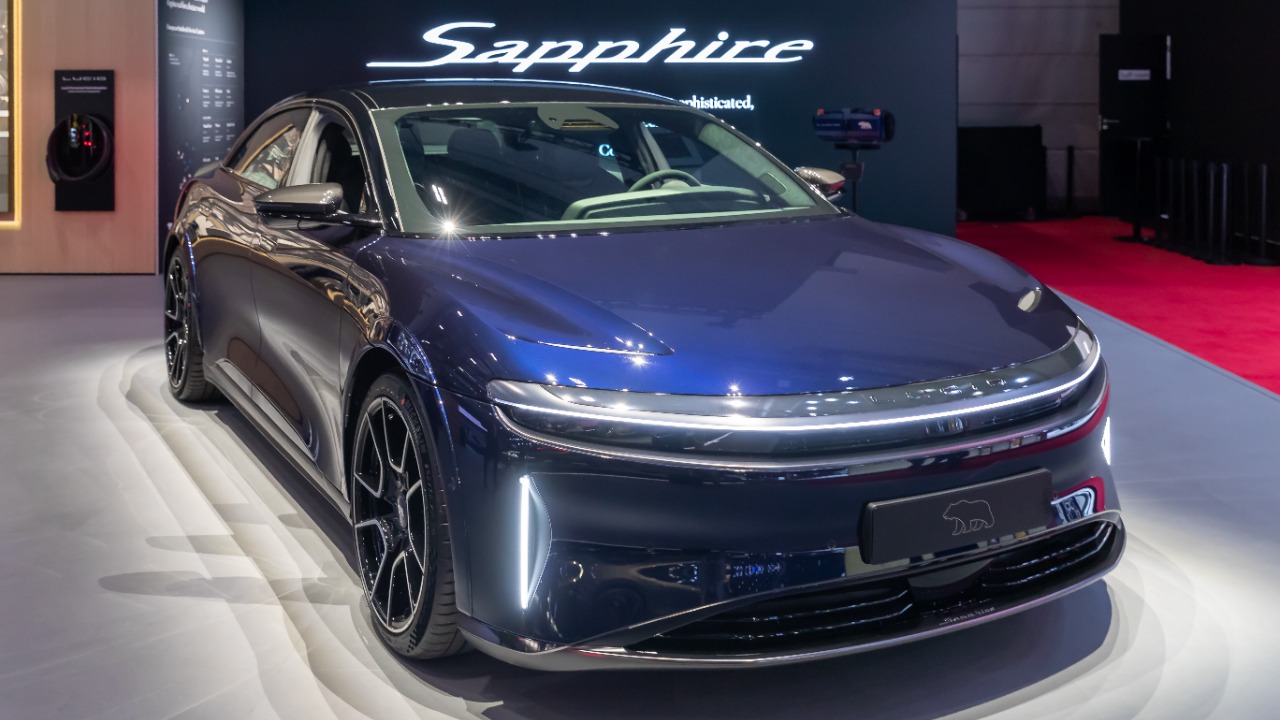
The Lucid Air Sapphire did not just nudge its way into the supercar conversation, it barged in with numbers and real‑world runs that forced veterans of the scene to recalibrate what “fast” and “capable” mean in an electric age. I have watched seasoned drivers, longtime Tesla loyalists, and old‑school drag racers walk away from this car looking slightly dazed, as if the rulebook they grew up with had been quietly shredded. What follows is how this sedan managed to stun people who thought they had already seen the limits of performance.
From curiosity to benchmark: how the Sapphire reset expectations
When I first started following the Lucid Air Sapphire, it felt like a curiosity, a high‑power variant from a young brand trying to elbow into a space dominated by legacy exotics and the loudest EV names. That perception did not last long. Once independent testers began timing its launches and lining it up against established heroes, the Sapphire stopped being a speculative “what if” and became a reference point, the car other machines had to beat rather than the upstart hoping to keep up.
That shift is clearest in the way performance outlets now talk about the Lucid Air Sapphire as the quickest car they have ever tested, full stop, not just the quickest EV. When a sedan earns that kind of status on a tightly controlled 0‑60 run, it changes the hierarchy that supercar veterans have carried in their heads for decades. The numbers are not abstract either; they are backed by repeatable launches and trap speeds that would have sounded like fantasy in the era when a V12 badge was the ultimate bragging right.
The Tesla loyalist who walked away shaken
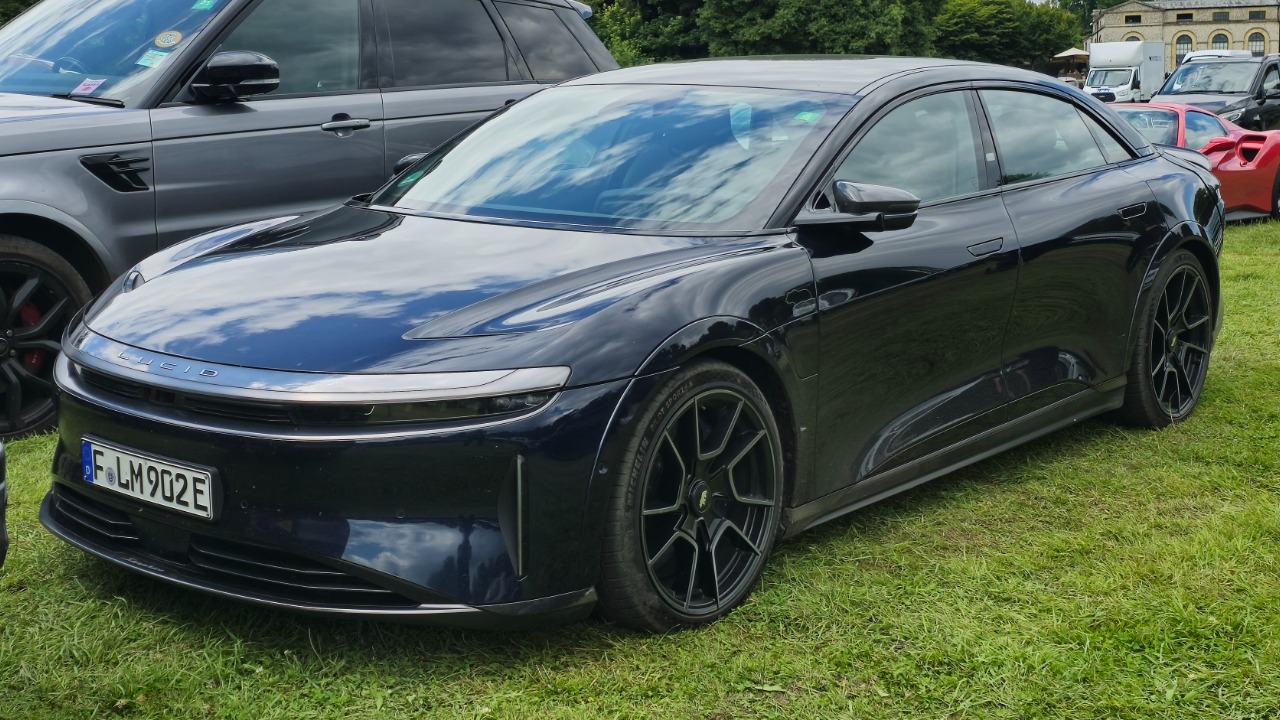
One of the clearest windows into how the Sapphire scrambles expectations comes from watching a committed Tesla owner confront it head‑on. In a detailed comparison, a host named Hussein, who openly identifies as a Tesla loyalist, climbed into a Lucid Air Sapphire and came away describing an unexpected revelation about what an electric sedan can feel like under full throttle. I have seen plenty of brand‑to‑brand comparisons, but it is rare to watch someone who has lived with a fast Tesla suddenly realize that their mental ceiling for acceleration might have been set too low.
Hussein’s reaction matters because it is not just a spec sheet debate, it is a visceral response from someone who knows how a top‑tier Tesla behaves at the limit. As he talks through the Sapphire’s surge and the way it keeps pulling deep into triple‑digit speeds, you can sense that his frame of reference is shifting in real time. That kind of on‑camera recalibration, captured in his EV comparison, is exactly what makes supercar veterans sit up and pay attention, because it suggests the Lucid is not just trading blows with familiar rivals, it is redefining what “normal” feels like in a flagship EV.
Taking an EV into gasoline country
If there is any environment where an electric sedan still feels like an intruder, it is a drag strip steeped in gasoline culture. That is why I keep coming back to the day an all‑electric performance car rolled into Maryland International Raceway, a place better known for big‑block rumble than silent launches. Watching an EV line up in that context is like seeing a chess grandmaster walk into a boxing ring; the crowd is curious, but not entirely convinced it belongs there.
In that setting, presenter Jared Gaul, working with the team from Motor Trend at Maryland International Raceway, framed the run as a “now or never” moment to put down a big number. The stakes were not just about bragging rights, they were about whether an electric sedan could earn respect in a venue that has long treated EVs as novelties. When the car delivered, it did more than light up a scoreboard; it forced a crowd of seasoned racers to reconcile the quiet launch they had just witnessed with the brutal times flashing on the board, a cognitive dissonance that plays directly into the Sapphire’s shock factor.
Facing the hypercar yardstick
For supercar veterans, the true test of any newcomer is how it fares against the hypercar royalty that has defined the outer edge of performance. That is why lining up a Lucid Air Sapphire and a Tesla against a Rimac Nevera matters so much. The Nevera has already built a reputation by humiliating some of the most storied names in the business, including a Lamborghini Revuelto, a Ford Police car, and even a Bugatti Divo, so any car that dares to share tarmac with it is stepping into the harshest possible spotlight.
In that drag race context, the Sapphire is not expected to dominate a purpose‑built hypercar, but to show that a four‑door luxury EV can live in the same frame without looking out of place. The fact that the Nevera has already dispatched a Lamborghini Revuelto, a Ford Police car, and a Bugatti Divo gives context to just how extreme the benchmark is. When the Lucid holds its own in that company, it sends a clear message to veteran drivers: the old separation between “family sedan” and “hypercar territory” is starting to blur in ways that would have sounded absurd only a few years ago.
Humbling track icons one run at a time
Drag strips and hypercar showdowns tell one part of the story, but for many purists the real test is how a car behaves against track‑bred machines with decades of development behind them. That is where the Lucid Air Sapphire’s encounters with cars like the Porsche 992 GT3 become so revealing. Watching a big electric sedan square off against a lithe, rear‑engined track weapon is like seeing a heavyweight step into a ring with a seasoned middleweight champion; on paper, the match‑up looks odd, yet the outcome can be startling.
In one widely shared clip, the Sapphire is pitted against a 992 GT3 in an “epic race showdown” that quickly racked up engagement, including 112 visible interactions in the form of likes and other reactions alongside a stream of Comments. The fact that a straight‑line duel between a luxury EV and a track‑tuned Porsche could command that kind of attention tells me something important: enthusiasts who once dismissed electric sedans as one‑trick ponies are now watching closely, frame by frame, to see whether the Sapphire can not only launch hard but also sustain its pace and composure against cars that were born and bred for circuit work.
The numbers that made veterans blink
For all the emotion wrapped up in these showdowns, the Lucid Air Sapphire’s impact on supercar veterans ultimately comes down to cold, hard numbers. When a car that looks like a comfortable long‑distance cruiser starts posting acceleration figures that eclipse purpose‑built exotics, even the most jaded track rat has to pause. I have spoken with drivers who have spent years chasing tenths in combustion cars, and they admit that watching a silent sedan rip off a near‑instant 0‑60 run feels almost unfair.
That sense of disbelief is exactly what surfaced when testers confirmed that the quickest car they had ever measured was not a stripped‑out supercar but the Lucid Air Sapphire. The data did not just crown a new 0‑60 king, it reframed the entire conversation about what kind of body style and drivetrain layout can sit at the top of the performance pyramid. When veterans who have spent their careers chasing incremental gains see a sedan leapfrog their heroes in one generation, it is no surprise that some of them walk away from the timing equipment looking a little stunned.
Luxury that does not apologize for speed
What really unsettles the old guard is that the Sapphire does all of this without sacrificing the comfort and tech that define modern luxury. Inside the cabin, the driver is greeted by a sweeping 34-inch curved glass cockpit display that wraps key information into a single, futuristic plane. I have sat in plenty of fast cars that feel like stripped‑out tools, but the Sapphire leans into the idea that you should not have to choose between a serene commute and a spine‑compressing launch.
That philosophy extends to the audio and driver‑assist systems, where features like DreamDrive Pro and the immersive Surreal Sound Pro setup turn the cabin into something closer to a rolling lounge than a bare‑bones racer. For supercar veterans used to trading away comfort in pursuit of lap times, climbing into a car that can crush a quarter‑mile and then settle into near‑silent, high‑fidelity cruising is disorienting in the best possible way. It suggests that the old compromises between speed and civility are no longer mandatory, and that realization can be as shocking as any launch control sequence.
Why the Sapphire hits different for seasoned drivers
When I talk to drivers who have spent years in high‑end performance cars, what strikes me is not just their admiration for the Sapphire’s numbers, but the way they describe its character. They are used to machines that demand constant attention, that telegraph their speed through noise, vibration, and a sense of barely contained violence. The Lucid Air Sapphire, by contrast, delivers its performance with a kind of calm inevitability that some veterans find almost eerie.
That contrast is part of why the car feels so disruptive. A veteran who has wrung out a Lamborghini Revuelto or chased a Bugatti Divo down a straight is conditioned to equate drama with speed. When the Sapphire matches or approaches those sensations without the usual sensory overload, it forces a mental reset. The shock is not just that an electric sedan can be this quick, it is that it can be this quick while feeling composed, insulated, and almost understated, a combination that leaves even the most experienced drivers reassessing what they actually want from a supercar‑level experience.
The new normal supercar veterans will have to live with
Looking across these encounters, from Hussein’s Tesla‑to‑Lucid awakening to the runs at Maryland International Raceway and the hypercar drag races, a pattern emerges. The Lucid Air Sapphire keeps showing up in places where it is not supposed to belong, then performing in ways that make its presence feel not just justified but inevitable. Each time it does, another piece of the old performance hierarchy crumbles, and another veteran walks away with a new benchmark etched into their memory.
For me, that is the real story of how this car has stunned the supercar establishment. It is not just about one outrageous 0‑60 time or a single viral clip, it is about a steady accumulation of proof that a spacious, tech‑laden sedan can run with, and sometimes outrun, the icons that defined an era. As more drivers experience that reality firsthand, the Sapphire stops being an outlier and starts to look like a preview of the new normal, a future where the most devastatingly quick car in the paddock might also be the one with the quietest cabin and the most comfortable seat.

Leave a Reply