
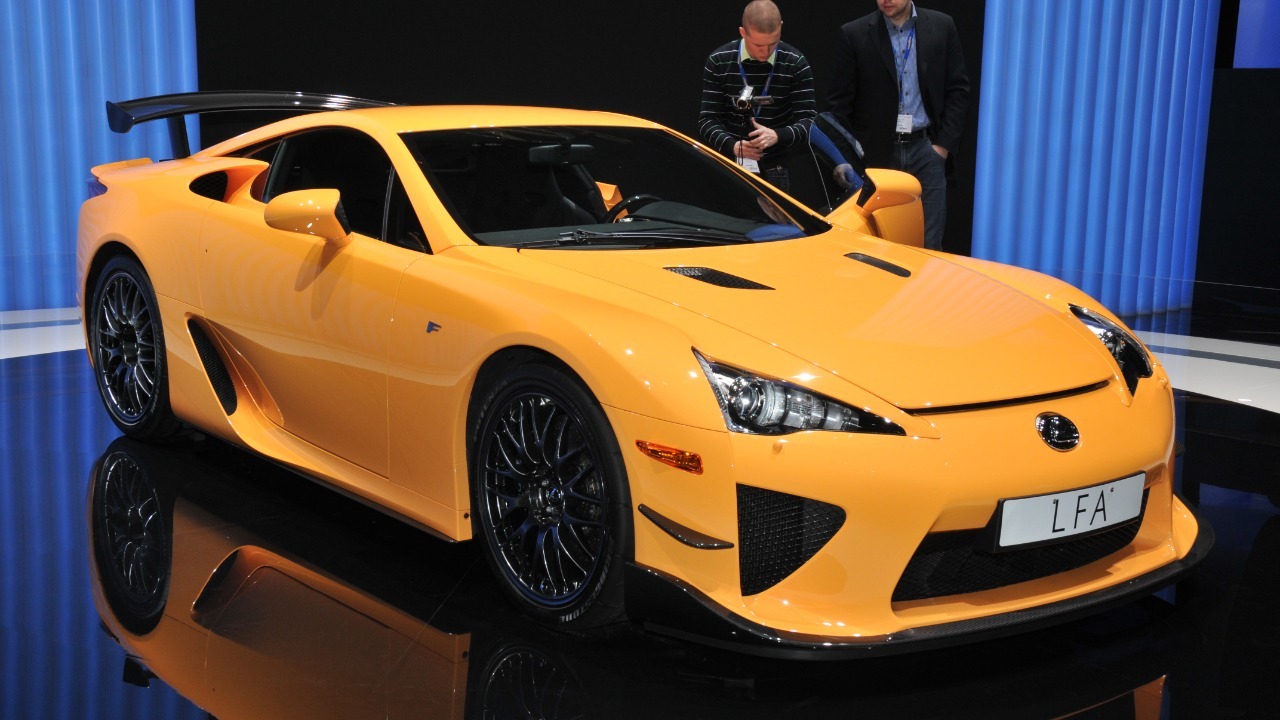
The Lexus LFA did not simply arrive as another high-revving supercar; it landed like a perfectly timed downbeat, turning a 4.8‑liter V10 into something that felt closer to a concert instrument than an engine. Rather than chasing volume for its own sake, Lexus and Yamaha treated sound as a core performance metric, shaping every intake pulse and exhaust note until the car’s voice became as defining as its speed.
What emerged was a machine that enthusiasts still describe in musical terms, a car whose howl can be recognized in a split second even through laptop speakers. In a world where turbochargers and synthetic soundtracks often blur the edges, the LFA’s naturally aspirated scream stands out as a deliberate act of acoustic engineering, a symphony weaponized for the road and track.
The V10 that thought it was in Formula 1
When I think about why the LFA’s sound hits so hard, I start with the way its V10 behaves more like a racing engine than a road car powerplant. The 4.8‑liter unit was not a reworked V8 or V12, it was a clean-sheet design that, as reporting makes clear, Was Derived From Formula 1 thinking. That heritage shows up in the way it zings from idle to redline, with sources noting it can sweep from 0 to 9000 rpm in just 0.6 seconds. That kind of response is not just a performance flex, it is the foundation for the LFA’s signature wail, because the faster an engine can change speed, the more dramatic its pitch and timbre shifts feel to the human ear.
The even firing order of the V10 adds another layer to the soundtrack, creating a smooth, almost synthetic sweep of frequencies that enthusiasts often describe as otherworldly. One deep dive into the car’s exhaust obsession notes that the LFA’s soundtrack is built around this even-firing V10, which gives the car a high, clean tone that some listeners compare to something “UFO-like” when it is pinned at full throttle. In other words, the LFA’s engine architecture was never just about power figures; it was a deliberate choice to create a specific kind of voice, one that could climb in pitch with almost musical precision as the tachometer sweeps toward 9000 rpm.
Lexus and Yamaha, composing a car

The LFA’s sound only makes sense once I see it as a collaboration between two companies that both live and die by how things feel and sound in the real world. Lexus brought the obsession with refinement and precision, while Yamaha arrived not just as an engine consultant but as an acoustic partner, treating the V10 like a performance instrument. In official material tied to the Oct Tokyo Motor Show, Yamaha describes how it created the acoustic design for the engine of the Lexus LFA, with the explicit goal of producing a clear, dynamic and smooth sound that would thrill both driver and bystanders.
That partnership went far beyond a few tweaks to the exhaust. Reporting on the project’s origins describes how Lexus and Yamaha treated the car as the genesis of a sonic icon, with Yamaha’s own description making clear that this was not a side project but a full acoustic design program. Another detailed breakdown of the hardware notes that Lexus engineers used a porous material in the exhaust system to tune resonance, a detail that reads less like traditional car engineering and more like the inside of a musical instrument. The result is a car whose voice was never left to chance, because both companies understood that sound would be central to its identity.
Inside the “sounds spectacular” hardware
To understand how the LFA turns combustion into music, I have to look at the physical hardware that shapes every note. The exhaust system is not just a pipe and a muffler, it is a carefully staged series of chambers and materials that sculpt the sound before it reaches your ears. One technical breakdown explains that the main silencer is made from a uniquely formed structure that splits and recombines exhaust pulses, a layout designed so the driver hears the same thrilling character as those on the outside, a detail highlighted in coverage of the main silencer. That is not an accident; it is a way of making sure the car’s personality is as vivid from behind the wheel as it is from the sidewalk.
The intake side is just as carefully tuned. Engineers modified the induction system to complement the engine’s acoustic properties, including a horizontally split intake layout that lets different frequencies resonate at different engine speeds. Reporting on the LFA’s development notes that while the sound outside the car is dominated by the exhaust, the cabin experience is shaped by this intake howl, which builds into a nape-tingling red-line wail as the V10 spins toward its limit, a crescendo captured in analysis of the red-line wail. When I put those pieces together, the LFA starts to look less like a car with a good exhaust and more like a full acoustic system, with intake, combustion and tailpipes all playing different parts in the same score.
From Tokyo show stand to lasting legend
The LFA’s sonic story did not stay locked in engineering diagrams; it was meant to be heard, and Lexus made sure of that from the moment the car stepped into the spotlight. At the Oct Tokyo Motor Show, the company and Yamaha openly framed the project around sound, presenting the V10’s acoustic design as a central talking point rather than a hidden detail. That early positioning matters, because it signaled that the Lexus LFA was not just another fast coupe, it was a statement about how deeply a brand could care about the way a car feels and sounds when pushed to its limits.
Over time, that focus has turned into legend. One retrospective on the car’s impact points out that it was Introduced in 2010 and still stands as a reference for how a supercar can sound, with the Lexus LFA often cited as proof that there is a deep connection between automobiles and acoustics. That staying power is not nostalgia; it is the result of a car that was engineered from day one to make its voice unforgettable, and that decision has kept it in the conversation long after production ended.
The internet-era halo of a “best-sounding” icon
What fascinates me most is how the LFA’s sound has not faded with time but has actually grown louder in the digital era, amplified by clips and loops that travel far beyond traditional car culture. One widely shared reel invites viewers to Enjoy 17 seconds of what it calls the greatest sounding car of all time, with The Lexus LFA front and center as the star of the clip. Another long-form video goes even further, offering hours of the car’s exhaust note on loop and emphasizing that the footage is all about the sound of the even-firing V10, a kind of meditative listening session built around the LFA’s exhaust note. When a car’s voice can hold attention for that long, it has clearly crossed from mechanical curiosity into cultural artifact.
Social media has only reinforced that status. One clip flatly calls the Lexus LFA the best-sounding car of all time and describes how Its high-revving character turns every acceleration run into a symphony on wheels, a sentiment captured in a reel that celebrates how Lexus LFA and Its soundtrack feel transcendent. Another detailed feature on why the LFA sounds like it escaped a concert hall notes that what sets the LFA apart is that its sound was never left to chance, with What emerges being described as the “secret behind the symphony.” In an era when so many performance cars rely on artificial augmentation, the LFA’s naturally aspirated, meticulously tuned voice feels even more special, a reminder that when engineers and acousticians work in harmony, a V10 can become something far more than a source of power.



Leave a Reply