
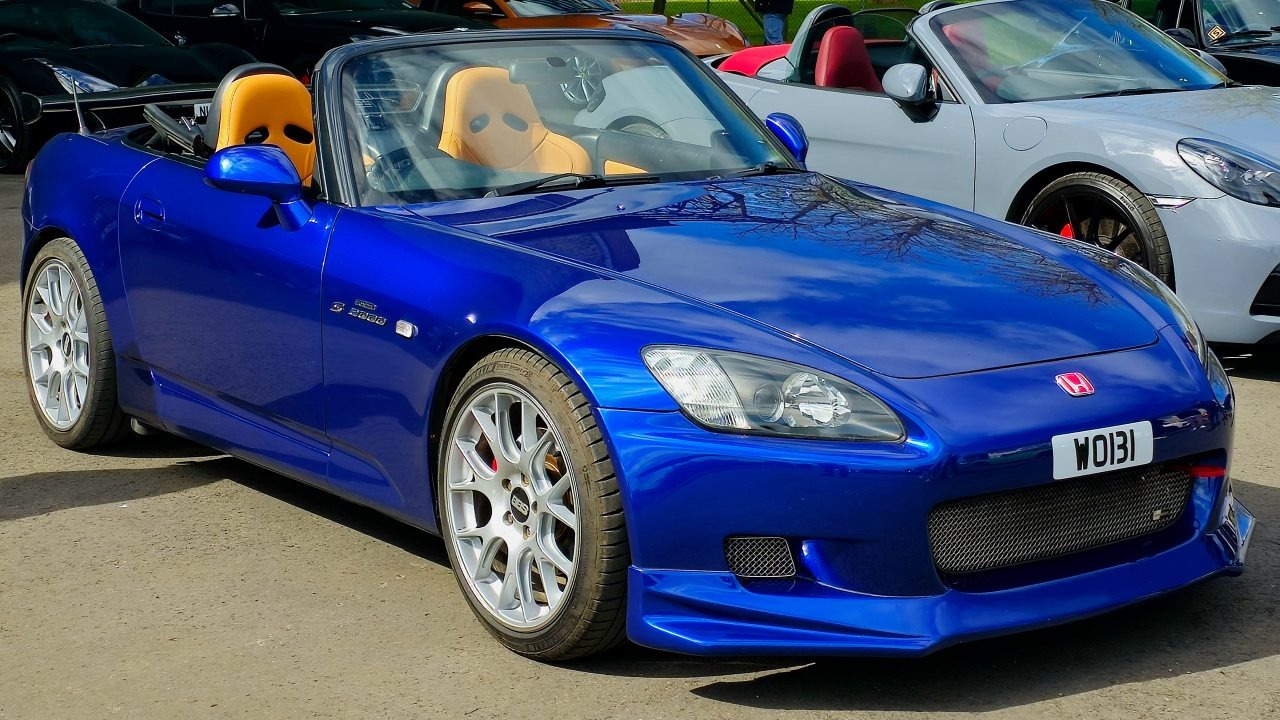
The Honda S2000 CR has quietly crossed the line from used roadster to modern collectible, and the market is finally pricing it that way. Values keep climbing because the CR is not just a rarer S2000, it is a concentrated version of everything enthusiasts now miss in new performance cars: light weight, high revs, and a chassis tuned for drivers rather than algorithms.
As I look at how clean examples trade hands today, it is clear the CR’s trajectory is not a bubble story but the result of limited supply, focused engineering, and a broader surge of interest in analog Japanese performance. The standard S2000 was already on an upswing, and the Club Racer simply sits at the sharpest point of that curve.
From cult favorite to appreciating asset
The starting point for understanding the CR’s rise is the base S2000 itself, which has shifted from overlooked used car to appreciating modern classic. The roadster arrived as a two-seater that did not just chase Miatas, it Took On More Premium Sports Cars Than Its Japanese Rivals, and that ambition shows in how the market now treats it. The car’s naturally aspirated engine, screaming to the top of the rev range, and its balanced rear wheel drive layout have aged into exactly the kind of experience enthusiasts struggle to find in new showrooms.
That shift is backed by hard numbers. One detailed valuation breakdown notes that the S2000 was one of Honda’s best naturally aspirated sports cars of all time, and that Time has proved its reliability and desirability. Another analysis points out that with an average of just 11,000 m made per year, the S2000 was never a mass market toy, which helps explain why clean examples are now chased so aggressively. When the base car is already climbing, a rarer, sharper derivative like the CR is almost guaranteed to move faster.
Why the CR is more than a sticker package
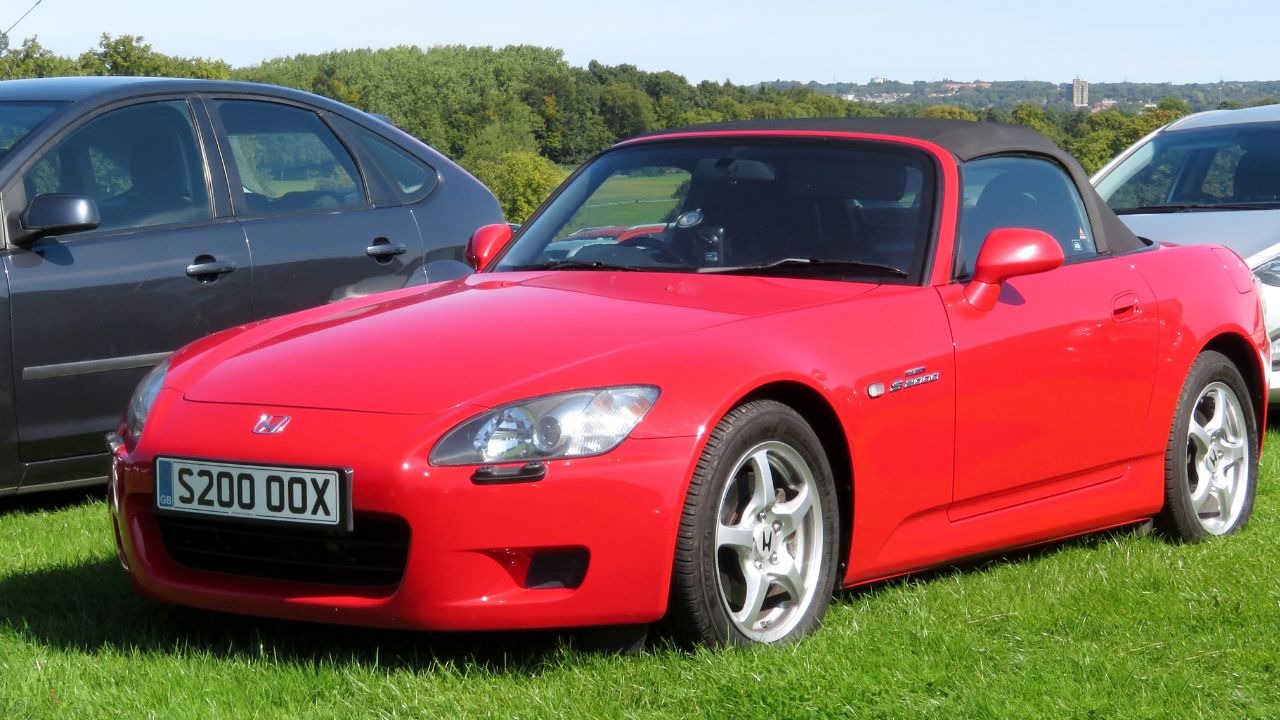
What keeps the S2000 CR on an upward curve is that it delivers real substance, not just a badge and a wing. With the CR, Honda treated the car as a serious track focused evolution, and With the CR extra attention was applied to adding lightness, even allowing owners to delete the air conditioning and radio. That kind of factory sanctioned minimalism is rare in any era, and it sends a clear signal to collectors that this is the “driver’s spec” straight from the engineers.
The hardware changes go deeper than creature comforts. A closer look at the package of Honda S2000 CR changes over the regular S2000 shows quicker steering, stiffer suspension, stickier tires, and aero pieces that actually add stability at speed, all of which are detailed in a breakdown of how Honda turned the car into its most hardcore form. When I weigh those upgrades against the standard car, it is obvious why track day drivers and collectors both see the CR as the one to have, and why they are willing to pay a growing premium for the privilege.
Rarity, production numbers, and the power of “last of its kind”
Rarity is the accelerant on the CR’s value curve. The broader S2000 lineup was already limited, with production averaging about 11,000 cars per year, and that scarcity is amplified when you zoom in on the Club Racer. One buyer’s guide notes that S2000 CRs, like for like in condition and mileage, generally sell for about double what a normal S2000 will, and that Of the 699 produced, a significant share were built in the intended, stripped out form. That figure, 699, is the kind of hard cap collectors love, because it makes the car feel more like a numbered print than a mass produced product.
The CR’s scarcity is even starker when you compare it with the rest of the S2000 family. A detailed look at why Honda’s roadster is so hard to find points out that the brand only sent a Limited number of cars per year to the U.S. market, and that Special Editions like the Club Racer, Type V and Type S come at a premium because they sit on top of an already small pool. When I factor in that Honda planned on producing around 2,000 units of the CR but in reality only managed those 699, it becomes clear why buyers now treat every surviving example as a scarce opportunity rather than just another used convertible.
Driving character that modern cars struggle to match
Values are not rising on rarity alone, they are rising because the CR delivers a driving experience that feels increasingly unavailable in new cars. The standard S2000 already built its reputation on a high revving engine and a chassis that rewarded commitment, and the CR simply turns that dial further. The combination of quicker steering, firmer suspension, and stickier rubber described in the analysis of the most hardcore Honda S2000 CR makes the car feel alive at speeds where many modern performance machines are still waking up.
From my perspective, that immediacy is exactly what today’s buyers are chasing. Modern sports cars are quicker on paper, but they are also heavier, more insulated, and more reliant on drive modes and electronics to shape the experience. The CR, by contrast, is a car you adjust to rather than one that adjusts to you, and that analog character is reinforced by the ability to delete comfort features and live with the car in its rawest form, as described in the deep dive that begins with the phrase With the CR. That kind of purity is hard to replicate, which is why owners who have it are reluctant to let go, and why those who want it are bidding prices up.
Collector psychology and where values go next
When I talk to collectors and track day regulars, a pattern emerges in how they think about the S2000 CR. They see it as the definitive version of a car that was already special, built in tiny numbers, and launched near the end of an era when naturally aspirated, high revving four cylinders could still anchor a halo model. The broader market analysis that calls the S2000 one of Honda’s best sports cars and highlights how Time has only strengthened its reputation feeds directly into that narrative, because the CR is the purest expression of that formula.
On top of that, the CR benefits from the same forces lifting other Japanese performance icons. Limited production, clear motorsport intent, and a reputation for durability make buyers comfortable paying more, because they believe the car will both deliver on the road and hold its value in the garage. The fact that S2000 CRs already trade for roughly double the price of comparable standard cars, as noted in the guide that spells out that only 699 were built, suggests the market has internalized that story. I do not see that premium shrinking while the appetite for analog, Limited run performance cars keeps growing, which is why the S2000 CR continues to climb in value and shows every sign of staying on that path.

Leave a Reply