
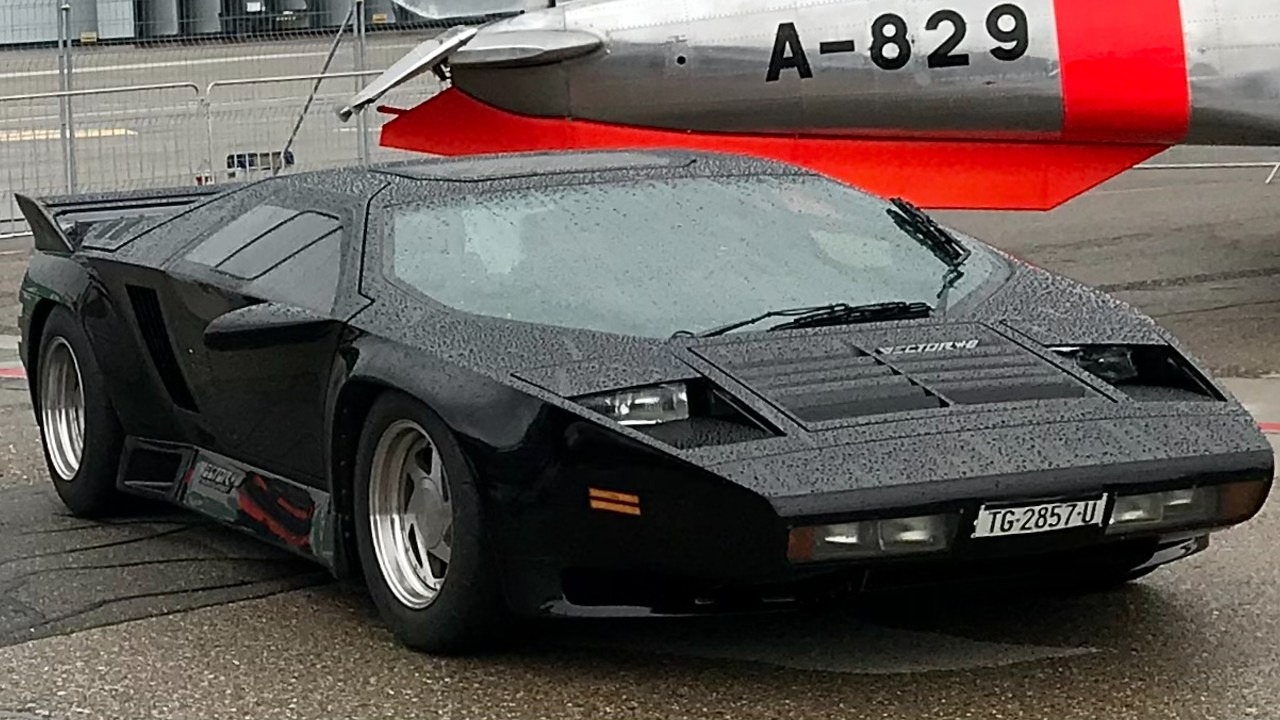
The Vector W8 arrived as if it had slipped through a wormhole from a stranger, faster future, a low, angular projectile that made even contemporary Ferraris look conservative. It promised aerospace materials, videogame dashboards and a top speed that would humiliate Europe’s finest, yet it also exposed how fragile that kind of ambition can be when it collides with reality. For me, the W8 remains a case study in automotive overreach, a car so extreme in vision and execution that almost nobody in its era was prepared to understand, fund or live with its particular brand of madness.
To grasp why this machine still exerts such pull, I have to look past the folklore and focus on what it actually was: a hand-built American supercar that tried to fuse race engineering, fighter-jet aesthetics and Silicon Valley bravado long before that mix became fashionable. The Vector W8 was not simply fast or rare, it was an attempt to redraw the boundaries of what a road car could be, and that is precisely why its flaws proved as spectacular as its achievements.
The audacious vision behind Vector
Long before the first customer car existed, the Vector project was framed as a technological moonshot rather than a conventional model line. The company that created it, Vector aimed to use the most advanced aerospace materials and technologies possible in a road‑legal supercar, a mission that immediately set it apart from the more incremental evolution at brands like Ferrari and Lamborghini. That ambition shaped everything from the chassis construction to the obsessive focus on stability at extreme speed, and it explains why the W8 never felt like a derivative American take on a European template.
At the center of this effort was founder Jerry Wiegert, whose determination bordered on monastic. Earlier in the program, Wiegert contacted Larry Griffin, then associate editor of Car and Driver, to help validate the car’s performance claims, a move that underlined how seriously he took independent scrutiny. That outreach also hinted at a tension that would haunt the W8: it was engineered to chase numbers that looked unbeatable on paper, yet it struggled to prove them consistently in the real world.
Design that looked like science fiction
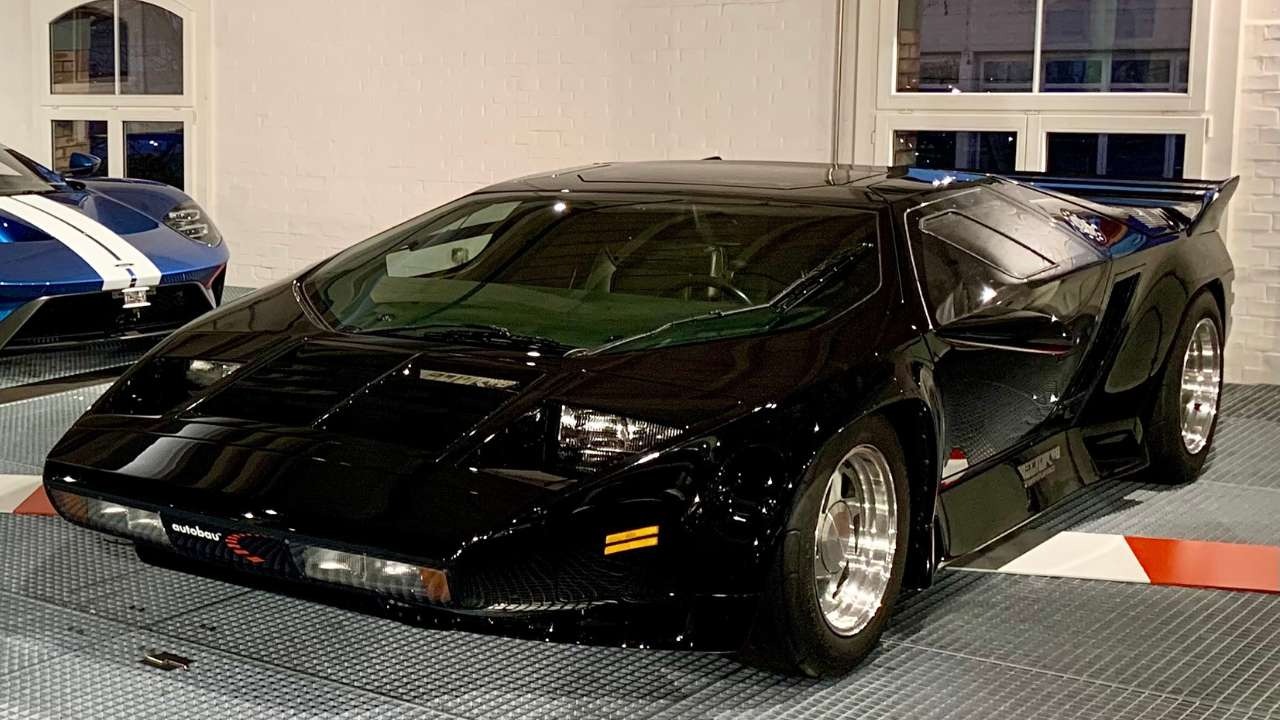
Visually, the W8 was a provocation. Its extravagant wedge-shaped silhouette and razor-edged surfaces made even the most aggressive Italian exotics look almost polite, a point underscored by the way Vector Style More Audacious than Lamborghini became a recurring theme in later commentary. The car’s stance, with its vast rear haunches and deep air inlets, was not just theatrical, it was a deliberate attempt to telegraph the power and cooling demands of a twin‑turbo V8 that sat like a small industrial plant behind the cabin.
Inside, the W8 pushed even further into fantasy. The cockpit wrapped the driver in neoteric display screens and aviation‑inspired switchgear, a layout that Its extravagant wedge-shaped silhouette, neoteric display screens, and extensive use of aerospace materials helped define as a kind of rolling fighter jet. In the central display, a Tron-like amber outline of the car appeared, turning basic vehicle information into a piece of digital theater. For a modern driver used to touchscreens and configurable clusters, it might feel like organized chaos, but in the context of its era it was a startling preview of the data‑rich cabins that would later become normal.
Powertrain promises and performance reality
Underneath the drama, the W8’s mechanical package was as bold as its styling. The heart of the car was a big American V8 from General Motors, and A Big V8 From The General, aided by two turbos, was tuned to deliver output figures that rivaled or exceeded European rivals. Contemporary coverage often cited ballyhooed numbers around 625 horsepower, and the company talked confidently about a top speed that would push into the mid‑200 mph range, a claim that fed directly into the car’s myth.
On paper, the metrics were staggering. The W8 was Able to achieve 0-60mph in just 4.2 seconds, the Vector W8 had a top speed of more than 220 m per hour at a time when Ferrari and Lambor were still struggling to hit more than 200 mph. Yet the gap between claimed and verified performance became a recurring problem. Independent testing struggled to reproduce the most extreme numbers, and The Vector W8’s performance is one of the best things about the car, but its Performance Didn Meet Expectations in the sense that the headline top speed was never conclusively demonstrated on a sanctioned run.
Engineering brilliance built on fragile foundations
Part of the W8’s mystique lies in how it repurposed existing hardware in unorthodox ways. Rather than commission a bespoke gearbox, Vector would modify this transmission, the same gearbox used in the front-wheel drive Oldsmobile Toronado, to handle the immense torque of a mid‑engined twin‑turbo layout. It was an ingenious, if risky, way to harness proven components for a radically different application, and it reflected the resourcefulness required of a small manufacturer trying to compete with global giants.
Yet that ingenuity came at a cost. The complexity of the powertrain and electronics, combined with the low production volume, meant that reliability was always going to be a challenge. In practice, the W8 often behaved like a prototype that had escaped the test track. Later accounts note that Car and Driver tested two W8s and they broke down constantly, a damning verdict for a car that was supposed to showcase aerospace‑grade durability. That fragility fed into a narrative that the W8 was as temperamental as it was fast, a machine that demanded patience and mechanical sympathy few owners were prepared to offer.
Money, myth and a spectacular flop
Even if the W8 had been perfectly reliable, its economics were stacked against it. The car’s intricate construction, exotic materials and hand‑built nature translated into a price tag that shocked the market, and This car has a spectacular presence, but The Vector W8’s Price Contributed To Its Lack Of Success because the very features that made it special also made the car so expensive. For a buyer weighing a W8 against a Ferrari or Lamborghini with established dealer networks and racing pedigree, the rational choice was rarely going to favor the upstart from California.
The financial strain on the company became impossible to ignore. Production remained tiny, and Vector unfortunately fell into receivership in 1993 after completing just 17 customer cars, While Jerry Wiegert’s dream of an American supercar brand was effectively halted during the 1980’s supercar wars. That collapse cemented the W8’s reputation as a spectacular flop, yet it also froze the car in time as a kind of automotive thought experiment, a snapshot of what happens when vision outpaces infrastructure.
Why the madness still matters
For all its flaws, the W8 has aged into something more interesting than a simple cautionary tale. Its combination of aerospace materials, digital instrumentation and unapologetically angular styling anticipated trends that would later define hypercars and concept vehicles. The car’s profile in enthusiast culture remains strong enough that a quick search for Vector W8 still surfaces debates about whether it was a misunderstood pioneer or an overhyped curiosity, a sign that its impact extends beyond the handful of chassis that were actually built.
Part of that enduring fascination comes from the way later commentators have reassessed the car’s supposed failure. Some argue that The engine was a race bred unit and that, despite the fact Dec opinions often frame it as a commercial misstep, the underlying concept still resonates. Others point out that the W8’s cabin, with its Ballyhooing a hefty 625 hp readout and videogame‑style graphics, captured the imagination of a generation raised on Tron and arcade racers, even if the car itself was, as one account put it, in a kind of death spiral from birth.
When I look at the W8 now, I see a machine that tried to compress an entire future of supercar development into a single, improbable object. It was too expensive, too complex and too fragile for its time, and its maker lacked the capital and industrial backing to refine it into a stable product. Yet that is precisely why its madness still matters. The Vector W8 forced the industry, and its audience, to confront how far they were willing to let imagination run before practicality pulled the handbrake. In that sense, the car’s short, turbulent life was not a detour from progress but an essential stress test of what a supercar could be.


Leave a Reply