
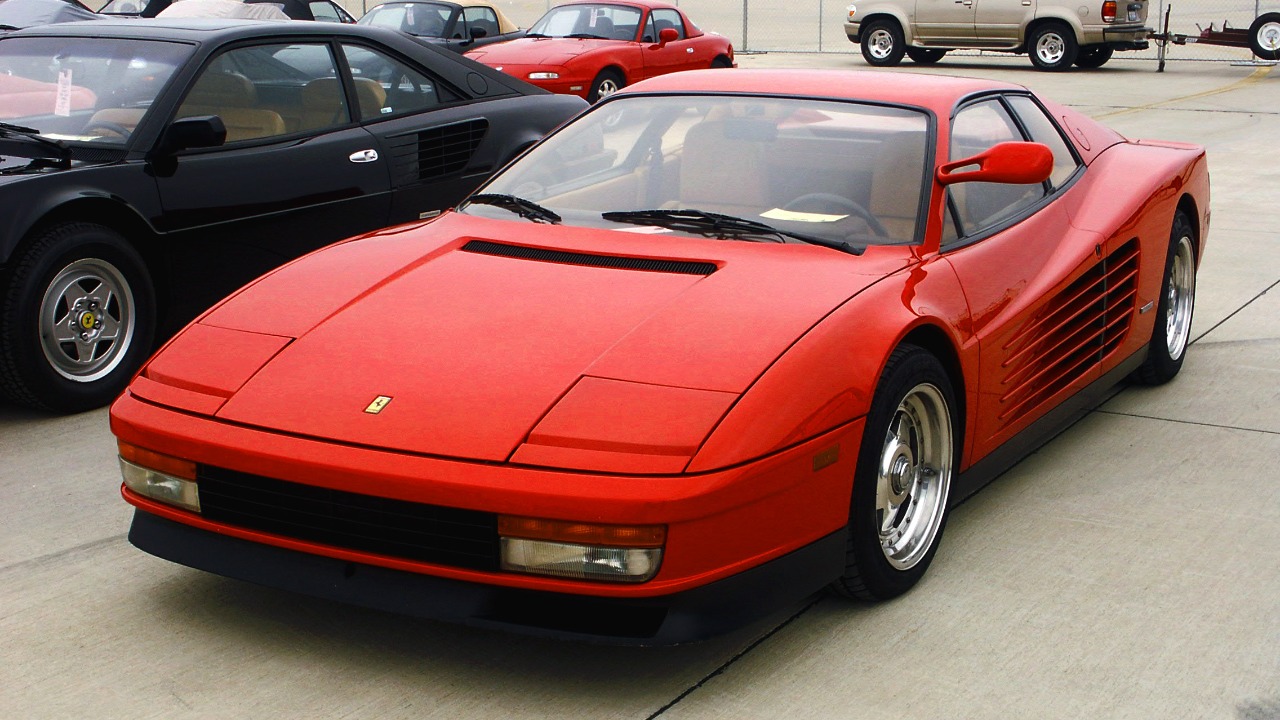
The Ferrari Testarossa did something very few cars ever manage: it turned a moment of economic swagger into a permanent visual language. Long after the 1980s boom faded, that wide tail, those strakes and that name still signal a kind of unapologetic plenty that newer supercars only hint at. I see it less as a nostalgic prop and more as the original badge of excess that every modern status symbol is still trying to live up to.
Part of the reason is timing, part of it is design, and part of it is the way the Testarossa slipped from the street into television, film and even early video games. Put together, those threads explain why a car born in a very specific era of ambition and flash still defines what over-the-top looks like, even in a world of hypercars and private rockets.
The moment the Testarossa met the 1980s
When I look at the Testarossa in context, it feels less like a car and more like a product launch for an entire decade’s mindset. It arrived just as a new wave of wealth and deregulated finance was reshaping cities and skylines, and its stance matched that mood: low, wide and utterly uninterested in subtlety. Reporting on its debut notes that in 1984, just before the model went public, Ferrari was positioning it squarely inside a culture of economic prosperity and unstoppable ambition, a framing that turned the car into a rolling mission statement rather than a mere replacement for the outgoing Berlinetta Boxer, as detailed in contemporary Testarossa history.
That timing meant the Testarossa quickly became shorthand for the new money that was flooding into places like Wall Street and Miami. It was the car you parked outside a glass tower or a waterfront condo to signal that you were not just doing well, you were winning on a scale that made restraint feel almost dishonest. The name itself, with its theatrical Italian cadence, slotted neatly into a decade that loved big hair, big shoulders and big deals, and it is no accident that the car’s silhouette still conjures that entire mood in a single glance.
Design that turned function into spectacle
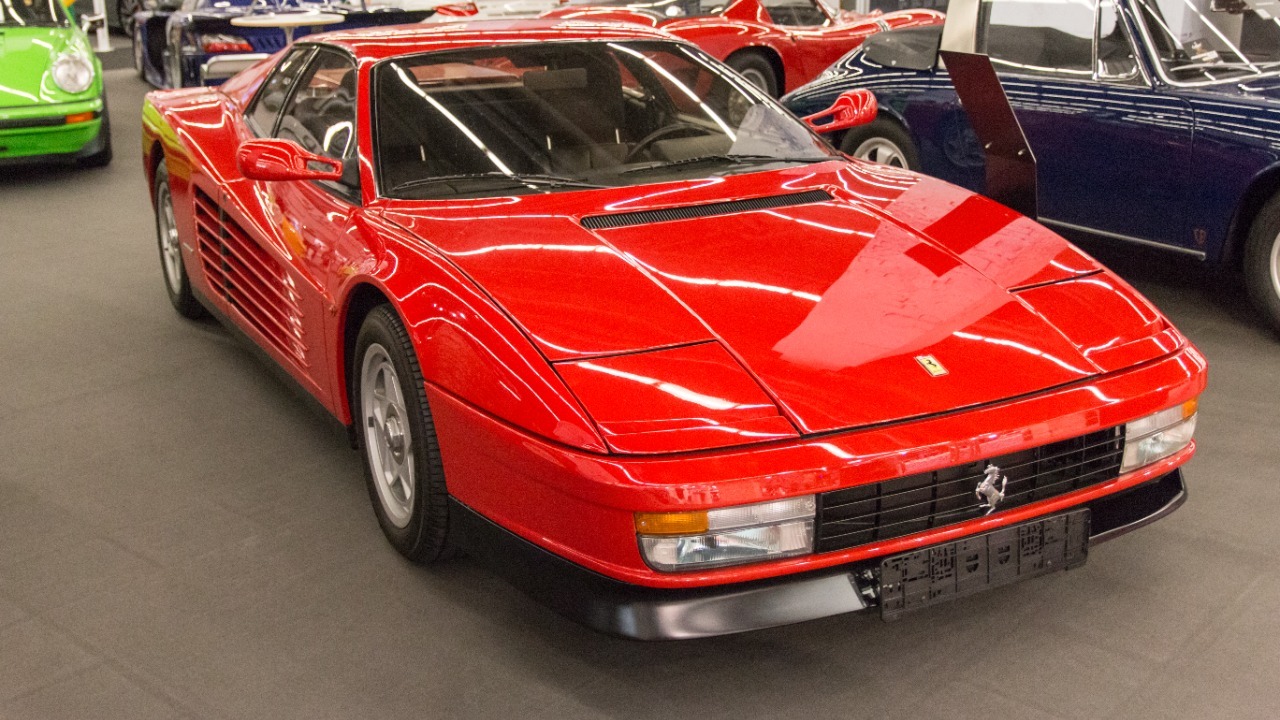
Excess is often dismissed as pointless, but the Testarossa’s most outrageous features began as problem solving. To keep the flat-12 cool without a front-mounted radiator, Ferrari’s engineers needed to move serious air through the sides of the car, and Pininfarina’s stylists, led by Leonardo Fioravanti, responded by carving those long strakes down the flanks to feed the radiators while visually stretching the body. That decision, described in detail in accounts of how Pininfarina and Leonardo Fioravanti handled the airflow challenge, turned a cooling requirement into one of the most recognizable design signatures in automotive history.
Underneath that drama sat hardware that was just as serious. The Testarossa’s engine was a naturally aspirated 4.9 litre longitudinally mounted, 180° Ferrari flat-12 unit, the product of ten years of technical development that made its performance feel as extravagant as its styling looked. That specification, laid out in detail in analyses of why Its engine was a worthy 4.9 litre 180° Ferrari flat-12, meant the car could back up its visual bravado with the kind of power delivery that made every tunnel a stage. Even its aerodynamics were more sophisticated than the wedge rivals it is often lumped in with, since the Testarossa’s slippery shape achieved a lower drag coefficient than the Lamborghini Countach, a point underscored in technical comparisons that note how the Testarossa bested the Lamborghini Countach with a Cd of 0.36.
From Miami Vice to every teenager’s bedroom wall
Design and timing would have taken the Testarossa far, but television turned it into a global icon. When Miami Vice swapped its replica roadsters for a real Ferrari, the white Testarossa that slid through neon-lit streets each week became a character in its own right, a visual anchor for a show built on glamour and moral ambiguity. Behind the scenes, Ferrari filed a lawsuit demanding that Tom McBurnie and four others stop producing and selling Ferrari replicas, and Miami Vice producers, once the case was resolved, agreed that the replicas be destroyed, a sequence of events that cleared the stage for the genuine car to dominate the screen, as chronicled in detailed histories of Ferrari and Miami Vice.
That exposure mattered because it put the Testarossa in living rooms far beyond the circles that could ever afford one. The car’s presence in glossy dramas about crime and capital made it the default mental image of success for a generation of viewers, and that image was reinforced by its appearance in early arcade hits and console titles. Contemporary retrospectives point out that The Testarossa is a recognized cultural icon of the 1980s, with the F512 M recorded as Ferrari’s last vehicle that featured the flat-12 engine and the model immortalized in the 1986 video game Out Run, a lineage captured in entries on Ferrari and The Testarossa that underline how deeply it seeped into pop culture.
The red heartbeat of aspiration
What fascinates me is how the Testarossa still makes people dream before they even understand what it is. Long before a teenager can explain flat-12 packaging or drag coefficients, they recognize that wide red shape as a kind of promise that life could be louder, faster and more vivid. One evocative description captures this perfectly, describing how it became the red heartbeat of a generation, its paint catching city lights like armour, a poetic shorthand for the way the car’s presence on a street or a poster could electrify a scene, as reflected in modern tributes that note how But the Testarossa was more about emotion than numbers.
That emotional charge is why the Testarossa did not just belong to the 1980s, it helped define the decade’s look and continues to shape nostalgia for that era’s style. Analyses of its legacy argue that the Ferrari Testarossa owned the 1980s in style and that its influence still colors how we picture that period’s fashion, architecture and nightlife, a point driven home in cultural retrospectives that emphasize how Why the Ferrari Testarossa and The Ferrari Testarossa remain central to any visual montage of the time. When I see a modern film or music video reach for that shorthand, it is almost always a riff on the Testarossa’s proportions, even if the actual car never appears.
Excess that refuses to age out
For all the nostalgia, the Testarossa’s excess has aged better than many of its contemporaries because it was rooted in coherent engineering rather than pure shock value. The same strakes that made it a poster car also solved a real cooling problem, the same width that made it look outrageous on city streets gave it stability at speed, and the same flat-12 that sounded theatrical was the culmination of a decade of Ferrari’s racing and road development. That blend of spectacle and substance is why collectors and enthusiasts still treat it as a benchmark rather than a guilty pleasure, and why detailed histories of the model’s evolution keep circling back to its mix of practicality and drama in the context of broader Testarossa debates about fad versus icon.
In a culture that now measures extravagance in private jets, mega-yachts and orbital tourism, it is telling that a mid-1980s supercar still reads as the purest symbol of having more than you strictly need. I see that persistence as proof that the Testarossa captured something fundamental about how we like our success stories to look: a little impractical, very visible and unapologetically loud. Whether it is resurfacing in a streaming-era homage to Miami Vice or gliding across a concours lawn, the car still wears excess like a tailored suit, reminding us that sometimes the most honest way to signal abundance is simply to let it show.


Leave a Reply