
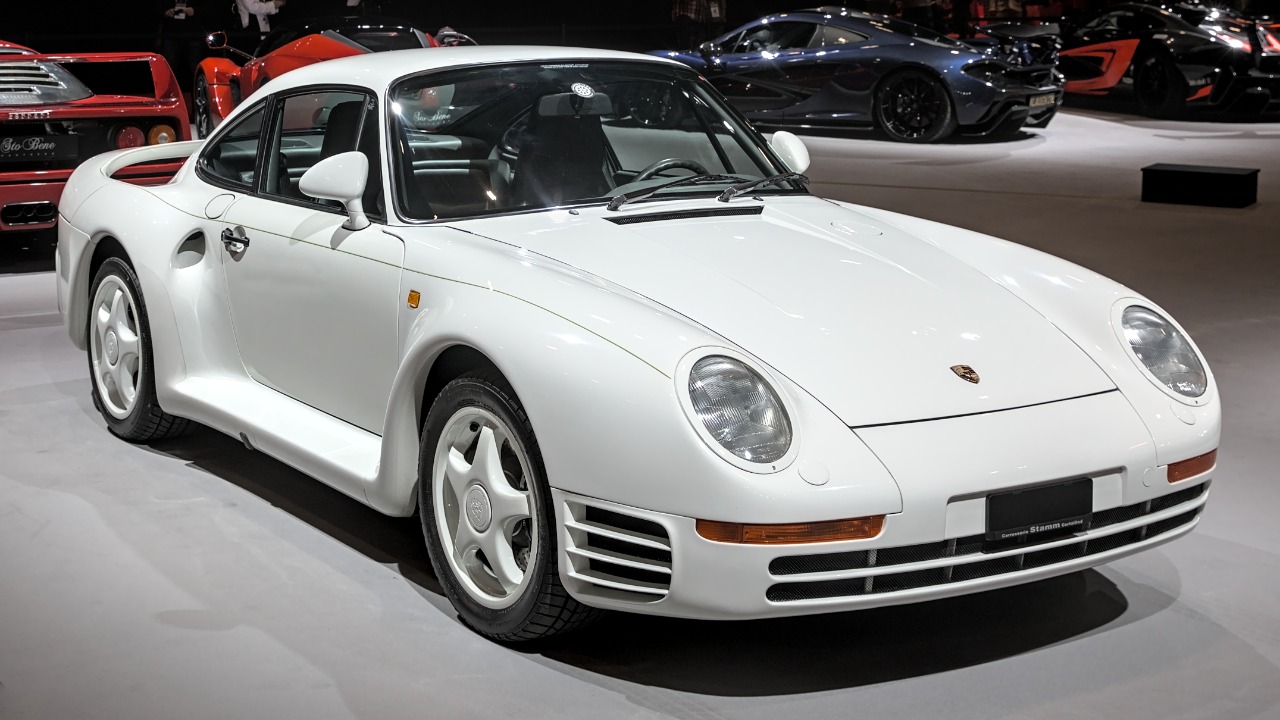
When the Porsche 959 arrived in the mid‑1980s, it did not simply join the supercar race, it reset the rules that governed how fast road cars should be engineered, driven and even lived with. Four decades later, its blend of radical technology, all‑weather usability and motorsport pedigree still reads like a blueprint for the way modern performance cars are conceived.
To understand why the 959 set the pace for today’s hyper‑sophisticated machines, I need to look beyond its headline speed and focus on how it fused electronics, aerodynamics and all‑wheel drive into a cohesive package that supercar makers still chase. The car that emerged from Stuttgart was less a museum piece and more a rolling test bed whose ideas now feel standard issue on everything from everyday sports cars to top‑tier track specials.
From Group B experiment to road‑going benchmark
The origin story of the 959 is rooted in competition, which is why its influence on modern performance feels so deep rather than cosmetic. In the early 1980s, Origins and Ambitions around Group B rallying pushed Porsche to develop a car that could dominate on gravel, tarmac and everything in between, and that competition mindset shaped the road version’s priorities. The result was a low, wide coupe from Stuttgart that treated the street as another proving ground for race‑bred hardware rather than a place to detune it.
That motorsport DNA is why the 959 feels less like a period curiosity and more like the starting gun for the modern supercar era. The car’s development as The Revolutionary Supercar That Redefined Performance meant its engineering brief was unusually ambitious, with engineers told to chase new materials, new electronics and new driveline concepts rather than simply more displacement. Even today, when I look at how brands justify their latest halo models as technology showcases, I see a direct line back to the way The Porsche 959 was conceived as a laboratory on wheels.
Turbocharged power and the template for usable speed
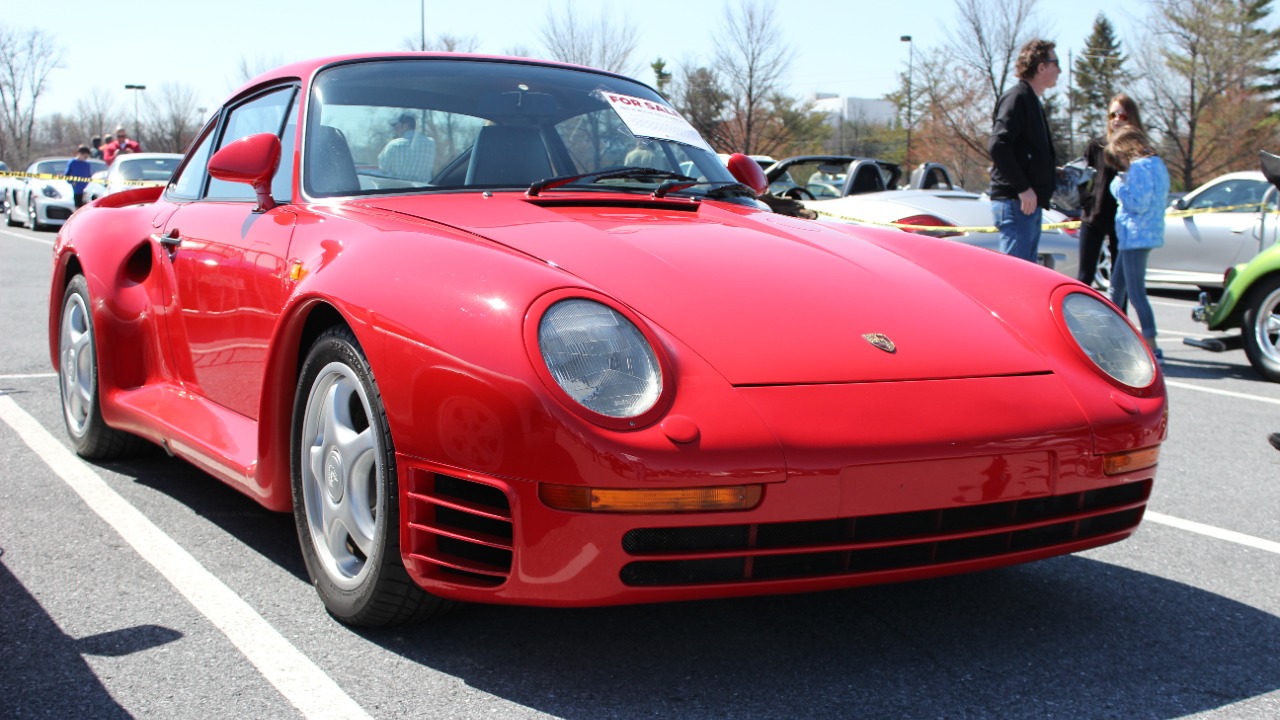
At the heart of the 959 was a compact but ferociously advanced flat‑six that previewed how tightly packaged turbo engines would power future performance cars. The engine was a rear‑mounted, turbocharged unit, Featuring a 2.85-litre displacement that proved you did not need a huge capacity V12 to deliver world‑class performance. That decision to chase efficiency and responsiveness rather than brute size foreshadowed the downsized, high‑boost engines that now dominate everything from super sedans to track‑focused specials.
Crucially, the 959’s sequential twin‑turbo layout was engineered to tame the lag that had defined earlier forced‑induction efforts, a trait that modern turbo cars still work hard to perfect. Contemporary observers like Walker have highlighted how this setup delivered a smoother, more progressive surge than other Pors of the era, which often felt explosive but unpredictable. When I drive or test modern turbocharged flagships that promise linear power and daily‑driver manners, I see them following a path the 959 cleared decades ago.
All‑wheel drive and active systems as a new performance philosophy
If there is one area where the 959’s influence is hardest to overstate, it is in the way it normalized sophisticated all‑wheel drive and active electronics as core performance tools. The car’s PSK 4‑wheel drive, officially known as PSK Steuer Kupplung, constantly varied torque between the axles, using sensors and control logic that were far ahead of what rivals offered at the time. That system did more than improve traction, it reframed all‑wheel drive as a way to sharpen handling and stability at extreme speeds, a philosophy that underpins many of today’s fastest road cars.
The same mindset extended to the chassis, where the 959 deployed adjustable ride height and damping to balance comfort with track‑ready control. Factory material notes that The 959 was a car bursting with innovative technology, including active suspension and a suite of electronic aids that would later be copied by many other supercar manufacturers. When I look at current performance flagships that rely on adaptive dampers, torque‑vectoring differentials and configurable drive modes, I see them echoing the 959’s core idea that software and sensors can be as important as raw mechanical grip.
Rally roots, real‑world usability and the daily‑driven supercar
The 959’s rally program did more than earn trophies, it shaped a car that felt unusually composed on real roads, which is exactly where modern performance brands now claim their cars must excel. Reports on That Rally Inspired All Wheel Drive System describe how the car’s development for brutal events like the Dakar run in Africa demanded durability, traction and predictability on loose surfaces. Those same traits translated into a road car that could handle rain, poor tarmac and long distances without feeling like a fragile toy.
That usability is where the 959 diverged sharply from its contemporaries and pointed toward the way modern supercars promise everyday livability. Enthusiast comparisons often note that the car is remarkably easy to drive, especially when set against a rival like the Ferrari F40, which was essentially a race car with license plates. When I see current halo models marketed as comfortable enough for commuting yet devastatingly quick on a circuit, I recognize the template laid down by a supercar that treated practicality as a feature, not a compromise.
Aerodynamics, materials and the quiet revolution in packaging
Beyond its drivetrain, the 959 quietly rewrote expectations around how a supercar should be shaped and built, and those lessons still echo in today’s wind‑tunnel‑honed flagships. The bodywork was sculpted to manage airflow for both stability and cooling, with integrated spoilers and ducts that looked subtle compared with the wings of its era but delivered serious downforce. Detailed histories of Porsche 959 development highlight how The Porsche 959 also featured advanced materials and construction techniques that kept weight in check while accommodating complex hardware.
That packaging challenge, fitting turbos, intercoolers, all‑wheel drive hardware and electronics into a compact silhouette, foreshadowed the way modern engineers juggle cooling, emissions and crash structures without sacrificing performance. Technical retrospectives describe how Among Porsche projects, the 959 stood out as An Engineering Masterpiece precisely because it integrated so many new systems without turning into an unwieldy science project. When I examine current supercars that hide hybrid systems, battery packs and complex cooling within sleek bodies, I see them following the same packaging playbook the 959 pioneered.
Collector status and the enduring technology halo
The 959’s long‑term impact is not just technical, it is cultural, and its current status in the collector market underlines how its innovations still command respect. Guides that explain Why the Porsche 959 is a Unique Collector Car to Buy point out that a well‑maintained 959 is now a highly sought‑after asset, with owners relying on Porsche Classic or 959 specialists to keep the complex hardware healthy. That appetite for a car that demands expert care shows how enthusiasts still value its role as a technological landmark rather than treating it as an obsolete curiosity.
The broader legacy is captured in analyses that describe The Porsche 959’s Lasting Legacy as a halo model that remains as relevant today as it was in 1986. When I see manufacturers touting their latest flagships as rolling laboratories whose tech will filter down to regular models, they are echoing a strategy the 959 executed decades earlier. The car’s continued desirability, even as its systems age, suggests that buyers understand they are acquiring not just performance, but a piece of the development ladder that led to the current crop of supercars.
How the 959’s blueprint shaped Porsche and its rivals
Inside its own brand, the 959 set expectations that future halo models would be both fast and forward‑thinking, a standard that still shapes product planning. Company histories note that The 959 was also intended as a billboard for Porsche and its abilities of the time, with technology so far ahead that it introduced one of the earliest uses of extensive sensors in a road car. That decision to treat the model as a showcase rather than a limited vanity project paved the way for later icons that similarly debuted new drivetrains, electronics and materials before they filtered into mainstream lineups.
The ripple effect extended beyond Zuffenhausen, pushing other manufacturers to rethink what their own flagships should deliver. Analyses of Legacy and The Blueprint for the Future argue that Its AWD system became the template for later high‑performance all‑wheel drive setups, while its mix of comfort and speed showed that customers would pay a premium to have both at a price. When I look across the segment today, from hybrid hypercars to ultra‑fast SUVs, I see competitors still chasing the same balance of everyday usability and cutting‑edge tech that the 959 normalized.
Why the 959 still feels like a modern car
What makes the 959 so striking today is how contemporary it feels from behind the wheel, even as its analog roots show through. First‑hand driving accounts describe how Four decades later, the car still accelerates, rides and communicates in a way that feels more aligned with modern GTs than with traditional sports cars from its own era. That sense of timelessness is not nostalgia, it is the product of engineering decisions that anticipated where performance car development was heading.
Technical retrospectives emphasize that Undoubtedly, this is the inherent advantage of 4‑wheel drive when it is tuned for both grip and balance, and the 959’s PSK system delivered that duality long before torque‑vectoring became a buzzword. When I compare it with later icons catalogued as 95 era supercars or with modern machines that claim to have Changed The Innovation and Performance Game, the 959 still feels like the reference point. It is the rare classic that does not just remind us where we have been, it still quietly explains why today’s performance cars look and behave the way they do.

Leave a Reply