
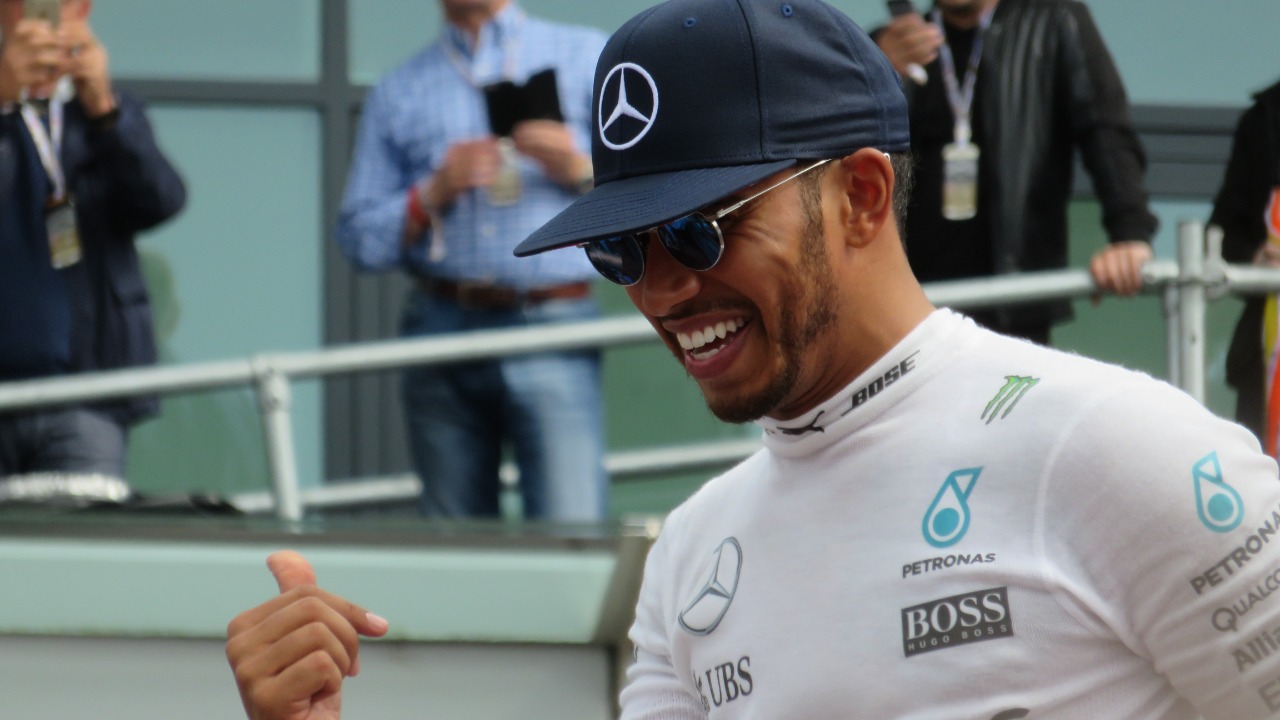
Lewis Hamilton has spent nearly two decades turning Formula One into his personal proving ground, stacking up wins and titles at a rate that still scrambles the record books. Yet for all the numbers in his favor, his reign continues to divide fans, rivals and even casual viewers who only tune in when the championship is on the line. I see that tension as the real story of his legacy: a driver whose dominance forced the sport to evolve, and whose personality and principles made it impossible for anyone to stay neutral.
The numbers that made Hamilton unavoidable
Any honest conversation about Hamilton’s legacy has to start with the scale of his success. His sport demands “prodigious reflexes, precise decision-making and an unblinking gaze into pressure” over races that can run to as many as 70 laps, and he managed to sustain that level across season after season at the front of the grid. That is why his period with Mercedes is routinely described as a historic level of control, with his run of wins and poles framed as a level of dominance that was “truly unprecedented” in modern Formula 1, a standard that still shapes how we judge every champion who has followed in his slipstream, including Max Verstappen, Charles Leclerc and Lando Norris, even when they are driving very different machinery.
When fans now argue about whether Verstappen has surpassed Hamilton, they often reach for a single-season comparison that underlines just how high the bar was set. In Hamilton’s most dominant year in 2020, he “had him only win 64% of races,” a figure that sounds almost modest when stacked against Verstappen’s more recent streaks but still represents a crushing advantage over a full calendar. The fact that a win rate of 64% can be described as “only” in fan discussion tells you how thoroughly Hamilton reset expectations for what a great season looks like.
From quiet prodigy to outspoken force

What keeps Hamilton’s story from being just a tale of statistics is how much he changed in public view. Early in his career he was often described as understated, a driver who let the stopwatch do the talking while he navigated the politics of the paddock and the weight of being the first Black superstar in a championship that had long been dominated by white drivers. Over time, that reserve gave way to a far more vocal figure, one who was willing to risk the displeasure of Formula 1’s authorities by kneeling before every race during the first season affected by pandemic restrictions, even when he was “at risk of being reprimanded” for taking that stand. That evolution from quiet talent to visible activist is part of why Hamilton now sits in conversations about influence that stretch well beyond motorsport or pop culture, and it is why his name surfaces whenever people talk about athletes using their platforms to push for change.
That shift did not happen in a vacuum. Hamilton had far greater aspirations than simply stacking up trophies, and together with Mercedes he continued to dominate as Formula 1 entered new rule cycles, all while he pushed to open doors for others. Reporting on his career has described how Hamilton, together with Mercedes, kept winning even as regulations changed, and how he used that security to pursue initiatives that aimed to diversify the paddock and to position himself among “the most elite of elite sportsmen.” The sense that Hamilton and Mercedes were moving in lockstep, both on track and off it, is central to understanding how he transcended the usual boundaries of a racing driver’s fame and became a figure whose choices are scrutinized in the same breath as his lap times, as detailed in coverage of how Hamilton had far greater aspirations than just winning.
Arrogance, authenticity and the early backlash
The friction around Hamilton’s personality did not start with his activism. From the moment he arrived in Formula 1, there were fans who saw his confidence as charisma and others who read it as arrogance. One early flashpoint came at the Brazilian Grand Prix, where he sparked controversy by telling Brazilian TV that he was more like Ayrton Senna than his then-rival Fernando Alonso, a comparison that landed badly with some supporters of the three-time champion. That moment, recalled in a long-running debate about whether Hamilton’s self-belief was a problem, crystallized the split: was this a young driver daring to place himself in the lineage of Ayrton Senna, or a rookie who had not yet earned the right to speak that boldly about his idols, as argued in the piece that framed it as “The Big Lewis Hamilton Debate” and asked, “Where do you stand?” about his comments on Brazilian Grand Prix Brazilian TV Ayrton Senna.
Looking back now, I see that episode as an early sign of the tightrope Hamilton would always walk. Formula 1 has long celebrated swagger in its champions, from James Hunt’s bravado to Michael Schumacher’s icy certainty, yet Hamilton’s version of that confidence was often judged through a different lens, shaped by his background and by the expectations placed on him as a trailblazer. The same self-assurance that allowed him to attack wet laps and late-braking overtakes also made some viewers bristle when he spoke about his place in history, and that tension between authenticity and public perception has followed him into every era of his career.
The activist who changed what a champion looks like
Hamilton’s willingness to speak out has become one of the defining pillars of his legacy, and it is here that the debate around his dominance takes on a different tone. While many athletes refrained from taking public positions on social issues, Hamilton chose to stand up for change not just in Formula 1 but throughout the motorsport industry, using his status as a multiple World Championship winner to push for more diversity and inclusion. Accounts of his career describe how the world watched in 2008 as Hamilton clinched his first World Championship, breaking multiple records in the process, and how he later leveraged that platform to become a visible advocate for racial justice and equal opportunity, a shift captured in profiles that highlight “Standing Up for Change: Hamilton’s Activism Beyond the Track” and his impact on the wider Hamilton World Championship story.
That activism has not always been universally embraced, especially among fans who prefer their champions to stick to racing, but it has undeniably broadened the definition of what a Formula 1 star can be. Hamilton’s evolution from understated competitor to outspoken advocate has been chronicled as a journey that took him from relative quiet to a position where, at risk of being reprimanded by Formula 1, he still chose to kneel before races and to speak about issues that mattered to him. One detailed profile notes that, regardless of whether Hamilton ever wins another world championship or race, no one in Formula 1 history can rival his legacy as a driver who used his success for “the betterment of everyone else,” a sentiment that underpins the argument that his influence stretches far beyond the timing screens, as seen in coverage of how But Hamilton changed expectations of a champion.
Rival legends and the Ferrari chapter still to be written
Any assessment of Hamilton’s place in history inevitably runs into the shadow of other greats. Michael Schumacher is routinely described as one of the greatest drivers in the history of Formula One, a benchmark whose popularity and achievements still loom large over the sport. Even as Max Verstappen has emerged as the new star, coverage has noted that the world still loves Michael Schumacher, and that Lewis Hamilton may share that rarefied space in the public imagination, with both men representing different eras of dominance and different styles of connecting with fans, as explored in reflections on how Michael Schumacher Formula One Lewis Hamilton continue to define greatness.
Hamilton’s next act, his move to Ferrari, adds another layer to the debate. One of Formula 1’s most iconic drivers, Fangio, listed in full as Juan Manuel Fangio, won five world titles with four teams, including Ferrari, and his career is often cited as proof that true greats can succeed in different environments. Hamilton’s switch has been framed against that backdrop, with some observers asking whether he can join the list of Ferrari debut winners and echo the path of Fangio, who is described as “One of F1’s most iconic drivers” and whose journey from Mercedes to Ferrari in a different era mirrors Hamilton’s own leap, as detailed in analysis of how One of Fangio Juan Manuel Fangio Ferrari set a precedent for changing teams at the peak of a career.
The scars of Abu Dhabi and the cost of dominance
For all the trophies, Hamilton’s legacy is also shaped by the titles that slipped away, none more so than the controversial finale in Abu Dhabi in 2021. Reports describe how Lewis Hamilton is widely regarded as one of the greatest Formula 1 drivers in history, with supporters, fellow racers and analysts all pointing to his years dominating the sport with Mercedes, yet he still thinks about that night every day. The sense that a record-breaking eighth championship was taken from him rather than lost on merit has become part of the mythology around his career, and it feeds into the ongoing debate about whether his era of dominance was properly rewarded, as explored in coverage that notes how Dec Lewis Hamilton Formula Supporters still see that race as a defining wound.
That lingering pain also colors how some fans interpret Hamilton’s demeanor in the years since. When you have lived at the top of a sport that demands such intense focus, where “His sport demands prodigious reflexes, precise decision-making and an unblinking gaze into pressure,” it is not surprising that a single night can haunt you. One of the enduring hallmarks of Hamilton’s career has been his ability to absorb setbacks, from early controversies about arrogance to late-career heartbreaks, and to turn them into fuel for another push. That resilience is part of why, regardless of how the Ferrari chapter unfolds, his legacy will keep sparking arguments: he is not just a record-holder, but a driver whose story forces everyone, myself included, to decide what we really value in a champion, a point underscored in detailed profiles of how His One of the key figures in modern Formula 1 changed the terms of the debate.
Why the argument over Hamilton will outlast his final lap
When I weigh all of this, I keep coming back to how Hamilton’s dominance forced Formula 1 to confront questions it had long been able to dodge. His evolution from understated racer to outspoken activist, his willingness to compare himself to Ayrton Senna on Brazilian TV, his decision to kneel at the risk of reprimand, and his refusal to let Abu Dhabi 2021 fade into the background have all made him a lightning rod. At the same time, profiles of his career note that he has evolved from understated to outspoken while still being seen as a legend, and that his readiness to speak out at risk of sanction placed him in a category of athletes whose influence stretches far beyond their own results, as captured in accounts of how Formula One legend Lewis Hamilton has evolved from understated into a figure who resonates across sports and culture.
That is why his legacy still sparks debate long after some of his peak seasons have passed. For some, he will always be the driver who made championships feel inevitable, the man whose 64% win rate in 2020 turned Sundays into a foregone conclusion. For others, he is the champion who changed what it means to hold that title, using his platform to challenge Formula 1’s comfort zones and to demand more from the sport he dominated. Both views can be true at once, and it is in that tension, between the stopwatch and the soapbox, that Lewis Hamilton’s place in history will ultimately be decided.

Leave a Reply