
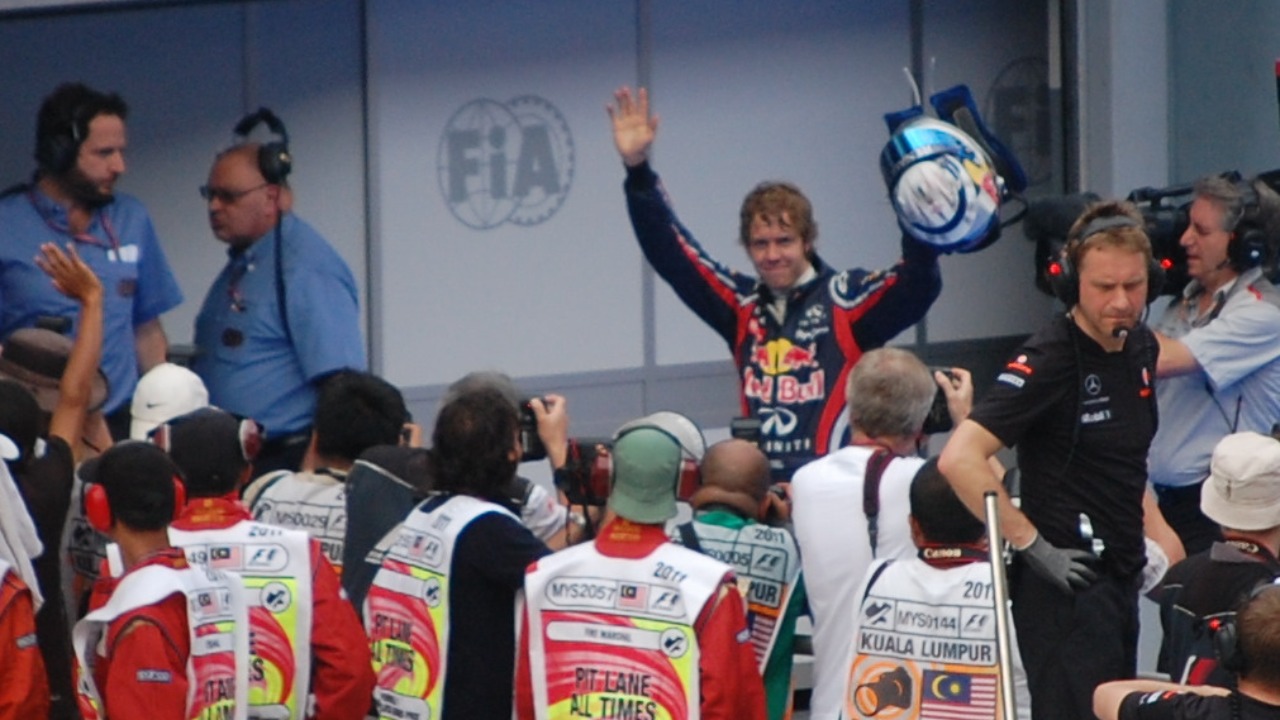
Sebastian Vettel’s story is not just about a driver who won early and often, but about how a prodigy grew into one of Formula One’s most thoughtful voices. His career arc, from teenage sensation to four-time champion to outspoken advocate, explains why his influence still shapes how the sport sees winning, leadership and responsibility. The trophies tell only part of the tale; the rest lies in how he chose to use his platform once the chequered flags stopped coming so easily.
The making of a prodigy in a golden era
Any assessment of Sebastian Vettel’s enduring impact has to start with the sheer scale and timing of his success. He emerged in an era defined by giants and still carved out a place among the sport’s reference points, becoming the youngest world champion at 23 years and 134 days while racing against established greats. That breakthrough did not come out of nowhere: he was already known as a technically sharp, relentlessly prepared driver whose intelligent decisions under pressure marked him out as more than just raw speed. In a field that also included serial winners like Michael Schumacher, his rise signalled that a new generation of German talent was ready to redefine the record books.
Vettel’s personality helped that ascent resonate beyond the timing sheets. As he settled into the paddock, Formula One fans saw a cheerful, funny “boy racer” who radiated enthusiasm even as he began to dominate. That mix of lightness off track and ruthlessness on it made him a natural focal point for a sport trying to appeal to younger audiences. He was not just another fast driver; he was a recognisable character in a championship that was becoming more global and more media driven, which is part of why his legacy still feels current even after his final race.
The Red Bull domination and the numbers that still matter
The core of Vettel’s competitive legacy is inseparable from his spell with Red Bull Racing. The defining phase of his career came with his association with Red Bull Racing, where he turned a rising team into a benchmark operation. Between 2010 and 2013, that partnership produced a run of titles that still frames how dominance is discussed in the hybrid era, with Vettel repeatedly converting front-row starts into controlled victories. The combination of his qualifying precision and race management made the “Red Bull era” a shorthand for sustained excellence, and it is this stretch that underpins his place in any conversation about all-time greats.
Those years were not just about championships, they were about the way he and the team squeezed every point out of a season. At one stage, Vettel and his fellow Formula One drivers won all 19 races in a campaign, a statistic that still colours how fans judge modern streaks. With Vettel at the centre of that run, his record haul of wins and poles from that period continues to be the yardstick for what a peak driver and team can achieve together. It is why, even as newer champions rack up their own numbers, his Red Bull spell remains a reference point rather than a historical footnote.
From Ferrari near-misses to a more reflective competitor
Vettel’s move to Ferrari was supposed to be the second act that completed the legend, echoing the way Michael Schumacher had turned the Scuderia into a title machine. He did achieve notable success at Ferrari, winning races and leading title fights, but the ultimate prize slipped away amid strategic missteps and a rising rival at Mercedes. That period, stretching through his final years in the sport, showed a driver grappling with the weight of expectation and the reality that raw speed alone could not always overcome structural disadvantages. It also set the stage for a more introspective Vettel, one who began to question what his career should stand for beyond the championship table.
By the time Vettel’s final years in Vettel’s final years on the grid unfolded, the narrative had shifted from whether he would add a fifth title to how he was evolving as a person in the spotlight. His career ultimately spanned 15 years at the top level, a stretch that tested his resilience as much as his speed. That longevity, combined with the disappointment of coming up short at Ferrari, gave him a vantage point from which to reassess his priorities. Instead of clinging to past glories, he began to lean into a different kind of influence, one rooted in what he said and did away from the cockpit.
Activism, regret and a late-career reinvention
The most striking turn in Vettel’s arc is how he shifted from a pure “winner’s mentality” to a driver who openly embraced activism. As he grew older, he realised there was more to racing than motorsport alone and began to use his status to highlight issues that mattered to him, including staging an all-women karting event in Saudi Arabia and speaking out on human rights. Reporting on his evolution describes how he moved from winner’s mentality to activist, recognising that his voice carried weight in debates that stretched far beyond the paddock. That change did not erase his competitive edge, but it reframed what success looked like in the final chapters of his career.
Vettel has been candid about wishing he had spoken up sooner. He has reflected that he was once only concerned with racing, later identifying his sole remorse as not being vocal enough earlier on issues like LGBTQ+ rights and global warming, a shift captured in coverage of Sebastian Vettel. In an emotional farewell message, he described his platform as a unique position and spoke about how he thought carefully about using the voice he had, with the phrase “Mine was a unique position” capturing that self-awareness. That combination of regret and resolve is part of why his activism feels authentic rather than opportunistic, and why younger drivers now cite him when they weigh speaking out themselves.
His environmental advocacy has been especially pointed, given the carbon-heavy nature of global racing. As a former Ferrari driver, Sebastian Vettel took his environmental efforts further by monitoring his own carbon footprint and engaging directly with critics who questioned whether a Formula One star could credibly campaign on climate. He did not pretend to have all the answers, but he treated the contradiction as something to confront rather than avoid. That willingness to sit in the discomfort of the debate, instead of hiding behind PR lines, is a big part of why his off-track legacy has real weight.
Why his influence outlasts the chequered flag
Vettel’s retirement from full-time racing did not diminish his presence in the sport’s culture, in part because his records and reputation still loom large. With Vettel stepping away, commentators noted that With Vettel leaving, Formula One would not look the same, given how significantly he had impacted both the record books and the sport’s willingness to raise awareness on social and environmental issues. His success on the track earned him a global fanbase that admired his technical skill, determination and ability to dominate races from start to finish, a profile that still drives demand for Vettel memorabilia. That combination of hard numbers and soft power is what keeps his name in the same breath as active champions when fans debate greatness.
His broader public image has also aged well. He is described as Known for a sharp mind and honest character, bringing a thoughtful, human touch to a sport often caricatured as cold and corporate. Readers of a recent biography are promised insight into how Readers can see Vettel (SEBASTIAN) transform into a leader respected for his outspoken stance on equality, sustainability and justice, which underlines how his story is now told as much through values as through lap times. That framing matters in a sporting landscape where fans increasingly expect their heroes to stand for something beyond performance.
Legacy among legends and the human details that stick
To understand why Vettel’s impact endures, it helps to place him alongside the other modern benchmarks. Discussions of all-time status often revolve around drivers like Lewis Hamilton, who would have been considered one of the greatest drivers Formula One has ever seen even if he had retired with a single McLaren title. Vettel belongs in that same tier, not only because of his four championships but because of how he helped define an era of ultra-professional, data-driven racing. His career numbers, including 299 races and a status as one of the most successful drivers by wins and podiums, are captured in profiles that list his age as 38 and underline how long he sustained elite performance.
Yet the stories that surface most often now are not just about statistics. Farewell pieces highlighted how Vettel, despite a lack of recent on-track success, became admired for what he did off the circuit, from picking up litter after the British Grand Prix to building a bee hotel in Austria. His official biography notes that Sebastian is closely connected with his family, while his Wikipedia entry reminds readers that Sebastian Vettel is a German driver whose story also intersects with that of his brother Fabian Vettel. Even commercial tributes, like the way Vettel’s die-cast models celebrate his ability to dominate races from start to finish, feed into a broader picture of a competitor who left a mark in multiple dimensions.
In the end, Vettel’s arc from prodigy to champion to activist offers a template for what a modern sporting legacy can look like. He started as a pure racer, became the face of The Red Bull Domination, then used the credibility that came with that success to push his sport toward uncomfortable but necessary conversations. That is why, years after his final start, his name still carries weight in debates about what Formula should be, and why his influence is likely to endure long after the last of his records is finally broken.

Leave a Reply