

Dario Franchitti’s record in American open-wheel racing is not just impressive on paper, it is the backbone of any honest conversation about the greatest drivers in IndyCar history. His blend of championships, Indianapolis 500 triumphs and relentless consistency over more than a decade at the top created a standard that modern contenders are still measured against. To understand why his name belongs alongside the legends, it is worth tracing how a Scottish karting prodigy became one of the defining figures of the IndyCar Series era.
From Scottish prodigy to American open-wheel force
The story starts with a young Dario Franchitti, a Scottish driver who climbed through the European ladder with the kind of technical polish that usually points toward Formula One. Instead, he chose a different route, shifting his ambitions across the Atlantic and betting that the most compelling future for his career lay on American ovals and road courses. That decision, unconventional for a European single-seater star at the time, set him on a path that would eventually reshape the IndyCar record book.
Since turning his focus from Formula One possibilities to a career in the United States, he built a résumé that combined raw speed with racecraft honed in traffic and over long green-flag runs. The move was not a detour but a deliberate embrace of a discipline that rewards adaptability, from tight street circuits to superspeedways. That willingness to pivot early, rather than chase a narrow European dream, is the first clue to why his career stands out among Indy greats.
Building a complete IndyCar résumé
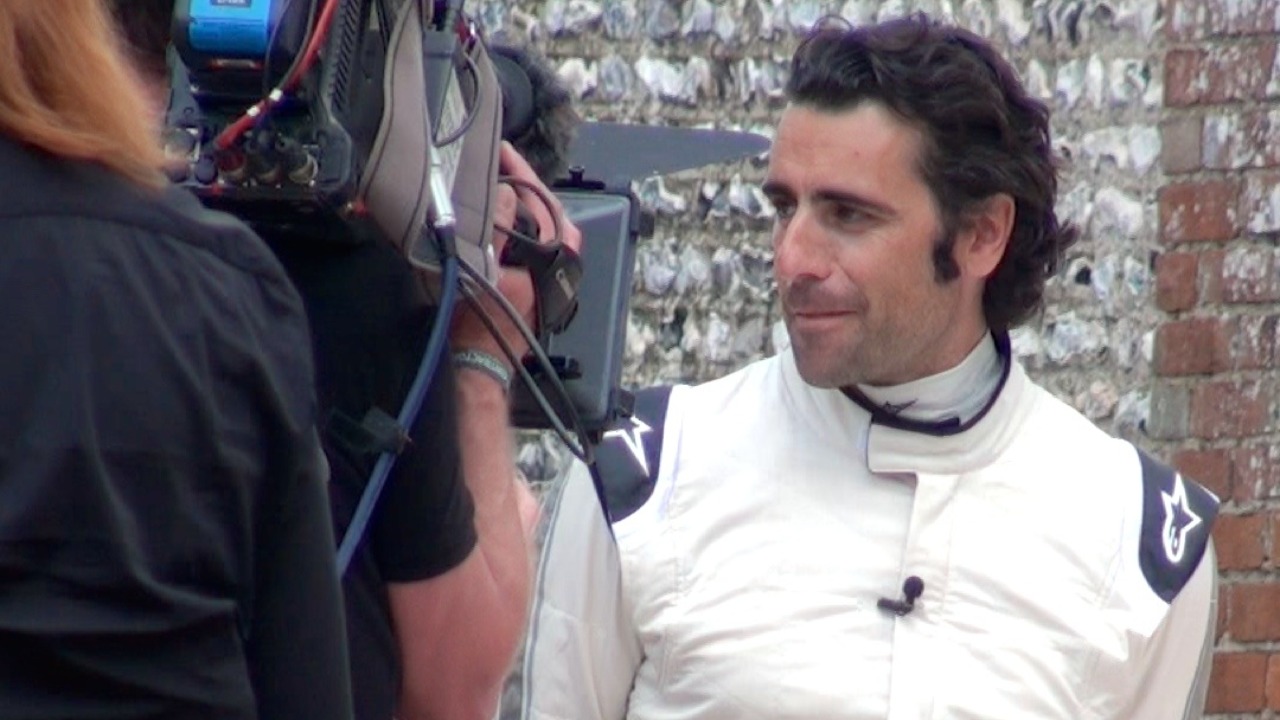
What separates Franchitti from many quick drivers is the sheer breadth of his results. From the moment Dario arrived in the United States, he turned speed into sustained production, stacking victories, poles and podiums across multiple teams and rule packages. Over his American career he recorded 31 wins, 33 pole positions, 119 Top-5 finishes and 167 Top-10s, numbers that speak to a driver who was rarely off his game even when he was not winning.
Within the IndyCar Series itself, that consistency translated into a dense body of work. Dario Franchitti ran Series events across 151 starts, a sample size large enough that his four championships and three Indianapolis crowns cannot be dismissed as the product of a short peak. Those 151 races, spread across different eras of chassis and competition, show a driver who adapted as the series evolved, maintaining front-running pace while younger rivals cycled in and out of contention.
Mastery at Indianapolis and the weight of three 500s
Any claim to all-time Indy greatness ultimately runs through one address, and Franchitti’s record at Indianapolis is central to his legacy. He did not simply win the Indianapolis 500 once and fade into nostalgia; he turned the event into a recurring showcase of his race management and composure under pressure. His victories in 2007 and 2010 were already enough to place him among the modern elite, but he then backed those up with another Indianapolis 500 win in 2012, becoming only the tenth driver to claim the race three times.
That triple places him in rare company in the sport’s most scrutinized event. Over six seasons between 2007 and 2012, Franchitti turned the Indy classic into a personal stronghold, with One of the sport’s most potent combinations of driver, team and engineering behind him. A separate accounting of his career lists him as a Three-time Indianapolis 500 winner, and that label alone would secure his place in the sport’s collective memory even without the rest of his achievements.
Championship streaks and the art of a complete season
Franchitti’s greatness is not confined to single-day heroics at the Brickyard. His run of titles shows a driver who could string together entire seasons of excellence, absorbing bad days without letting them derail the bigger picture. His championship years of 2007, 2009, 2010 and 2011, listed as Titles alongside 31 Victories, Starts totaling 265 and his three Indianapolis 500 wins, underline how often he converted opportunity into hardware.
Those seasons were not runaway coronations but hard-fought campaigns that demanded resilience. His third consecutive title in 2011, for example, came in a fierce duel where His battle with Will Power for the championship went deep into the schedule. That ability to manage risk, bank points and still attack when it mattered is a hallmark of the very best, and it is a key reason his four titles carry as much weight in the paddock as his wins at Indianapolis.
Rivalries, comparisons and the fan verdict
Any discussion of where Franchitti ranks historically inevitably drifts into comparisons with his peers. Among fans, one recurring debate pits him against Juan Pablo Montoya, another driver with a glittering mix of IndyCar, Formula One and sports car credentials. In one Comments Section discussion, a contributor notes that Dario has the stronger career “on paper” in IndyCar because he stayed in the series longer and translated that continuity into multiple championships.
Those same fans often weigh Franchitti’s record against other modern benchmarks, including Scott Dixon, whose longevity and consistency have sparked their own debates. In a separate Indycar thread, Dixon is described as one of the best drivers in series history, a reminder that Franchitti’s era was not defined by a lack of competition but by a dense cluster of elite talent. When a driver emerges from that environment with four titles and three Indianapolis 500 wins, the numbers do not just look good in isolation, they look even stronger in the context of who he had to beat.
The crash, retirement and a legacy that keeps working
Franchitti’s career did not end on his own terms, which adds a bittersweet edge to his statistics. A violent accident cut short his time in the cockpit and forced him to weigh long-term health against the urge to keep racing. When he announced he would step away, the statement came with an acknowledgment that he had joined Andretti Green Racing for the 2003 season and that, After years of success, medical advice left him no realistic path back to full-time competition in the Indianapolis-centered series he loved.
Even so, his influence did not vanish with his helmet. A detailed Complete Timeline of Dario Franchitti Career traces how his path was shaped from the earliest days by his father, George Franchitti, and that family grounding has carried into his post-driving roles as a mentor and ambassador. In a later conversation about his life in racing, he spoke about his love of high performance road cars and his work with Gordon Murray Automotive, a reminder that his technical feel and competitive instincts still feed into cutting-edge projects even if he is no longer threading an IndyCar through Turn 1 at full speed.
Why his name belongs with the all-time Indy greats
When I weigh Franchitti’s career against the sport’s history, the case for his inclusion among the all-time Indy greats rests on three pillars: sustained excellence, peak achievement at Indianapolis and the respect of his peers and fans. His three Indianapolis 500 wins, four series titles and 31 victories across Starts that reached 265 form a statistical spine that very few drivers can match. Add in the Indianapolis Motor Speedway Museum’s recognition of him as a Scotsman who delivered multiple wins for Chip Ganassi’s teams, and the institutional verdict is clear.
There is also the way his career is remembered by those who watched it unfold in real time. A tribute tagged Oct and framed as a thank-you to his achievements captures the emotional side of his retirement, while fan debates on Dec-dated threads and Edited posts show that his name still anchors arguments about who belongs on the IndyCar Mount Rushmore. When a driver’s statistics, institutional honors and fan memory all point in the same direction, the verdict is hard to dispute: Dario Franchitti did not just have a great career, he carved out a place among the all-time giants of American open-wheel racing.

Leave a Reply