
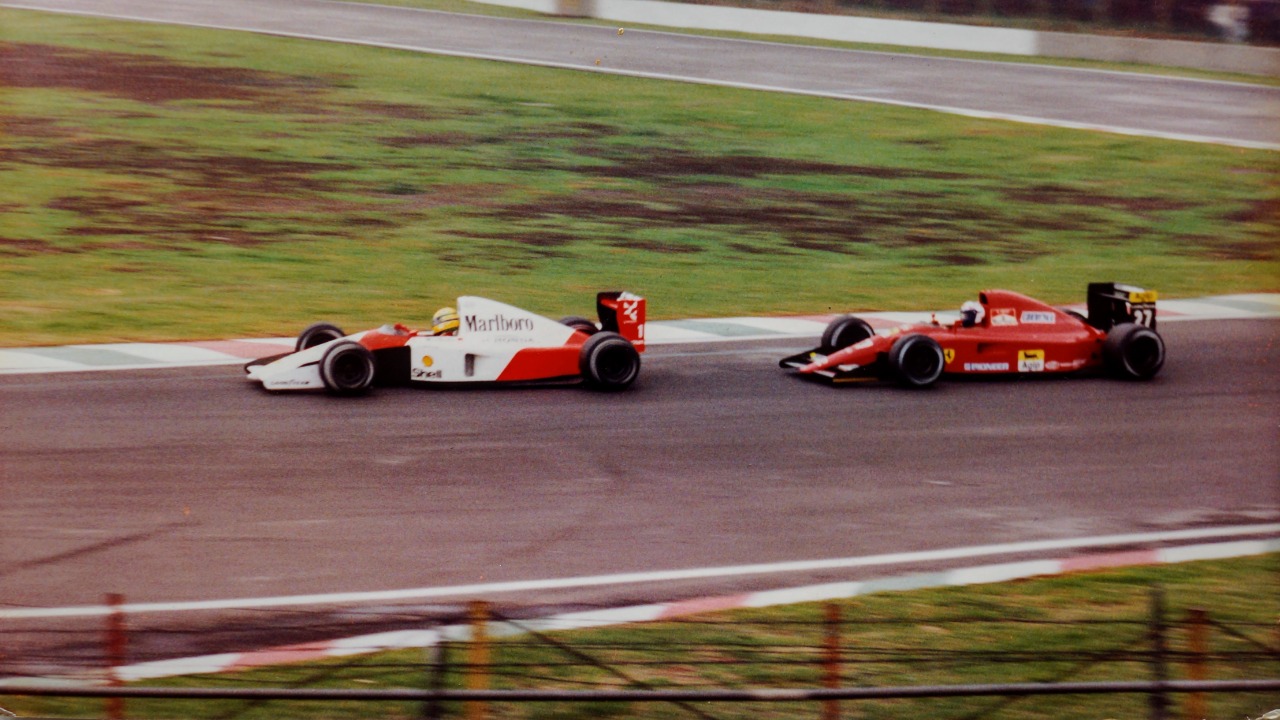
The duel between Ayrton Senna and Alain Prost did more than decide championships. It crystallised two philosophies of how to win in Formula One, and it still shapes how drivers, teams and fans understand the limits of risk, rivalry and respect at the top of the sport. Their clashes at McLaren and beyond turned a private battle into a defining storyline that continues to frame debates about greatness decades later.
What keeps this confrontation so vivid is not only the titles it decided but the way it exposed the tension between cold calculation and raw aggression, between political savvy and spiritual intensity. In the space of a few seasons, Senna and Prost turned Formula One into a global morality play about ambition, fairness and how far a champion is willing to go.
The rivalry that became Formula One’s reference point
At its core, the Prost–Senna rivalry was a contest between two drivers at the absolute peak of their powers, fighting for the same prizes in the same machinery. The Prost–Senna rivalry is described as a Formula One battle between French driver Alain Prost and Brazilian star Ayrton Senna, with titles trading hands as Prost won one year and Senna the following. Their duel quickly came to stand for more than a championship tally, because it pitted two contrasting approaches to the same problem: how to dominate the fastest sport on earth without flinching.
Those contrasts were not just about nationality or personality, they were visible in every lap. The Prost–Senna rivalry is often framed around their different driving styles and characters, with Prost cast as the calculating “Professor” and Senna as the uncompromising racer who treated every corner as a test of will. That duality still provides a template for how fans and insiders talk about modern pairings, from team mates fighting over the same car to generational clashes between rising talents and established champions.
Professor versus pure instinct
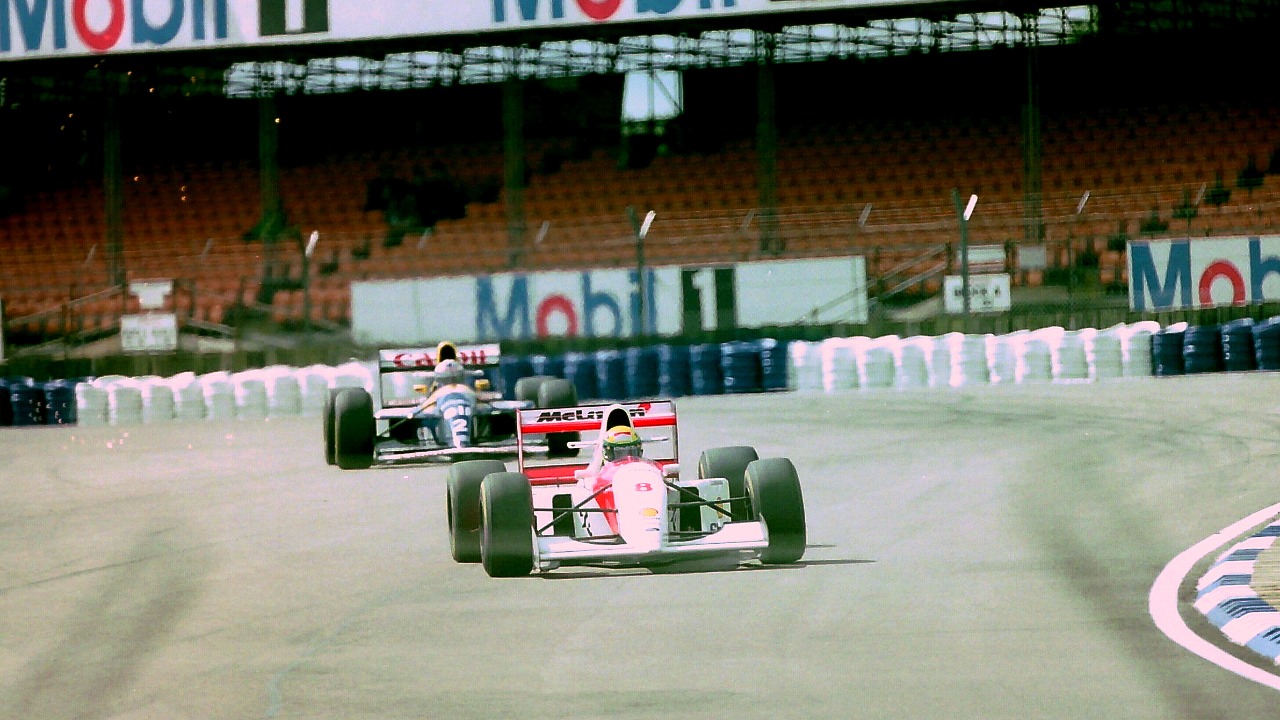
Alain Prost built his legend on method and restraint, a style that made his nickname “The Prost” shorthand for clinical racecraft. Accounts of Alain Prost describe how his measured, collected driving was set against Senna’s aggressive, flat-out approach, turning every shared race into a clash of philosophies as much as a fight for points. Prost’s ability to think several moves ahead, manage tyres and fuel, and pick his battles made him the benchmark for strategic excellence in the turbo and early normally aspirated eras.
Senna, by contrast, was defined by raw speed and a willingness to live on the edge of adhesion. He is widely regarded as one of the greatest drivers in the history of Formula One, with profiles of Ayrton Senna highlighting his qualifying prowess and relentless pursuit of perfection. The Brazilian Formula One driver later amassed 41 race wins in F1, a tally that underlines how his high-risk style still translated into sustained success. When I look at modern drivers who lean on instinct and outright pace, they are inevitably measured against the standard Senna set in opposition to Prost’s cerebral approach.
McLaren, domination and the boiling point at Suzuka
The rivalry reached its most intense phase when both men shared the same garage. Their partnership at McLaren created a superteam that crushed the field, with their rivalry reaching its peak in the late 1980s as they dominated the championship and split the fanbase. In that period, the McLaren MP4/4 became a symbol of their stranglehold, with reports noting that they scored 15 pole positions (13 by Ayrton Senna and 2 by Alain Prost) in a total of 16 grands prix, a level of dominance that made their internal feud the main show.
That dominance set the stage for some of the most controversial moments in Formula One history. In 1989, their collision as team mates effectively secured Prost’s third World Championship, and historical overviews note that Prost and Senna were central to the title-deciding Japanese Grands Prix of 1989 and 1990. The following season, once again, the title was decided at Suzuka, but this time the rivalry peaked as Senna and Prost’s clashes spilled over into open warfare that would eventually see Prost winning the title for Williams later in his career.
Controversy, collisions and the ethics of winning
Nothing captures the moral complexity of this rivalry like the infamous first corner at Suzuka in 1990. At the Japanese Grand Prix, Senna started from pole but was left on the dirty side of the track, and he made it clear he would not yield into turn one. When Prost, then driving for Ferrari, moved across, Senna held his line and the two collided, ending both races on the spot. Contemporary accounts of that Japanese Grand Prix describe Prost calling Senna’s move “disgusting” and refusing to fight “irresponsible people who aren’t afraid to die,” while Senna insisted Prost had tried to destroy him and that he always went for the gap.
That collision did not happen in isolation, it was the culmination of years of escalating grievances. Earlier, once again, the title was decided at Suzuka when Senna and Prost tangled, with Prost later convinced that Senna had intentionally taken him out. The bitterness was sharpened by off-track politics, including disputes involving Ayrton Senna and officials, with one account recalling how Senna (Ayrton Senna) saw his “payback” as something that had to come on track. When I hear current drivers debate whether a move is “over the line,” they are still, consciously or not, arguing in the shadow of Suzuka.
Margins, mastery and the numbers that still resonate
Beyond the crashes, what made this rivalry so compelling were the tiny margins that separated victory from defeat. The rivalry between Ayrton Senna and Alain Prost produced some of the smallest time gaps at the finish line in Formula One, with some of their duels in Spain, Japan and Australia decided only in the final metres. Those photo finishes reinforced the sense that neither man could ever fully break the other, no matter how dominant the car or the conditions.
The statistics underline how evenly matched they were. Senna eventually scored the first eight of his 65 pole positions in a car that also carried champion Prost, while historical records show that Prost continued adding to his remarkable tally of wins and secured a third title in 1989. When I weigh up modern title fights, I keep coming back to how these numbers, combined with the intensity of their wheel-to-wheel battles, set a benchmark that is hard to match.
From bitter enemies to complex legacy
For all the venom of their peak years, the story of Senna and Prost did not end in permanent enmity. Retrospectives on All about Ayrton Senna and Alain Prost describe how the fiercest rivalry in F1 gradually evolved into an unexpected friendship, with both men acknowledging that they were equally skilled and that their clashes had defined their careers. Later reflections from Prost himself are even more revealing, with Prost saying that when Senna died he felt a part of him had gone too, and that he had long refused to speak about Senna because it was too difficult to be fully honest.
Their legacy now stretches far beyond the record books. Modern commentary notes that Ayrton Senna and Alain Prost embodied the tension between raw talent and intelligence in achieving sporting success, while social media tributes frame The Bitter Rivalry That Built a lasting legacy in F1, stressing that despite their intense competition, Ayrton Senna and Prost ultimately came to respect each other. When Ayrton (Ayrton Senna) delivered some of his most dominant performances, such as scoring pole with a 1s409 advantage over his rival Alain Prost in the desert, it only deepened the mythology around their duel.
Why Senna versus Prost still defines greatness
Part of the reason this rivalry still looms so large is the way it ended, and the sense of unfinished business that followed. On 1 May 1994, Brazilian Formula One driver Ayrton Senna was killed after his car crashed into a concrete barrier while he was leading at the Imola circuit in Italy, an event described as the capstone to one of the darkest weekends in Formula One history. That loss froze Senna in time as the eternal rival, the man forever measured against Prost without the chance to rewrite the narrative in later years.
Yet even before that tragedy, the rivalry had already become a touchstone for how Formula One understands itself. The top moments between Prost and Senna are still replayed as shorthand for the sport’s drama, from tense title deciders to the rare occasions when they shared a podium and sprayed each other with champagne. Even now, features on why their rivalry captivates fans argue that the Senna–Prost battle remains the lens through which new generations judge what is fair, what is ruthless and what it really means to be a champion in Formula One.



Leave a Reply