
In a sport built on speed and split-second choices, few moments have lingered in the collective memory quite like the Texas pit-road melee involving Kevin Harvick and Brad Keselowski. What began as a hard restart in a high-stakes playoff race turned into a defining flashpoint that still shapes how both drivers are remembered. The story of how tempers boiled over, and why the emotions never fully cooled, reveals as much about NASCAR’s culture as it does about the two men at the center of it.
The confrontation that night was not an isolated scuffle but the culmination of weeks of escalating frustration, aggressive moves on track, and simmering grudges. Harvick’s shove, Keselowski’s refusal to back down, and the chaos that followed became a shorthand for the sport’s raw edge, a reminder that the pressure of a championship run can turn even veteran judgment into combustible fuel.
The Texas flashpoint that lit the fuse
The pivotal clash unfolded at Texas Motor Speedway with the playoff field on edge and every position carrying outsized weight. A late restart set the stage, with Brad Keselowski making a bold move that altered the outcome of the race and rattled the title picture. Contact in that sequence, described as the kind that left the race’s Contact Shook Up the Race Outcome, knocked Jeff Gordon’s No. 24 team out of realistic contention and set emotions surging before the cars even rolled onto pit road.
By the time the checkered flag fell, the tension was no longer theoretical. Gordon climbed from his car looking for answers, Keselowski walked into a storm of angry crew members, and Kevin Harvick, already frustrated by how Keselowski had raced him in prior weeks, moved in from behind. What followed was the now-famous shove that sent Keselowski into Gordon’s path, triggering a scrum that turned pit road into a scene fit for PHOTOS of a full-on Brawl in Texas. In that instant, a hard race became a lasting storyline about accountability, provocation, and where the line really sits in NASCAR’s code of conduct.
Harvick’s shove and the accountability argument
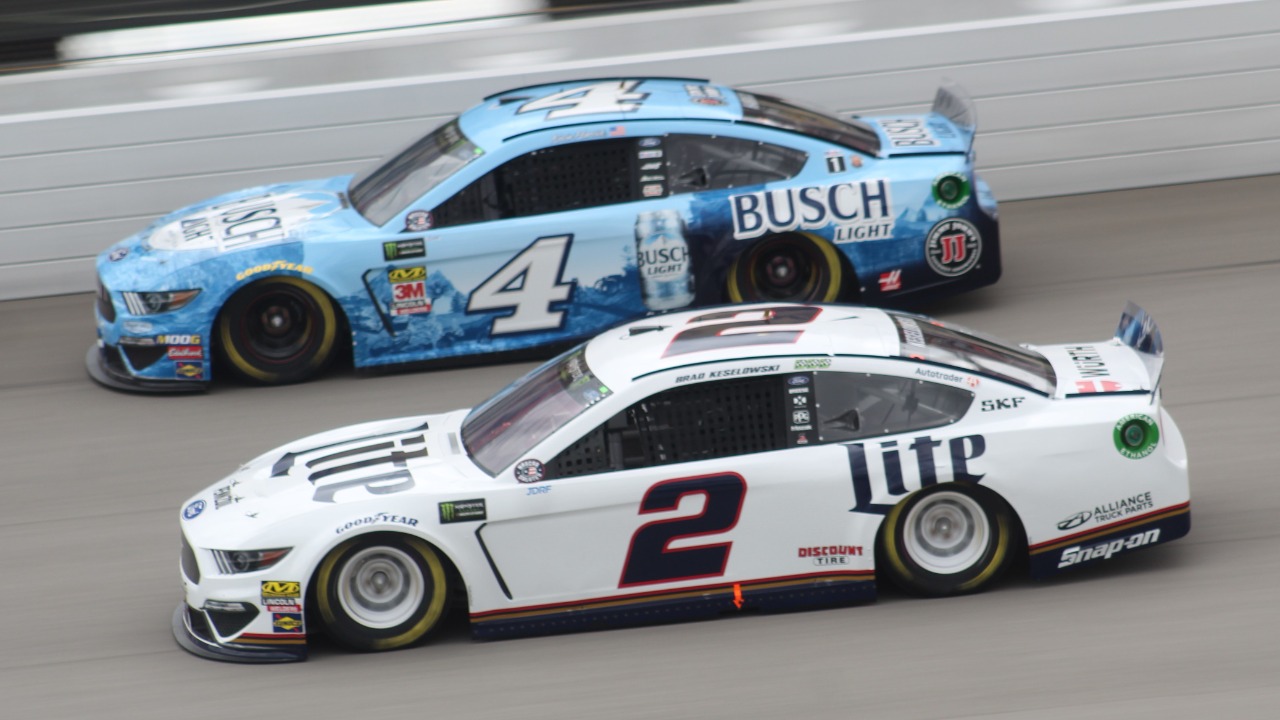
Kevin Harvick has never pretended his role in the chaos was accidental. In the immediate aftermath, he explained that he shoved Keselowski because he believed the younger driver needed to be held responsible for the way he had raced. Harvick framed the move as a way to force Keselowski to face Jeff Gordon directly, rather than slip away behind crew members and officials, a decision he later described as a deliberate attempt to make Keselowski “accountable” for the contact that had derailed Gordon’s night at Texas.
That perspective has not softened with time. Harvick has said he does not regret shoving Keselowski, even while acknowledging that the moment escalated into more than he anticipated. He has praised Keselowski’s intensity, noting that “I think he races hard and that’s what we’re all supposed to do and in those positions you’d probably do the same thing,” before adding that the Texas confrontation was about consequences for choices that affected a championship run, which is what they were. In Harvick’s mind, the shove was not a cheap shot but an extension of the same hard-nosed ethos that governs how drivers police each other on track.
Inside Harvick’s long memory and calculated push
Years later, Harvick has offered a more detailed look at what he was thinking in that split second on pit road. He has recalled how he stepped in behind Keselowski and delivered what he described as a slight push toward Gordon, a move he now characterizes as a conscious decision to spark a confrontation rather than let words drift away into the noise. In his retelling, that nudge was not a blind burst of anger but a calculated act, one he has revisited in conversations about how drivers manage rivalries and pressure in the NASCAR Cup Series.
Harvick has also been candid that, in his view, there is a strategic layer to moments like Texas. He has said, “There’s more to it than just driving the car, and sometimes you have to try to do different things to re-direct the conversation,” a line that reveals how he saw the shove as part of a broader effort to shape the narrative around Keselowski’s aggressive style rather than let it fade as just another restart incident. That mindset traces back to his own early years, when he entered the Cup Series rotation in 1997 and learned that reputations are built as much in the garage and on pit road as they are at 200 mph, a lesson he has revisited while reflecting that There’s more to it than just driving.
Keselowski’s response and the rhetoric he refused to chase
Brad Keselowski, for his part, has consistently framed the Texas chaos as a byproduct of racing on the edge rather than a personal vendetta. In the days that followed, he made it clear he was not interested in getting bogged down in what he called the rhetoric swirling around the incident. While acknowledging that emotions were high and that Gordon and Harvick had their own views of what happened, Keselowski emphasized that his focus remained on the championship picture and on how he raced, not on trading barbs or apologies in the media.
That stance was tested as replays of the shove and the ensuing scrum looped endlessly and questions about intent and blame dominated the garage. Gordon was attempting to confront Keselowski on pit road when Harvick rushed in from behind and shoved Keselowski into the confrontation, a sequence that left Keselowski in the middle of a fight he insisted he did not seek. Even so, he chose to downplay the war of words, signaling that he would not be consumed by the noise around how Gordon, Keselowski, Harvick each interpreted the shove. That refusal to fully engage in the back-and-forth helped keep the rivalry simmering rather than exploding into a prolonged public feud.
How Texas reshaped Harvick’s image and NASCAR’s edge
The Texas fight did more than create viral highlights; it sharpened the way fans and competitors viewed Kevin Harvick. Already known as a fiery presence, he emerged from that night as a driver willing to enforce his own version of justice, even if it meant stepping into someone else’s dispute. In later reflections, Harvick has revisited the scene with a mix of humor and blunt honesty, recounting on-air how he knew some fans “love to correct” him on the exact year but that he will always remember it as a moment when he chose to act rather than stand back, a story he has retold in a segment that Kevin Harvick on Jeff Gordon, Brad Keselowski revisits in vivid detail.
That willingness to stir the pot fed into a broader conversation about NASCAR’s identity in the playoff era. The Texas melee became a touchstone for debates over how far drivers should go in policing each other and whether the sport benefits from such raw displays of emotion. For some, Harvick’s shove embodied the authenticity that keeps stock-car racing from feeling sanitized. For others, it raised questions about safety and whether pit road, already crowded with crew members and officials, should ever be the arena for settling scores. Either way, the incident cemented Harvick’s reputation as a driver who understood that the battle for respect does not end when the engine shuts off.
Aftershocks in the garage and the long tail of Texas
The fallout from Texas rippled far beyond the three drivers at the center of the scrum. NASCAR officials reviewed the fight, issued penalties, and made clear that while passion is part of the product, there are limits to how far confrontations can go before they threaten order and safety. In the days that followed, Kevin Harvick spoke again about shoving Brad Keselowski in Texas, this time from AVONDALE, Ariz., where he acknowledged the intensity of the moment while the sanctioning body later suspended four crew members involved in the fracas, a reminder that the cost of such eruptions is often paid by more than just the stars whose names dominate the headlines in NASCAR’s Kevin Harvick talks about shoving Brad Keselowski in Texas.
Even as the penalties faded from the weekly news cycle, the memory of that night stayed fresh in the garage. Drivers and teams pointed to Texas as a cautionary tale about how quickly a heated conversation can turn into a full-scale brawl, especially when long memories and playoff stakes collide. The Harvick versus Keselowski dynamic, shaped in part by that shove and the brawl that followed, became a reference point whenever either driver found himself in another tight spot. The story has kept tempers hot not because punches were thrown, but because it distilled the sport’s central tension: the thin line between hard racing and going too far, and the reality that in NASCAR, someone is always willing to push it.


Leave a Reply