
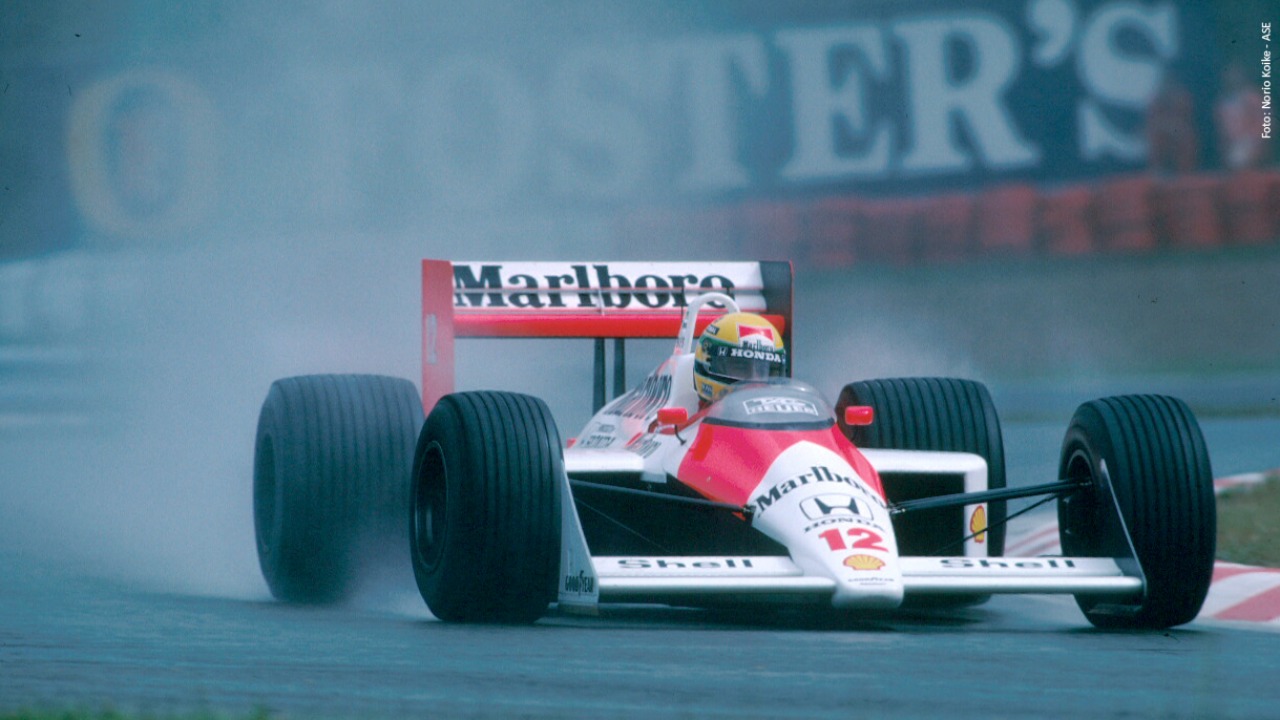
The legend of Ayrton Senna did not begin with a title, a trophy, or a dominant season. It began with a drive in Monaco that turned a little-known rookie into the sport’s most electrifying new force. In the rain and concrete canyons of the principality, Senna showed a level of control and conviction that made the rest of Formula 1 sit up and reassess what greatness could look like.
That afternoon did more than showcase raw speed. It revealed a driver who could bend a treacherous street circuit to his will, who treated the barriers as reference points rather than threats, and who seemed to find grip and courage where others found only survival. From that moment, every lap he turned in Monaco carried the weight of a legend in the making.
The stormy Monaco breakthrough
When people talk about Ayrton Senna’s rise, they almost always start with the wet Monaco Grand Prix that turned a midfield car into a weapon and a newcomer into a headline. In conditions that exposed every weakness in machinery and mindset, Senna’s pace and precision made the rest of the field look ordinary, and that contrast is what truly launched his reputation. The drive was not about a result on the timing sheet as much as it was about the sense that something new and frighteningly fast had arrived.
Later assessments of his career routinely single out that breakthrough in Monaco as the moment the paddock understood how dangerous he would be in the wet. Official retrospectives describe how The Senna legend was effectively born at the Monaco Grand Prix, with Senna’s charge through the field framed as a “tragic result” only in the sense that the final classification did not match the scale of his performance. From that race onward, rivals and observers alike began to treat him as the reference point whenever rain clouds gathered.
Saint Devote and the art of Monaco risk
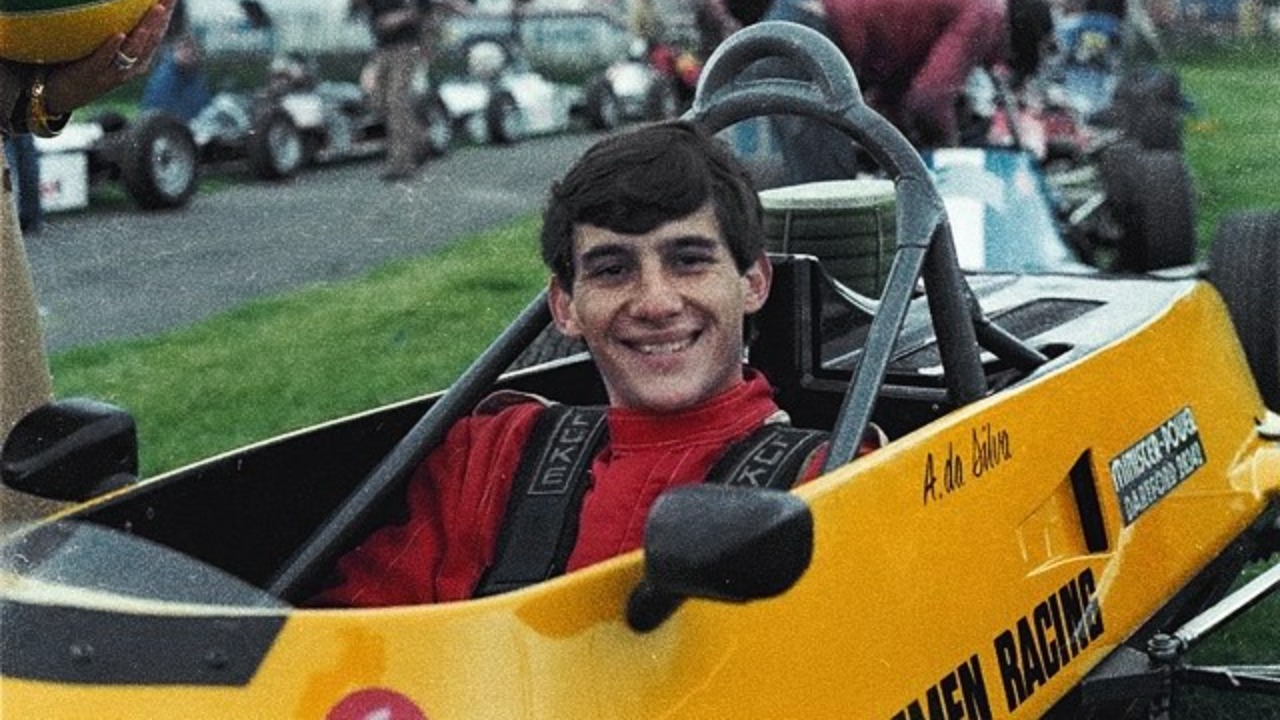
To understand why that early Monaco drive resonated so deeply, it helps to look at how Senna approached the circuit’s most unforgiving corners. At Saint Devote, the first turn named after the nearby church, he treated the entry not as a place to survive the start but as an opportunity to attack. Accounts of his later laps around Saint Devote describe one of Senna’s most remarkable moves there, a sign of how he used the corner’s blind apex and tight exit to unsettle rivals who were still treating the barriers with caution.
That same mindset defined his relationship with the rest of the lap, from the climb up the hill to the Monaco Grand Prix tunnel and back down to the harbor chicane. Where others saw a narrow, bumpy street circuit, Senna saw a sequence of reference points that could be stitched together into a rhythm, even in treacherous conditions. His willingness to brake later into Saint Devote, commit earlier to the throttle, and trust the car on the painted lines and manhole covers was a direct extension of the confidence he had already shown in that formative wet drive.
From miracle drive to “Master of Monaco”
The miracle run that first put Senna on the map did not remain an isolated flash of brilliance. It became the foundation for a record that would eventually see him win in the principality six times, a tally that still defines his status as the Master of Monaco. Those victories were not identical, but they shared a common thread: an ability to extract lap time from a circuit that punishes even the smallest lapse in concentration. Each win reinforced the idea that Monaco was his natural habitat, the place where his blend of aggression and precision made the most sense.
That dominance is now celebrated in dedicated tributes that frame the principality as Senna’s personal playground, a venue where he understood the famed street circuit in a way few others ever have. The Ayton Senna Institute, working with FOM (Formula One Management), has even curated special material around his Monaco record, highlighting how his run of wins up to 1993 remains unbroken. That institutional recognition underlines how a single breakthrough drive evolved into a sustained era of supremacy that still shapes how the sport talks about street-circuit mastery.
The 1988 qualifying lap and another dimension
If the early wet charge announced Senna to the world, his qualifying lap for the 1988 Monaco Grand Prix showed just how far he could push the limits once he had the best machinery. In that session, he produced a pole time that left even his team mate stunned, a lap that has since been held up as one of the most extraordinary single efforts in Formula 1 history. The gap he opened over the field was not just large, it was psychologically crushing, a reminder that on his day he could operate on a different plane.
Later analyses describe how, at the 1988 Monaco GP, Senna was almost 1s5 faster than Alain Prost in qualifying, a huge difference in F1 terms that underlined the scale of his advantage. Team material invites fans to Take that lap as the benchmark for what a qualifying performance can be, describing it as mesmeric and widely regarded as the greatest of its kind. When I look back at that session, what stands out is not just the raw time but the way Senna later spoke of feeling as if he had gone beyond conscious control, a sensation that fits with the idea of him “driving in another dimension” around the streets of Monaco.
Rivalry, controversy and the making of a myth
Senna’s Monaco story is not only about clean laps and perfect execution. It is also about the tension and controversy that came with his rivalry against Alain Prost, a dynamic that added drama to every appearance they made in the principality. In heavy rain, when visibility was poor and grip was minimal, Prost and Senna collided for the first time, an incident that deepened their mutual suspicion and set the tone for future clashes. Senna’s reaction, convinced that circumstances were stacked against him, fed into a narrative of a driver who felt he had to fight not just rivals but the system itself.
One detailed look back at that era notes how Senna Was Certain It Was a Conspiracy when decisions went against him, particularly in the context of his battles with Prost. That sense of persecution, whether justified or not, only heightened the drama around their duels in Monaco and elsewhere. It also helped draw the attention of the general public, who were captivated by the contrast between Prost’s calculated approach and Senna’s more visceral, emotionally charged style.
From Monaco miracle to rain king
The miracle drive that first turned heads in Monaco did not just define Senna’s relationship with one circuit. It also set the template for his reputation as the ultimate rain specialist, a driver whose car control in low grip conditions became the standard by which others were judged. The Portuguese Grand Prix that followed that early spectacle is often cited as the race that finally established Ayrton Senna in the rain as Formula 1’s best driver ever on a wet track, but that status was only possible because of what he had already shown on the streets of the principality.
Official commemorations of that first win in Portugal explicitly frame it as coming After 1984’s spectacle in Monaco, drawing a straight line from the street-circuit miracle to the day he finally converted wet-weather dominance into a victory. By then, the paddock no longer saw his pace in the rain as a surprise. It was the logical extension of the control he had already displayed in Monaco, from Saint Devote to the tunnel and back along the harbor, where he had first shown that he could find speed in conditions that left others clinging to survival.





Leave a Reply