
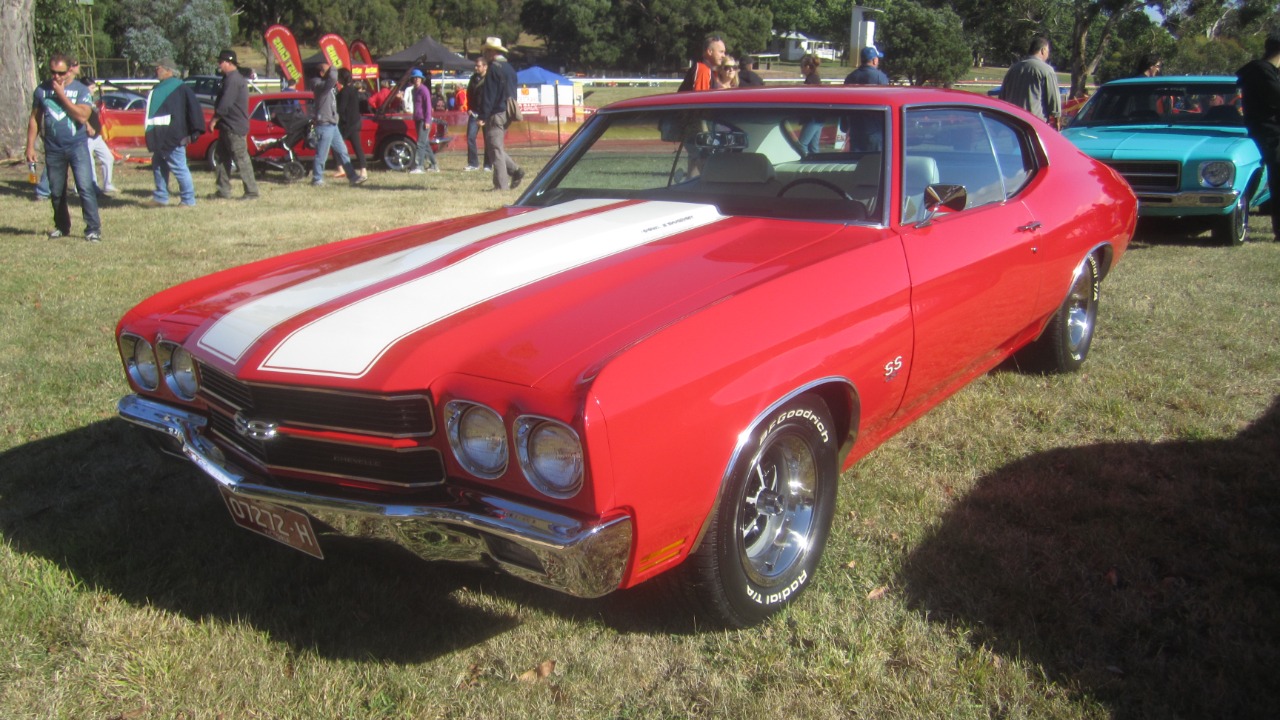
The 1970 Chevrolet Chevelle SS LS6 arrived at a moment when Detroit was locked in a very public horsepower arms race, and it did not bother with subtlety. On paper and in the real world, it pushed big-block performance to a level that still feels outrageous, even in an era of 700 horsepower showroom specials.
When I look back at that car, I see more than a spec sheet; I see the point where Chevrolet decided to turn the volume all the way up on the muscle era, then snap the knob clean off. The LS6 Chevelle was not just fast for its time, it was the clearest expression of how far a factory big-block could be pushed before insurance companies, emissions rules, and changing tastes slammed the door.
The LS6 recipe: a big-block built to dominate
At the heart of the LS6 story is a simple idea taken to its logical extreme: stuff the largest, most aggressive big-block into a midsize body and back it with hardware that could survive repeated full-throttle abuse. The Chevelle SS package had already proven that the formula worked, but the LS6 specification sharpened every edge, turning a quick street car into something that felt barely domesticated. It was the moment when Chevrolet treated the showroom like a staging lane, and the Chevelle like a sanctioned weapon.
The centerpiece was the 454 CID V8, an Engine rated at 450 Horsepower and 500 ft-lbs, numbers that still sound bold for a street car. That 454 was paired with the M22 “Rock Crusher” 4-speed Transmission, a gearbox whose very nickname told you it was built for brutality rather than quiet commuting. When I picture that drivetrain in a Chevelle shell, I see a package that was unapologetically focused on acceleration, with the big-block’s tidal wave of torque doing the talking long before the styling or badging had a chance.
From SS Malibu to LS6 legend
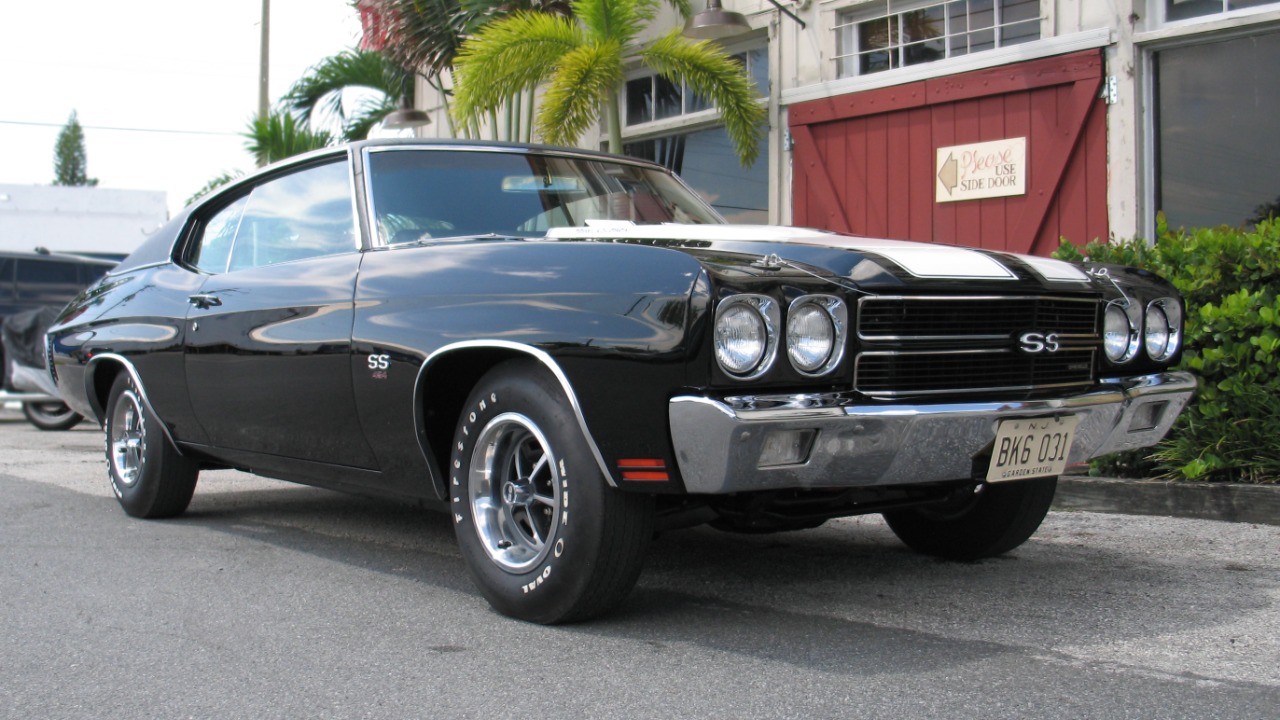
Chevrolet did not invent the idea of a hot midsize coupe, but with the Chevelle SS it refined the concept into something that felt attainable and lethal at the same time. The SS Malibu variants had already earned a reputation as serious street machinery, and by 1970 the name carried real weight at the drag strip and on the boulevard. When the LS6 option arrived, it took that familiar SS Malibu silhouette and quietly turned it into one of the most feared cars you could order with a warranty.
Period testing made it clear that the SS Malibu 454/450 combination was not aimed at casual drivers or light duty errands, describing how the 454 cubic inch package with its 450 horsepower rating transformed the car into something far more intense than a daily runabout in that Jan road test of the Malibu. I read those impressions as a reminder that the LS6 was built for drivers who wanted to go very fast in a straight line, and who were willing to live with a heavy clutch, a lumpy idle, and a fuel gauge that moved like a tachometer. The familiar Chevelle shape hid a temperament that was anything but mild.
Factory firepower and the peak of big-block bravado
What sets the 1970 LS6 apart, in my mind, is how brazenly it pushed the idea of factory performance. This was not a tuner special or a backdoor racer; it was a Chevrolet Chevelle SS you could finance, insure, and park in the driveway, even if its personality belonged at the drag strip. The LS6 option turned a popular midsize into a statement about how far a mainstream brand was willing to go in the name of speed.
Documentation on surviving cars shows how Chevrolet baked that intent into the build sheet, with a Chevrolet Chevelle SS 454 LS6 configuration that was factory documented as the top dog in the lineup and identified explicitly as a 454 LS6. When I look at those records, I see more than a list of options; I see a manufacturer willing to sign its name to a car that could embarrass purpose-built racers. That level of factory firepower, wrapped in a Chevelle body and sold over the same counter as family sedans, is exactly why the LS6 feels like the high-water mark of big-block bravado.
Living with an LS6: noise, numbers, and nostalgia
On paper, the LS6 Chevelle reads like a numbers exercise, but living with one, even briefly, is a sensory experience first and a spec sheet second. The 454’s idle is not just loud, it is insistent, a deep mechanical thrum that sends vibrations through the steering wheel and seat before you even ease out the clutch. The M22 Rock Crusher adds its own soundtrack, with a gear whine that makes every shift feel like a small event rather than a background motion.
Those 450 horsepower and 500 ft-lbs of torque are not abstract figures when you are behind the wheel; they show up as a shove in the back that starts just off idle and does not let up until you run out of courage or road. I find that the nostalgia around the LS6 is not only about quarter mile times or rarity, it is about how completely the car immerses you in the act of going fast. In an era when performance can feel filtered and managed, the Chevelle’s big-block personality is refreshingly direct, a reminder of what peak big-block power felt like when it was delivered with minimal mediation between crankshaft and driver.
Why the 1970 LS6 still defines big-block peak power
Decades later, the 1970 Chevrolet Chevelle SS LS6 still sits at the center of any conversation about ultimate big-block muscle, and I do not think that is an accident. It arrived at a perfect storm moment, when displacement was cheap, regulations were still on the horizon, and buyers were hungry for bragging rights measured in cubic inches and trap speeds. The LS6 did not just participate in that moment, it crystallized it.
When I line up the facts, from the 454 CID V8 and its 450 horsepower rating to the Rock Crusher 4-speed and the factory documentation that confirms how intentionally it was built, I see a car that represents the summit of a very specific mountain. Later performance cars would be quicker, more refined, and far more efficient, but the 1970 LS6 Chevelle captured the raw, unfiltered idea of big-block power at full song. That is why, whenever the topic turns to peak muscle car performance, my mind still goes first to that Chevelle, idling hard, waiting for the light to turn green.

Leave a Reply