
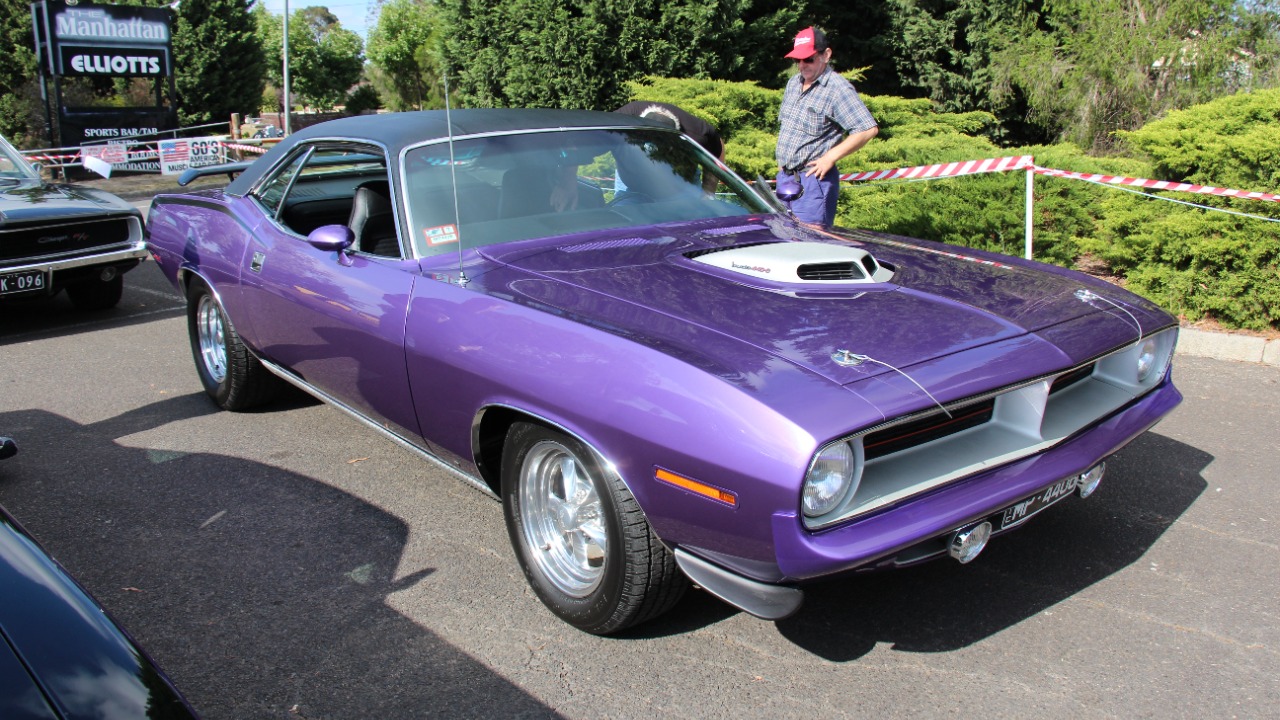
The 1970 Plymouth Hemi ’Cuda did not need decades to earn its reputation. From the moment it hit American streets, it felt less like a new model and more like a declaration that the muscle car wars had reached their wildest phase. I want to trace how that one model year, with its mix of brute force and scarcity, turned a showroom curiosity into a legend that still commands reverence and staggering money today.
To understand that overnight ascent, I am looking at how the car’s raw hardware, its place in the broader Barracuda story, and its tiny production run all fed into a myth that has only grown stronger. The result is a car that enthusiasts now treat as a kind of rolling Hall of Fame plaque, a machine whose name alone can quiet a parking-lot argument.
The moment the Hemi ’Cuda crashed the muscle car party
By 1970, Detroit’s horsepower race was already in full swing, but the Plymouth Hemi ’Cuda arrived like a final escalation. Under that iconic shaker hood sat the 426 Hemi, a race-bred V8 that turned a compact pony car into what one modern walkaround rightly calls the “apex predator of the muscle car world,” a description that captures how completely it reset expectations for street performance once the Plymouth Hemi Cuda the appeared. I see that moment as the tipping point when the Barracuda stopped being a niche alternative and became a fearsome headline act.
What made the 1970 Hemi ’Cuda feel so immediate was not just the power, but the attitude baked into every surface. The shaker scoop, the bold graphics, and the squat stance announced that this was not a polite cruiser, it was a car built to dominate the quarter mile and the boulevard alike. In a market already crowded with big-block Chevelles and GTOs, the Hemi ’Cuda’s combination of outrageous engine and compact footprint gave it an edge that enthusiasts recognized almost instantly as something different, something closer to a factory hot rod than a family car with options.
From Barracuda to ’Cuda: how a nameplate became a menace
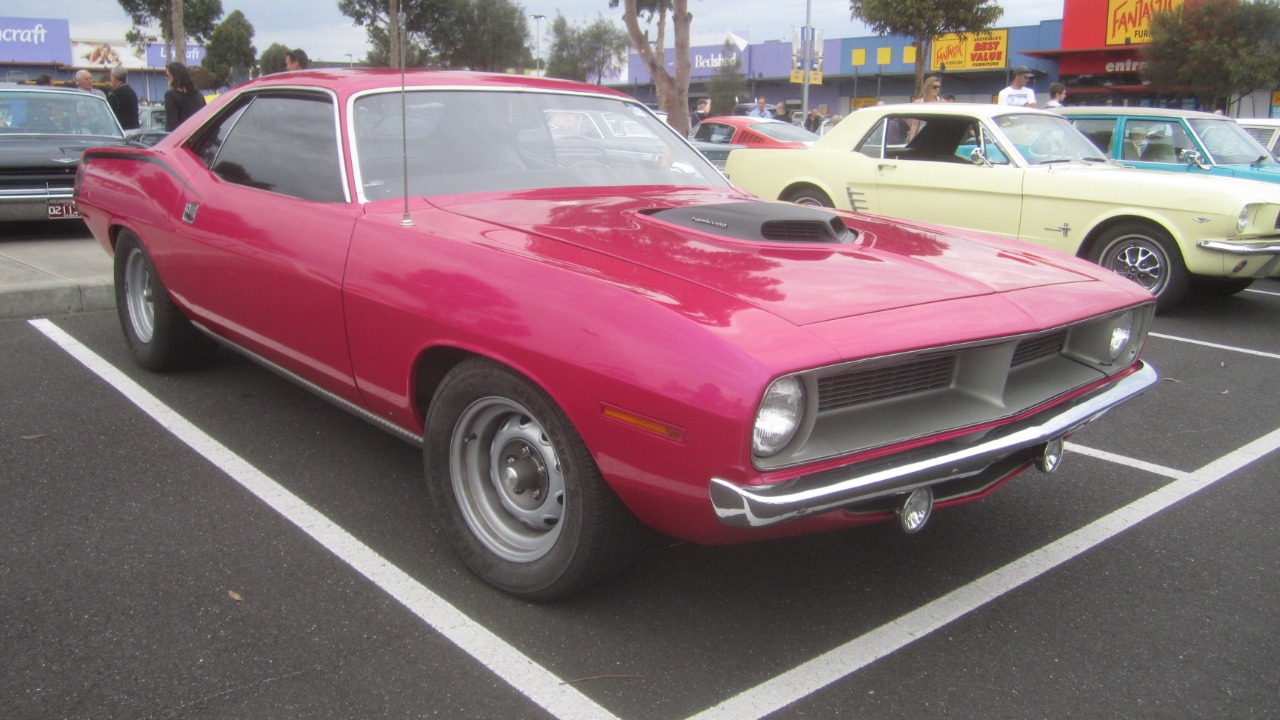
The Hemi ’Cuda’s legend makes more sense when I step back to the third-generation Barracuda that spawned it. Plymouth had already been in the pony car game, but the redesign that arrived for 1970 sharpened the car’s identity and created room for a more focused performance sub-brand. The third-gen Barracuda was given a special ’Cuda designation for the top performance models, and that simple trim shift turned a familiar fish into a street predator in the public imagination.
By carving out the ’Cuda label, Plymouth created a shorthand that enthusiasts could latch onto immediately. Saying “’Cuda” meant you were talking about the serious one, the car with the big engine and the right options, not just any Barracuda that happened to share the body. When the 426 Hemi was dropped into that package, the name itself became a kind of warning label. The ’Cuda badge on the fender told anyone at a stoplight that this was not just another sporty coupe, it was the one built to embarrass rivals and rewrite what a small Mopar could do.
Why the 1970 Hemi ’Cuda felt like a revolution, not just an upgrade
To me, the 1970 Hemi ’Cuda stands out because it did not simply add more power, it captured the spirit of a whole era of American performance. Looking back on that period as a kind of Stroll Down Memory Lane, it is clear that the car arrived at the peak of what many enthusiasts now call The Muscle Car Revolution, when manufacturers were willing to push engineering and marketing to extremes. The 70 model year crystallized that mindset, turning the Hemi, the Cuda, and the new body into a single, unapologetic statement.
What I find striking is how quickly the car’s personality overshadowed its spec sheet. Yes, the 426 Hemi was the star, but the way the Hemi and the Cuda body worked together made the car feel like more than the sum of its parts. The short wheelbase, the aggressive gearing, and the visual drama of the shaker hood created an experience that drivers still describe in almost reverent tones. In that sense, the 1970 Hemi ’Cuda did not just participate in The Muscle Car Revolution, it became one of the clearest symbols of how far that revolution was willing to go before insurance rates, emissions rules, and changing tastes pulled the plug.
Rarity that turned into a gold rush
Power alone does not make a legend, and the Hemi ’Cuda’s scarcity is a huge part of why it looms so large today. Production numbers for 1970 were tiny by any modern standard, and even by the looser norms of the muscle era. For example, there were just 14 Hemi ’Cuda Convertibles, 652 Hemi ’Cuda Hardtops, 34 Magnum 440 ’Cuda Convertibles and 2,724 cars built across the various power plant and transmission combinations, figures that underline how limited the true top-spec cars really were according to detailed Hemi Cuda Convertibles and Cuda Hardtops records. When I look at those numbers, it is easy to see why collectors now treat surviving examples like blue-chip assets.
That scarcity has had a compounding effect over time. As values climbed and stories spread about record-setting auctions, the Hemi ’Cuda’s reputation fed on itself, turning a rare car into a near-mythical one. The fact that so few people ever saw a Hemi ’Cuda Convertible in period, let alone owned one, only adds to the aura. In the modern market, those production totals have become part of the folklore, recited almost like stats for a legendary athlete, and they help explain why the car’s name alone can push prices into the stratosphere whenever a clean example surfaces.
“King of the streets” and a permanent place in muscle car lore
Rarity and power would mean less if the car had not delivered where it mattered most, on real roads and dragstrips. Among Cudas, the Hemi was king of the streets and quickly became legendary for its performance and rarity, a status that has only grown stronger as the years have passed and as Among Cudas Hemi Today enthusiasts continue to celebrate it. I see that “king” label as more than nostalgia, it reflects how completely the car dominated the imagination of anyone who cared about straight-line speed at the time.
What keeps the 1970 Hemi ’Cuda in the conversation today is how cleanly its story ties together performance, scarcity, and timing. It arrived at the height of the muscle era, carried one of the most feared engines Detroit ever built, and was produced in numbers small enough to make every surviving car feel like a minor miracle. That combination turned the Hemi ’Cuda into a street legend almost overnight, and it is why, decades later, the sight of that shaker hood still sends a quiet signal that you are looking at one of the purest expressions of American horsepower ever to roll out of a factory.


Leave a Reply