

The 1974 Camaro Z/28 arrived at a moment when American performance cars were being squeezed by new safety rules, emissions standards, and insurance crackdowns, yet it still managed to matter in ways that went far beyond quarter-mile bragging rights. Instead of chasing the peak horsepower numbers of the late 1960s, it quietly redefined what a factory performance car could be in a tougher era. It did this through balance, chassis tuning, and character, proving that the muscle-car story did not simply end when the big numbers disappeared.
Looking back now, I see the 1974 Camaro Z/28 as a pivot point, a car that kept the flame alive by evolving rather than surrendering. It was shaped by regulation, but it was not defined by compromise, and its mix of styling, handling, and survivable performance still resonates with enthusiasts who care about how a car feels as much as how fast it is on paper.
The regulatory squeeze that reshaped Camaro
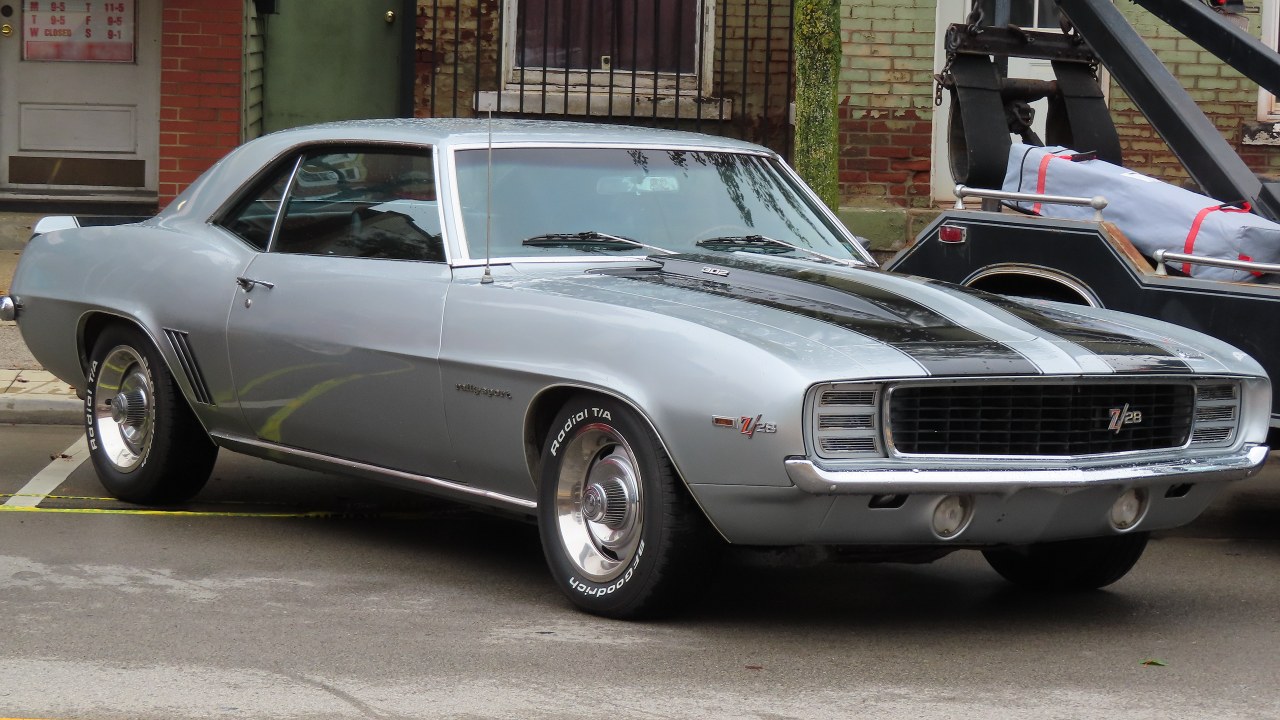
By the time the 1974 model year rolled around, the second-generation Camaro had to be reworked to satisfy a wave of federal safety and emissions rules that were reshaping every Detroit performance nameplate. Engineers had to redesign the front and rear to accommodate larger impact-absorbing bumpers and related structure, a change that altered the proportions of the car and added weight even as the market still expected a sporty profile from a Camaro. Contemporary testing made clear that this first major rework of the second-gen body was driven largely by the government’s new requirements, not by a desire to chase styling trends for their own sake, and yet the car still managed to look purposeful and athletic in its updated form, especially in Z/28 trim that highlighted the long hood and short deck of the basic shell with stripes and spoilers that were anything but subtle, as period coverage of the revised second-gen Camaro makes clear.
Under the skin, the same pressures that reshaped the body were also reshaping the engine bay, and the Z/28’s small-block V8 had to live within tightening emissions limits that dulled the headline horsepower figures compared with the peak of the muscle era. Yet the car’s character was not simply a casualty of regulation, because the chassis tuning, gearing, and overall calibration were aimed at delivering a broad, usable powerband rather than a single big number at the top of the spec sheet. That is why road tests of the time emphasized how the engine pulled strongly in the midrange, with the tach needle swinging eagerly toward the upper reaches of the dial, even if the official output figures no longer shocked anyone used to late-1960s big blocks.
The Z/28’s role after The SS and RS faded

Context matters when judging the 1974 Z/28, and the Camaro lineup around it was changing fast. The SS was gone by this point, and the pretty RS model had been cancelled at the end of 1973, which meant the Z/28 suddenly had to carry far more of the performance and image load for the entire Camaro range. Instead of being one of several hot variants, it became the de facto halo for enthusiasts who still wanted a car that looked and felt like a proper American performance coupe. That shift in the lineup is spelled out clearly in period documentation of the 1974 Camaro, which notes that The SS had disappeared and the RS had been dropped, leaving the Z/28 and the more comfort-oriented LT to define the top of the range, a change that underlined how the Z/28 had become the standard-bearer for the car’s sporty identity as described in detailed 1974 Camaro specifications.
That new responsibility shaped how the Z/28 was equipped and marketed, because it had to appeal to buyers who might once have gravitated to The SS or the RS but still wanted something more focused than a basic coupe. The car’s mix of performance hardware and visual cues was calibrated to send a clear message that this was not just another emissions-era compromise, even if the raw numbers no longer matched the legends of a few years earlier. In that sense, the 1974 Z/28 mattered because it kept the Camaro’s performance narrative alive at a time when some rivals were retreating into pure appearance packages or soft luxury, and it did so by leaning into its own heritage rather than pretending the early 1970s had not changed the rules.
How the Z/28 proved performance was still alive
For enthusiasts who lived through the mid-1970s, the 1974 Camaro Z/28 became a kind of litmus test for whether Detroit still cared about driving excitement. Ask Monte Dinnell about mid-1970s performance cars and he will quickly point to the 1974 Chevrolet Z28 as a personal favorite, a car he sees as proof that the story of American performance did not simply end when compression ratios dropped and catalytic converters arrived. His unrestored original example, which has been documented in detail, shows how the car’s combination of small-block power, four-speed gearing, and chassis tuning delivered a driving experience that felt alive and responsive even in an era often dismissed as the dark ages of performance, a perspective captured in coverage that profiles how Ask Monte Dinnell about his Chevrolet and he will talk about the mighty Z28 rather than lament what had been lost.
What stands out in that story is not just nostalgia, but the way the car’s original configuration underscores how carefully the Z/28 package had been assembled to deliver real-world performance. The Z28 package also included special sport suspension, 15×7 five-spoke-style wheels, and F60-15 bias-belted, white-letter tires, hardware that worked together to give the car grip and composure that many earlier straight-line bruisers simply lacked. Those details, preserved on unrestored survivors, show that the engineers were thinking about cornering and control as much as acceleration, and they help explain why the 1974 Z/28 still feels like a driver’s car today, as documented in technical breakdowns of how The Z28 package also included those specific suspension and wheel upgrades.
Design details and the culture of keeping them alive
Part of what keeps the 1974 Camaro Z/28 relevant today is the way its design details have become touchstones for a generation of enthusiasts who grew up around second-gen cars. The distinctive front end, with its bumper-integrated look and revised grille, and the rear treatment that had to accommodate new impact standards, gave the car a unique identity within the broader Camaro story. Owners and restorers obsess over getting those details right, from the shape of the spoilers to the exact finish of the trim, and the aftermarket has responded with a deep catalog of reproduction parts that make it possible to keep these cars on the road in factory-correct form. You can see that commitment in the availability of specific 1974 Camaro components, such as reproduction exterior and interior pieces tailored to the Chevrolet body style, which are cataloged in detail by suppliers that list dedicated 1974 Chevrolet Camaro parts for owners who want to preserve or restore their cars.
That ecosystem of parts and knowledge matters because it turns the 1974 Z/28 from a historical footnote into a living part of car culture. When enthusiasts can source the correct trim, decals, and hardware, they are more likely to keep these cars in circulation, which in turn keeps their story visible at shows, on social media, and in everyday traffic. The car’s survival is not just about nostalgia, but about the way its design and driving experience still speak to people who value analog feedback and mechanical honesty in an era dominated by digital interfaces and turbocharged four-cylinders. In that sense, every carefully restored bumper, wheel, or stripe package is a small vote in favor of a particular vision of what a performance car should feel like, one that the 1974 Z/28 embodied even under the constraints of its time.
Why the 1974 Z/28 still resonates in a data-driven world
We live in a moment when car buying and car culture are increasingly shaped by data, from online configurators to comparison tools that can surface every trim, option, and price point in a few clicks. Product information is aggregated and organized at massive scale, with systems that connect brands, stores, and content providers so shoppers can see how one model stacks up against another in real time. That shift is powered by technology that builds a kind of living map of retail, a network that ingests and links millions of individual listings and specifications into a single structure that helps people find the exact Product they want, as explained in technical overviews of how a modern Product shopping graph pulls together data from across the web.
In that environment, it would be easy to assume that a car like the 1974 Camaro Z/28, with its modest factory horsepower and emissions-era compromises, would be lost in the shuffle of more impressive numbers and newer technology. Yet the car continues to punch above its weight in enthusiast circles precisely because it offers something that cannot be captured fully in a spreadsheet: the way the steering loads up in a corner, the sound of a small-block climbing toward redline, the view over that long hood framed by stripes and fender creases. When I look at how people still search out, restore, and celebrate these cars, I see a reminder that performance is not just a spec, it is an experience, and the 1974 Z/28 mattered because it kept that experience alive at a time when the industry could easily have walked away from it.


Leave a Reply