
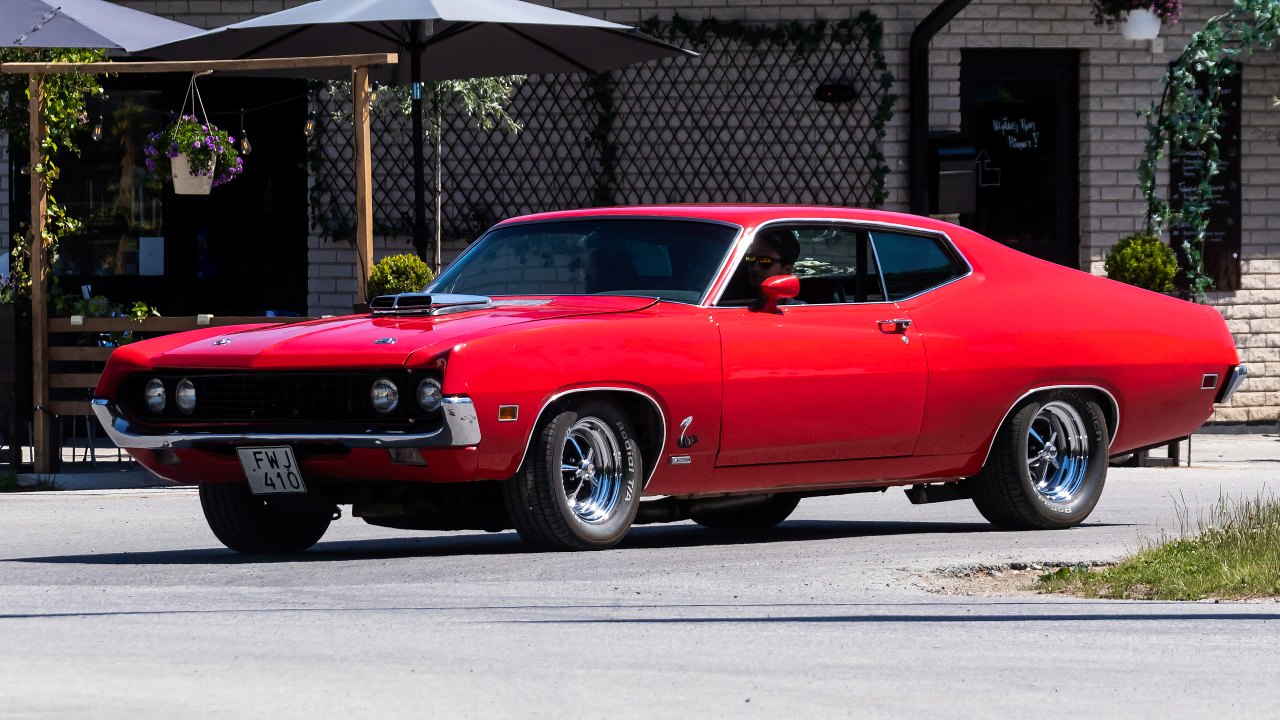
The 1970 Ford Torino Cobra arrived at the exact moment stock car racing turned into an arms race over aerodynamics, and it quietly gave Ford a way to stay dangerous even as the wildest experiments were shut down. While the radical Torino King Cobra prototype grabbed the headlines inside the industry, it was the production Torino Cobra that slipped into garages and race shops, carrying much of the same thinking in a package NASCAR would actually allow. I see that combination of subtle aero work and brutal big-block power as the reason this car became a kind of secret weapon when the rulebook slammed the door on the most extreme designs.
Instead of chasing ever taller wings and longer noses, Ford used the Torino Cobra to translate lessons from the short‑lived aero wars into a car that could be built in volume, sold to the public, and still tuned into a contender on Sunday. The result was a machine that looked like a street muscle car, behaved like a purpose‑built oval racer, and helped close the gap after NASCAR moved to rein in the most outrageous shapes.
From Fairlane roots to a purpose-built Cobra
The Torino Cobra’s story starts with the Fairlane, a sensible midsize that Ford gradually turned into a weapon by reshaping its body and stuffing ever larger engines under the hood. By 1970, All new styling and engine options up to and including the 429 SCJ turn the Fairlane into the 70 FORD TORINO COBRA, a car that looked lower, longer, and more aggressive than the boxier sedans it replaced. That evolution mattered for NASCAR, because the sanctioning body still required race cars to be based on production sheetmetal, and the sleeker Torino gave Ford teams a better starting point without needing a separate, exotic homologation special.
Underneath, the Torino Cobra’s hardware was aimed squarely at high speed work. The availability of the 429 SCJ meant teams could tap into serious big‑block power straight from the factory, then refine it for the sustained full‑throttle abuse of superspeedways. Period fact sheets and race prep guides treated the Torino Cobra as the natural successor to earlier Fairlane‑based stockers, but with a body that finally acknowledged how much aerodynamics mattered on the big ovals. That blend of familiar chassis and sharper shape is what made it so attractive to NASCAR crews looking for a platform they could trust and still push.
Aero wars and the birth of the King Cobra
To understand why the regular Torino Cobra became so important, I have to look at the wild experiment that almost replaced it: the Ford Torino King Cobra. Fast Facts on the Ford Torino King Cobra make it clear how radical that project was, with Just three prototypes of the Ford Torino King Cobra built, none of which ever reached showrooms. Engineers reshaped the front of the car into a long, pointed nose and integrated hidden headlights, all in pursuit of lower drag and better stability at the kinds of speeds that were starting to terrify officials and rivals alike.
On track, that work paid off. Out on the track, the aerodynamic nose did the job of getting the Torino up to speeds in excess of the magic 200-mile-a barrier, proving that the concept worked even if the car itself never got a green light. The cardinal rule of aerodynamics is, “You can move as much air as you want, but you must put it back neatly.” Legendar engineers working on the King Cobra tried to follow that principle by smoothing the airflow over the hood and roof and then tapering it cleanly off the rear. Their research methods, including prototype testing and comparison runs against rivals, showed that the pointed front and carefully managed rear surfaces could turn the Torino into a 200 mph threat on the superspeedways.
Why the King Cobra died and the Torino Cobra lived
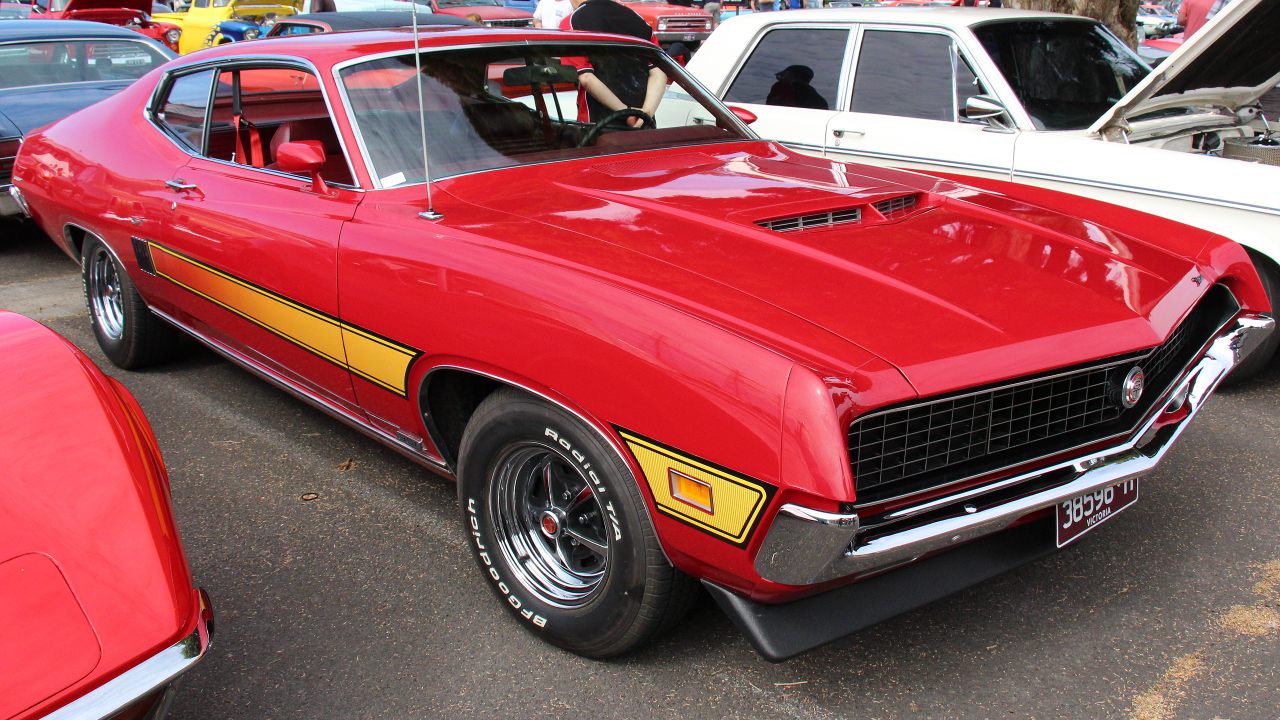
The King Cobra’s problem was not speed, it was politics and timing. The project was sadly scrapped after this test, with The King Cobra’s demise hanging on several factors that had little to do with its raw pace. NASCAR officials were already uneasy about the escalating aero war, and rival brands were fielding their own extreme shapes, including The Charger with its 23-inch-tall rear stabilizer wing and missile-shaped nose. As speeds climbed and the cars grew more specialized, the series risked drifting away from anything fans could actually buy, and that tension pushed regulators to clamp down.
At the same time, Ford executives were rethinking how much money they wanted to pour into limited‑run specials that existed mainly to win trophies. Internal budget cuts and shifting priorities meant the company was less willing to fund a car that would require a dedicated production run just to satisfy homologation rules. After watching the Da… era of aero warriors unfold, decision‑makers concluded that the King Cobra’s extreme nose and low‑volume nature would be a hard sell in the new environment. By cutting budgets, NASCAR teams were nudged back toward cars like the standard Torino Cobra, which could be justified as part of the regular lineup rather than a one‑off science project.
How the production Torino Cobra carried the aero torch
With the King Cobra shelved, the 1970 Ford Torino Cobra suddenly looked like the perfect compromise between radical aerodynamics and real‑world practicality. Its body did not wear the dramatic pointed nose of the prototype, but it still benefited from the same wind tunnel lessons about how to move air cleanly around a big American coupe. The front fascia, hood contours, and fastback roofline all worked together to reduce lift and drag compared with earlier Fairlane shapes, giving NASCAR teams a car that sliced the air more efficiently without triggering the rulebook alarms that doomed the King Cobra.
On the track, that meant the Torino Cobra could run closer to the front even as officials tightened regulations on wings and nose cones. Reports on the 1970 Ford Torino highlight how the car’s more refined aerodynamics helped tame the “squirrelly” behavior that plagued some earlier stockers at high speed, especially on the longest ovals. You can move as much air as you want, but you must put it back neatly, and the Torino Cobra’s production body did that well enough to keep the tires planted and the steering predictable. For teams that had watched the King Cobra touch the 200-mile-a neighborhood in testing, the production car represented a way to capture much of that stability in a package NASCAR would actually approve.
NASCAR’s secret weapon in plain sight
What made the Torino Cobra a secret weapon was not that it was invisible, but that it looked ordinary enough to blend in while carrying lessons from the most extreme aero experiments. The 1970 Torino King Cobra was to be Ford’s answer to the Dodge Daytona and Plymouth Superbird on the NASCAR circuit, yet when that car never materialized for the grid, rivals might have assumed Ford had lost its edge. In reality, teams were quietly massaging Torino Cobras, taking advantage of their 429 power and slippery shape to stay competitive even as the era of towering wings and needle noses faded.
From my perspective, that is the real legacy of the 1970 Ford Torino Cobra in stock car history. It bridged the gap between the wild, short‑lived world of aero warriors and the more regulated, production‑based racing that followed, carrying forward the best ideas from projects like the King Cobra without drawing the same scrutiny. By starting with a Fairlane‑derived body that had been carefully restyled into the 70 FORD TORINO COBRA and pairing it with the 429 SCJ, Ford gave its NASCAR teams a car that could run at the front while looking like something a fan might actually drive home. In a sport where the most radical machines were suddenly unwelcome, that combination of subtle aero, big power, and showroom credibility was exactly the kind of quiet advantage every team was chasing.



Leave a Reply