
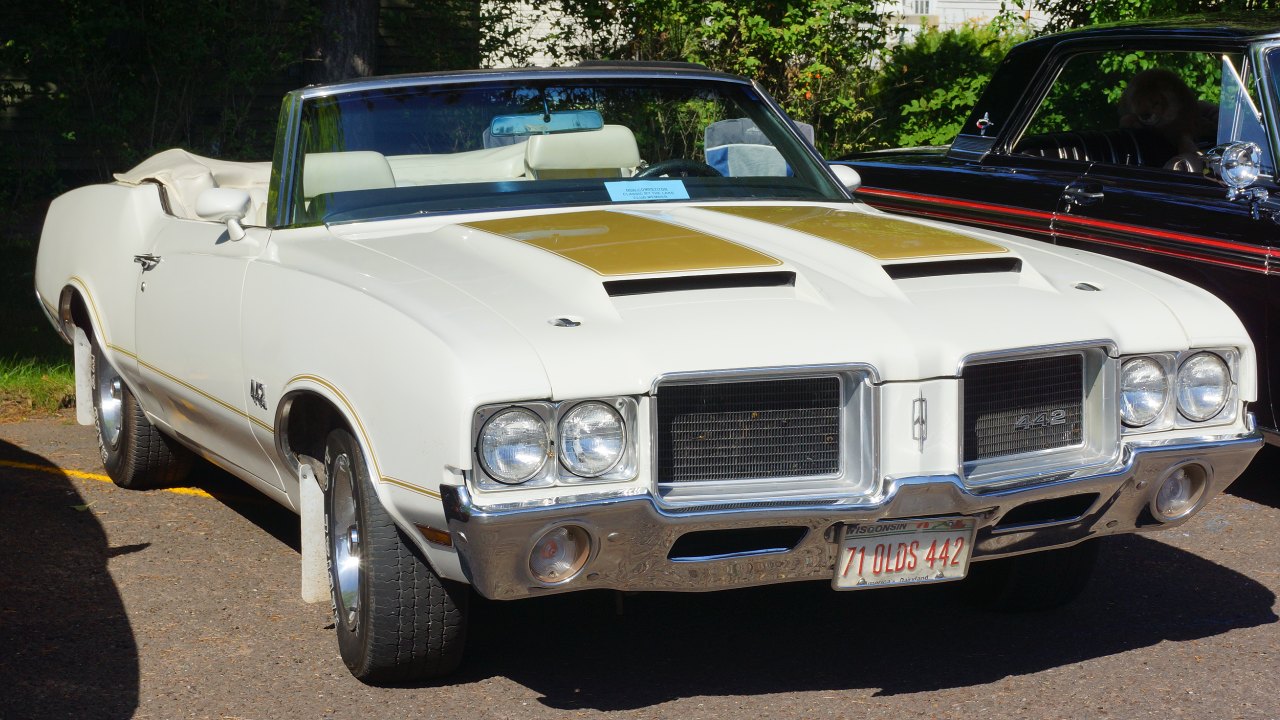
The Oldsmobile 442 W-30 earned its reputation not in brochure copy but in the way it bent real streets and dragstrips to its will. In an era crowded with big claims and optimistic factory numbers, this package turned the Cutlass into a brutally effective tool that could run with the quickest muscle cars while still functioning as a usable daily driver. I want to trace how that combination of raw hardware, underrated engineering and lasting collectability turned the W-30 from a high-performance option into a benchmark for real-world dominance.
The moment Oldsmobile stopped holding back
Oldsmobile spent the late 1960s playing within General Motors’ corporate rules, which capped engine displacement in intermediate cars and kept some of its most serious hardware on the sidelines. When that cap disappeared, the division did not ease into the new freedom, it went straight to a big-block centerpiece that would define the 442 W-30. The standard engine for the 442 became a 455-cid V8, and the W-30 package sharpened that foundation into something far more focused, turning a comfortable Cutlass into a car that could embarrass rivals that looked wilder on paper.
The factory specification sheet for the 1970 Oldsmobile Cutlass 442 makes clear how aggressive that pivot really was. The W30 package included the 455 CID V8, delivering 370 horsepower, and paired it with Forced-Air induction, a special air cleaner, heavy-duty internal components, and chassis upgrades that went well beyond cosmetic stripes. Period documentation notes specific W30 emblems and performance-oriented tires, details that signaled to anyone in the know that this was not a dress-up kit but a comprehensive performance recipe. By anchoring the car around that 455 and its 370 rated horsepower, Oldsmobile finally aligned its intermediate muscle car with the full potential of the corporate parts bin instead of the corporate rulebook.
How the W-30 turned numbers into real-world speed
On paper, the 442 W-30’s output looked competitive rather than outrageous, especially in a marketplace where rivals often quoted optimistic horsepower figures. The difference came in how Oldsmobile translated those numbers into usable performance. The combination of the 455 CID block, high-flow heads, and the Forced-Air induction system gave the engine a deep well of torque that arrived early and stayed with the driver through the midrange, exactly where a street car spends most of its time. That meant the W-30 could leap off the line without elaborate launch techniques and pull hard in passing situations, traits that mattered more in the real world than a few extra claimed horsepower at the top of the tach.
Factory literature for the 1970 Oldsmobile Cutlass 442 underscores how integrated the W30 package really was. The special air cleaner and ducting worked with the Forced-Air setup to feed cooler, denser air to the 455, while suspension tuning and specific letter tires helped the chassis keep up with the engine’s output. Rather than chasing peak dyno numbers, Oldsmobile engineered a package that delivered repeatable acceleration and stability on imperfect pavement, which is why owners could drive these cars to the strip, run competitive times, and then drive home. That blend of tractable power and durable hardware is a major reason the W-30’s performance reputation has held up as more than just folklore.
Rarity, convertibles and the 442 mystique
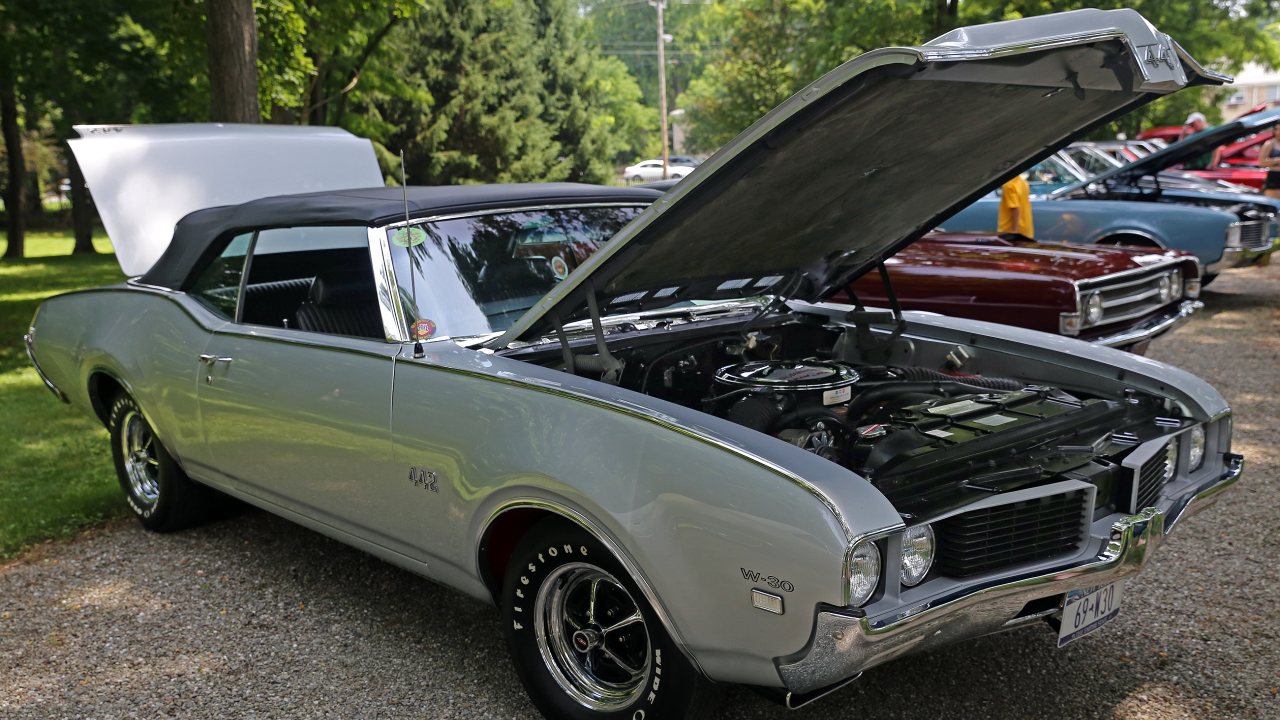
Even within the already focused world of the 442 W-30, some configurations have taken on near-mythic status. The combination of the W-30 package with a convertible body created one of the most coveted muscle cars of the period, a car that blended open-air cruising with serious quarter-mile intent. Enthusiast coverage of 1970 Oldsmobile 442 W30 convertibles notes that these cars are not just rare, they are described as some of the most sought-after muscle machines ever built, a reflection of how collectors value both their scarcity and their dual-purpose character.
That desirability is not theoretical. At the Barrett-Jackson 2025 Scottsdale Auction, a particularly rare 1970 Oldsmobile 4-4-2 W30 crossed the block and sold for $137,500, a figure that underlines how the market now prices these cars as blue-chip collectibles rather than used muscle. Auction houses that specialize in high-end American performance, including venues like Barrett-Jackson and Mecum, routinely spotlight 442 W-30 examples as headline lots, especially when they combine original drivetrains, documented W-30 equipment and low production body styles. The sustained willingness of buyers to pay six-figure sums for the right car shows how the W-30’s real-world performance legacy has translated directly into long-term value.
Time-capsule survivors and what they reveal
Surviving, unrestored 442 W-30s offer a rare window into how these cars left the factory and why they were so effective. One widely discussed example is a 1970 Oldsmobile 442 W-30 described as perhaps the best-preserved of its kind, a time capsule that still carries its original 455-cubic-inch V8 and factory-correct W-30 hardware. Looking closely at a car like this reveals the small but telling details that separated a true W-30 from a standard 442, from the routing of the Forced-Air ducting to the specific finishes on engine components and suspension pieces.
Reports on that exceptionally original Oldsmobile 442 W-30 emphasize how intact the drivetrain and underbody remain, which helps confirm how the factory balanced performance with durability. The presence of the original 455, the correct induction system and the unmodified chassis setup shows that the car did not need extensive aftermarket help to deliver serious speed. For historians and restorers, these time-capsule cars serve as rolling reference manuals, validating the specifications listed in period documents and helping separate authentic W-30 components from later substitutions. For enthusiasts, they are proof that the legend of the W-30 is grounded in tangible hardware, not just nostalgia.
Why the 442 W-30 still dominates the conversation
Decades after the last 442 W-30 left the assembly line, the package still commands attention in a crowded field of classic muscle. Part of that staying power comes from the way Oldsmobile balanced brute force with a level of refinement that many rivals lacked. The 455-cid V8 gave the 442 a deep reservoir of torque, while the W-30’s Forced-Air induction, chassis tuning and visual cues turned it into a complete performance statement. That combination allowed the car to excel in everyday driving, highway pulls and dragstrip runs, which is why owners and collectors continue to treat it as a benchmark for usable power.
The ongoing interest in Oldsmobile 442 W-30 models, from detailed heritage writeups to high-profile auction appearances, shows how thoroughly the car has transcended its original role as a mid-priced performance option. When a package that started as an upgrade on a Cutlass now inspires dedicated research, carefully preserved survivors and six-figure bidding wars, it is clear that its reputation for real-world dominance was earned the hard way, through results rather than marketing. In a muscle car landscape filled with bold claims, the 442 W-30 stands out because its numbers, its engineering and its surviving examples all point in the same direction: this was a car built to deliver, and it still does, every time someone turns the key on a well-preserved 455 CID and lets the Forced-Air system go to work.



Leave a Reply