
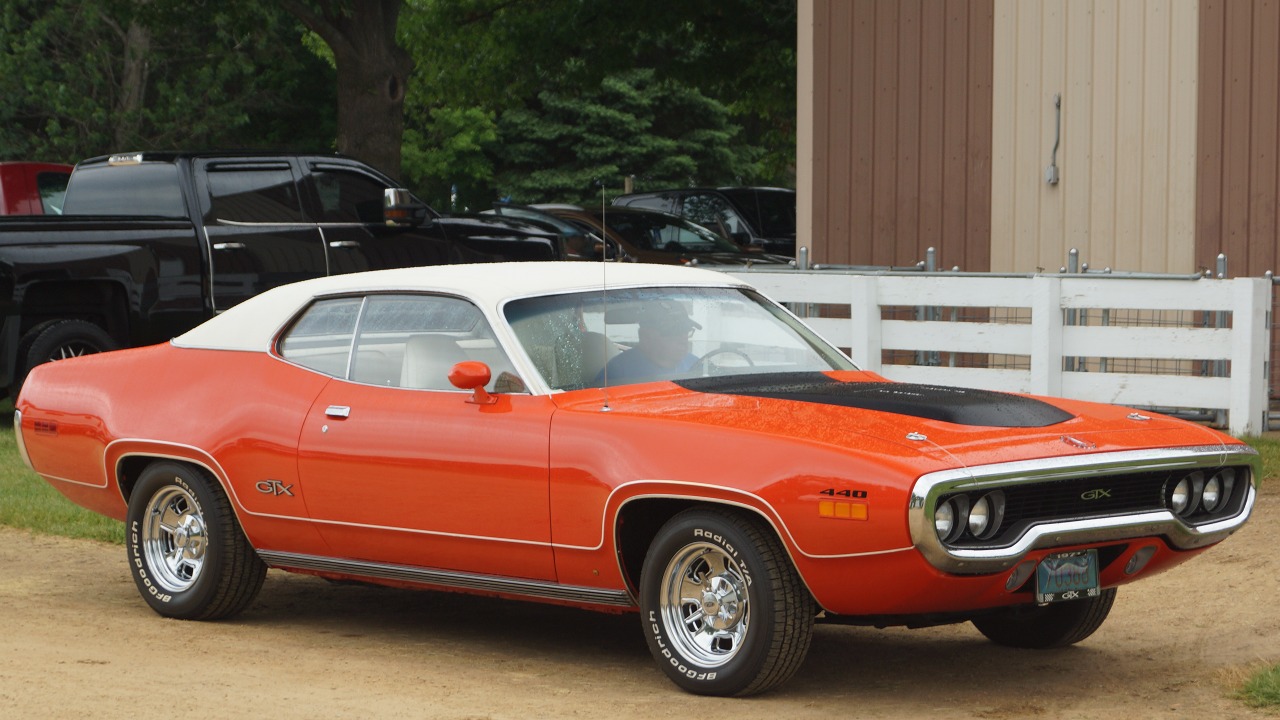
The 1971 Plymouth GTX arrived at the exact moment American muscle cars began to lose their grip on the market, and it shows. On paper it was still a heavyweight bruiser, but in practice it marked the pivot from unrestrained performance to a more cautious, regulated, and insurance‑burdened era. To understand why that single model year feels like the beginning of the end, I need to look at how the car changed, how buyers reacted, and how the wider muscle segment was already starting to unravel around it.
The last fully armed GTX
By 1971, the Plymouth GTX still carried the hardware that had made it a street legend, yet the context around it had shifted. The car moved to a redesigned B‑body with rounded “fuselage” styling, a raked windshield, and a lower, sleeker profile that signaled a new design language even as it tried to preserve its muscle identity. Under the hood, the engine choices remained serious, with the 440 four‑barrel as standard and the 440+6 and 426 Hemi still available, keeping the GTX aligned with the big‑block power that had turned Plymouth into a Big Player In The Muscle Arena.
Performance hardware was not yet stripped away, which is part of what makes 1971 feel like a hinge point rather than a clean break. Four‑speeds and TorqueFlites, with axle ratios up to 4.10:1, were still available, as was the Air Grabber hood that visually and mechanically underlined the car’s intent. Even as weight was up and the body grew more curvaceous, the 1971 GTX 440+6 and Hemi variants remained brutally quick, with the 440+6 rated at 385 hp and the Hemi still the top dog in the lineup according to factory figures. The car itself had not surrendered, which is why its fate says more about the world closing in around it than about any lack of firepower.
From halo car to endangered species
The real warning sign for the GTX came not from its spec sheet but from its shrinking audience. Plymouth had sold almost 15,000 GTXs in 1969, a healthy number for a premium muscle model that sat above the Road Runner in price and positioning. By 1970, that figure had dropped to about 7,000, even though the car itself was essentially unchanged, a clear sign that the market was cooling on high‑priced, high‑horsepower intermediates. Analysts looking back on this period describe 1970–1971 as the moment when the Plymouth GTX became an endangered species, squeezed by cheaper and often faster alternatives within Plymouth’s own lineup and from rival brands.
That internal competition mattered. Buyers who wanted Mopar performance could get similar thrills from a Road Runner or other models for less money, which undercut the GTX’s role as a halo car and eroded its volume. Reporting on the period notes that power and torque figures had remained identical to earlier years, yet the sales slide continued, underscoring that the problem was not the car’s capability but its positioning in a market that was starting to question the value of paying extra for a luxury‑leaning muscle coupe. When I look at those numbers alongside the “endangered” framing in retrospective coverage, the 1971 GTX reads like a car that still had the right ingredients but was losing its place in the performance food chain.
Insurance, regulation, and the tightening vise
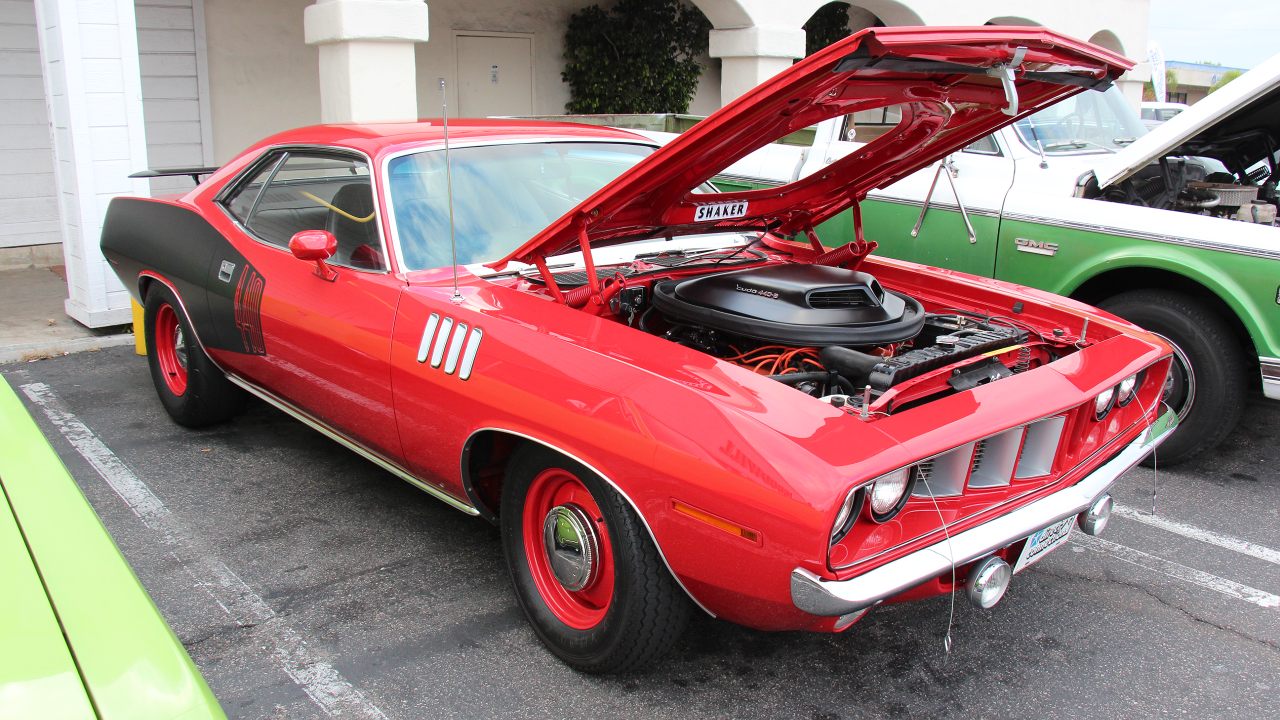
Even if the GTX had been perfectly positioned, the broader environment for muscle cars was turning hostile by the early 1970s. By the end of the 1970 model year, insurance companies, gas prices, and new government regulations had begun to target the very formula that defined cars like the GTX, raising costs and complicating compliance for high‑compression, big‑block machines. Contemporary analysis of the 1971 Plymouth Hemi GTX points out that 1971 was the last year the Hemi was offered in the GTX, a symbolic and practical blow that signaled how quickly regulators and insurers were reshaping what was possible in a showroom performance car.
Industry historians describe this period as the start of the decline of the muscle segment, with rising insurance premiums, tightening emissions rules, and looming safety standards all converging. Coverage of why the muscle car era ended highlights how aggressive underwriting on high‑horsepower models, combined with changing consumer tastes, pushed buyers toward more sensible or at least less overtly powerful cars. By the 1971 model year, even the Pontiac GTO, often credited as the first modern muscle car, was feeling the squeeze, with reporting noting that By the 1971 model year the muscle car era had peaked under pressure from insurance companies and environmental concerns. The GTX was not an outlier, it was a high‑profile casualty of a policy and pricing vise that was closing on the entire segment.
Oil shocks and the collapse of the muscle formula
The real collapse of the classic muscle formula arrived a couple of years after the 1971 GTX, but the seeds were already visible when that car hit showrooms. Analysts of the muscle car market point to the 1973 oil crisis as a decisive blow, with fuel rationing and sustained higher prices making thirsty big‑block coupes look irresponsible and impractical for many people. The broader Decline of the muscle segment in the 1970s is tied directly to that shock, which magnified the impact of insurance and regulatory pressures that were already in motion when the 1971 GTX was launched.
By the time fuel prices spiked, sales of high‑performance Plymouths had already been sliding, and corporate strategy was shifting toward smaller, more efficient models. Reporting on why Plymouth stopped making muscle cars notes that sales plummeted and one by one the performance nameplates were dropped, steering the marque toward economy cars rather than big‑block bruisers. In that context, the 1971 GTX looks like the last fully realized version of the traditional formula before external shocks made it untenable. It still offered the engines, gearing, and visual drama enthusiasts wanted, but it was sailing straight into a storm of economic and regulatory change that would soon make such cars rare and then extinct in mainstream showrooms.
The GTX’s legacy in a post‑muscle world
When I trace the arc from the 1969 sales peak to the 1971 redesign and the eventual discontinuation of the GTX, the pattern is clear. The car did not fade because it suddenly became slow or dull, it faded because the world around it changed faster than Plymouth could adapt while keeping the GTX’s identity intact. The B‑body redesign with its fuselage styling, the retention of the 440+6 and Hemi options, and the availability of performance hardware like the Air Grabber hood and aggressive axle ratios all show that Plymouth tried to carry the muscle banner into a new decade. Yet the combination of falling demand, internal competition, and external pressure meant that by the time the 1971 GTX arrived, the classic muscle template was already living on borrowed time, and the model was discontinued after that year according to factory records.
That is why the 1971 GTX resonates so strongly with enthusiasts and historians today. It represents the last moment when a Plymouth muscle car could be ordered with uncompromised big‑block power, aggressive gearing, and extroverted styling before insurance tables, emissions rules, and fuel prices rewrote the rules. Later performance cars would return in different forms, but the straightforward formula of a mid‑size coupe with a massive engine and few apologies effectively ended here. In that sense, the 1971 Plymouth GTX did not just mark the beginning of the end for one nameplate, it captured the final full‑throated expression of an era that was about to be regulated, surcharged, and priced out of everyday American life.



Leave a Reply