
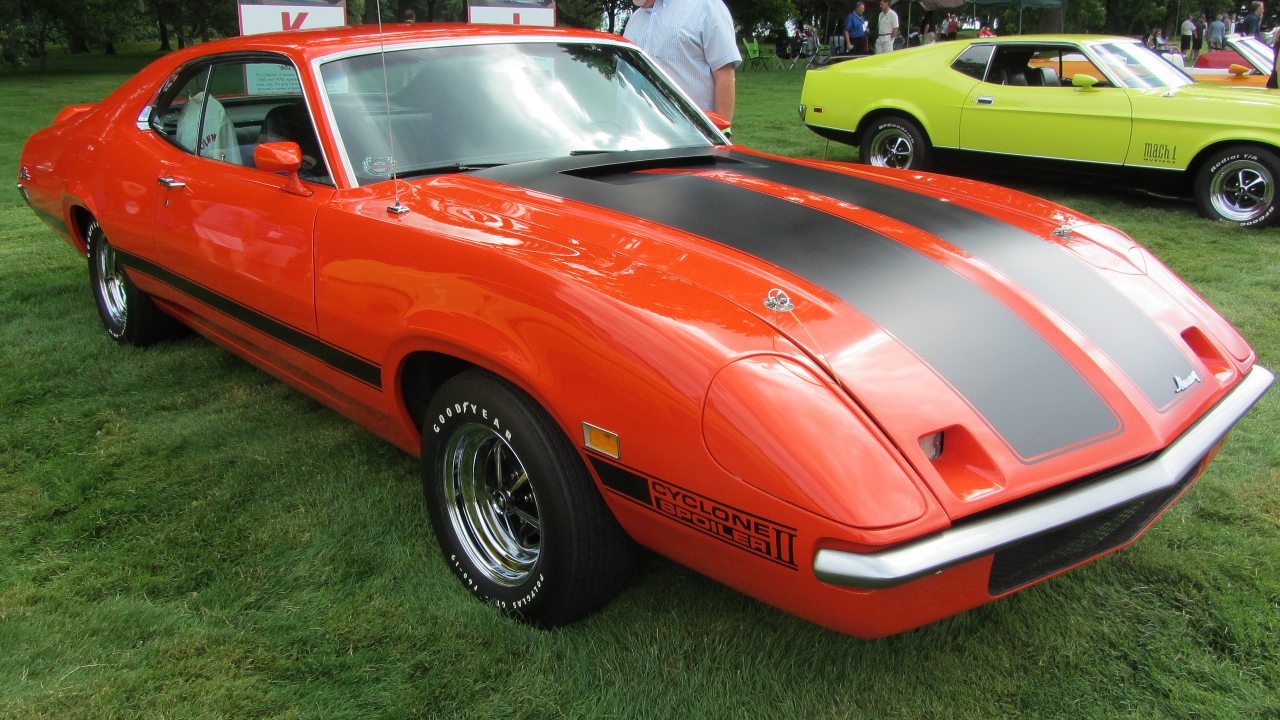
The 1970 Mercury Cyclone Spoiler was built in an era when Detroit treated air as an opponent to be beaten, not just a medium to move through. Instead of chasing comfort or chrome, Mercury shaped this intermediate muscle car around the single-minded goal of going faster on the high banks of NASCAR superspeedways. The result was a gunsight-styled, wind-cheating machine that pushed the brand deeper into the aero wars and, in the process, created one of the rarest and most intriguing performance cars of its time.
That pursuit of speed produced a car that looked radical even parked, backed it with serious big-block power, and then faded into obscurity as rules changed and insurance rates spiked. Today, the Cyclone Spoiler’s blend of race-bred aerodynamics, limited production, and surviving “time capsule” examples makes it a case study in how far manufacturers were willing to go when the stopwatch was the only judge that mattered.
From intermediate workhorse to aero warrior
The Cyclone started life as Mercury’s performance twist on the Comet line, a way to give the brand its own answer to the Ford and Mustang muscle crowd. By 1970, that basic Cyclone intermediate had become the foundation for something far more specialized, as Mercury turned its attention to the high-speed demands of stock car racing. The company’s entry into the aero-car sweepstakes was a streamlined version of its fastback body, reshaped to slice through the air more cleanly than the standard street model.
That transformation produced what period coverage simply called The Cyclone Spoiler, a car that took the familiar intermediate proportions and stretched them into something more purposeful. The nose was longer and more pointed, the body sides were smoothed, and the rear treatment was tuned for stability at speed rather than boulevard style. Mercury’s own branding still leaned on the Cyclone name, but the intent had shifted: this was no longer just a sporty version of a family car, it was a homologation tool aimed squarely at the racetrack.
NASCAR rules and the birth of the Spoiler
The real catalyst for the Spoiler’s existence was not a styling whim, it was NASCAR’s homologation rule that required at least 500 street-legal versions of a race car before it could compete. That requirement forced manufacturers to bolt their wildest aerodynamic ideas onto showroom cars, then convince regular buyers to live with them. Mercury followed the same path, turning its Cyclone into a wind-tunnel-influenced special that could be sold through dealers while still giving the race team the body they needed.
In that environment, the Cyclone Spoiler became Mercury’s ticket into the aero wars that were already producing extreme shapes across the industry. Reporting on the period notes that Mercury’s streamlined fastback was explicitly developed as its entry into this high-speed contest, with the Mercury engineers reshaping the Cyclone to meet the letter of the NASCAR rulebook while exploiting every aerodynamic advantage they could find. The result was a car that looked aggressive on the street but was fundamentally a race body wearing license plates.
Shaping the air: gunsight styling and aero tricks
Visually, the 1970 Mercury Cyclone Spoiler stood apart from other intermediates with a front end that enthusiasts now describe as Gunsight themed. The nose extended forward into a pointed, almost weapon-like profile, with the grille and headlamp arrangement emphasizing a central target motif. That design was not just cosmetic; the elongated front helped manage airflow over the hood and around the sides, reducing turbulence that would otherwise sap speed at racing velocities.
Side by side with a standard Cyclone, the Spoiler’s differences become even clearer. Contemporary analysis points out how the aero-focused version smoothed its bodywork, tightened panel transitions, and used its fastback roofline to keep air attached longer before it separated at the tail. The theme was simple: take on the Wind with as few compromises as possible, even if that meant a more polarizing look for street customers who might never see a racetrack.
Big-block power and the chase for pure speed
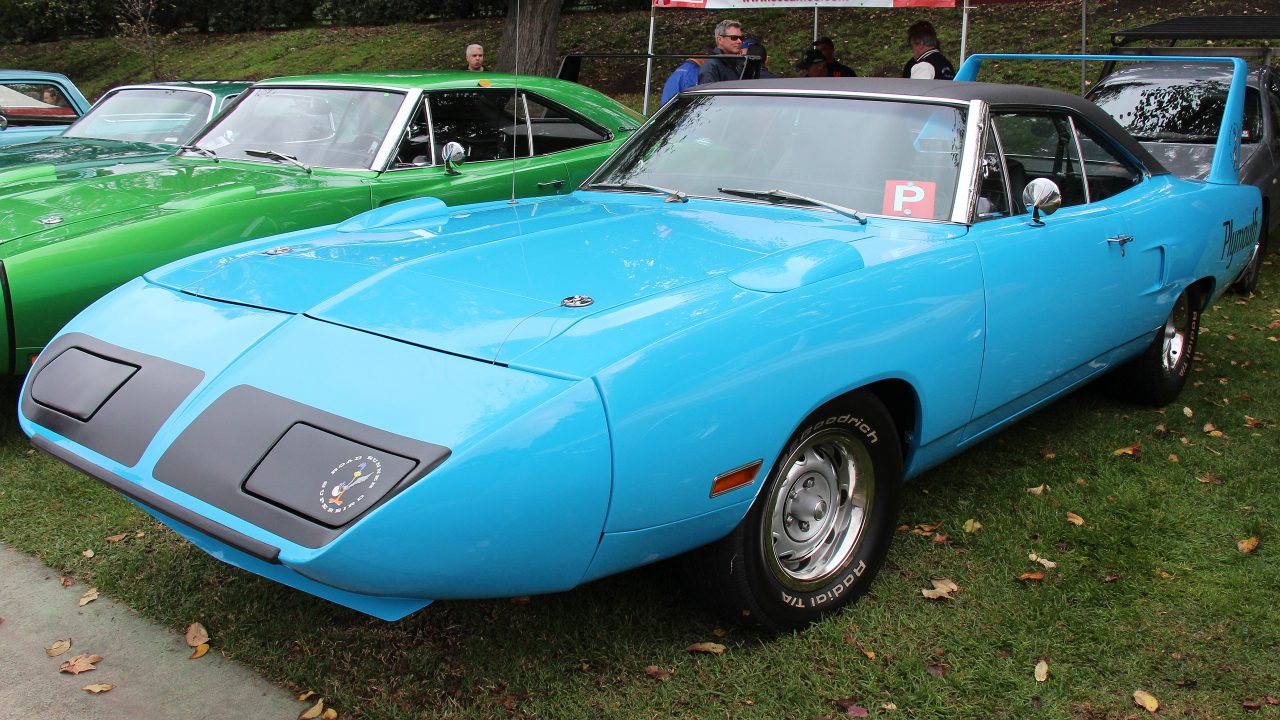
Aerodynamics alone could not win races, so Mercury backed the Spoiler’s slippery shape with serious big-block muscle. Period specifications highlight the availability of a 429 cubic inch engine in the Cyclone Spoiler, paired with Ram Air induction to feed the big V8 at high speed. That combination, often described as Cobra Jet Ram Air One of the defining powertrains, turned the car into a legitimate high-speed contender rather than a styling exercise.
The broader aero-war context shows how that engine choice fit into a larger arms race. Reporting on Mercury’s racing program notes that the arrival of the Boss 429 in 1969 helped Ford and Mercury teams make life difficult for Mopar rivals chasing the same trophies. On the street, that same big-block philosophy gave Spoiler buyers a car that felt every bit as serious as it looked, with the Ram Air hardware and heavy-duty driveline underscoring that this was built for sustained high-speed work, not just stoplight theatrics.
Rarity, homologation numbers, and forgotten status
For all its engineering ambition, the Cyclone Spoiler never became a common sight. One detailed breakdown of production notes that only 341 customers were able to buy a Cyclone Spoiler for the 1970 model year, a figure that falls well short of the 500 units NASCAR typically demanded for homologation. Another source cites a broader run of 1,631 Cyclone Spoiler 429 Ram Air cars, suggesting that while the specific high-spec variants were extremely scarce, the overall aero-bodied production still met the racing threshold. The discrepancy underscores how quickly these cars slipped into niche status, with only a small fraction built to the most desirable configurations.
That limited output helps explain why the Cyclone Spoiler is often described as Mercury’s forgotten muscle car. Production tables for the Production run of the Mercury Comet Cyclone line show how quickly volumes tapered off by the early 1970s, as insurance costs, emissions rules, and changing buyer tastes squeezed the market. Within that shrinking segment, a specialized aero homologation car was always going to be a tough sell, which is why the Spoiler’s story is now told more in auction catalogs and enthusiast videos than in mainstream muscle car lore.
Time capsules and the Cyclone’s legacy
Today, the Cyclone Spoiler’s pursuit of speed is preserved in a handful of remarkably original survivors. One widely shared feature walks through a Mercury Cyclone Spoiler SCJ described as a Time Capsule, a one-owner, unrestored car that still wears its original paint and hardware. A similar walkaround invites viewers to Join Craig Jackson for a first look at a 1970 Mercury Cyclone Spoiler SCJ, again emphasizing how rare it is to find these cars in untouched condition. Those examples give modern audiences a direct window into how the Spoiler left the factory, from its graphics to its engine bay.
Enthusiast storytellers have also worked to reconnect the Cyclone with its broader brand context. One video explicitly notes that the subject is not a Ford or a Mustang, but instead focuses on Mercury the Mercury Cyclone, underscoring how easily the car is overshadowed by its corporate cousins. Other deep dives into the aero wars trace how the Cyclone Spoiler II concept pushed the idea even further, with reports describing it as the rarest Mercury born from that period’s aerodynamic experimentation. Together, these surviving cars and historical accounts show how a once-obscure homologation special has become a prized artifact of the moment when Mercury chased pure speed with almost no regard for anything else.



Leave a Reply