
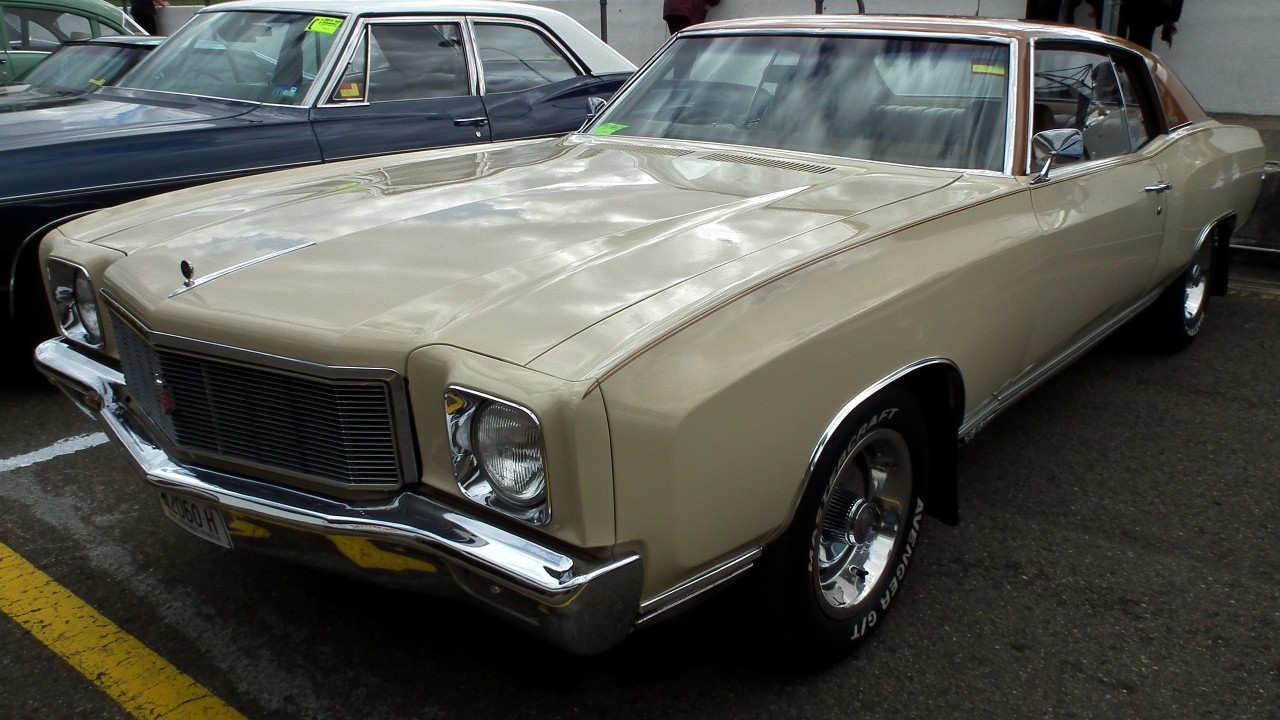
The first-generation Chevrolet Monte Carlo SS arrived at a moment when American buyers wanted comfort as much as quarter-mile bragging rights, and it answered with a mix of plush appointments and big-block brutality that few rivals matched. In the early 1970s, this personal coupe blurred the line between luxury and muscle by wrapping serious performance hardware in a long-hood, formal-roof body that looked more country club than drag strip. I see that tension between refinement and raw power as the key to understanding why the Monte Carlo SS still fascinates enthusiasts decades later.
From personal luxury coupe to “forgotten” muscle car
Chevrolet did not set out to build a pure muscle car when it created The Monte Carlo. The model was conceived as a mid-size personal luxury coupe, a stylish two-door aimed at drivers who wanted a more upscale image than a Chevelle without paying Cadillac money. According to Information About Every Chevrolet Monte Carlo Generation, The Monte Carlo was first introduced in September 1969 for the 1970 model year, immediately positioning itself as one of Chevrolet’s most recognizable nameplates. Its long hood, short deck proportions and formal roofline signaled elegance more than aggression, yet the platform shared bones with Chevrolet’s more extroverted Chevelle SS, which meant the potential for serious performance was already baked in.
That dual identity is why many enthusiasts now talk about Monte Carlo as The Forgotten Muscle Car. When Chevrolet unveiled the Monte Carlo in 1970, it was not just another mid-size coupe, it was a car that could be optioned with some of the most potent engines under any GM hood of the era. Reporting on Monte Carlo, The Forgotten Muscle Car notes that When Chevrolet launched the line, buyers could specify big-block power that rivaled dedicated muscle machines. That combination of upscale styling and hidden ferocity meant the Monte Carlo never fit neatly into a single category, which helps explain why its performance credentials were overshadowed for years by flashier siblings even as collectors now reassess its place in muscle history.
The SS 454 package, where comfort met lethality
The clearest expression of this split personality arrived with the Monte Carlo SS and its signature 454 big-block option. The SS 454 package transformed the gentlemanly coupe into what one period-minded account calls The SS, Where Luxury Met Lethality, highlighting how the car could cruise quietly yet shred its rear tires if provoked. Coverage of The SS 454 underscores that the 454 engine turned the Monte Carlo SS into a high-water mark for the model, with Only a relatively small number built compared with mass-market Chevelles. In practice, that meant a car that could deliver Chevelle SS-grade thrust while surrounding the driver with more sound deadening, richer trim and a quieter, more composed ride.
Under the skin, the SS 454 package was more than a badge and a big engine. Reports on the 1970–1971 Chevrolet Monte Carlo SS 454 detail how Standard front disc brakes and heavy-duty suspension pieces were paired with the LS5 454-cu in V8, effectively importing Chevelle SS hardware into a more formal body. That LS5 454-cu engine gave the Monte Carlo SS the same kind of big-block muscle that defined the era, yet the car retained its long-wheelbase composure and quieter cabin. In my view, that hardware mix is what truly blurred the categories: the Monte Carlo SS 454 was not a stripped street brawler, it was a powerful coupe engineered to cover long distances quickly and comfortably.
Chevy’s first true “luxury muscle” experiment
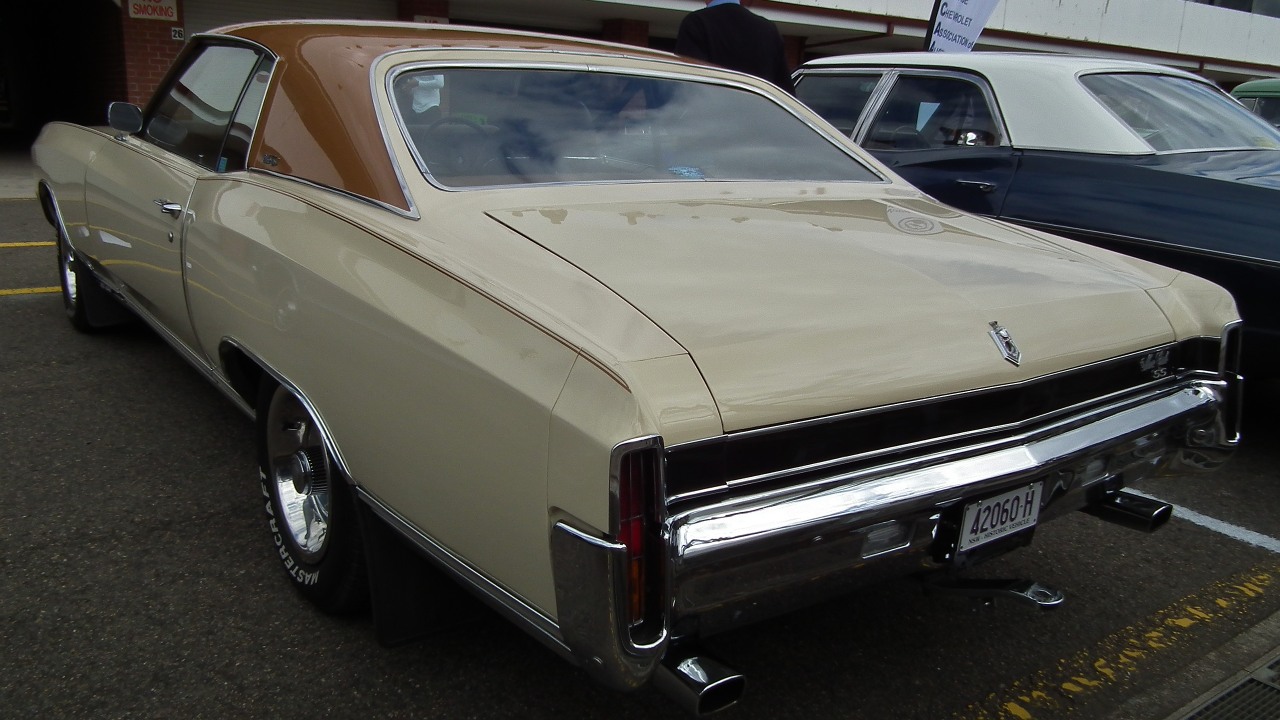
Chevy leaned into this dual character by marketing the Monte Carlo SS as a personal luxury car even while equipping it like a muscle machine. One detailed retrospective describes the Monte Carlo SS 454 as Chevy’s first attempt at combining a big-block V8 with a more upscale, comfort-oriented package, calling it a Velvet, Wrapped Street Monster that balanced the car’s size with its muscle. That framing, drawn from analysis of The Monte Carlo SS, captures how Chevrolet tried to broaden the appeal of high performance by wrapping it in a more mature image. Instead of stripes and spoilers, buyers got chrome, woodgrain and thick carpeting, yet the 454 under the hood meant the car could still deliver serious acceleration.
Other reporting goes further, explicitly labeling the Monte Carlo SS as Chevy, First Luxury Muscle Car and inviting readers to Imagine cruising down the highway in the early 1970s with that kind of power on tap. The account of Monte Carlo SS emphasizes how the package combined rally wheels, white-letter tires and performance suspension with a cabin that felt more like a small luxury car than a bare-bones muscle coupe. I see that as a deliberate experiment by Chevrolet to test whether buyers would pay for both comfort and speed in one package, effectively seeding the idea of luxury muscle that later brands would chase with their own high-spec coupes and sedans.
Power, poise and the “gentleman’s bomb” image
For all its luxury positioning, the Monte Carlo SS did not skimp on output. Analyses of the 70 and 71 model years stress that the Chevy Monte Carlo SS Were Extremely Powerful, noting that Even though the Chevrolet Monte Carlo was not always marketed as a pure performance car, its big-block variants delivered muscle car levels of horsepower. The detailed breakdown of the 70 and 71 Chevy Monte Carlo SS highlights that these cars could produce a power output of 365 horsepower, a figure that placed them firmly in muscle territory despite their more restrained styling. That level of performance, combined with the car’s weight and wheelbase, produced a distinctive driving character: strong straight-line speed with a more relaxed, grand-touring feel than shorter, lighter muscle coupes.
Period advertising and later reviews reinforced this split personality. One vintage road test recalls that Chevrolet promoted the 1970 Chevrolet Monte Carlo as a “gentleman’s car,” a budget-priced personal luxury coupe laden with comfort features, yet the same review ultimately dubbed the 1970 Chevrolet Monte Carlo SS454 “a gentleman’s bomb.” That evocative phrase, drawn from a vintage review of the Chevrolet Monte Carlo, captures how the car’s refined exterior and plush interior could mislead onlookers about the violence available under the throttle. In my assessment, that tension between image and capability is exactly what made the Monte Carlo SS such a compelling proposition for buyers who wanted to go fast without shouting about it.
How the first-gen SS fit into the broader Monte Carlo story
To understand the SS 454’s legacy, it helps to place it within the broader first-generation lineup. The standard Base Chevrolet Monte Carlo, built from 1970 to 1972, offered a range of smaller engines and more modest equipment, giving buyers the look and comfort of the model without the cost or thirst of a big-block. A detailed Variant Breakdown of the first Gen Monte Carlo notes that these base cars shared their platform with Chevrolet’s more extroverted Chevelle SS, which made it relatively straightforward for engineers to bolt on performance hardware when speccing the SS package. That shared architecture also meant the Monte Carlo could benefit from proven suspension and braking components while maintaining its own, more formal styling.
Over time, The Monte Carlo evolved through multiple redesigns, but the early SS 454 models set a template for blending comfort and performance that later generations would revisit in different forms. A historical overview titled How Many Generations of Monte Carlo Were There notes that The Monte Carlo spanned six generations between 1970 and 2008, with the first cars establishing the nameplate’s identity as a stylish, somewhat upscale coupe. Subsequent versions leaned at times more toward NASCAR-inspired performance and at others toward pure comfort, but the idea that a Monte Carlo could be both quick and plush traces directly back to the SS 454 experiment. In my view, that is why enthusiasts still look to those early 1970 and 1971 SS cars as the moment when Chevrolet most successfully fused luxury and muscle in a single, memorable package.



Leave a Reply