
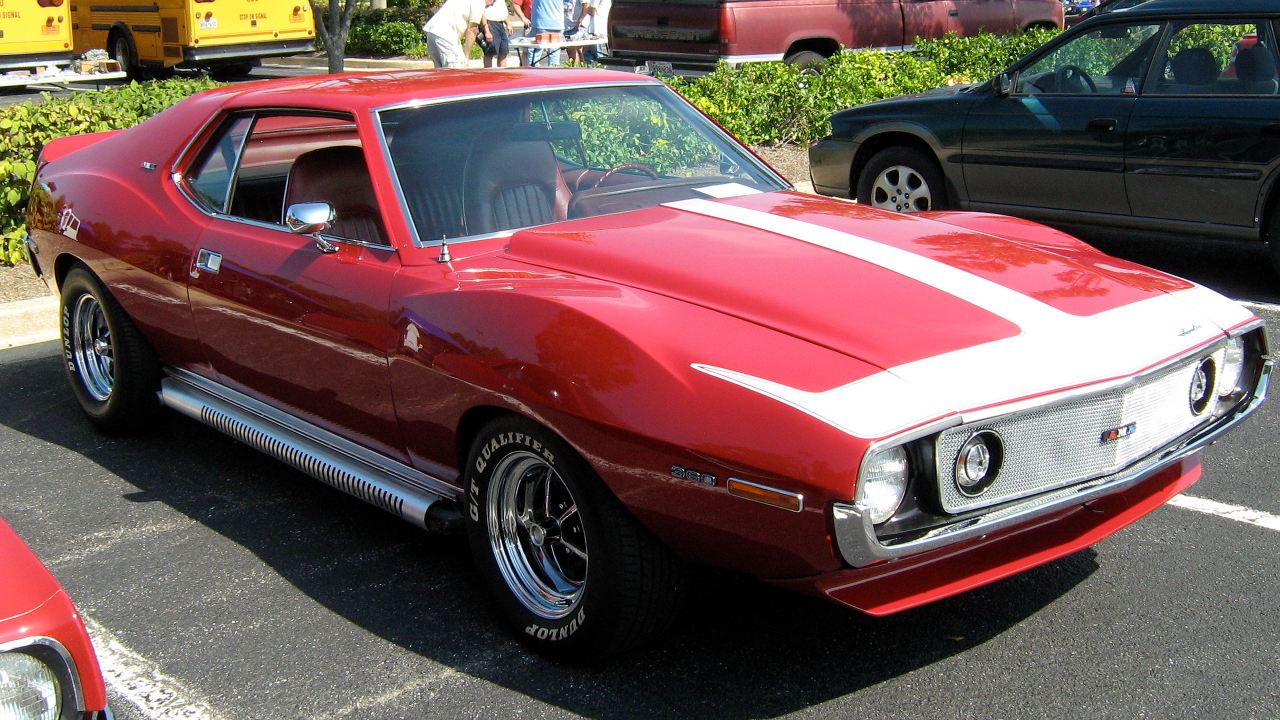
The 1971 AMC Javelin AMX arrived just as the classic muscle era was starting to fade, yet it managed to hit far above its market position in performance, design, and racing credibility. In a field dominated by Detroit’s biggest brands, this lean, independent coupe proved that smart engineering and bold styling could matter more than sheer size or marketing budgets.
By combining a reshaped body, serious V8 power and a direct link to championship-winning Trans-Am racers, the 1971 Javelin AMX turned limited resources into a genuine threat to better funded rivals. It was the moment when AMC’s muscle car strategy became most focused, and it is why this model still feels like it overachieved compared with its modest origins.
AMC’s last stand in the muscle car wars
By 1971, the traditional muscle car formula was under pressure from rising insurance costs and tightening regulations, yet AMC chose that moment to sharpen its performance image rather than retreat. The Javelin AMX sat at the center of that push, pairing the compact, sporty Javelin shell with serious V8 power and track-bred hardware so the company could compete directly with better known pony cars from Detroit’s Big Three. When AMC decided to go out swinging, it did not hold back, and the Javelin AMX became the clearest expression of that mindset.
Reporting on the brand’s final muscle efforts notes that the 1971 AMC AMX 401 Was A Brilliant Exit For The Brand, underscoring how the high performance 401 cubic inch V8 turned a relatively small manufacturer into a legitimate performance player. That same spirit carried into the Javelin-based AMX, which shared the focus on big displacement power and aggressive tuning. When AMC engineers and marketers leaned into that formula, they created a car that could credibly challenge rivals that enjoyed far larger budgets and dealer networks, a point highlighted in coverage that describes how When AMC pushed its last true muscle offerings, the result was far more impressive than its limited marketing reach would suggest.
A radical redesign with race-bred intent
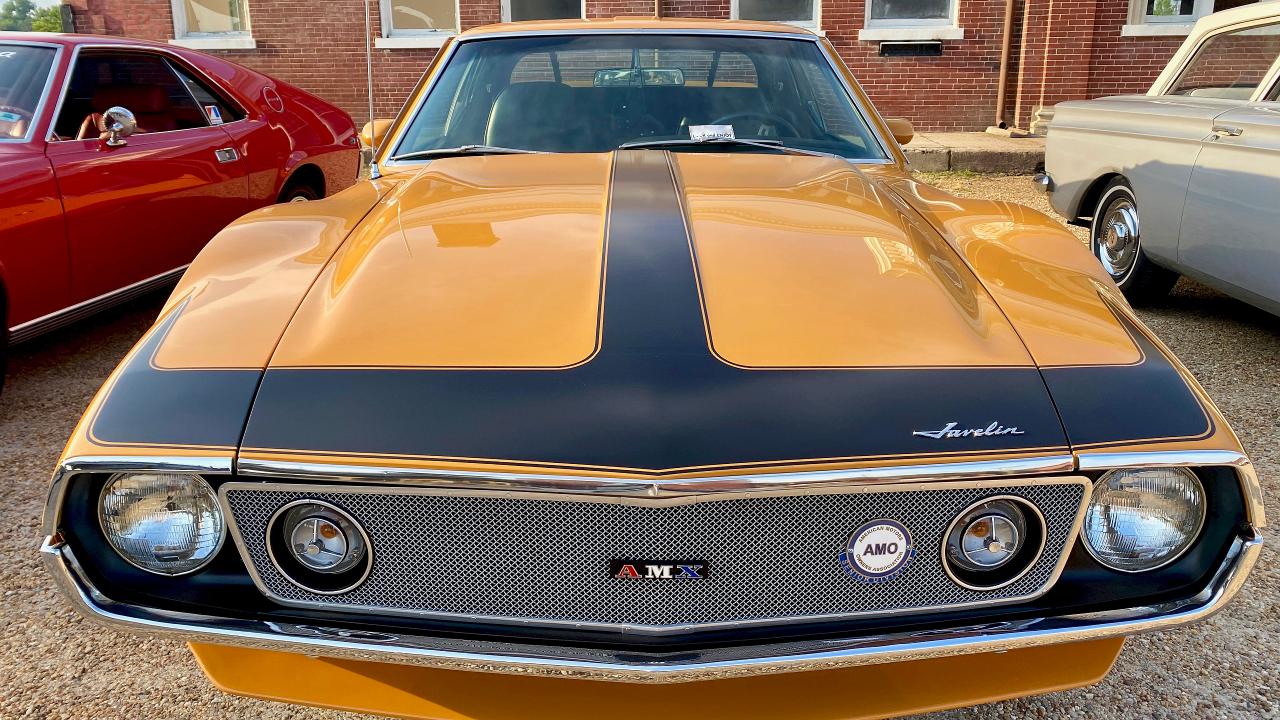
The 1971 model year brought a complete visual reset for the Javelin, and that transformation is a key reason the AMX version feels so potent even today. The car adopted a longer, more sculpted profile with muscular haunches and a pronounced nose that looked less like a traditional pony car and more like a purpose-built racer adapted for the street. Contemporary descriptions of the 1971 Javelin emphasize that it was completely re-styled, with Prominent, sculpted fenders, a twin-canopy roof and new full-width tail lamps that gave the car a distinctive, almost exotic stance compared with its domestic rivals.
That redesign was not just cosmetic flair, it was shaped by the demands of Trans-Am competition and the need for better high speed stability. The longer wheelbase and extended bodywork improved straight line composure and allowed for more aerodynamic tuning, traits that later coverage of What Made The AMX a Terror On The Track credits as Perfect balance and Longer wheelbase that improved high-speed stability, along with Aerodynami advantages. By baking those race-informed proportions into every showroom Javelin AMX, AMC effectively sold a street car that looked and behaved like its track counterpart, a strategy that helped the model feel more serious than its price tag might suggest.
Trans-Am success that humbled bigger rivals
What truly elevated the 1971 Javelin AMX beyond its spec sheet was its direct connection to a factory racing program that actually beat the giants. In the early 1970s, the Javelin became a force in the SCCA Trans-Am series, where factory backed teams from Ford and Chevrolet had long dominated. Accounts of that era describe how the AMX-based racers developed into a Terror On The Track, with their longer wheelbase and carefully tuned chassis delivering the Perfect balance needed to challenge and, at times, destroy Ford and Chevy in Trans-Am competition.
The racing narrative is not just marketing gloss, it is anchored in specific results. In one pivotal Trans-Am event, Here Follmer’s bold red, white, and blue Javelin came in second and Revson’s placement was reduced to fourth after a protest, part of a broader campaign that ultimately delivered a championship for AMC. That success meant the 1971 Javelin AMX was not merely styled to look like a race car, it was directly tied to a program that had proven itself against the most established names in American performance. For a buyer walking into an AMC showroom, that connection turned a relatively obscure brand into the one that had just beaten the favorites, giving the Javelin AMX an underdog swagger that its competitors could not easily match.
Independent muscle with serious hardware
Underneath the bold bodywork, the Javelin AMX carried hardware that showed AMC understood the muscle car formula as well as anyone. The company offered large displacement V8s that gave the car the straight line punch enthusiasts expected, culminating in the 401 cubic inch engine that enthusiasts still single out as the brand’s peak performance motor. Coverage of AMC’s performance lineup notes that the 1971 AMC AMX 401 Was A Brilliant Exit For The Brand, and that same 401 became the centerpiece of the Javelin AMX’s appeal, turning a relatively compact coupe into a serious threat at the drag strip and on the street.
Even beyond the headline engine, the Javelin platform itself was engineered to handle real punishment. Reports on what made AMC stand out in the muscle era point to robust drivetrains and suspension that could take punishment, a crucial advantage for owners who wanted to drive hard without constant breakage. Discussions of What Was the Largest AMC Engine, Specifically pertaining to the AMC Javelin, underline that the car was designed from the outset to accept big power, with the chassis and components sized for the largest engines offered during its run. In practice, that meant the 1971 Javelin AMX combined the brute force of the 401 with a structure capable of exploiting it, a combination that let this independent muscle car run with, and sometimes ahead of, better known rivals.
The last true independent muscle car
Part of the Javelin AMX’s enduring appeal is that it represents the final flourish of a truly independent American muscle brand. While other performance coupes of the era were backed by sprawling corporate empires, AMC operated on a much smaller scale, which makes its achievements with the Javelin even more striking. Analysts looking back on the period describe The AMC Javelin Was The Last True Independent Muscle Car In America, a label that captures how the 1968 to 1974 AMC Javelin (and its AMX variants) stood apart from the more common offerings that filled most showrooms.
That independent status shaped everything from the car’s design to its marketing. Without the budget to chase every niche, AMC focused its efforts on a single, distinctive pony car that could carry the brand’s performance image almost alone. The result was a Javelin that looked different, felt different and, thanks to its Trans-Am success and 401 powered AMX versions, could legitimately claim to run with the best. In a market where most muscle cars came from the same few corporate families, the Javelin AMX’s outsider status became a strength, giving it a cult following that has only grown as enthusiasts rediscover how effectively it punched above its weight.
A high point at the end of an era
The timing of the 1971 Javelin AMX adds another layer to its story. The early 1970s marked the end of what many consider the classic muscle era, as insurance pressures, emissions rules and shifting consumer tastes began to undercut the formula of big engines in relatively affordable coupes. Retrospectives on that period note that the following model year, 1971, would be recognized as the end of the automotive industry’s greatest era and the final chapter for many of the wildest performance options and most of the High Impact Paints that had defined the late 1960s. Against that backdrop, the Javelin AMX arrived as one of the last fully committed expressions of the breed.
That context helps explain why the car feels so concentrated in its purpose. AMC knew the window for unrestrained performance was closing, so it poured its remaining resources into a model that combined fresh styling, proven race engineering and its strongest engines. The 1971 Javelin was completely re-styled, and paired with the AMX package and the 401, it became the sharpest tool AMC ever aimed at the muscle car establishment. In a single package, the company delivered a car that looked like a Trans-Am winner, carried the largest AMC Engine offered for the Javelin, and represented the Last True Independent Muscle Car in America. That convergence of timing, intent and execution is why the 1971 AMC Javelin AMX still feels like it hit far harder than anyone expected from a small independent automaker.



Leave a Reply