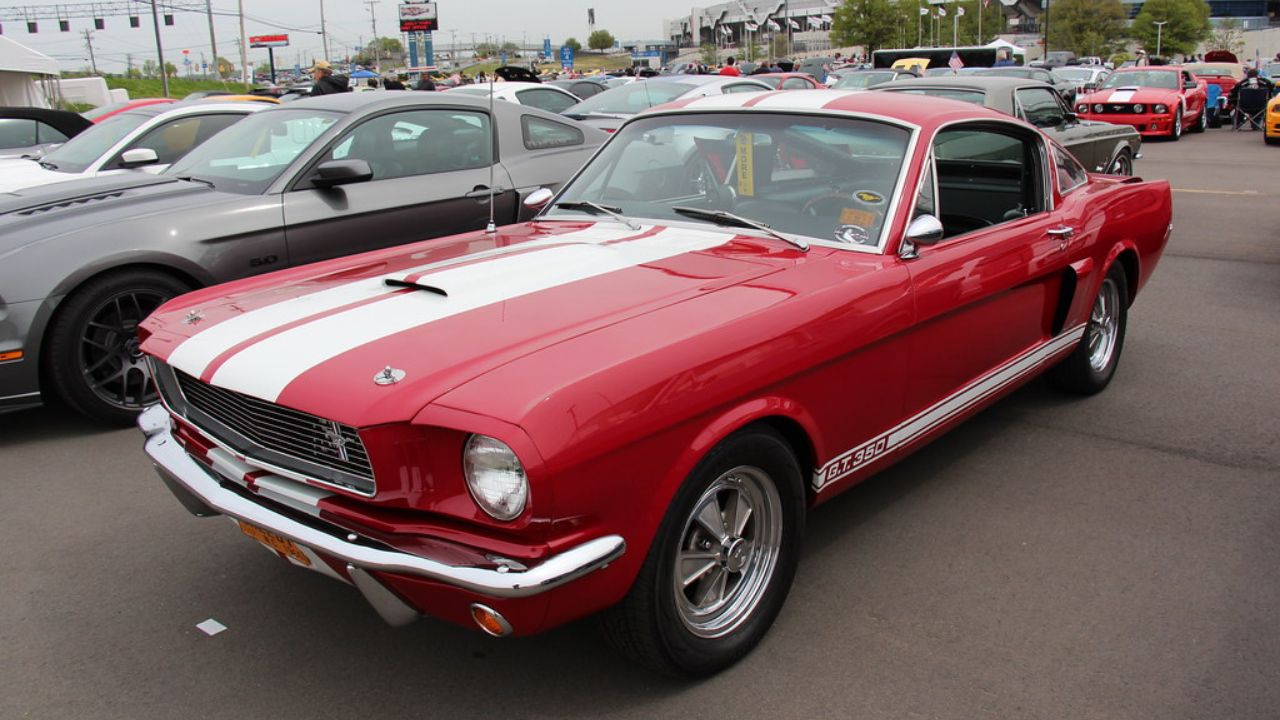
The 1966 Mustang Fastback occupies a rare space in car culture. It is old enough to be iconic, yet it still feels instantly usable, intuitive and right-sized in a way that connects across generations. The shape, the driving position and the analog feedback all help this particular Mustang feel strangely current, even as technology and tastes move on.
That enduring mix of familiarity and freshness is why the car keeps returning in restomods, tribute builds and daily-driver debates. Whether it is preserved as a factory GT, reengineered with modern hardware or pushed into four-figure horsepower, the 1966 Fastback continues to feel relevant rather than merely nostalgic.
The year the Mustang grew up
By 1966, the Mustang had already reshaped the American car market, but the Fastback body style was still something of a connoisseur choice. One detailed history notes that, although the Mustang line enjoyed a strong sales year, the Fastback suffered a 50-percent decrease in sales compared with the previous model year, which has only made surviving examples more sought after by Mustang collectors.
That drop in volume helped turn the 1966 Fastback from a common sporty coupe into a more distinctive silhouette. The long hood, short deck and sloping roof gave it a profile that looked closer to European grand tourers than to Detroit sedans. A specialist guide to the model describes how the 1966 cars benefited from an Evolution of the 1966 Model By Mustang, with subtle styling tweaks and improved performance options that refined the original idea rather than replacing it.
Those refinements included cleaner side scoops, a more integrated grille and a more polished interior. The cabin retained simple round gauges and a thin steering wheel that still feel intuitive to drivers raised on modern cars. It is this balance of familiarity and difference that lets the 1966 Fastback slide into contemporary traffic without feeling like a relic.
From showroom GT to collector-grade survivor
Among 1966 Fastbacks, the GT package carries special weight. Period-correct restorations document how a Factory GT added front disc brakes, fog lamps, dual exhaust with trumpets through the rear valance and specific badging. The Discovered archive of Mustang specialists shows how carefully these details are preserved today, down to the correct style of exhaust hangers and instrument clusters.
Collectors value those cars because they capture the original intent of the pony car: relatively light, compact and eager, rather than overpowered. A restored example can still be driven briskly on modern roads without feeling overwhelmed by its own output. That balance explains why a later video review of a 1966 Ford Mustang GT features Joe Ready from Rady Rise at Dream Giveaway Garage describing the car as a dream pony, positioning it as the sort of muscle car that an enthusiast can actually use rather than just store.
Enthusiast groups amplify that appeal. Online communities such as the Discovered Mustang clubs and forums track individual cars, share build sheets and document factory-correct finishes. The result is a shared understanding of what a 1966 GT Fastback should feel like, from the weight of the clutch to the way the car settles on its suspension in a fast corner.
Why the driving experience still connects
Part of the Fastback’s enduring appeal lies in how it drives at ordinary speeds. A widely shared reflection from a longtime owner recalls that, growing up, a Mustang was not judged by resale value or fuel economy. Instead, it was measured by how it felt going from 1st to 2nd gear, and the writer describes how, in one particularly well kept car, the interior was like new and the engine compartment the same, which made every shift feel special.
That focus on feel resonates with modern drivers who are used to cars that isolate them from the road. A social media thread from Jan, prompted by Speedway Motors, points out that modern cars are good and that the worst car built today is still pretty good by historical standards. Yet the same post notes that older machines like a classic Mustang can effortlessly feel like a thrill, even at modest speeds, because of their sound, steering and visibility.
The 1966 Fastback amplifies that effect. The thin pillars and large glass area create an airy cabin that contrasts with the thick rooflines of new cars. The long hood and short rear deck give a clear sense of where the car begins and ends. For drivers raised on digital dashboards, the simple analog dials and mechanical switches feel refreshingly direct.
Restomod culture: classic lines, modern roar
Not every 1966 Fastback is preserved as a time capsule. Increasingly, owners are reimagining the car as a restomod that blends vintage style with contemporary performance and reliability. An official Ford social post on Mark T’s 1966 GT Fastback describes The Mustang Restomod as a build that combines Classic Lines with Modern Roar, emphasizing that this Ford Mustang Fastback hides a surprise under the hood in the form of upgraded powertrain hardware.
High-end builders have taken the same idea to an extreme. A detailed video review of car number 252, a Revology Car Review of a 1966 Mustang Fastback in Jet Black Metallic, explains how the company reengineers the classic shape with modern chassis, brakes and drivetrains. The presenter describes the philosophy as a blend of classic design, modern engineering and evolution, turning the familiar silhouette into something that can be driven daily with contemporary expectations for comfort and safety.
At the wilder end of the spectrum, fabricators such as Marlon Milka have built extreme show cars. In a feature on a 1500HP 1966 Mustang Fastback, he introduces himself and explains that this is the car that his team built for 2024, known as the Vibrant Plute at SEMA. The Marlon Milka build retains the basic Fastback profile but wraps it in radical paint, aero and power levels that would have been unimaginable to the original engineers.
These restomods prove that the 1966 shell can accept almost any mechanical vision. Whether the goal is quiet, fuel injected reliability or outrageous horsepower, the underlying proportions still look right. That flexibility keeps the Fastback in the conversation for builders who might otherwise default to newer platforms.
The Bullitt effect and pop culture memory
Even though the famous movie car wore a 1968 body, the Bullitt connection has helped cement the Fastback shape in popular memory. A detailed feature on a restored 1966 Ford Mustang Fastback notes that the car is not an official Bullitt car, but it sure looks like one thanks to the green paint it received during restoration. The report explains that the car had been rebuilt in the 1990s, then later refinished again to capture those Bullitt vibes, with minimal badging and a purposeful stance.
That kind of tribute build blurs the line between specific movie replicas and broader cultural memory. For many viewers, any dark green Fastback with Torq Thrust style wheels instantly evokes Steve McQueen, even if the year and details are different. The 1966 cars benefit from that association without being tied to a single canonical specification.
Pop culture has also kept the Mustang name in front of younger enthusiasts through video games, music videos and social media, which in turn feeds interest in earlier generations. A teenager who first encountered a modern Mustang GT in a racing game may later discover the 1966 Fastback and recognize the lineage in its roofline and side scoops.
Could a 1966 Fastback really be a daily driver?
Enthusiasts debate whether a 1960s pony car can realistically serve as daily transportation in a world of traffic, ethanol-blended fuel and distracted drivers. A long-running thread on r/cars, titled Making a 66 Mustang a daily driver, features a comment from a user identified as aceogorion who writes that they Bought their car for a thousand fourteen years ago and that the motors and such tend to run forever. The same post notes that the car just is what it is, acknowledging that comfort and safety expectations have changed.
Another detailed discussion on r/Mustang focuses specifically on a 1966 Mustang with 60,000 miles. One contributor warns that Regular carb rebuilds will be required because the ethanol will eat away at the seals, and suggests that Swapping in retrofit fuel injection would be a practical upgrade. The same Regular thread points out that, as long as an owner can do basic maintenance and accept the risk, parts are fairly plentiful and the cars are very easy to work on.
That ease of maintenance is one of the Fastback’s quiet advantages. The engine bay is spacious, the mechanical systems are simple and there is a deep supply of reproduction parts. For an owner comfortable with wrenches, a 1966 Mustang can be more approachable than a modern car packed with sealed modules and proprietary diagnostics.
At the same time, safety and reliability cannot be ignored. Another Speedway Motors discussion from Jan reminds readers that modern cars go, stop and idle in traffic nicely, and that they protect occupants in crashes far better than classics. The post frames the idea of daily driving a classic as a tradeoff, where the emotional reward must outweigh the objective compromises.
How builders modernize the experience
To bridge that gap, many owners adopt a middle path: subtle modernization that preserves the look while addressing weak points. The same guide that chronicles the Evolution of the 1966 Model By Mustang notes that performance options and minor tweaks already improved drivability in period, and contemporary builders extend that philosophy with front disc brake conversions, better tires and electronic ignition.
Some go further with full fuel injection systems that eliminate the need for Regular carb rebuilds. Others install overdrive transmissions to drop highway revs, or retrofit air conditioning for hot climates. The key is that the 1966 shell accepts these upgrades without losing its visual identity.
Professional restomod shops have turned this approach into a business model. The Jet Black Metallic Revology Fastback, car number 252, is presented as a turnkey solution that looks like a vintage Mustang but behaves like a modern sports coupe, with updated suspension geometry, rack and pinion steering and anti-lock brakes. Customers pay a premium for that blend of nostalgia and usability, but they also gain the confidence to drive the car regularly rather than saving it for occasional shows.
Community, memory and the emotional case
The emotional pull of the 1966 Fastback extends beyond specs and upgrades. A widely shared post from Mustang Humor recounts how, growing up, a Mustang was measured by how it drove, not by spreadsheets. The writer describes a particular car where the interior was like new and the engine compartment the same, and remembers how going from 1st to second felt so good that it overshadowed concerns about fuel economy or resale.
That kind of memory is common in enthusiast circles. Owners gather in online spaces such as the Discovered forums, local club meets and national events to trade stories about first drives, family road trips and late-night repairs. The 1966 Fastback often appears in these stories as a first serious project car or as a long-term companion that outlasted jobs, relationships and daily drivers.
More from Fast Lane Only