
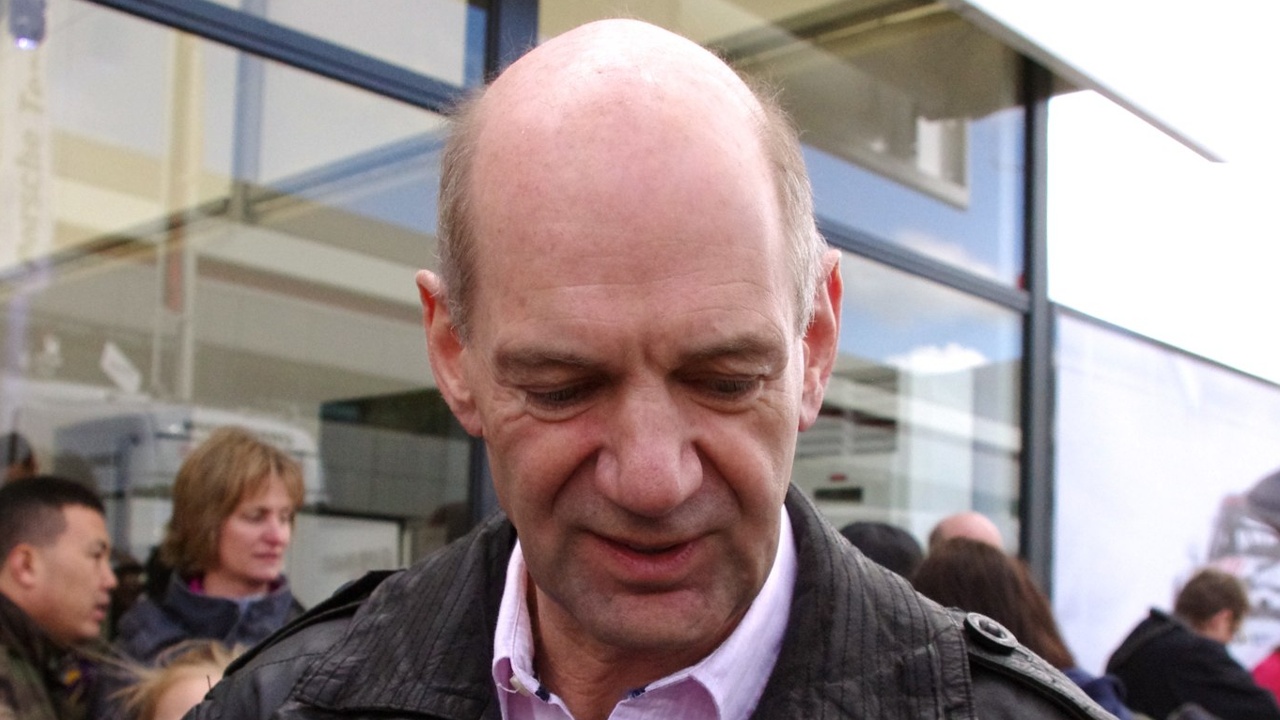
Aston Martin has spent the past few seasons promising more than it could consistently deliver, yet the ingredients for a dramatic shift in 2026 are now in place. With Adrian Newey installed as the guiding technical force and a new Honda power unit on the way, the team is being quietly positioned by insiders as the outfit most likely to spring a major surprise when Formula 1’s next rules cycle begins. The question is not whether the British team has potential, but whether its structure, resources, and leadership can convert that potential into a sustained front-running threat.
The Newey factor and a champion’s bold prediction
I see the core of the 2026 optimism resting on one simple reality: Adrian Newey changes the competitive ceiling of any team he joins. His record, from Williams to Red Bull, shows that when Adrian Newey OBE is given time and influence, he tends to redefine what is possible under a new set of regulations. The 1996 world champion Damon Hill has already argued that Newey’s arrival could allow Aston Martin to deliver a “complete surprise” in 2026, a view that carries weight given Hill’s first-hand experience of Newey’s work during his Williams years. When a driver who won a title in a Newey car suggests that the same designer can again upset the established order, it is more than polite praise, it is a pointed warning to rivals that the status quo is at risk.
Newey’s reputation is not built on mystique but on a long catalogue of evidence. Adrian Newey, also referred to as Adrian Martin Newey in biographical records, has been central to multiple eras of dominance, and his status as the most successful car designer in Formula 1 history is widely acknowledged. Earlier reporting has underlined that Newey, described simply as Newey in those accounts, has joined Canadian billionaire Lawrence Stroll’s ambitious project with the explicit aim of shaping the next generation of Aston Martin machinery. When a figure with that track record commits to a team just as a major regulation reset approaches, it is logical that seasoned observers like Damon Hill see 2026 as a genuine opportunity rather than a marketing slogan.
Building a team around a design legend
For Newey’s influence to translate into lap time, the environment around him must be capable of executing his ideas, and Aston Martin has spent heavily to create that platform. Team statements have highlighted how, when he visited Silverstone, Newey was shown the AMR Technology Campus and the “talented group of people” assembled there, a clear indication that infrastructure and personnel were central to convincing him to begin this new chapter. I interpret that as a sign that Aston Martin understands that hiring a star designer is only the first step; the real work lies in aligning facilities, processes, and culture so that his concepts can be turned into competitive cars at speed.
Newey’s early actions inside the team suggest he is not treating Aston Martin as a comfortable semi-retirement but as a serious engineering challenge. Reports have described how Adrian Newey is pushing Aston Martin to address “weak” resources ahead of 2026, pressing for upgrades to tools and capabilities that he does not consider up to title-challenging standards. Separate accounts have detailed how he has taken what were described as extreme measures in response to concerns about the current car, including questioning whether existing simulations and development pathways are robust enough. In my view, that combination of high expectations and willingness to disrupt established habits is precisely what Aston Martin needed if it is to move from midfield promise to genuine contender.
Honda partnership and the 2026 rules reset
The second pillar of the 2026 optimism is the new power unit partnership with Honda, which arrives just as Formula 1’s technical regulations undergo a major reset. The collaboration with Honda gives Aston Martin full control over its development path in a way that would not have been possible had it remained dependent on Merc hardware, and that autonomy is strategically significant. A senior Honda figure has gone so far as to frame the upcoming campaign as a “Very Special” Season for the British manufacturer, describing the project as being on the eve of something very special and linking that confidence to Honda’s previous success when it took over as a works partner and quickly helped a team finish third in the championship in consecutive years.
From my perspective, the timing could hardly be better. The 2026 regulations are widely viewed as a clean slate, a chance for teams to reset competitive hierarchies, and even discussions about Lewis Hamilton’s prospects have framed that year as a moment when the field could be reshuffled. Aston Martin will enter that reset with a bespoke Honda power unit, deep backing from Aramco, and the design direction of Adrian Newey, a combination that few rivals can match on paper. Lawrence Stroll has publicly acknowledged that it is a new power unit and a key transition for the team, and his comments underline that Aston Martin’s leadership sees 2026 not as a routine season but as a defining test of its long-term vision.
Inside the hype: optimism, concerns, and internal pressure
While the narrative around Aston Martin has tilted toward excitement, I find it important to note that not all recent reporting has been unreservedly positive. Detailed analysis has already flagged Concerns around the emerging Aston Honda “superteam,” pointing to the sheer complexity of integrating a new power unit partner, a star designer, and rapidly expanding facilities in a compressed timeframe. Scott Mitchell has highlighted that even with seemingly endless resources, there are questions about whether the organisation can mature quickly enough to avoid operational missteps once the 2026 season begins. That scepticism is healthy, and it tempers any assumption that Newey’s presence alone guarantees instant success.
Inside the team, there are signs that expectations are being managed even as internal hype grows. Coverage of Aston Martin’s preparations has described how inner confidence is soaring but also noted that worries are emerging about whether all the new structures will function smoothly under race pressure. Lawrence Stroll has issued what was characterised as a vital plea ahead of the transition, stressing that everyone must recognise the scale of the change and the need for patience as the new power unit and technical direction bed in. I read those remarks as an attempt to balance ambition with realism, acknowledging that while the ingredients for a breakthrough are present, the process of turning them into consistent podiums will not be instantaneous.
Why a “shock” surge is plausible, but not guaranteed
When I weigh the evidence, I find the idea of Aston Martin delivering a shock surge in 2026 both plausible and conditional. On the positive side, the team now combines Adrian Newey’s design leadership, a dedicated Honda power unit, and a state-of-the-art AMR Technology Campus at Silverstone, all backed by the financial commitment of Lawrence Stroll. Damon Hill’s view that Newey could orchestrate a complete surprise aligns with the pattern of past regulation changes, where Newey-led projects have often interpreted new rules more effectively than their rivals. The fact that insiders are already tipping Aston Martin for a “surprise” 2026 season, and that one report even highlighted the figure 48 in the context of expectations, reflects how strongly some within the paddock believe this project can leap forward.
More from Fast Lane Only

Leave a Reply