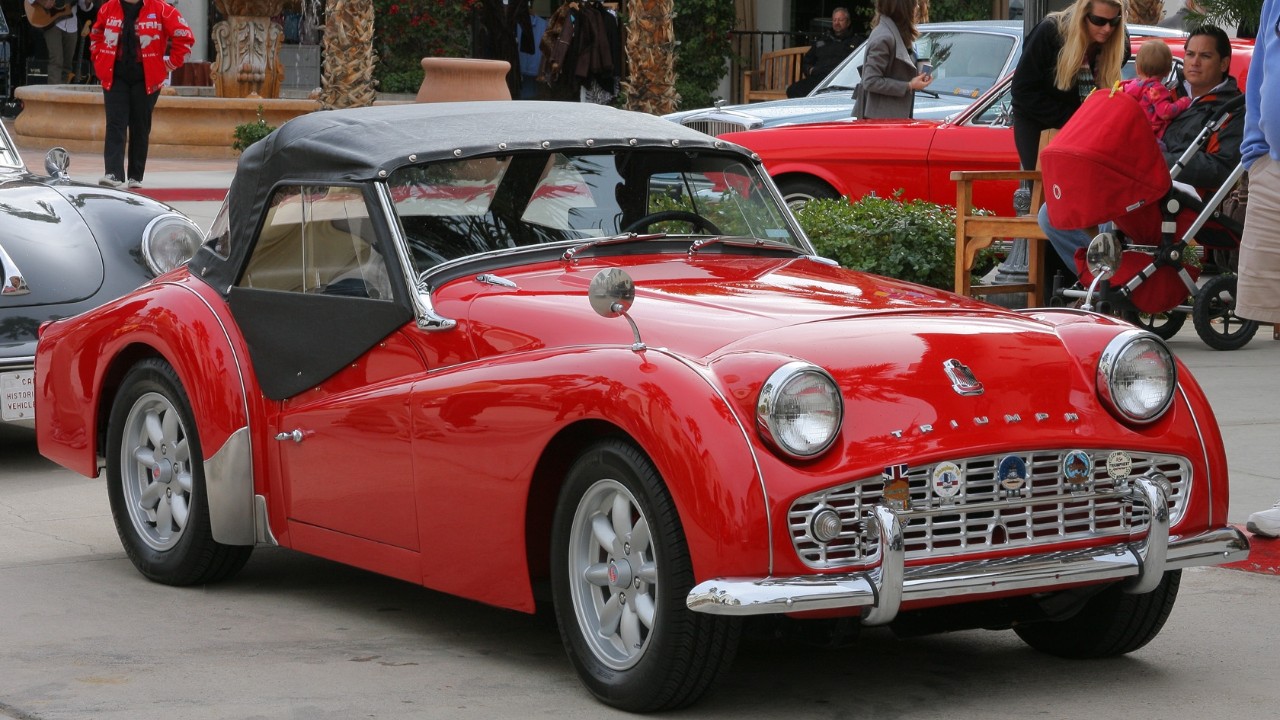
Triumph never officially called it the TR3A. The 1957 update still wore TR3 badges, yet buyers took home 58,236 of them, and the Triumph TR3A became one of the best-selling TRs of all. That kind of loyalty runs right through Britain’s open two-seaters.
Britain built roadsters for almost every budget after the war. Some were cheap and cheerful, some were thinly disguised race cars, and a few packed far more engine than anyone expected. Some of them asked for regular tinkering. Even so, owners kept driving them, because the experience was worth the fuss.
These 12 are our picks, the British roadsters we would refuse to part with if one ever landed in our garage. The choice is our opinion, and it is unashamedly personal. However, the engines, production totals and dates come from museum records, model histories and period road tests, and we only quote a number where a source we read gives it.
1. MGB Mk I roadster
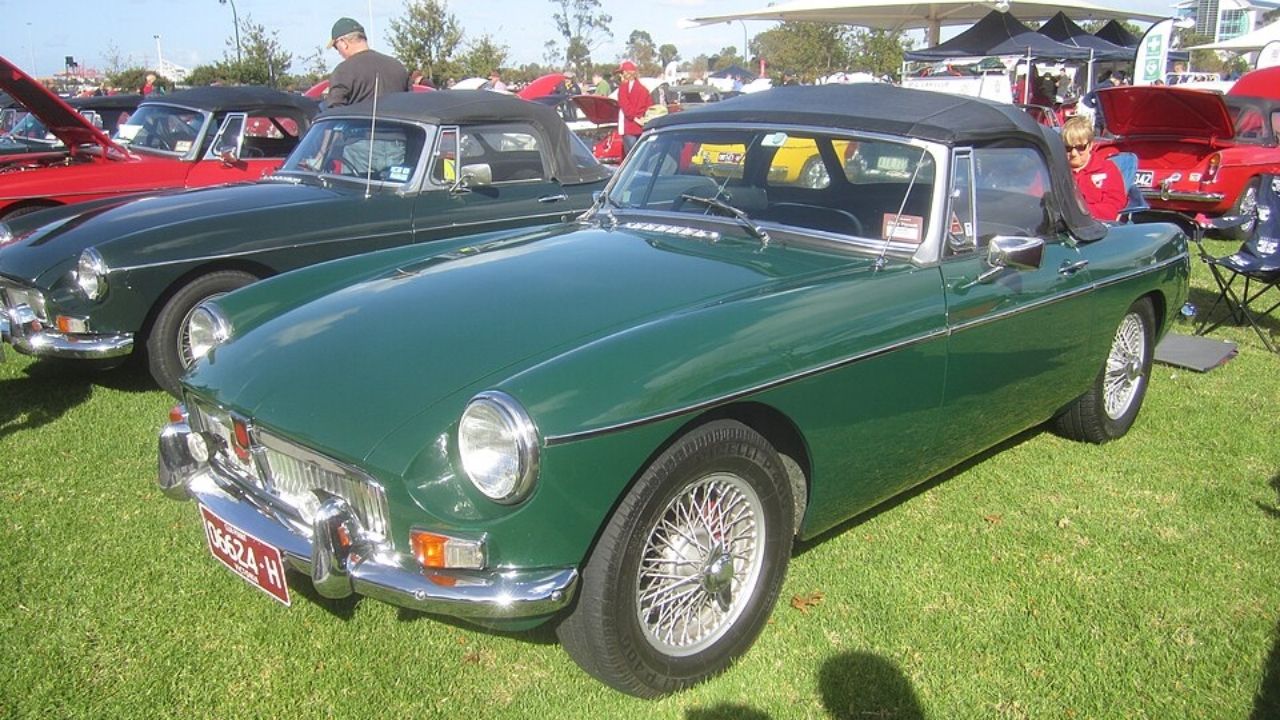
MG announced the MGB on September 19, 1962, as the replacement for the MGA. The big change sat underneath. Instead of a separate body and frame, MG built the new car around a monocoque structure, a brave choice for a small sports car maker at the time.
Power came from the 1,798cc B-Series four, rated at 95 horsepower at 5,400 rpm. That is a modest figure. Still, the car’s simple layout made it easy to understand and work on. Over its long life, the MGB family, including the MGC and the V8 GT, reached 523,836 sales.
Our take: the early Mk I roadster is the purest version of the most familiar British sports car. It has chrome bumpers, a clean body and none of the later additions. That is exactly why we would keep one. With more than half a million MGB-family cars built, it is also a car you can drive rather than store. In our view, the Mk I gives you the best looks of the run.
2. MGC roadster
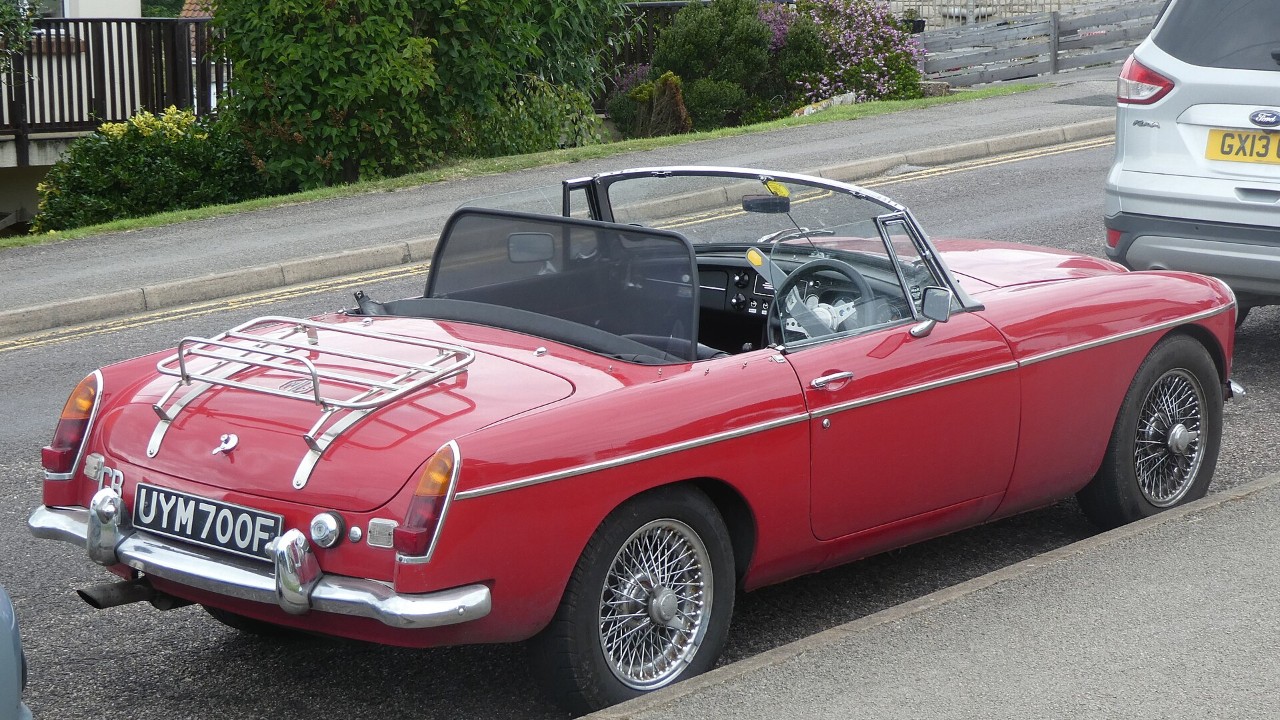
The MGC looked like an MGB with a bulge in the hood. That bulge was there to clear the relocated radiator for a much bigger engine, a 2,912cc straight-six rated at 145 bhp at 5,250 rpm. MG built it from 1967 to 1969.
Still, underneath, it was more different than it looked. The MGC used special torsion-bar suspension up front, along with 15-inch wheels and Pirelli Cinturato tires. It could reach 120 mph. However, the six weighed 209 pounds more than the MGB’s four, and the press gave it a mixed response. Autocar noted strong understeer. BMC later admitted that the launch cars had the wrong tire pressures, which did not help.
In our view, the MGC has spent decades paying for a bad first impression. On the open road, a smooth six and a 120-mph top speed turn the MGB into a proper grand tourer. That is a character no four-cylinder version can match. We would keep one for long drives rather than tight back roads. The short run also makes it one of the more unusual cars here.
3. Triumph TR3A

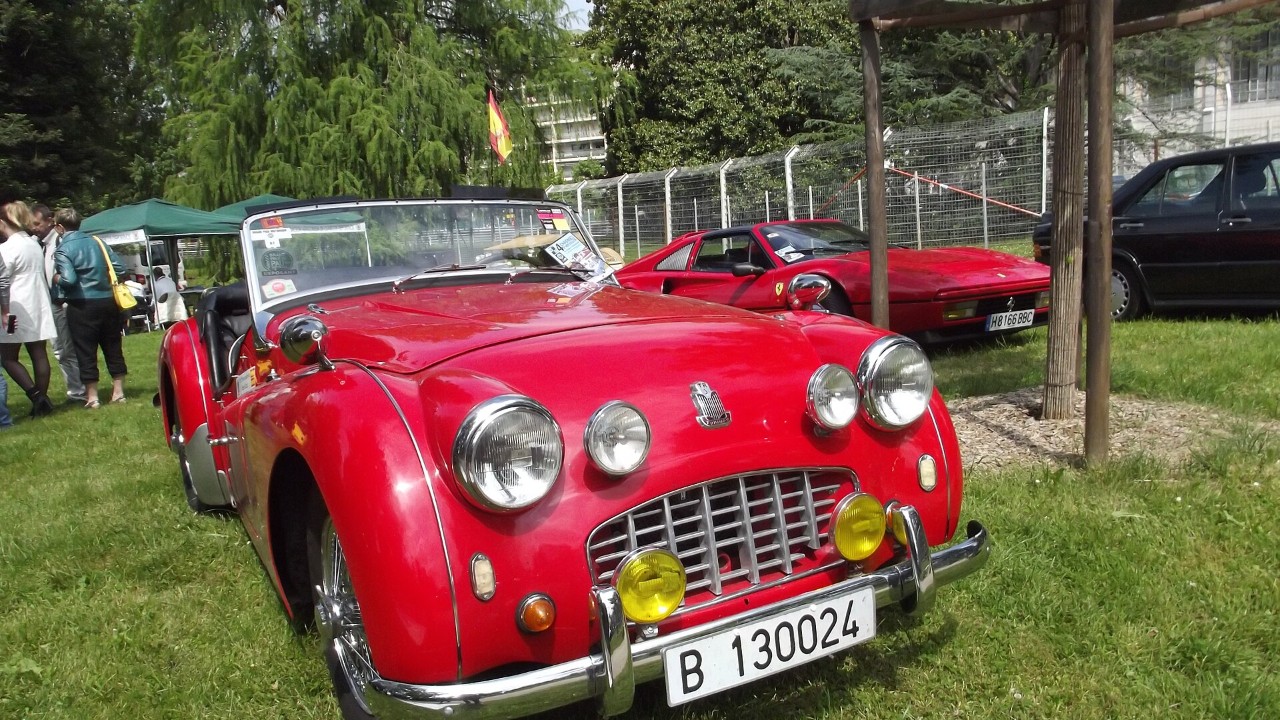
The 1957 update brought a new full-width grille, exterior door handles and a lockable trunk handle. Under the hood, the Triumph TR3A kept the 1,991cc four, now rated at 100 horsepower. It also kept the front disc brakes that Triumph had added to the TR3 in 1956.
As a result, those changes gave the Triumph TR3A a more finished look without dulling the car’s tough character. Meanwhile, the Triumph TR3A could reach 105 mph. More importantly, buyers liked it, and total production reached 58,236 cars. That makes it the third best-selling TR in its own right, a strong result for such a raw, hairy-chested roadster.
Our take: the TR3A is the TR we would choose to keep for good. It still has the bare-bones feel of the early cars, yet it gains that wider grille and better everyday details. In our view, it is the sweet spot of the early TR era. If you want to see how Triumph moved on afterward, we looked at how the 1964 Triumph TR4 modernized roadsters. For us, though, the Triumph TR3A is the one to own.
4. Triumph TR2
The TR2 started Triumph’s TR story in style. In 1953, a nearly stock two-liter car hit 124.889 mph on a closed Belgian motorway at Jabbeke. The British Motor Museum, which now holds that car, calls it possibly the most important Triumph in the company’s history.
Meanwhile, production cars used a 1,991cc four adapted from the Standard Vanguard, with twin SU carburetors and 90 bhp. The Motor’s 1954 test car, with overdrive, reached 107.3 mph and averaged 34.5 miles per imperial gallon. It cost £900 plus £56 for overdrive. Triumph built 8,636 TR2s from 1953 to 1955. In 1955, a works team of three modified cars finished 14th, 15th and 19th at Le Mans.
In our view, the TR2 earns its place because it proved that a cheap British two-seater could be fast and frugal at once. It raced, it rallied and it set records. Customer TR2s even took first, second and fifth on the RAC Rally the March after the Jabbeke run. We would keep one simply for that history. Better still, it drives like the honest machine it was.
5. Triumph Spitfire Mk III

The Spitfire began as Giovanni Michelotti’s 1957 styling design on a shortened Triumph Herald chassis. By March 1967, it had reached the Mk III. That version replaced the 1,147cc engine with a bored-out 1,296cc unit, rated at a claimed 75 bhp at 6,000 rpm with twin SU carburetors.
Then the Mk III also changed the look and the daily routine. Triumph raised the front bumper to meet new crash rules, which gave the car a slightly bolder face. Meanwhile, a simpler folding top replaced the earlier, more complicated design. Buyers clearly approved, because Triumph built 65,320 Mk III cars.
Our take: the Mk III is the Spitfire we would hang on to. It has the bigger engine and the easier top. That mix makes it the best all-round small Triumph in our view. Its swing-axle rear end asks for some respect in fast corners, so drive it with care. Even so, few roadsters this small feel this lively on a country road.
6. Sunbeam Alpine Series II

Sunbeam gave the Alpine a bigger heart for the Series II. Displacement grew from 1,494cc to 1,592cc, and output rose to 80 bhp. The rear suspension also got revisions, though there were few other changes. Sunbeam built 19,956 of them before the Series III replaced it in 1963.
The Motor tested a Series II with a hardtop and overdrive in 1960. It reached 98.6 mph and ran from zero to 60 mph in 13.6 seconds. Then, in 1962, a lake blue Series II roadster had a starring role. James Bond drove one in Dr. No, escaping pursuers by ducking under a crane. The car was reportedly borrowed from a local resident, because it was the only suitable sports car on the island.
In our view, the Alpine is the gentleman’s choice on this list. Its test figures point to a touring car rather than a racer, and that suits long drives perfectly. We would keep a Series II for its film fame alone. Thankfully, it is also a genuinely pleasant car to drive.
7. Lotus Elan Sprint

Lotus launched the Elan Sprint in 1970 as the last word on its small roadster. The Big Valve version of the Twin Cam made 126 bhp net at 6,500 rpm. Lotus also gave it a standard two-tone paint scheme that echoed the Gold Leaf racing colors of the time.
The Elan paired a steel backbone chassis with a fiberglass body, and the Sprint kept that layout. The convertible weighed about 1,530 pounds in standard trim. Estimates of Sprint production range from about 900 to 1,353 cars, and Lotus ended it in 1973.
Our take: the Elan Sprint is the roadster we would never sell, full stop. Light weight and that big-valve engine make it feel alive at any speed. In our view, nothing else here steers quite as sweetly. It does need careful maintenance, so budget for a specialist. For the original car’s story, we looked at how the 1962 Lotus Elan redefined handling for its time. The Sprint is that idea at its very best.
8. MG Midget Mk III

The Midget started life as a badge-engineered twin of the Austin-Healey Sprite. By the Mk III, it had a bigger engine. MG fitted a detuned version of the Mini Cooper S’s 1,275cc four, rated at 65 horsepower at 6,000 rpm, while the Cooper S itself made 76 bhp.
However, the other big change was the roof. For the first time, the top stayed permanently attached to the car, with an improved mechanism that made it easier to raise and lower. That small detail made the Midget much friendlier in British weather. MG built 22,415 of these cars from 1966 until the 1969 facelift, and the Mk III ran in later form until 1974.
In our view, the Mk III Midget is the best way into British roadster ownership. It is tiny, simple and cheap to run. Better still, the 1,275cc engine gives it enough punch to keep up with modern traffic. We would keep one as the car you grab for a quick drive on a sunny afternoon. Pick a pre-1969 car if you want the earliest form of the Mk III.
9. Elva Courier
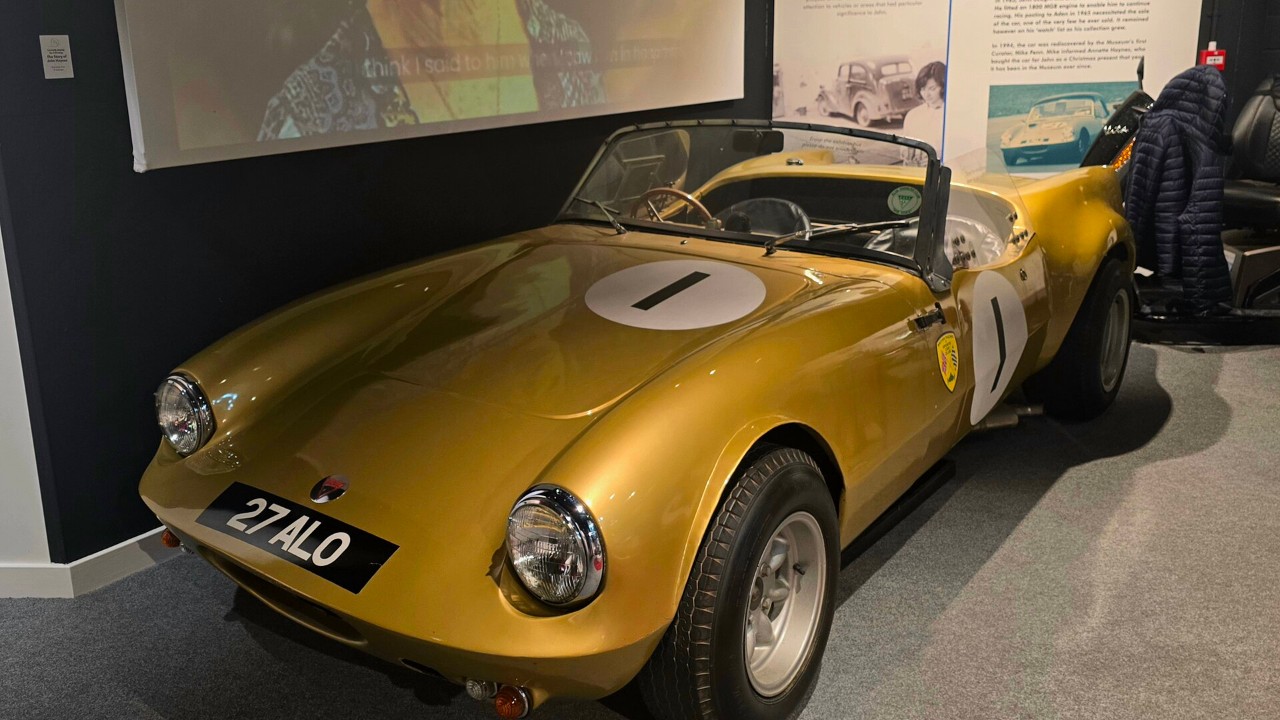
Elva launched the Courier in 1958, and at first every car went overseas. Home-market sales only began in 1960. The Mk I had a light two-seat fiberglass body on a ladder chassis, with a 1,500cc MGA or Riley engine. After about 50 cars, the Mk II moved to the larger 1,600cc MGA engine and gained a curved windscreen.
The Courier then changed hands several times. Trojan bought the rights in 1962 and moved production to its Croydon factory. Next, Ken Sheppard Customised Sports Cars took over in 1965, and production ended in 1968. In Britain, buyers could save money by building one from a kit. A Mk III kit cost £716, compared with £965 for a complete car.
Our take: the Courier is the hidden gem of this list. It is far less familiar than an MG, yet it combined MG engines with a light fiberglass body and real racing spirit. That is a great recipe. We would keep one for the surprise on people’s faces at every show. In our view, few small British makers built a better all-round roadster.
10. Morgan 4/4 Series V

Morgan introduced the 4/4 Series V in February 1963, and it built 639 of them by March 1968. Power came from a 1,498cc Ford Cortina 116E engine rated at 65 bhp. In other words, Morgan used a proven family-car engine rather than building its own. A Ford four-speed gearbox sent that power to the rear wheels.
Besides that, the car belongs to one of the longest runs in motoring. The 4/4 name first appeared in 1936, and apart from a break during World War II and a gap from 1951 to 1955, Morgan kept building it until 2018. That adds up to 73 years in production.
In our view, the Series V shows Morgan at its most practical. A Ford engine and gearbox make it easy to maintain, while the traditional body keeps all the old charm. That is a rare mix. We would keep one because it feels like a 1930s sports car you can actually use. Only 639 were built, so a good one is worth holding on to.
11. Lotus Seven Series 2

The Seven S2 arrived in June 1960. It was a bit more road-friendly than the first Seven, with a simpler chassis and a fiberglass nose in place of aluminum. Most used Ford Kent engines of 1,340cc or 1,499cc. In Cosworth tune, the Super Seven made 85 bhp, and the later Super Seven 1500 made 105 bhp.
Also, many buyers built their own. Under Britain’s purchase tax system, a car supplied as a kit avoided the tax charged on an assembled one. Lotus built 1,310 S2 cars before production ended in August 1968. One even became a TV star. According to Hagerty UK’s look at the cars of The Prisoner, Patrick McGoohan visited Lotus in 1966 and chose a Super Seven S2 demonstrator over an Elan for the series.
Our take: the Seven is the rawest car on this list, and that is the point. There is almost nothing on it that you do not need. Every drive feels like an event. We would never part with one, because nothing else delivers that much fun for so little. The Prisoner connection is simply a bonus.
12. TVR Griffith 500
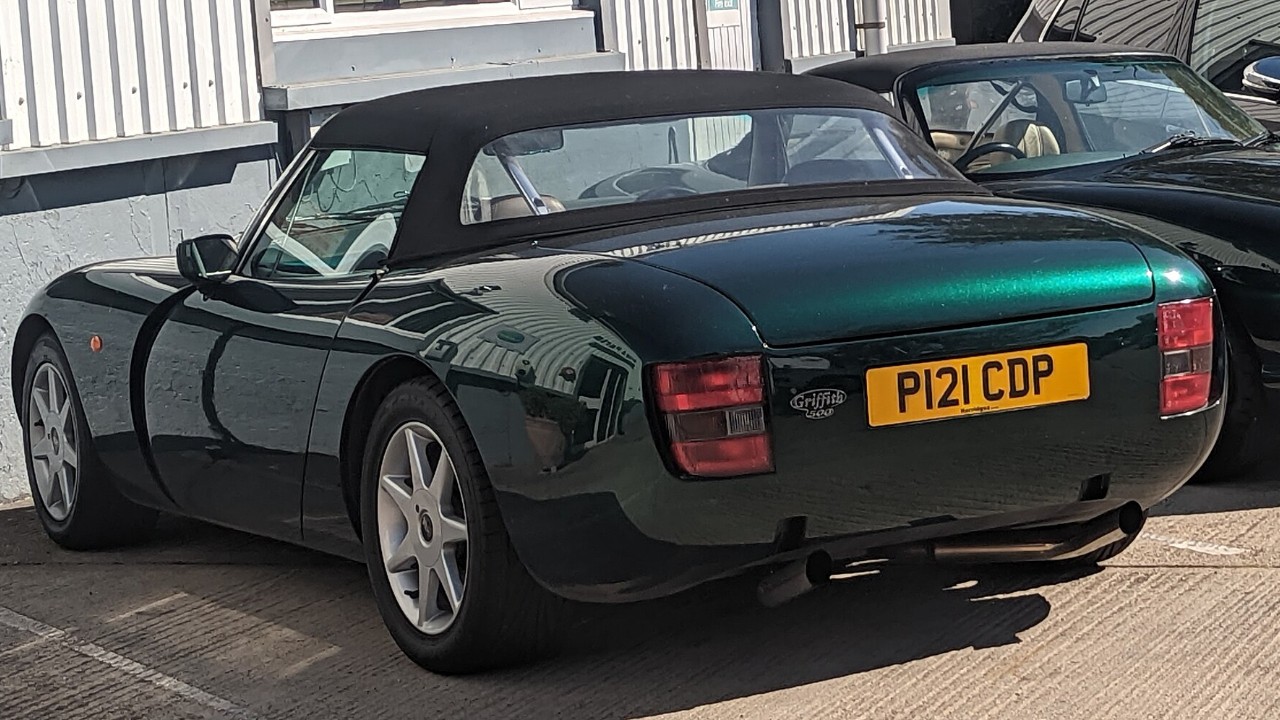
TVR’s Griffith put a lot of engine in a very small car. The Griffith 500 used a 5.0-liter Rover V8 rated at 340 horsepower and 350 lb-ft of torque. Better yet, the car weighed only about 1,060 kg dry, roughly 2,336 pounds. With a catalytic converter fitted, torque dropped slightly to 320 lb-ft.
Those numbers produced serious pace. The 5.0-liter car could reach 60 mph in 4.1 seconds and run on to 169 mph. Meanwhile, the first-generation Griffith stayed in production from 1990 to 2002, and TVR built 2,351 of them. TVR announced in 2000 that production would end, so the final SE versions came between 2000 and 2002.
In our view, the Griffith 500 is the most thrilling car here and the one we would guard most jealously. It looks fantastic, and its numbers still impress today. It also asks for respect from the driver, so it is not for beginners. Still, if you want one modern British roadster in the garage beside the classics, this is our pick.
More from Fast Lane Only