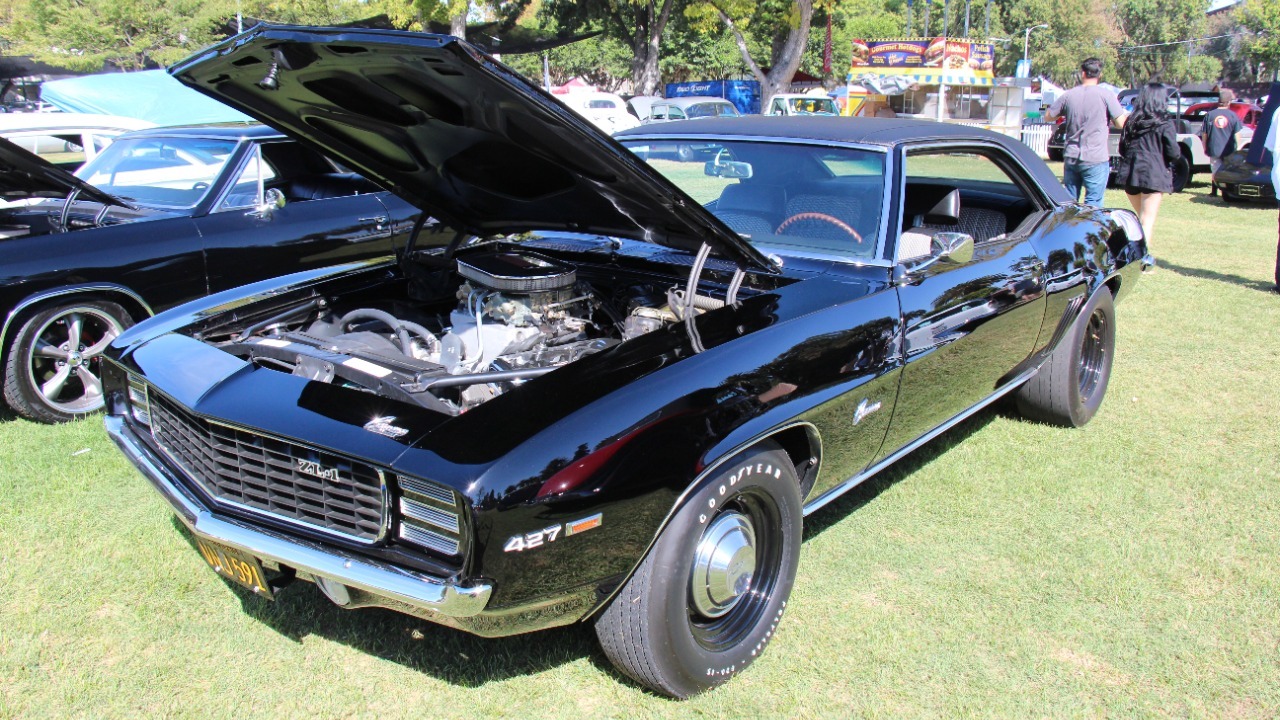
The 1969 Camaro ZL1 arrived with an official 430 horsepower rating, a number that already sounded outrageous for a street car. Yet anyone who drove or raced one quickly realized the figure was a polite fiction. Beneath the plain Camaro bodywork sat a racing refugee that behaved less like a showroom engine and more like a Can-Am refugee in disguise.
The gap between the window sticker and reality turned the ZL1 into a legend. Chevrolet quietly built a handful of cars that could outrun almost anything Detroit offered, then hid their true strength behind conservative paperwork and cryptic option codes.
The Can-Am heart hiding in a Camaro
The story starts long before any customer saw a ZL1 on a dealer lot. Chevrolet engineers had been developing an all-out racing V8 for series like Can-Am, where factory-backed cars needed enormous power and durability to survive flat-out abuse. That racing background shaped the 427 ZL1 engine that would eventually find its way into a Camaro shell.
Video coverage of what happens when a Can-Am style engine is stuffed into a street-legal Camaro describes exactly that formula: a lightweight, big-inch V8 dropped into a familiar F-body and priced higher than a Corvette in 1969, a combination that shocked even seasoned enthusiasts when they first encountered it on film. The result was a car that looked like an ordinary pony car but carried a powerplant born from pure competition.
The ZL1 engine itself was a 427 cubic inch design, a figure that appears again and again in period racing lore. Later coverage of the Chevrolet 427 ZL1 describes the unit as a name whispered with equal parts reverence and fear, a race-bred powerplant that never really forgot its original purpose on track. Dropping that engine into a production Camaro created something Detroit had never quite offered before: a factory muscle car with a full-on racing heart.
All aluminum and nothing like a regular big-block
Where most muscle-era big-blocks relied on heavy cast-iron blocks and heads, the ZL1 went in a radically different direction. The engine used an all-aluminum block and aluminum cylinder heads, a combination that slashed weight while keeping the massive displacement and breathing potential of a 427 cubic inch racing motor.
Enthusiast histories of the 1969 ZL1 emphasize that the ZL-1 took things further than even the hottest production big-blocks, with the all-aluminum construction dramatically reducing weight while still producing massive power, making it arguably the most extreme factory car of the era. However extreme. That weight reduction transformed the Camaro’s balance and helped the car behave more like a small-block machine with the punch of a full race engine.
Later retrospectives on the 1969 Chevrolet Camaro RS ZL1 describe how the package combined the sleek Rally Sport styling with this exotic aluminum powerplant, positioning the car among the rarest and most powerful muscle machines ever produced while highlighting how the Rally Sport appearance belied the violence under the hood. Combining the Rally.
Fred Gibb, COPO, and a secret factory hot rod
The ZL1 Camaro did not originate from a corporate marketing plan. Instead, it began with Chevrolet dealer Fred Gibb, a businessman and drag racer who recognized that the aluminum 427 could turn a Camaro into a devastating quarter-mile weapon. Rather than waiting for the factory to bless such a car, he used the Central Office Production Order (COPO) system, which normally handled fleet and special orders, to request a run of Camaros built with the racing engine.
Accounts of the program describe how, instead of a top-down corporate initiative, it was Chevrolet dealer Fred Gibb who pushed for the package, seeing the quarter-mile potential in the aluminum powerplant and using COPO to bring it to life Instead, Chevrolet dealer. The result was a car that technically existed in the catalog only as a cryptic option code, not a mainstream model.
That low-key birth helped the ZL1 stay under the radar. On the street, it could appear as a relatively plain Camaro, especially compared with wilder stripes and scoops from rivals. Enthusiast commentary from period-style discussions captures the perception succinctly, noting that ZL1s were plain-looking sleepers with race engines, a combination that let them ambush unsuspecting opponents at the drag strip or stoplight, Rick Canup.
Why Chevrolet wrote “430 hp” on the spec sheet
Officially, Chevrolet rated the ZL1 engine at 430 horsepower. That figure matched the paper rating of the iron-block L88 Corvette engine and gave the company a neat way to present the new aluminum motor as equivalent to an existing top-tier option. Multiple technical explanations, however, show why that number did not capture the engine’s real output.
Discussions of the L88 and ZL1 ratings point to several factors. Multiple reasons are given for the understatement, including changes in how horsepower was calculated, the difference between gross and net ratings, and the reality that horsepower cannot be directly measured but must be derived from torque and rpm under specific test conditions Multiple reasons. Manufacturers could alter accessories, exhaust, and test setups to yield lower official numbers while the real-world engine, installed in a car, behaved very differently.
There were also strategic motives. Insurance companies and regulators were already nervous about rising power levels in American performance cars. Labeling the ZL1 at 430 horsepower, even if conservative, kept the figure in line with other advertised ratings and helped Chevrolet avoid drawing extra attention to a handful of cars built primarily for racing customers.
Dynos, drag strips, and the real number
Once ZL1 engines reached racers and tuners, the polite fiction of 430 horsepower did not last long. Dyno sessions and track results quickly suggested that the aluminum 427 produced far more power than the official sheets claimed.
Coverage of the ZL1 engine’s rarity notes that, in essence, the ZL1 was closely related to the L88 but with aluminum construction, and that officially Chevrolet rated the ZL1 at 430 horsepower while dyno tests suggested they were really pumping out well over 500 horsepower, with those muscles described as bulging once the engine was properly tuned. Officially, Chevrolet. That gap between 430 and numbers north of 500 gave the car an aura of forbidden strength.
Drag strip testing from period-style reporting reinforces this view. One retrospective on the 1969 Chevrolet Camaro ZL1 describes it as an all-aluminum monster born for the drag strip in the golden age of American muscle and notes that while the official rating sat at 430 horsepower, analysis of its performance suggested it was actually around 525 horsepower in real-world trim. That figure aligns with what racers experienced when they uncorked the exhaust, optimized ignition timing, and allowed the big aluminum V8 to breathe.
Contemporary drag tests of original ZL1 cars tell a similar story. One well-known evaluation recounts how tire technology and track bite limited the car’s times more than any lack of power, with the testers remarking that a lack of bite kept them out of the 10-second range despite trap speeds that hinted at far more power than the paper rating suggested. Original Camaro Drag. On a prepared modern surface with contemporary slicks, the same combination would likely have revealed even more of the engine’s potential.
Why the understatement mattered
Understating the ZL1’s power did more than protect Chevrolet from awkward questions. It shaped the car’s reputation among racers and collectors. On paper, a 430-horsepower Camaro looked like a close cousin to other big-block machines of the era. On the street and strip, it behaved like something altogether different.
Discussions of the 1969 Chevrolet Camaro Capo ZL1 in enthusiast media highlight how the car quickly gained a reputation as an icon that punched far above its official numbers, with owners and tuners discovering that the aluminum 427 responded aggressively to careful tuning and free-flowing exhaust systems. The gap between brochure and reality became part of the car’s mystique, reinforcing the sense that insiders knew something the spec sheet did not reveal.
Over time, the conservative rating also contributed to the ZL1’s status as a sort of factory outlaw. Later video features on the car describe it as the machine Chevrolet built in secret to beat Ford on the track, a response to images of Shelby’s blue and white racers dominating road courses and Ford’s marketing muscle, the Shelby rivalry. In that narrative, the 430-horsepower claim reads less like a technical figure and more like a smokescreen for a program aimed squarely at racing glory.
The banned engine and the short production run
The 427 ZL1 engine itself has taken on a life separate from the Camaro. Coverage focused on the Chevrolet 427 ZL1 describes it as an engine so aggressive that it was effectively banned from certain forms of sanctioned racing, with the combination of aluminum construction and immense displacement putting it at odds with evolving rules and safety concerns Chevrolet 427 ZL1. That regulatory pressure, combined with cost and limited demand, kept production numbers extremely low.
Later retrospectives point out that only 71 examples of the ZL1 engine were produced for automotive use, a figure that underscores just how experimental the program was and how far it sat from mainstream Chevrolet engine offerings. That scarcity, combined with the understated rating, has turned surviving cars and engines into some of the most coveted pieces of American performance history.
The limited run also explains why the ZL1 never received the kind of marketing push that surrounded more conventional models. For Chevrolet, the car functioned more as a homologation special and engineering showcase than a profit center. For drag racers and collectors, that only made the car more desirable.
How enthusiasts remember the ZL1 today
Modern coverage of the ZL1 tends to treat it as a benchmark for factory-built performance. Enthusiast groups describe the 1969 Chevrolet Camaro ZL1 as a plain-looking sleeper with a racing engine, a car that could humiliate more flamboyant rivals while idling quietly at the curb. That dual personality remains central to its appeal.
Video and written retrospectives often group the ZL1 with other historic pony cars that competed across price ranges, noting that while Ford, Chrysler, and Chevrolet all fielded serious hardware, the aluminum Camaro sat at the end of the spectrum in both performance and cost among the three historic pony cars. The car’s high price relative to a Corvette at the time, combined with its almost secretive availability through COPO, kept production low and mystique high.
Even general automotive gear coverage that traces citation trails back to original drag tests continues to reference the ZL1 as a touchstone. Modern platforms that share and promote those original stories, including pages tied to The Original 1969 ZL1 Camaro Drag Test on the HOT ROD Network, help keep the legend alive for a new generation of readers and viewers who may never see one in person.
More from Fast Lane Only