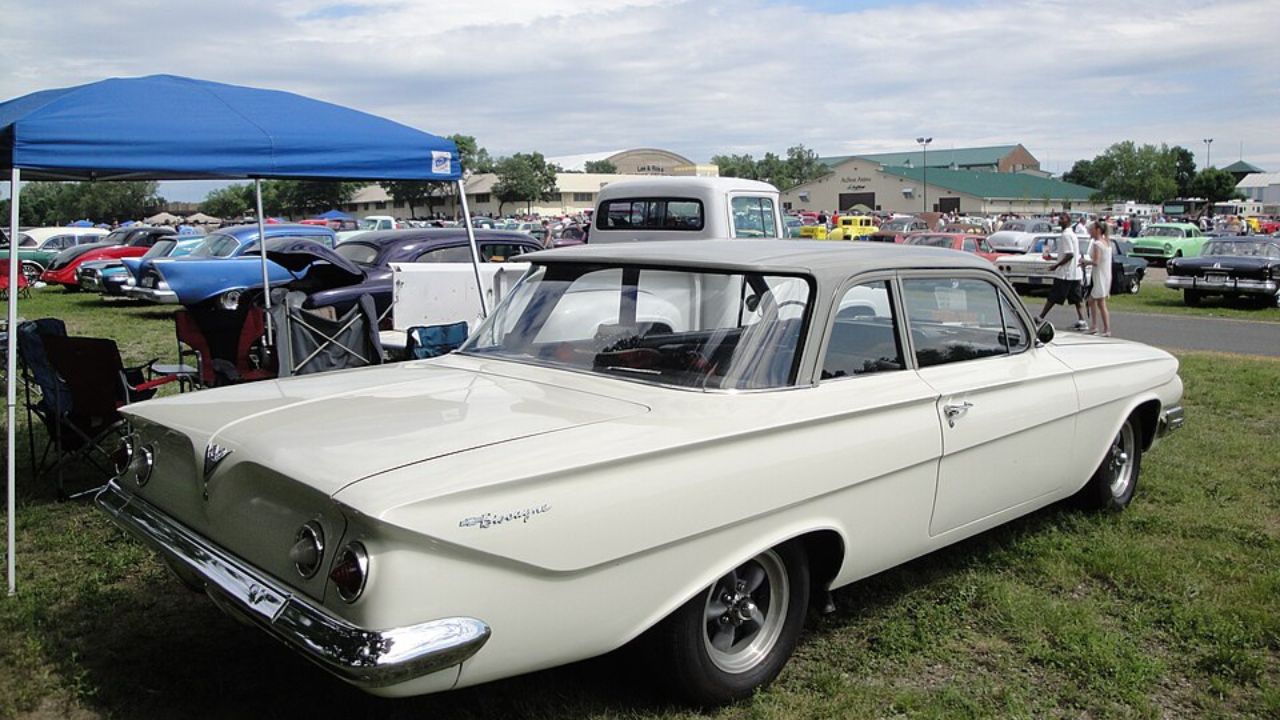
The 1961 Chevrolet Biscayne arrived as the quiet one in Chevrolet showrooms, a full-size car that let flashier Impalas and Bel Airs soak up the attention while it went to work. It kept things simple, from its clean sheetmetal to its thrifty six-cylinder options, yet that restraint made it a favorite of budget buyers and fleet managers who valued durability over chrome. Today, that same understated formula is exactly what turns the 1961 Biscayne into a cult favorite among enthusiasts who see beauty in a car that did not need to shout.
The budget full-size that did the heavy lifting
Chevrolet positioned the 1961 Chevrolet Biscayne as its entry-level full-size line, a car that delivered the basic size and utility of the big Chevrolets without the cost of extra trim. Period material aimed squarely at fleet buyers and law enforcement described the 1961 Chevrolet Biscayne with a six-cylinder engine and optional upgrades as a practical tool that emphasized low purchase price, durability, and a straightforward driving experience, a role confirmed by contemporary descriptions of the Chevrolet Biscayne in that year.
Factory literature for the 1961 model year presented the BISCAYNE SERIES FOR 1961 as a family of no-frills sedans. Brochure pages highlighted the BISCAYNE 2-DOOR SEDAN with simple side trim and new functional high level vent ports shared across the line, a reminder that Chevrolet saved its boldest styling flourishes for more expensive models while still giving Biscayne buyers modern ventilation and full-size room in the BISCAYNE SERIES FOR.
That positioning meant the car often wore solid colors, dog-dish hubcaps, and minimal brightwork. Under the hood, the base six-cylinder powertrain was chosen as much for its low operating cost as for performance. The 1961 Chevrolet Biscayne was built to be a workhorse, and Chevrolet leaned into that identity rather than trying to disguise it.
Fleet favorite, everyday family car
Biscaynes were produced primarily for the fleet market, where municipalities, police departments, and businesses needed full-size cars that could rack up high mileage with little drama. At the same time, Chevrolet made the line available to the general public, particularly to buyers who wanted the space and comfort of a big car without paying for the extra trim and features of an Impala. That dual mission is clear in historical summaries of how Biscaynes were marketed and sold.
For families, the Biscayne’s appeal was obvious. It delivered the same basic body shell and interior volume as other full-size Chevrolets, so there was room for kids, luggage, and the occasional road trip. What it skipped were the extra trim strips, elaborate interiors, and power accessories that added cost and complexity. Buyers who chose the Biscayne effectively traded some visual flash for a car that was easier to afford and, in many cases, easier to maintain.
That practicality also made the car a favorite among rural buyers and small-town fleets. A Biscayne could serve as a company car during the week and a family hauler on the weekend, all while keeping the purchase order modest. In an era when full-size cars dominated American roads, the Biscayne quietly handled the unglamorous work.
The clean, understated coupe
Not every 1961 Chevrolet Biscayne was a four-door sedan with a spotlight and a radio delete plate. Chevrolet also offered the 1961 Chevrolet Biscayne Coupe, a full-size two-door that wrapped the same budget-minded philosophy in a sleeker roofline. Contemporary enthusiasts describe the 1961 Chevrolet Biscayne Coupe as a clean, understated classic that represented Chevrolet’s commitment to practical and affordable transportation, with a focus on dependable, no-nonsense driving. That sentiment is echoed in modern profiles of the Chevrolet Biscayne Coupe.
On the outside, the coupe shared the same restrained side sculpting and minimal trim as sedan versions, which meant a long, clean body with only a few bright accents. Inside, the cabin was functional rather than plush, with durable materials that could stand up to daily use. The two-door layout added a hint of style, yet the car still read as a sensible choice rather than a flashy statement.
That combination of proportions and restraint has aged well. Today, the 1961 Chevrolet Biscayne Coupe is often praised for exactly what it left out. Without the elaborate trim of an Impala, the basic lines of the 1961 full-size Chevrolet design are easier to appreciate, and the coupe’s long doors and simple roofline give it a quietly confident stance.
No-frills body, surprising potential
At the time, the Biscayne’s plain exterior was deliberate. Fleet spec meant minimal chrome, simple wheel covers, and paint choices that leaned toward solid colors that were easy to touch up. Yet those same traits have turned the car into a favorite canvas for enthusiasts who like the idea of a sleeper. With the right stance and drivetrain, a Biscayne can look like a retired city car while running with serious performance machines.
Modern coverage of modified examples highlights this duality. One widely shared build described the 1961 Chevrolet Biscayne as Chevrolet’s no-frills, full-size workhorse that could be optioned into a serious street performer, an approach that turned the car into what some fans called the ultimate sleeper. In that context, the Chevrolet Biscayne became a kind of blank slate, with its no-nonsense fleet roots hiding performance parts that rivaled far more expensive muscle cars.
Factory options already hinted at that potential in 1961. While many Biscaynes left the assembly line with six-cylinder engines and manual transmissions, Chevrolet allowed buyers to specify V8 power and heavier-duty components. For a police department or performance-minded customer, that meant a car that still looked like a basic sedan but had the hardware to surprise anyone who underestimated it.
The perfect sleeper in modern trim
Contemporary builders have taken that idea much further. A notable example surfaced at the 2025 Muscle Car and Corvette Nationals, where a 1961 Biscayne appeared with a serious performance surprise under its hood. Coverage of that car described how the 1961 Biscayne packed dual-quad induction and the right amount of pedals, a clear nod to a manual transmission and a focus on driver engagement. The build was singled out as a perfect sleeper, and its appearance at the Muscle Car and (often abbreviated as MCACN) underlined how seriously the hobby now takes these once-humble Chevrolets.
In that car, the Biscayne’s plain body became an asset. Without stripes, scoops, or loud badging, the dual-quad engine remained a secret until the driver opened the hood or the throttle. The sleeper ethos that enthusiasts prize today fits naturally with the Biscayne’s original mission as a fleet car that did not call attention to itself.
Other modified Biscaynes follow a similar recipe. Builders often retain the stock or near-stock exterior, sometimes even keeping steel wheels and dog-dish caps, while upgrading suspension, brakes, and powertrains. The result is a car that still looks like a municipal sedan but can make full use of modern performance parts.
Original survivors and the pull of nostalgia
Not every 1961 Biscayne has been turned into a hot rod. Some have survived in remarkably original condition, a fact that has drawn the attention of enthusiasts who value preservation. An example documented in a feature on Automotive Archaeology described how a one-owner 1961 Chevy Biscayne sat largely untouched for decades, a time capsule that showed exactly how Chevrolet built these cars. The writer, Ryan, recounted the discovery in a piece that invited readers to See All the details of a car that had escaped the crusher and the customizer, a story that linked directly back to the Automotive Archaeology project.
Other survivors were not so lucky at first. One 1961 Chevy Biscayne was literally saved from the crusher after sitting for likely over 30 years, its shiny paint still showing a vibrant patina. Coverage of that rescue pointed to Another good attribute present on the car’s body, the way its original colors had aged gracefully Over the long storage period, and how close it came to being scrapped before enthusiasts intervened. That story of a car saved from destruction was documented in detail when the 1961 Chevy Biscayne was pulled back from the brink.
Stories like these help explain the nostalgia that surrounds the model. For many enthusiasts, the Biscayne recalls police cars, taxi cabs, and family sedans that filled the background of everyday life. Seeing one preserved in original paint or carefully restored to stock specification triggers memories of an era when full-size Chevrolets were everywhere.
Personal connections that keep the name alive
The emotional pull of the Biscayne is not limited to magazine features and show builds. Owners still share personal stories about how these cars fit into their lives. One enthusiast described how he had Well dropped off his buddy Keith’s 1961 Biscayne to its new owner on the mainland, calling the moment Bitter sweet and admitting that he Loved the car and so did his friend. That farewell, captured in a short social media post about Keith and his Biscayne, underscored how attached people become to these unpretentious cars.
Similar stories surface again and again. A Biscayne might have been a first car, a hand-me-down from a parent, or a project that brought friends together in a garage. Because the cars were affordable, they often ended up in the hands of young drivers who learned to wrench on them, and that experience tends to leave a lasting impression.
Even when a Biscayne moves on to a new owner, the memories remain. The model’s simplicity makes it easy to project personal history onto it, whether that involves police duty, drag strip passes, or long highway trips with the family.
Modern upgrades on a modest platform
While some owners chase originality, others embrace tasteful modernization. A video walkaround of a customized 1961 Chevrolet Biscayne highlighted how well the car accepts subtle upgrades. At the corners of the car, chrome 18 inch front and 20 inch rear Coys wheels wore 255/35 Ventus Sport Z-rated radials, a combination that updated the stance and grip without overwhelming the original lines. The builder presented the car as something an entire family could enjoy for generations, a sentiment captured in the footage of the At the corners view of those 255 and 35 series tires.
Other owners focus on drivability. Swapping in modern disc brakes, overdrive transmissions, and improved cooling systems can make a 1961 Biscayne far more comfortable in present-day traffic while preserving the car’s basic character. Because the Biscayne shares its platform with other full-size Chevrolets, parts availability is relatively strong, and many upgrades are straightforward.
That balance between heritage and usability is part of the car’s appeal. A well-sorted Biscayne can still function as a family cruiser, a weekend show car, or even a daily driver in fair weather. Its original mission as a practical workhorse translates surprisingly well into the expectations of modern enthusiasts who want something classic that they can actually use.
More from Fast Lane Only